Cheburashka rig: the jig head that hinges
Before tying this one on, it helps to know if the spot actually calls for it. CarnaFish reads the scene from a photo.
Take a standard jig head and look at it closely: the lead and the hook are a single piece. It is simple, it is tough, and it has two consequences you end up accepting without thinking about them.
The first is that changing weight means stripping everything down. You reach a drop-off at seven metres with a 10 g head rigged for three, and you have to pull the bait off its hook, usually tearing it, then rig another. In practice plenty of anglers just don't bother and fish half an hour with the wrong weight.
The second is subtler. A single solid block forces the bait onto the weight's path. On the drop, the whole thing falls as one piece, nose down, and the bait does nothing but follow. Yet the drop is the moment most zander make up their minds.
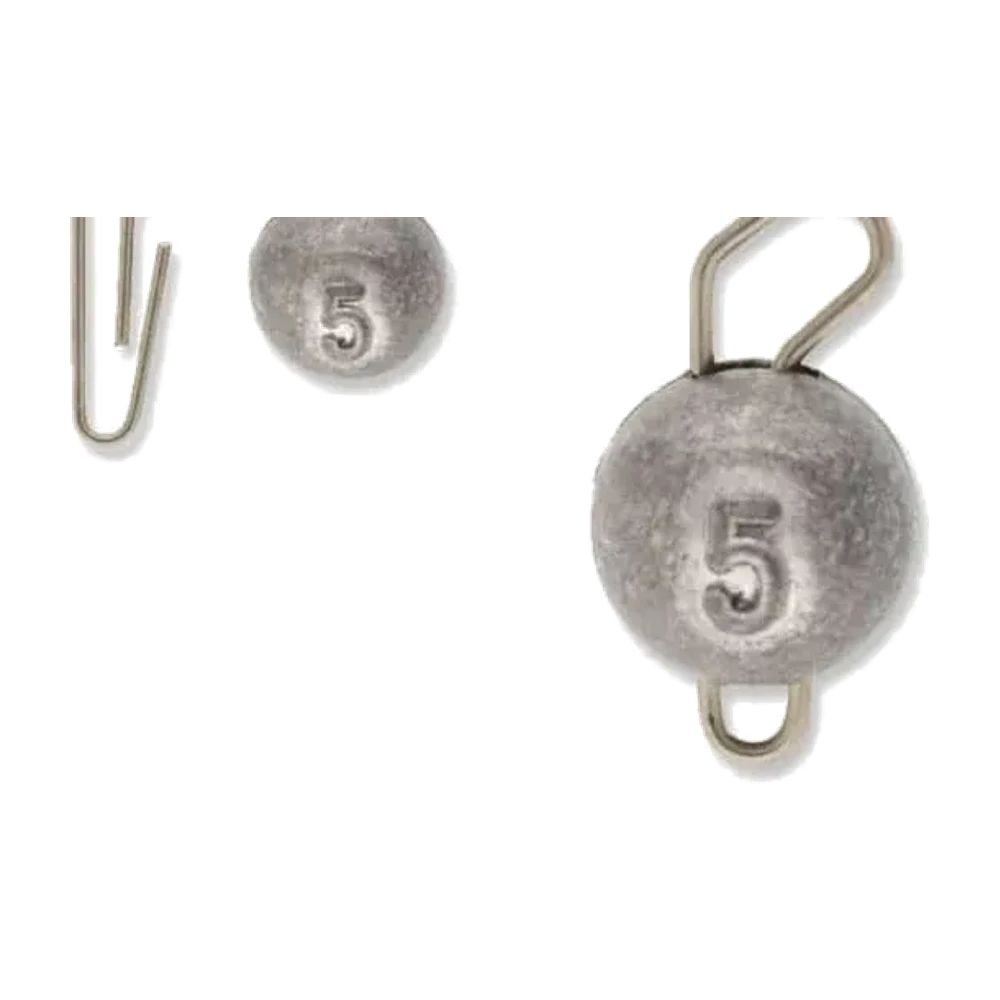
The cheburashka — the name comes from a big-eared Russian cartoon character, a nod to the two loops on the weight — separates the two parts. A round weight fitted with a loop, a hook, and a split ring joining them so they pivot freely. The weight goes down first, the hook follows with a lag and an angle, and the bait starts working through the whole fall.
What the hinge actually does
Three effects, very different from one another.
On the drop, the weight leads and the bait swings out behind it instead of falling in line with it. A shad rigged this way glides down slightly, tail beating, on an angled rather than a vertical path. To a fish sitting on the bottom looking up, the difference is enormous: it sees prey coming down alive, not a stone falling.
On the pull, the hinge soaks up the jolt. You pull on the rod, the weight sets off, and the bait unfolds behind it half a second later. That bit of breathing room gives a far smoother action than a jig head, where the bait moves instantly.
On the hookset, things get ambiguous. The hinge absorbs part of the movement, and the free weight tends to knock against the fish's nose. Some see that as one more reason to lose fish; in practice, with a well sharpened hook and a long lifting hookset rather than a sharp strike, the conversion rate stays excellent. The key is not to set the hook the way you would with a jig head.
Rigging a cheburashka properly
- Pick a wide gap hook. The bait is not pressed against a head, it hangs freely: the gap needs to be generous so the point clears properly inside the mouth. A short shank single with a wide gap is the basic option; a double works very well on thick-bodied baits.
- Use a strong split ring, not a snap. That is the breaking point of the rig. A good quality split ring, oval for preference, holds better than a thin snap that opens under a sideways pull.
- Or fit a cheburashka clip. Most modern weights have a loop that unlocks by hand: you swap the weight in five seconds, with no tools and without touching the bait. That is the whole practical point of the system, so make use of it.
- Thread the bait dead straight. Since the bait hangs freely, a crooked rig will not be corrected by the weight of a head the way it is on a jig head. Check the alignment before every cast.
Working it by depth
- Slow straight retrieve, 2 to 5 m: a steady, very slow wind, rod at 45°, with a one-second stop every five or six turns. The bait dips slightly at each stop, then sets off again. It is the simplest way to make the rig work.
- Sawtooth retrieve, 4 to 8 m: two thirty-centimetre pulls with the rod tip, then let it drop back, following the slack with the tip without tightening it. It is during that guided fall that 80% of the bites come.
- Vertical, beyond 8 m: short twenty-centimetre lifts and back down onto the bottom, with five-second pauses. The weight taps, raises a cloud, and the bait stays suspended above it.
On the water: never tighten the line completely during the fall, but don't let it run free either. Follow the drop with the rod tip, keeping just enough tension in the slack to see it. A tight line forces the bait to pendulum back towards you and kills the glide; a completely loose line leaves you blind to the bite. Almost every cheburashka bite is read on the line, not in the rod: if it stops sinking early or moves off sideways, set the hook.
Weight, set by fall time
| Depth | Weight | Target fall time | Retrieve |
|---|---|---|---|
| 2 to 3 m | 5 to 7 g | 3 to 4 s | Slow straight retrieve |
| 3 to 5 m | 10 to 14 g | 4 to 5 s | Gentle sawtooth |
| 5 to 8 m | 14 to 18 g | 5 to 6 s | Sharp sawtooth |
| 8 to 15 m or current | 21 to 28 g | 6 s and over | Vertical, short lifts |
The column that matters is the middle one. The right weight is not the one that reaches the bottom, it is the one that takes long enough to get there for the bait to have time to work on the way down. If your bait touches in two seconds, you are too heavy, even if you feel the bottom nicely.

Not sure what to tie on?
Photograph your spot: CarnaFish reads the scene, cross-checks the conditions and gives you the zone, the lure and the retrieve. Free on iOS and Android.
Where it shines, where it doesn't belong
It is the number one rig for zander on a slow retrieve and on the sawtooth, especially on big flats and gravel pit drop-offs. It is excellent for vertical fishing from a boat, where swapping weights quickly keeps up with changes in depth. And it earns its place searching cold water, when a slow fall is the only thing the fish will react to.
Leave it at home in three cases. In branches and sunken wood: the bait hangs freely, the hook moves, and anything sticking out snags — the Texas rig is made for that. Over soft silt: the round weight sinks in and the bait lies down, which is exactly the problem the Tokyo rig solves. On very wary margin fish in clear shallow water, where the whole rig carries too much mass and lands too noisily.
Cheburashka, jig head or jika rig
The plain jig head is still the most direct rig and the most reliable on the hookset. If you fish a steady retrieve, if you need to feel the bottom precisely, or if you are starting out, it is easier to read and you will lose fewer fish. It is also the cheapest.
The jika rig is often confused with the cheburashka when it does the opposite: its weight hangs below the hook on a ring, instead of sitting at the nose of the bait, in line with it. The jika suspends the bait; the cheburashka makes it swim.
So the cheburashka keeps a very specific territory: the free swimming of a soft plastic weighted at the front, with a living fall and a five-second weight change. If your bites come on the drop, this is the one. Our guide to getting started on zander goes through the spots where that fall makes the difference, and if you are unsure what weight to fit in front of a given spot, CarnaFish will look at a photo of it and answer you.
Key takeaways
- The weight and the hook are two pieces joined by a split ring: the bait swims unrestrained instead of following the lead.
- The fall is the key moment, and that is where the vast majority of bites happen.
- Choose your weight on fall time, not simply on whether it reaches the bottom.
- Set the hook with a long lift, never with a sharp strike: the hinge absorbs part of the movement.
- Avoid it in sunken wood and over soft silt, where other rigs do better.
FAQ
Why is this rig called a cheburashka?
It is named after a big-eared Russian cartoon character, by analogy with the metal loop on the weight. The rig was born and became popular in Eastern Europe, mainly for zander.
What is the difference from a classic jig head?
The weight and the hook are separate and hinged. The bait glides down instead of falling in line with the weight, and you can change weight in seconds without unrigging the bait.
What weight should I choose for zander?
Ten to fourteen grams covers most situations between three and five metres. Set it by fall time: aim for four to six seconds of drop, not just contact with the bottom.
Do you lose more fish than on a jig head?
A few more, if you set the hook the way you would with a jig head. The hinge soaks up a sharp strike: set with a long lift of the rod rather than a hit, and keep your hook well sharpened.
Which hook goes on a cheburashka?
A wide gap, short shank single, or a double on thick-bodied baits. Since the bait hangs freely, the point needs real clearance to bite.
Split ring or snap?
A split ring, oval for preference and good quality. It is the weak point of the rig, and a thin snap can open under a sideways pull on the hookset or in a snag.
The full zander lure guideSeason-by-season strategy: which family of lure, when, and why.Go from theory to fish
CarnaFish reads your spot from a photo and gives you the game plan: zone, lure, retrieve. Free on iOS and Android.