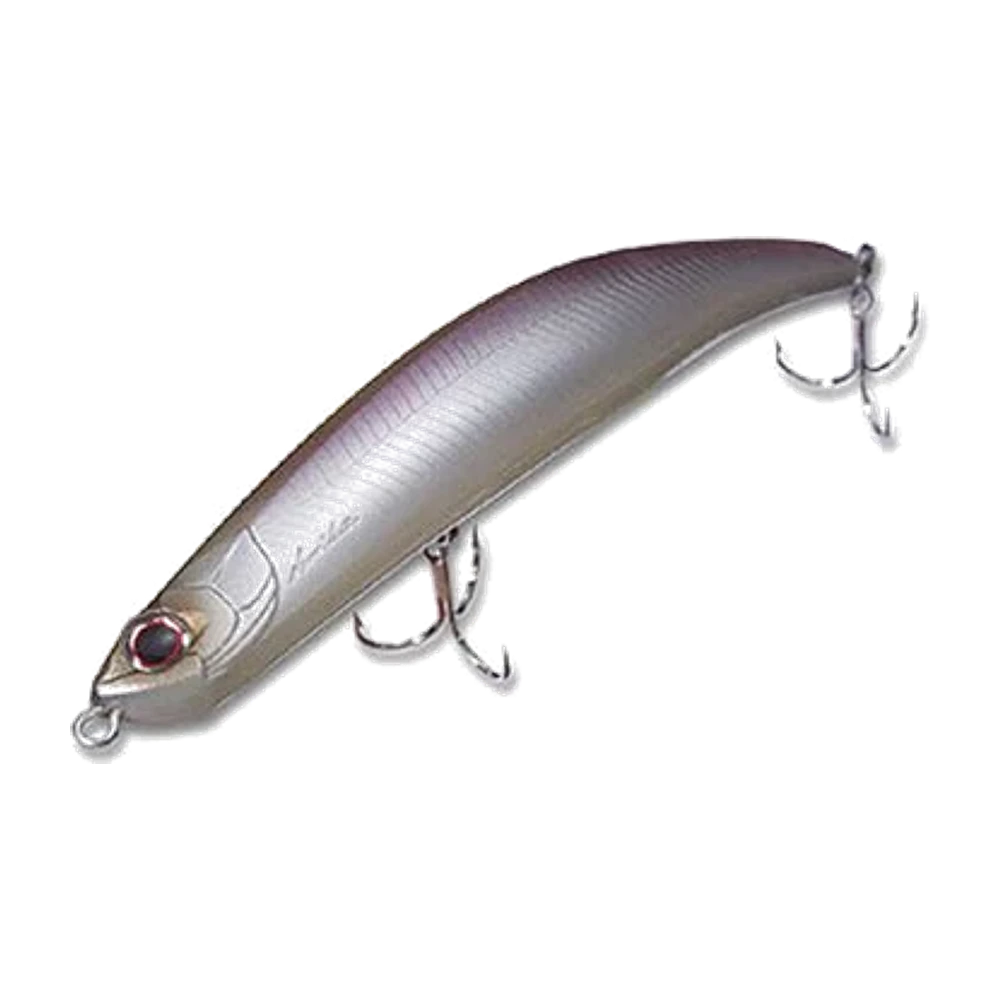
O.S.P Bent Minnow: the lure that fishes best when you do nothing
Before tying this one on, it helps to know if the spot actually calls for it. CarnaFish reads the scene from a photo.
Every lure starts from the same principle: it has to move to trigger a strike. The Bent Minnow turns that logic completely on its head. Its body is bent like a banana, it floats flat just under the surface, and most of its effectiveness comes from the moments when it does absolutely nothing.
It is a lure that imitates a dying fish, and that is one of the rare situations where a predator attacks without being provoked.
What the bend does
The body is not straight. That asymmetry produces two behaviours classic minnows do not have.
On a twitch, the lure sets off in a sideways glide under the surface, over 30 to 50 cm, rolling onto its flank. It does not zigzag like a walking bait: it glides flat, showing its flank and then its belly.
On the stop, it rises slowly and settles horizontally just under the surface, motionless, slightly tilted. That posture is exactly that of an injured fish that can no longer hold itself upright.
It is that motionless, abnormal silhouette that triggers, not the movement.
Dead sticking: the retrieve that isn't one
- Cast beside cover — a stump, a jetty, the edge of weed — not onto it.
- Do nothing for ten to twenty seconds. The lure settles and drifts.
- One sharp isolated twitch. The lure glides sideways, shows its flank, then goes still again.
- Wait another ten seconds.
- Repeat two or three times, then wind in and cast somewhere else.
On the water: the clock in your head is your worst enemy with this lure. Ten seconds of stillness feel endless and most anglers crack after three. It is precisely during those seven missing seconds that the fish makes up its mind.
The bite is often silent: the lure disappears without a splash. Strike on weight, not on sight.
Why it works on educated fish
A predator that has been caught several times develops a distrust of anything fleeing abnormally. A lure zigzagging non-stop signals danger.
A fish that is motionless and tilted, by contrast, sets off no alarm. It signals an effortless opportunity — exactly the kind of prey a predator eats first. That is why the Bent Minnow catches fish on saturated waters where everything else gets refused.
Where it excels
- Precise, sheltered spots: under a low branch, against a jetty, at the mouth of a bay.
- Calm, clear water, with no chop. The slightest wind destroys the motionless presentation.
- Visible fish that refuse everything — that is its home ground.
- Summer and early autumn, when bass hold near the surface in the shade of structure.
Conversely, it is unusable as soon as there is wind or current, and it searches nothing: it is a spot lure, not a locating lure.
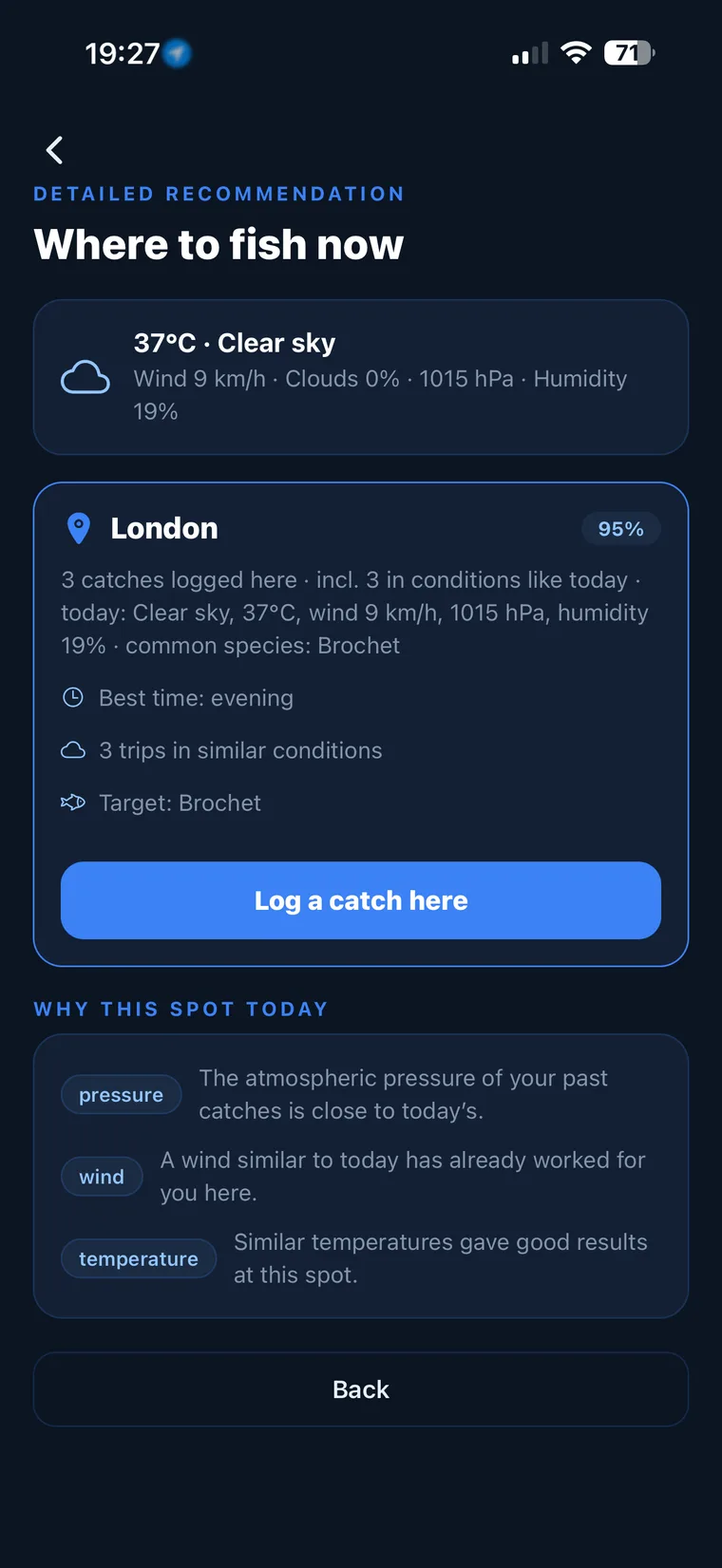
Not sure what to tie on?
Photograph your spot: CarnaFish reads the scene, cross-checks the conditions and gives you the zone, the lure and the retrieve. Free on iOS and Android.
The sizes
- 7.6 cm: perch and small bass, very clear water.
- 8.6 to 10.6 cm: general use for bass. The most versatile format.
- 13 cm: big bass, pike in the margins, and better casting range.
The low weight makes casting awkward in wind, even in the larger sizes. A fine rod and 0.20 to 0.25 mm fluorocarbon are needed if you are not to choke the glide.
Bent Minnow or a classic topwater
A walking bait or a popper call fish from a distance with noise and movement. They cover ground and they provoke.
The Bent Minnow provokes nothing and calls nobody. It simply stays credible for a very long time in front of a fish that is already there. It is the tool you bring out after you have located the fish, once provocation has failed.
Our beginner's guide to bass fishing covers the windows where topwater takes over. And if you have spotted a fish that refuses everything and you have run out of ideas, CarnaFish analyses a photo of the spot and suggests a line of attack.
Key takeaways
- The bent body makes the lure glide flat and leaves it motionless and tilted on the stop.
- The main retrieve is stillness: ten to twenty seconds between each twitch.
- Strike on weight, not on sight — the bites are often silent.
- A spot lure for a located fish, never a searching lure.
- Unusable in wind, chop or current.
FAQ
How do you work a Bent Minnow?
Mainly by not working it. Cast, wait ten to twenty seconds for the lure to settle motionless, give one sharp isolated twitch that makes it glide sideways, then wait again. The stillness is the retrieve.
Why is the body bent?
The bend produces a flat sideways glide instead of a zigzag, and makes the lure settle tilted on the stop. That crooked posture imitates an injured fish unable to hold itself upright, which triggers the attack without arousing suspicion.
How long should you wait between two twitches?
Ten to twenty seconds. It is long and counter-intuitive: most anglers crack after three seconds, and it is precisely during the wait they cut short that the fish makes up its mind.
Does it work in wind?
No. The presentation rests on perfect stillness at the surface: the slightest chop makes the lure drift and destroys the posture. It is a calm-water lure exclusively.
What size should you choose?
8.6 to 10.6 cm for general bass use, 7.6 cm in very clear water or for perch, 13 cm for big fish and better casting range.
When should you prefer it to a popper or a walking bait?
When the fish is already located and refuses anything that moves. The popper and the walking bait call from a distance and provoke; the Bent Minnow stays credible for a long time in front of a wary fish that has already refused the rest.
The full bass lure guideSeason-by-season strategy: which family of lure, when, and why.Go from theory to fish
CarnaFish reads your spot from a photo and gives you the game plan: zone, lure, retrieve. Free on iOS and Android.