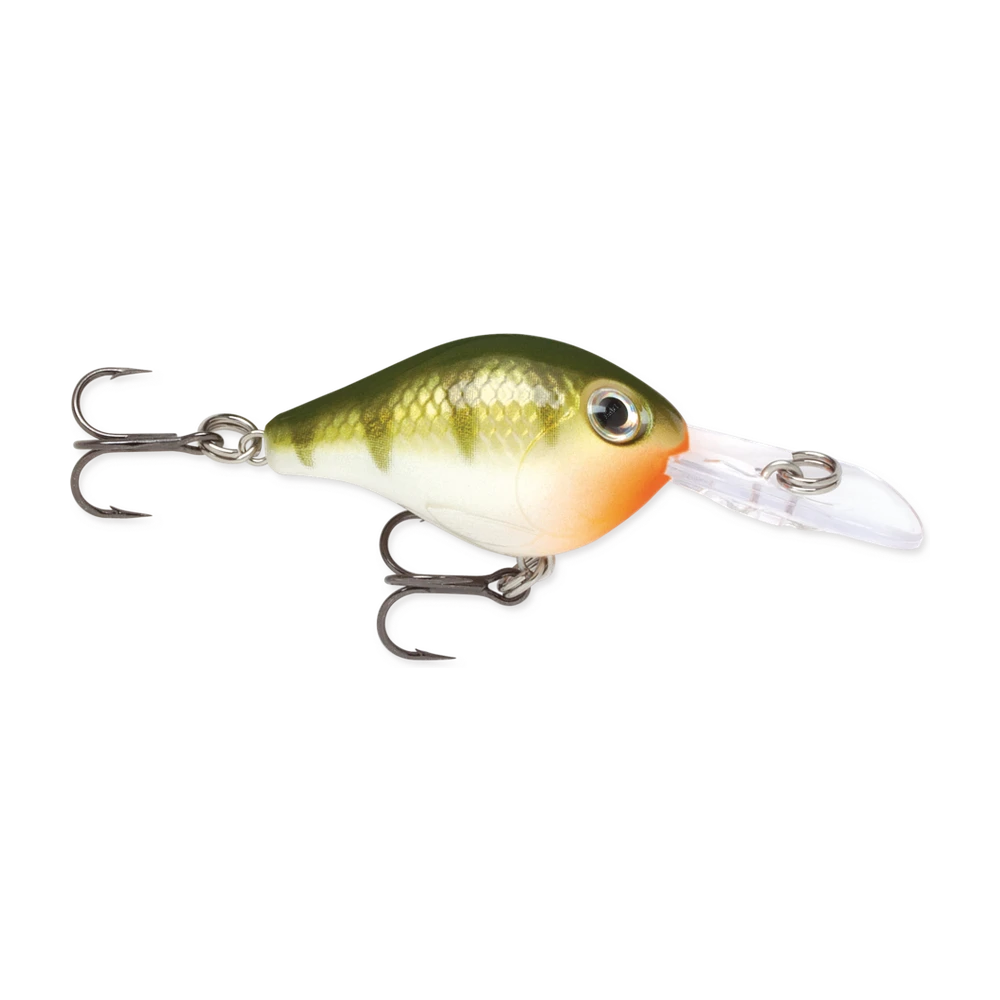
Rapala Ultra Light Crank: the mini crankbait for small-stream trout
Before tying this one on, it helps to know if the spot actually calls for it. CarnaFish reads the scene from a photo.
The classic small-stream trout angler's problem: most crankbaits are built for zander or bass, too big and too heavy for a spot that's two metres wide and thirty centimetres deep. Rapala solved it with the Ultra Light Crank, a crank stripped down to the essentials that still casts like something twice its size.
Built-in weight that changes the game
At 3.5g for just 3.8cm, the Ultra Light Crank carries an internally weighted body — a trick that lets it cast easily even on a light rod, whereas a lure this small without that weight would be unmanageable to throw. That's what sets it apart from a micro spinner like the Panther Martin Classic: the crank casts almost as far as a standard-size lure while keeping a miniature profile suited to small brown trout or freshly-stocked fish early season.
The swim: surprisingly strong roll for its size
Despite its size, the Ultra Light Crank has a surprisingly pronounced roll and wobble — Rapala didn't just shrink an existing model, the shape was reworked to keep amplitude despite the miniaturization. The result: a swim that's clearly identifiable to trout even in fast water, where a background of current noise would mask a more subtle signal.
Why it forgives beginner mistakes
This crank floats and rises fast on the pause, making it a great choice for a beginner angler: catch it early on a rock or branch and simply releasing tension lets it float free before you even pull on it. That's a real advantage in small, snaggy streams, where anglers normally lose plenty of lures to bottom hang-ups.
Working it in a stream
Unlike a zander crank worked on a long straight retrieve, the Ultra Light Crank fishes in short bursts suited to a stream's small pockets:
- Cast upstream or across the current, never straight downstream.
- Retrieve slow to medium, letting the current itself contribute to the swim.
- Pause briefly the moment the lure reaches a calm patch or back-eddy — that's often exactly where a trout waits.
In a stream, the spot matters more than the lure: a trout always holds behind something that breaks the current, never right in the flow.
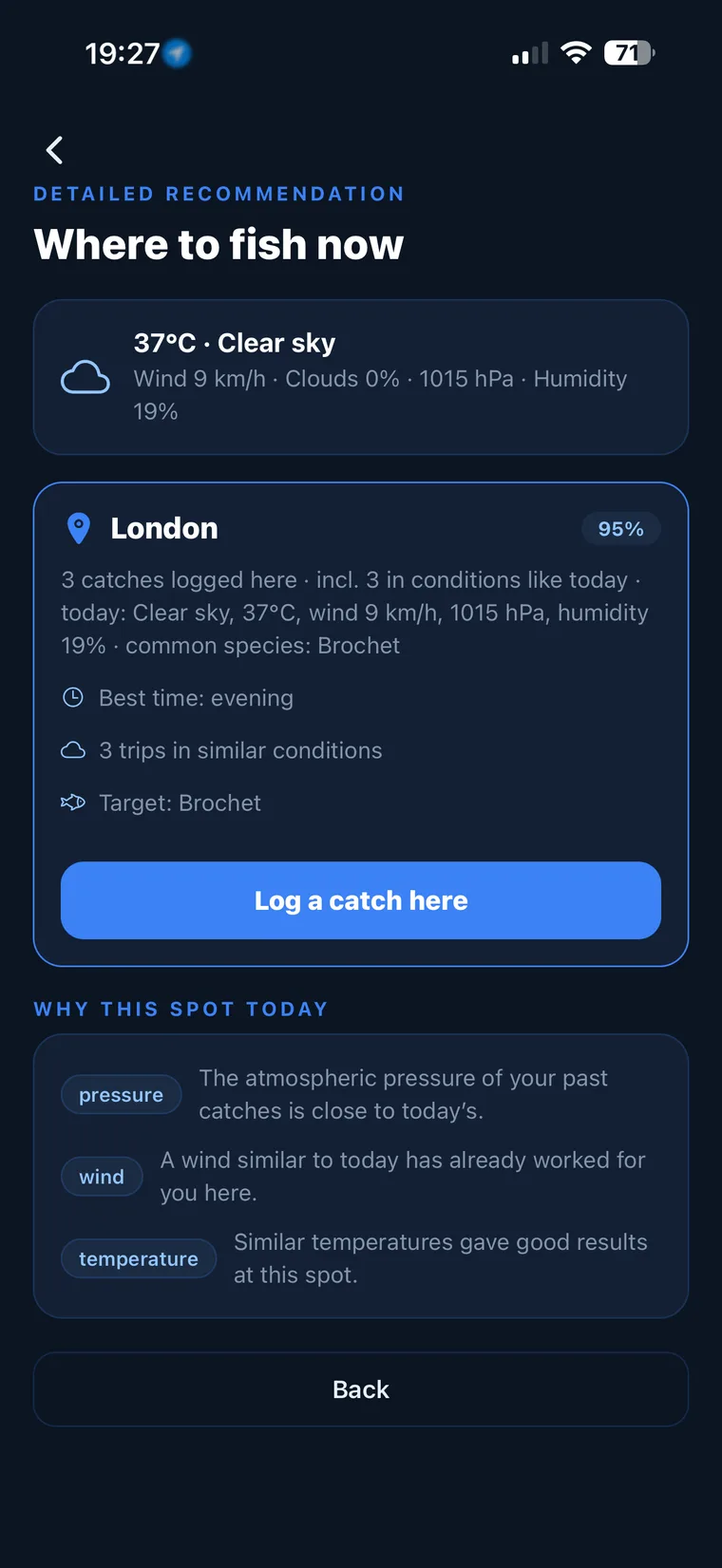
Not sure what to tie on?
Photograph your spot: CarnaFish reads the scene, cross-checks the conditions and gives you the zone, the lure and the retrieve. Free on iOS and Android.
Versus a spoon or a soft plastic
Against a wobbling spoon like the Williams Wabler, the Ultra Light Crank has the edge of a constant swim with no rod-work effort — good news for a kid or a beginner angler. It loses some subtlety, though, in very low, gin-clear midsummer water, where a thinner spoon or a Salmo Slider fished dead-slow is often still more effective.
Colors by season
- Clear water, early season: natural brown-trout or minnow tones, subtle and believable.
- Cooler water or after rain: orange or chartreuse, bright colors that stay visible through temporary turbidity.
- Recently stocked fish: bright colors often work better, since these fish are used to colored hatchery pellets.
Reading a small river takes practice, and that's exactly what CarnaFish simplifies for beginners: photograph the stream, and the app spots the current breaks where trout hold, even before you pick a lure. For the full strategy, our river trout fishing guide covers spot reading and water-reading season by season.
Before you head to the streambank
- The built-in weight lets it cast far despite its small size — a real edge on an ultralight rod.
- Its buoyancy floats it up fast on the pause, cutting down on lost lures in snaggy streams.
- Work it in short bursts that account for current, not a long straight retrieve like on a big lake.
- Switch to bright colors (orange, chartreuse) after rain or on recently-stocked fish.
FAQ
Is the Ultra Light Crank beginner-friendly?
Yes, that's one of its strongest points. Its buoyancy, which floats it up fast on the pause, limits permanent snags on rocks or branches, common in cluttered small streams.
What rod should I use with this crankbait?
An ultralight trout rod (usually 0.5-3g casting weight) works very well, since the lure's built-in weight (3.5g) compensates for the rod's lightness and allows accurate casting even over short distances.
How do you work a trout crankbait in a small river?
In short bursts, casting upstream or across the current rather than downstream, with a slow-to-medium retrieve that lets the current contribute to the swim. Pause the moment the lure enters a calm patch.
What color should I use after rain?
Favour orange or chartreuse, bright tones that stay detectable through temporary water turbidity, unlike natural colors, which lose contrast in those conditions.
Does this lure work on stocked fish?
Very well, especially in bright colors: recently-stocked trout often associate bold colors with hatchery pellets, which makes triggering a strike easier early in the season.
What's the running depth of the Ultra Light Crank?
Between 1.2 and 2.4 m depending on retrieve speed, plenty for most small-river spots where the water column rarely exceeds a metre in depth.
The full trout lure guideSeason-by-season strategy: which family of lure, when, and why.Go from theory to fish
CarnaFish reads your spot from a photo and gives you the game plan: zone, lure, retrieve. Free on iOS and Android.