Savage Gear Fat Tail Spin: the blade that keeps spinning on the drop
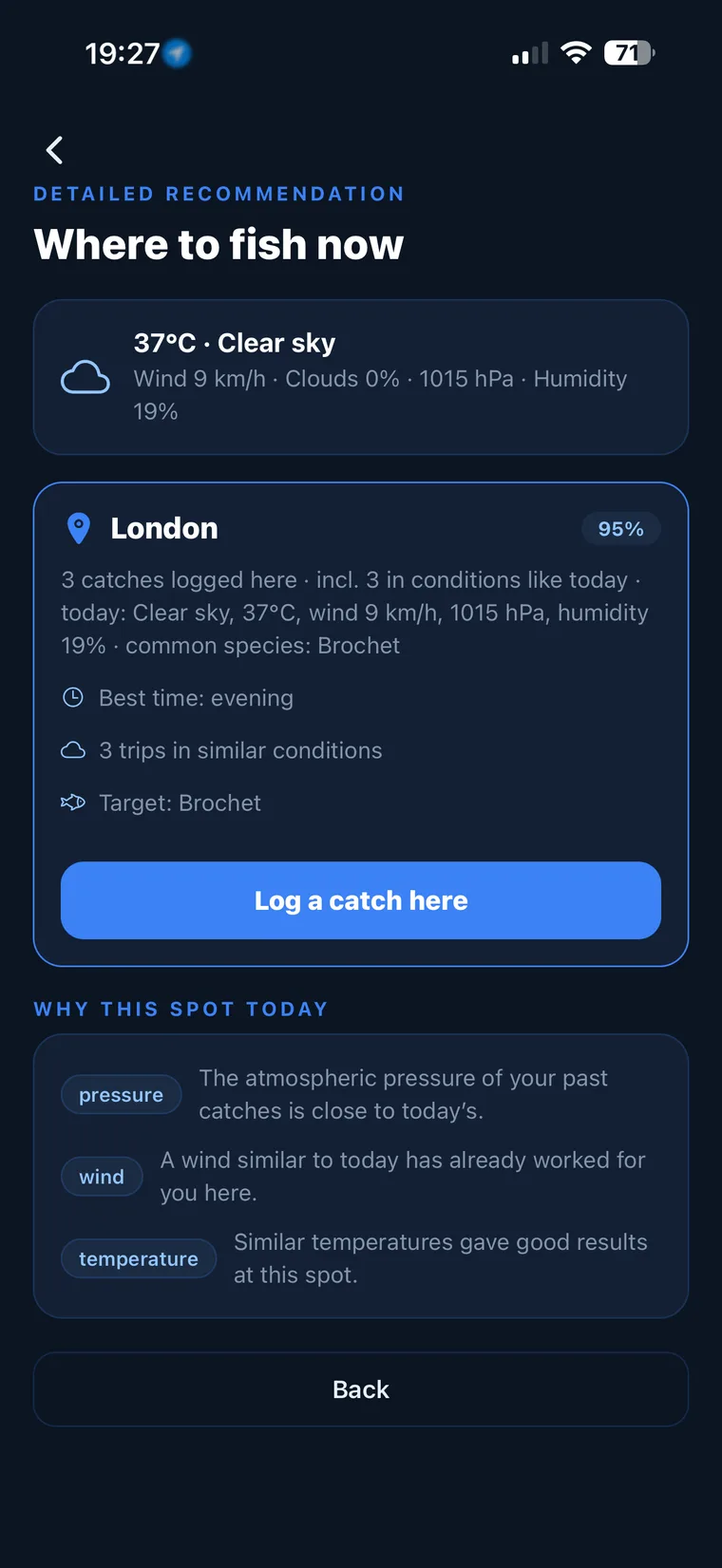
Before tying this one on, it helps to know if the spot actually calls for it. CarnaFish reads the scene from a photo.
December, ten metres of water, perch clearly visible on the screen but sitting right on the bottom in a ball. You put a jig head past them: nothing. A lipless: nothing. The problem is not the lure choice, it is that these fish do not chase. They eat what falls on them, and only that.
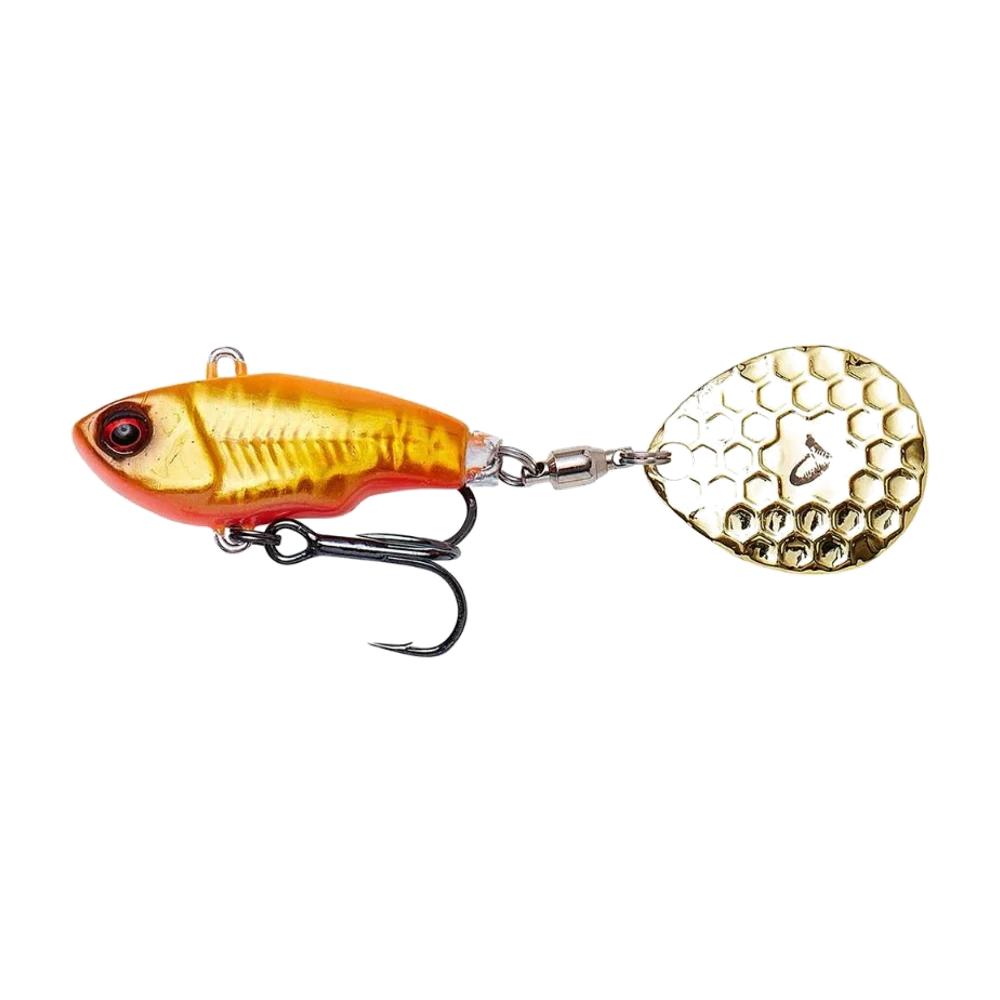
The Fat Tail Spin is built for that exact situation. A compact, heavy body and above all a blade mounted at the back that keeps spinning while the lure sinks. Unlike almost every other lure, it does not switch off on the drop: that is in fact when it puts out its strongest signal.
A lure that works downwards
The structural difference with other weighted lures lies in the working axis. A blade bait or a lipless puts out signal when you pull and goes silent when you release. The tail spinner reverses that logic.
- On the drop, the mass pulls the body down and the water rising along the lure spins the blade. You get flash and a low-frequency pulse through the whole fall.
- On the pull, the blade carries on spinning, faster, and adds a vibration the body alone would not produce.
- At a dead stop on the bottom, everything switches off. That is the only dead moment, and it should be short.
Second characteristic: the body sinks straight, without gliding. That may look like a flaw; it is an advantage vertically and in wind — you know exactly where your lure is, and you stay inside your sounder's cone.
The retrieve: the short yo-yo, not the big lift
- Let it sink on a controlled line down to bottom contact. Count the seconds, you will use them to come back to the right layer on the next cast.
- Wind in the slack without lifting the lure. You should feel the weight at the end of the line, no more.
- Lift thirty to forty centimetres, firmly but not violently. The blade starts immediately.
- Give the line back while following the drop, rod tip tracking the fall, never coming tight. Two seconds, sometimes three.
- Repeat five or six times in the same place, then move or recast. On balled-up perch, persist: repetition is what finally convinces one, and then the whole shoal.
On the water: with a tail spinner, a one-metre lift is less effective than a thirty-centimetre one. The blade only spins properly in the first few tens of centimetres of the fall, before the lure picks up speed and drops too straight to drive it. A big lift gives you a lot of dead time; three small lifts over the same height give you three sequences of flash.
Choosing the weight by depth and wind
| Situation | Indicative weight | What you are after |
|---|---|---|
| Perch, 2 to 4 m, no wind | 6 to 10 g | Slow fall, discreet signal |
| Perch, 4 to 8 m, boat on the drift | 12 to 16 g | Clean vertical, permanent contact |
| Zander, 6 to 12 m, current or wind | 18 to 24 g | Holding bottom without dragging |
| Casting and retrieving the margins | 10 to 14 g | Distance and a slow retrieve without snagging |
The rig calls for one precaution: this lure twists the line as soon as you string straight retrieves together. Fit a rolling swivel a metre up, or work more vertically and in yo-yo, where twist stays marginal. Fine braid with a 0.22 to 0.28 mm fluorocarbon leader gives the best detection: with this kind of lure, a bite on the drop often shows simply as the line stopping.
Casting and retrieving, its second life
It usually gets filed under "vertical" when it makes a very good slow searching lure on the cast. The principle: cast, count down to the layer you want, then retrieve slowly with the rod low, with a light lift every five seconds. The lure climbs and drops in a staircase and covers a whole drop-off in one pass.
That is particularly effective over reservoir plateaus in winter and along gravel breakwaters, where the perch are spread out but not very mobile.
One last point often neglected: the colour of the blade matters more than that of the body. A silver blade throws a short, bright flash, perfect in clear water and good light; a gold or copper blade produces a warmer, more diffuse signal, far more readable under a low sky, in slightly stained water or at depth, where the cold wavelengths have already gone. If you can only carry two versions of the lure, take the same size in those two blade finishes rather than two different body colours.
Not sure what to tie on?
Photograph your spot: CarnaFish reads the scene, cross-checks the conditions and gives you the zone, the lure and the retrieve. Free on iOS and Android.
Where you should not use it
Its window is clear, and so are its limits. It is unsuited to fishing weed or wood: the rear treble and the blade collect everything. It is also of no interest on high, active fish hunting in open water: there, a straight-retrieve lure covers more ground for the same time. Finally, in very shallow water, under 1.5 m, you do not have the height to exploit the falling phase, which is the whole point of the lure.
Fat Tail Spin or a blade bait
The Heddon Sonar occupies the same window — fish glued to the bottom, winter, vertical — but on an opposite principle. It is a flat metal blade: it vibrates hard when you pull, and goes completely dead the moment you release. On an active fish that reacts to a sharp signal, the blade wins. On an apathetic fish that only attacks on the drop, the Fat Tail Spin keeps the edge because it carries on emitting during exactly the phase where the other goes quiet.
Against the Savage Gear Fat Vibes, a lipless from the same brand, the difference is one of coverage: the Fat Vibes searches fast and wide on a straight retrieve, the Fat Tail Spin works a narrow vertical over located fish. One finds the fish, the other convinces it.
Our guide to perch lure fishing covers how to read a winter shoal before dropping a lure on it. And if you are unsure which weight to use for the depth and drift, CarnaFish analyses a photo of the spot and answers.
Key takeaways
- The blade spins during the fall: it is the one lure that emits when the others go quiet.
- Short lifts of 30 to 40 cm, never a big one-metre lift.
- The body drops straight without gliding: ideal vertically and in wind.
- A rolling swivel is essential if you fish it on a straight retrieve, or you will twist the line.
- Of no use in weed, in wood and under 1.5 m of water.
FAQ
How do I work a tail spinner like the Fat Tail Spin?
On a short yo-yo: lift thirty to forty centimetres, then follow the drop with the rod tip without coming tight. Repeat five or six times in the same place. The blade spins during the fall, and that is when most bites happen.
What weight should I choose for perch in winter?
Between 10 and 16 g in most cases, from a boat over 4 to 8 m. Go up to 18-24 g if you are drifting fast or there is current: too light a lure swings off at an angle and you lose contact with the bottom.
Does the Fat Tail Spin twist the line?
Yes, as soon as you string straight retrieves together. Fit a rolling swivel about a metre from the lure. Fished vertically and in yo-yo, twist stays very limited and the swivel becomes optional.
Can it be fished on the cast?
Yes, and it is an underrated use. Cast, count down to the layer you want, then retrieve slowly with the rod low and a light lift every five seconds. The lure covers a drop-off in a staircase in a single pass.
How does it differ from a blade bait?
The blade bait vibrates when you pull and goes dead when you release. The tail spinner keeps emitting during the fall thanks to its rear blade. On an apathetic fish that only attacks on the drop, that difference is decisive.
Does it work for zander?
Yes, especially deep, between 6 and 12 m, with the heavy models. Zander respond well to the blade's low-frequency pulse, provided you slow the rhythm down and slightly lengthen the pauses on the bottom compared with perch.
The full perch lure guideSeason-by-season strategy: which family of lure, when, and why.Go from theory to fish
CarnaFish reads your spot from a photo and gives you the game plan: zone, lure, retrieve. Free on iOS and Android.