Duel Hardcore Heavy Minnow: counting the sink over a rock wall
The right lure in the wrong spot still catches nothing. CarnaFish spots the zone that works, from a single photo.
A 25-knot headwind, a short steep sea, the rock wall of a breakwater. You tie on your usual floating minnow, you cast, it goes 35 m and flops down. The fish are at 60 m, in the zone where the swell churns the base of the structure. This is a situation where the best lure in the world is worthless if it cannot get there.
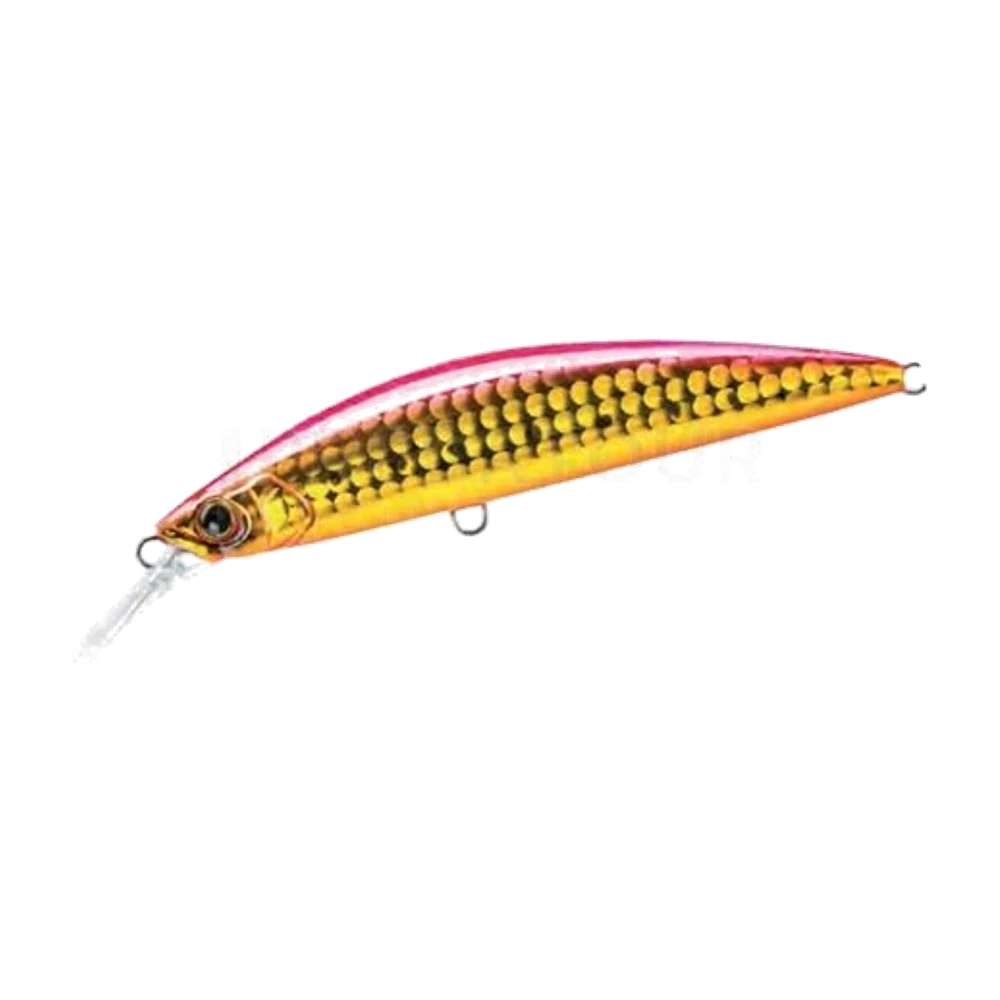
The Hardcore Heavy Minnow is a blunt but effective answer to that problem: you raise the density until the lure beats the wind. The result is a sinking minnow, heavy for its size, that casts like a bullet and, as a bonus, lets you work layers of water a floater will never reach.
Dense, therefore sinking, therefore measurable
That is the most interesting consequence of its design, and the one most anglers never exploit. A sinking lure drops at a more or less constant rate. So you can count.
- After the splashdown, you count the seconds before you start reeling.
- One extra second is roughly 25 to 40 cm deeper, depending on the model and the current.
- You note the count that produced a bite, and you repeat it.
That simple counting turns a distance lure into a tool for exploring vertically. On a rock wall where the bottom drops from 1 to 4 m in a few metres, you can sweep every level without changing lure.
| Count before retrieving | Approximate layer | Typical situation |
|---|---|---|
| 0 to 2 seconds | Sub-surface, 30 to 80 cm | Active bass, visible feeding |
| 3 to 5 seconds | 1 to 1.5 m | Default setting in a working sea |
| 6 to 10 seconds | 2 to 2.5 m | Inactive fish, cold water, broad daylight |
| Until it touches | Bottom | Reading the structure on the first cast |
Its descent is horizontal, not nose-down: the lure keeps its attitude and stays visible while it sinks. Some bites come during that phase, on a semi-tight line — which is why you should never let the line go completely slack.
The retrieve: slow and steady, the density does the rest
- Cast into the wind without forcing it: the weight does the work, not your arm. An over-muscled cast puts twist in the line against the rocks.
- Count the sink according to the layer you want, line semi-tight, rod pointed at the lure.
- Start slowly, about one turn of the handle per second. A dense lure retrieved too fast rises and cancels out all your counting.
- Hold the depth by keeping the rod tip low and the speed strictly constant.
- Put in two or three one-second pauses along the way. The lure drops back slightly, which creates a staircase trajectory that is very effective on apathetic bass.
- Slow down again at the foot of the rocks: bass hold within three metres of the edge there, in the wash.
On the water: on a breakwater, the first cast at every spot should be for sounding, not for fishing. Let the lure sink until it touches bottom while counting, then subtract two seconds from that count for every cast afterwards. You are then permanently fishing 50 cm above the rocks, without snagging, and you know exactly where you are. Do it again as soon as you move twenty metres: on a rock wall the profile changes with every step.
Night is its best window
This lure is at its best between dusk and the first hours of darkness, for three reasons.
- Bass work their way along the structure under cover of darkness and come much closer to the edge.
- The lure's density lets you fish slowly without it rising, which is exactly what night fishing needs.
- Vibration matters more than sight. Its dense roll is picked up from a distance through the lateral line, where a subtle lure says nothing at all.
At night, switch to opaque, dark colours, black and purple included, and slow down a notch from your daytime rhythm.
The gear takes a beating
Casting 35 g two hundred times in an evening, off rocks, wears out tackle faster than any other shore fishing.
Check the split rings before every session: on a heavy lure they are what fails first, not the braid. Check the first metre of braid after every fish too, and especially after every snag on the rocks — abraded line always breaks at the worst moment, which is mid-cast, with a 35 g lure heading out to sea.

Not sure what to tie on?
Photograph your spot: CarnaFish reads the scene, cross-checks the conditions and gives you the zone, the lure and the retrieve. Free on iOS and Android.
Where it does not fit
- Shallow water. Under a metre it hits bottom and snags before it has swum.
- Weed and eelgrass beds: its density and its trebles are unmanageable there.
- Flat calm, clear water, broad daylight. Its heavy roll looks laboured and gets refused by wary bass.
- Small bass on finesse gear, for which its bulk and weight are out of all proportion.
- Sight fishing: it cannot be controlled finely enough to be stopped in front of a fish.
Heavy Minnow and Hardcore Minnow: same family, two jobs
One important point to clear up: Duel and Yo-Zuri are two trade names of the same Japanese company, and the Hardcore range circulates under both labels depending on the market. Hence two models with near-identical names that have almost nothing in common on the water.
The Yo-Zuri Hardcore Minnow is a floater, lighter, sitting between 0.6 and 1.5 m, designed for sheltered water — canals, harbour basins, calm estuaries. It gets swamped as soon as a sea gets up and it barely passes 45 m on the cast.
The Heavy Minnow is its exact opposite: sinking, heavy, built for wind, a working sea and depth. It is unusable in a shallow canal. If you are hesitating between the two, the question is not "which is better" but "is there wind and depth".
Against the Shimano Exsence Silent Assassin, another distance benchmark, the difference is density: the Exsence stays a high-layer lure with a wide, silent action, suited to clear water. The Heavy Minnow goes deeper and vibrates more. And if you want still more depth on the same spot, a line-through lure such as the Savage Gear Line Thru Seeker takes over.
Our guide to sea bass fishing with lures sets out how to work through the layers of water on a structure. And if you are unsure what sink count to use when you get to your breakwater, CarnaFish analyses a photo of the spot and answers.
Key takeaways
- A dense, sinking lure: it exists to beat the wind and reach the productive zone.
- Its real strength is the sink count, which lets you explore every layer of water.
- First cast at every spot: sound down to the bottom, then subtract two seconds from the count.
- Best window at dusk and in early darkness, slowing the rhythm down.
- Unsuited to under a metre of water, to weed, to a flat calm and to sight fishing.
FAQ
Does the Duel Hardcore Heavy Minnow really sink?
Yes, it is a distinctly denser model than a classic minnow. It drops at a steady rate and stays horizontal, which lets you count the seconds to target a precise layer of water.
How long should you let it sink?
Three to five seconds covers most situations in a working sea, for a layer of 1 to 1.5 m. Sound down to the bottom on your first cast, then subtract two seconds from that count to fish just above the rocks.
How does it differ from the Yo-Zuri Hardcore Minnow?
Duel and Yo-Zuri are two labels of the same company. The Hardcore Minnow is a floater, light, intended for sheltered water between 0.6 and 1.5 m. The Heavy Minnow is a sinker, heavy, built for wind, a working sea and depth.
Can you fish it at night?
That is actually its best window. Bass run closer along the structure in darkness, and its density lets you fish slowly without the lure rising. Switch to opaque, dark colours.
How far can you cast it?
With a 2.70 to 3.00 m rod and fine braid, 60 to 80 m is reachable depending on the model, even into a headwind. There is no point forcing the cast: the weight of the lure makes the distance.
Is it suitable over a weed bottom?
No. Its density takes it straight down into the vegetation and its trebles load up immediately. Over weed, go for a high-swimming lure or a soft plastic on a single hook.
The full sea bass lure guideSeason-by-season strategy: which family of lure, when, and why.Go from theory to fish
CarnaFish reads your spot from a photo and gives you the game plan: zone, lure, retrieve. Free on iOS and Android.