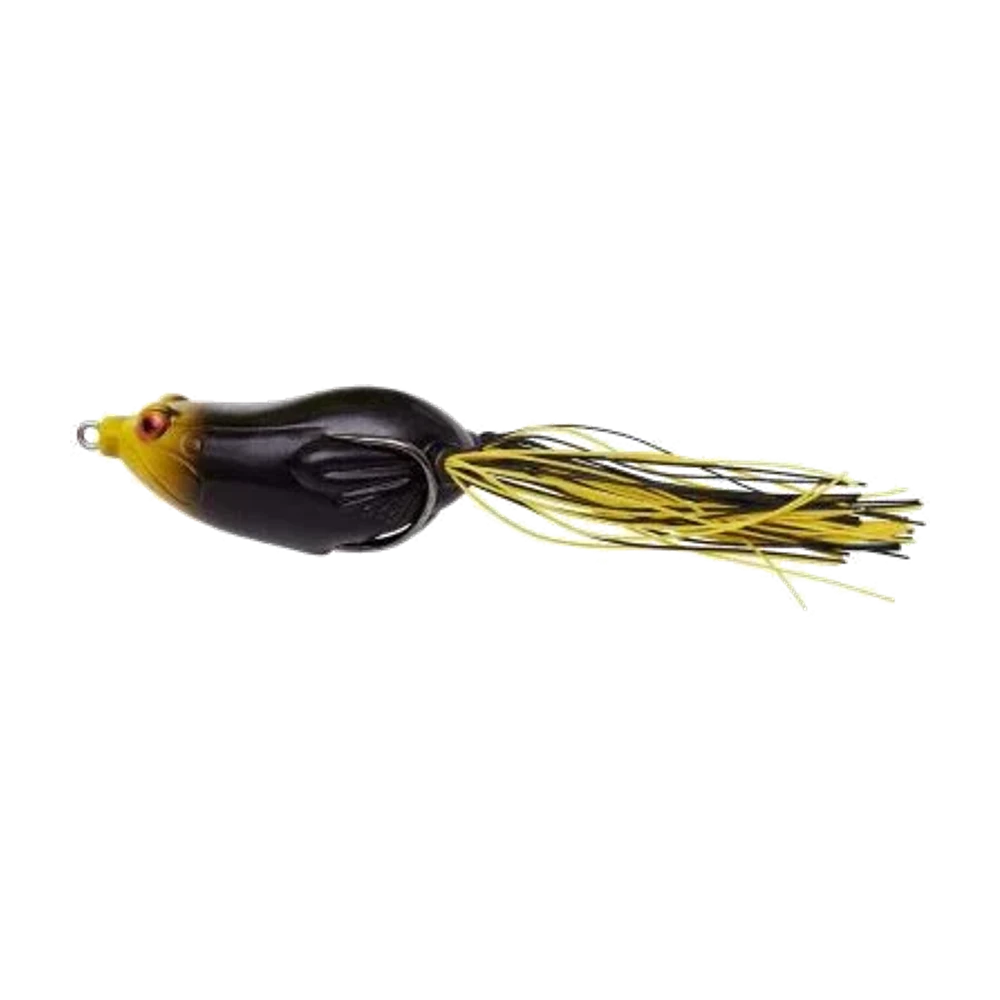
Savage Gear Hop Walker: walking the dog at sixty metres
The right lure in the wrong spot still catches nothing. CarnaFish spots the zone that works, from a single photo.
The feeding shoal is fifty metres out. You can see it boiling, you tie on your best topwater stickbait, you cast — and the lure lands ten metres short every single time. Meanwhile the shoal moves on and the window closes.
That is the structural limit of classic topwater lures. To float and walk properly, a stickbait has to stay light for its volume. That compromise costs it exactly what is missing here: mass, and therefore distance and wind penetration.
The Hop Walker takes the problem the other way round. It is a walking bait that is dense and sinks on the stop, and which can therefore be far heavier than its volume suggests. You gain twenty metres of range and the ability to fish into the wind. In exchange, you have to learn to manage a topwater lure at a distance where almost nothing is instinctive any more.
A walking bait that does not float: the point and the price
A floating stickbait forgives everything: you can leave it sitting for three seconds and start again, it is still there. A sinking model forgives nothing — the moment you stop, it goes down.
What you get in return:
- Distance. At comparable volume, the extra mass translates directly into metres. On fish feeding offshore or a shoal on the move, those metres decide the session.
- Wind penetration. The lure cuts in instead of gliding, which changes everything into a head or three-quarter wind.
- Access to the subsurface. Let it sink for two to five seconds and you work it thirty centimetres or a metre down, in the same place and without changing lure. On a fish that will not commit to coming right up, that option is worth a lot.
- A tighter walk. The density gives a compact, fast walking the dog rather than a wide sweep.
The price is clear: on a shallow or cluttered spot, any slightly long stop puts the lure in the weed or the rocks.
The retrieve: the stroke, then the real problem
The basic stroke is classic walking the dog.
- Cast long and close the bail immediately, taking up the slack at once. A sinking lure left on a slack line for two seconds is already underwater.
- Rod tip pointed down, almost at the water, not at the sky.
- Give short wrist twitches, five to ten centimetres, taking a quarter to a half turn of the handle between each. The rhythm is regular, around two to three twitches per second.
- The lure should dart alternately right and left. If it tracks straight, you are not giving back enough slack between twitches.
- On a refusal, insert a fall: stop everything for two to four seconds, let the lure sink, then start walking again. A lot of bites come on the first twitch after the fall.
The real difficulty is not the stroke, it is distance. At fifteen metres the line bow is short and the energy from your wrist reaches the lure intact. At fifty metres, much of that energy is absorbed by the bow, especially in a crosswind that bends it into an arc.
On the water: beyond forty metres, stop increasing the force of your twitches and drop your rod tip until it is almost in the water. The curve of the line bow, not the power of the stroke, is what kills the walk at long range. With the tip low, the line runs under the wind instead of arching above it, and the lure starts zigzagging cleanly again — often by the second twitch.
Choosing the size and setting the fall
| Approximate size | Indicative weight | Relative range | Situation |
|---|---|---|---|
| 5.5 cm | 9 to 12 g | fair | Small bass, fish feeding on fry, calm clear water |
| 6.5 cm | 15 to 18 g | good | The all-round shore saltwater size |
| 7.5 cm | 20 to 23 g | maximum | Headwind, fish feeding offshore, lake pike |
For the subsurface phase, count the descent as on any sinking lure: on the middle sizes, two seconds usually puts you around 40 to 60 cm down, five seconds around a metre. Reset that scale on your first session by counting down to the bottom over a known depth.
Where it takes the lead — and where it has no business
Its window is distant, exposed surface water:
- The coast in wind, on a beach, a breakwater or a rocky point, when a light stickbait no longer reaches the productive zone.
- Visible feeding fish offshore, where distance decides everything and the window is short.
- Big freshwater expanses in late summer, on pike hunting bleak shoals on the surface.
- Fish that rise without taking: being able to let it sink and carry on in the same place often solves the problem without changing lure.
It is a poor fit, on the other hand, on shallow, cluttered spots: weed breaking the surface, rock fields at fifty centimetres, where any pause puts it in the scenery. The same goes for a perfectly flat surface in very clear water on educated fish, where its fast walk and dense volume make more noise than needed — a slow, discreet stickbait does better. Finally, it is not a close-range finesse lure: at ten metres you exploit none of its strengths.
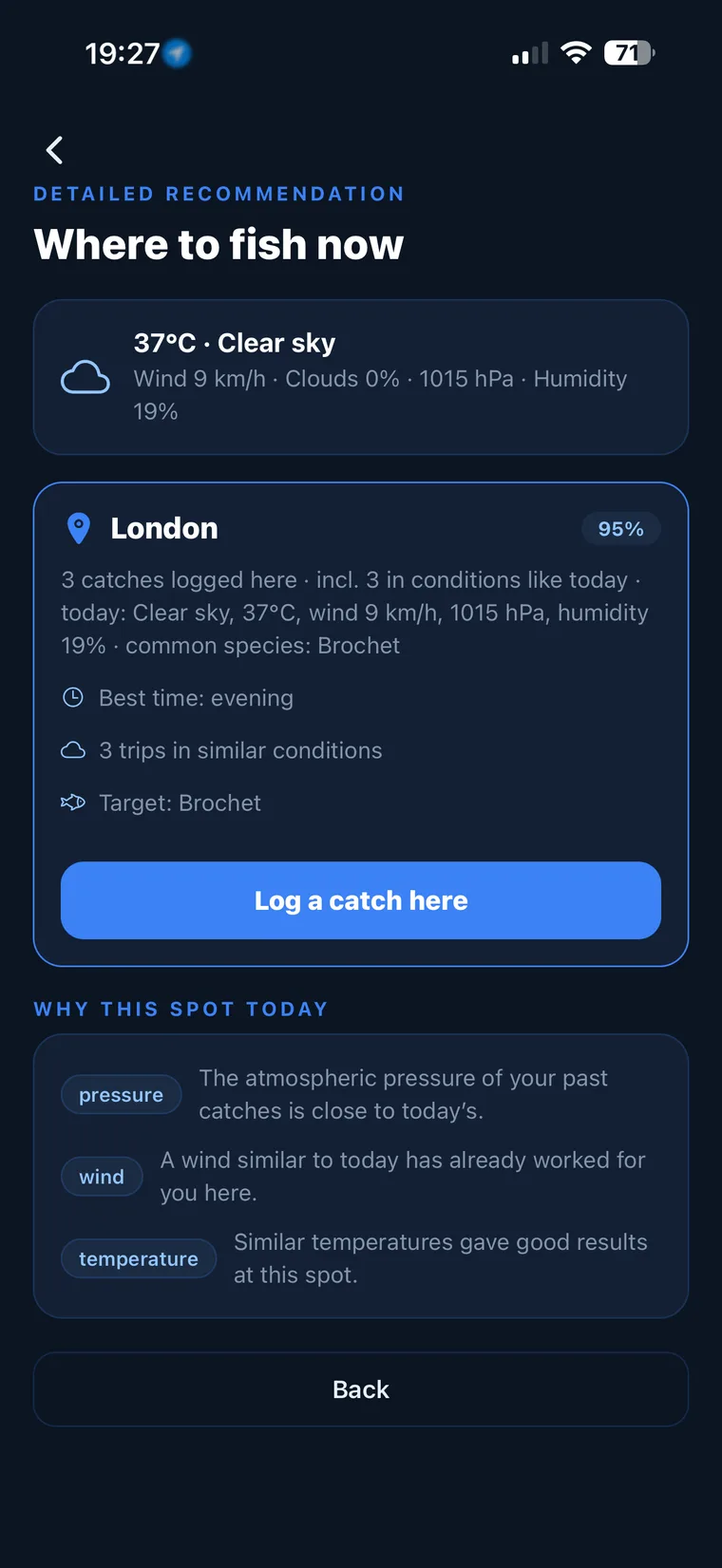
Not sure what to tie on?
Photograph your spot: CarnaFish reads the scene, cross-checks the conditions and gives you the zone, the lure and the retrieve. Free on iOS and Android.
Rigging and breakages
In saltwater, check the split rings and trebles after a fish dragged through rocks: that is where things let go, never on the body. Fluorocarbon of 0.25 to 0.35 mm as a leader off the braid is enough for bass.
For pike, add a short titanium trace, fifteen to twenty centimetres. Longer and it weighs down the front and flattens the walk; shorter and you are not protected. Avoid thick coated wire on the small sizes.
Hop Walker or floating stickbait
The Heddon Super Spook illustrates the other philosophy: floating and forgiving, it gives you time to think between twitches and fishes very well over fifty centimetres of water. It loses out clearly on distance, though, and takes far more punishment from the wind. The Lucky Craft Sammy 100 is a floater with a wider, slower walk, spot on over flat water and wary fish — exactly the ground where the Hop Walker is too fast.
The Xorus Patchinko 140 is its closest saltwater rival on distance, with a longer profile and a wider walk. The Hop Walker keeps the edge when the fish are on short prey and a compact profile matches better, or when you want to be able to switch to the subsurface without changing lure.
Our guide to lure fishing for sea bass covers how to read the wind and the tide before choosing a topwater lure. And if you are torn between floating and sinking in front of a windy beach, CarnaFish analyses a photo of the spot and answers.
Key takeaways
- A dense sinking walking bait: twenty metres of range gained and real wind penetration.
- It sinks on the stop, so any pause takes you down — useful on purpose, risky over cluttered ground.
- Short wrist twitches, two to three per second, rod tip down.
- Beyond forty metres, lower the tip instead of pulling harder: it is the line bow that kills the walk.
- Out of place over shallow clutter and on flat, very clear water at close range.
FAQ
Does the Hop Walker float?
No, it is a sinking walking bait: it goes down as soon as you stop working it. That is what gives it its mass, its casting distance and its wind penetration, but it means taking up the slack immediately after the splashdown and avoiding long pauses over cluttered ground.
How do I fish it under the surface?
Let it sink on a count before starting the walk. On the middle sizes, two seconds puts you around 40 to 60 cm down, five seconds around a metre. Then work it normally: you get a subsurface zigzag in the same place, without changing lure.
Why won't my lure zigzag at long range?
Because the line bow absorbs the energy of your twitches, especially in a crosswind that bends it. The fix is not to pull harder but to drop the rod tip almost to the water, so the line stops arching above the surface.
Do I need a wire trace for pike?
Yes, but a short one: fifteen to twenty centimetres of titanium. A long or thick trace weighs down the front of the lure and flattens the walk, which is particularly noticeable on the small sizes.
Which size should I choose for shore bass?
The middle size around 6.5 cm covers most situations. Move up to 7.5 cm when you need to cast into a headwind or reach fish feeding offshore, and drop to 5.5 cm when the bass are on small fry and refuse bigger profiles.
What is the difference with a classic floating stickbait?
A floater forgives dead time and fishes over very shallow ground, but it casts noticeably shorter and suffers in the wind. The Hop Walker reverses that trade-off: more range and more wind penetration, at the cost of a lure that tolerates no accidental pause.
The full sea bass lure guideSeason-by-season strategy: which family of lure, when, and why.Go from theory to fish
CarnaFish reads your spot from a photo and gives you the game plan: zone, lure, retrieve. Free on iOS and Android.