SPRO Iris Twitchy: the jerkbait you fish without pauses
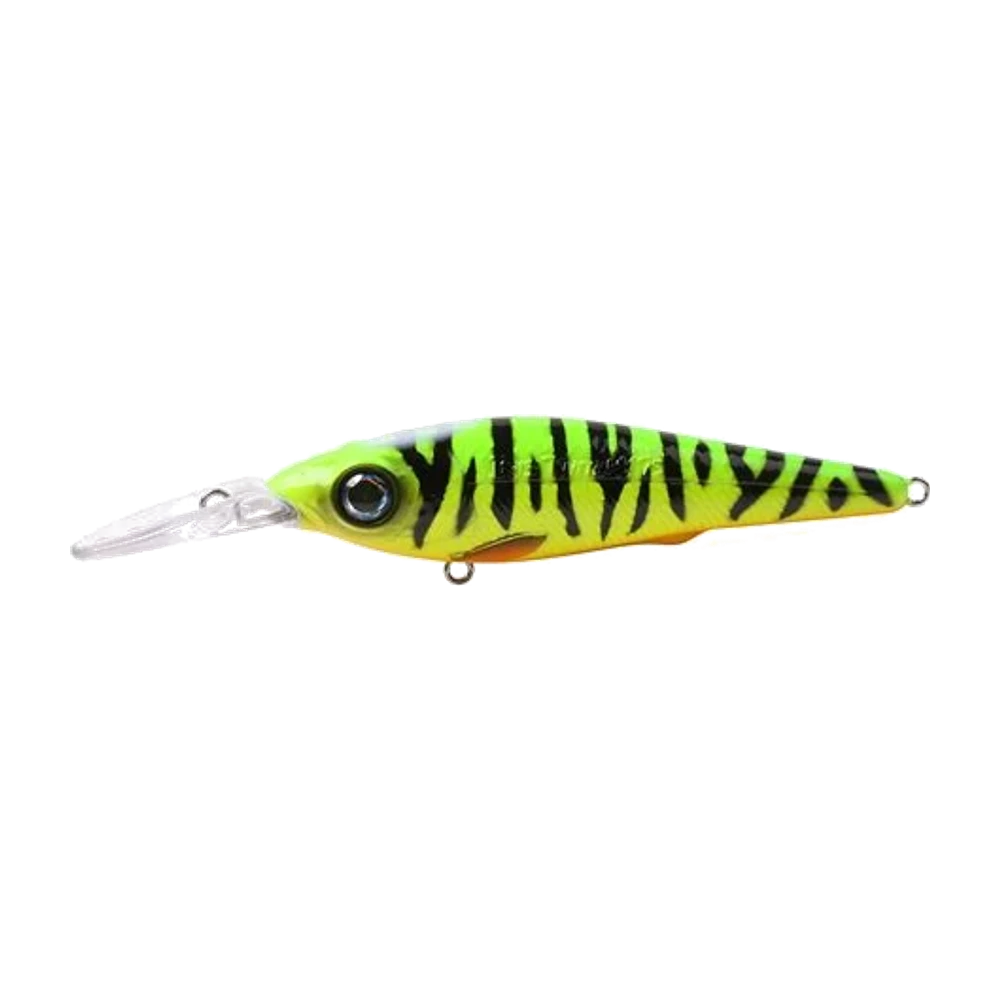
This lure shines under specific conditions. CarnaFish tells you in 10 seconds if today is one of them.
You have a shoal of perch smashing bait thirty metres out, on the surface, over a flat two metres deep. You drop a suspending jerkbait on them, you give two jerks, you hold a four-second pause — and the shoal has already moved ten metres.
That is the scenario where the classic jerkbait method turns against you. The long pauses that make an apathetic February zander bite are exactly what you must not do on a mobile, actively feeding fish. What you need is a lure that stays alive continuously, changes direction without forcing you to stop, and keeps up with the shoal.
The Iris Twitchy is built for that. Its name is not decoration: it describes a cadence, not a pause.
A short jerkbait, so a short dart
The length of a jerkbait directly determines how wide its darts are. An 11 cm bait swings a long way to the side and takes time to come back on line: excellent for covering a wide drop-off, too much for keeping up with a perch circling the lure.
On a compact format like the Twitchy, the mechanics change:
- The dart is short but very crisp. The lure pivots on the spot rather than fleeing sideways. Seen from behind, it does not move away — it wriggles.
- The return on line is immediate, which lets you link twitches without the lure leaving the feeding zone.
- The short lip keeps it high, between 30 cm and 1.5 m depending on version and speed. That is the layer where perch pin their prey against the surface.
The result: you can hold the lure inside a radius of two or three metres for ten seconds, with movement throughout. On an active shoal, that is exactly what you want.
The retrieve: a cadence, not a sequence
Forget the "two jerks, pause" rhythm. Here it is a continuous run.
- Cast beyond the shoal or the spot, never into it. A jerkbait landing in the middle of a shoal of perch scatters it.
- Two turns of the handle to start the action and bring the lure down to depth.
- Link short, closely spaced twitches, wrist only, rod tip pointed down and slightly to the side. Target rhythm: three to five twitches per second, without forcing the amplitude.
- Take up the slack continuously, a quarter turn of the handle between each pair of twitches. That is the technical point of this retrieve: let slack build up and your twitches no longer reach the lure.
- Hold a stop of one second maximum every five or six twitches. No more. It is a break in rhythm, not a fishing pause.
- Speed the cadence up over the last three metres, under the rod tip. Perch often follow right to the bank and make up their minds in the last second.
On the water: when a perch follows without attacking, do not slow down and do not stop — speed up. On a shoal fish, the stop resolves the doubt and the fish peels off; the acceleration triggers the competitive reflex. It is the exact opposite of what you should do with a zander in cold water.
Sinking or suspending version: which layer to target
The choice of version makes more difference than the colour does.
| Situation | Version | Setup |
|---|---|---|
| Perch feeding at the surface, 1 to 3 m of water | Suspending, small size | High retrieve, fast cadence, no sinking at all |
| Flat of 2 to 4 m, fish on the bottom | Sinking | Count 3 to 6 seconds of fall before working it |
| One-metre margin with weed | Suspending | Fast cadence, rod tip high to stay above it |
| Headwind or a long cast needed | Sinking, large size | The density carries, the suspending version drops off fast |
On the sinking version, the fall is not wasted time: count the seconds under your breath and note the depth at which the bite comes. It is the fastest way to find the active layer of the day, and it is worth every theory about colour.
Line choice, often overlooked
On a lure this size, line is not a detail:
- Fine braid and a 0.20 to 0.26 mm fluorocarbon leader. Finer and you lack holding power near structure; heavier and the mono flashes and chokes the darts of a light lure.
- A short leader, 60 to 80 cm, is enough. You want transmission, not damping: a cadence retrieve travels badly through a long soft leader.
- A small round clip is acceptable and makes changes easier. Avoid flat, long clips, which weigh the nose down and flatten the darts.
One remark that matters in fresh water: as soon as there are pike on the area — and there almost always are where perch are feeding — a thick fluorocarbon leader only protects you partly. If you lose two lures in a day, switch to a fine titanium leader and accept the slight loss of action.
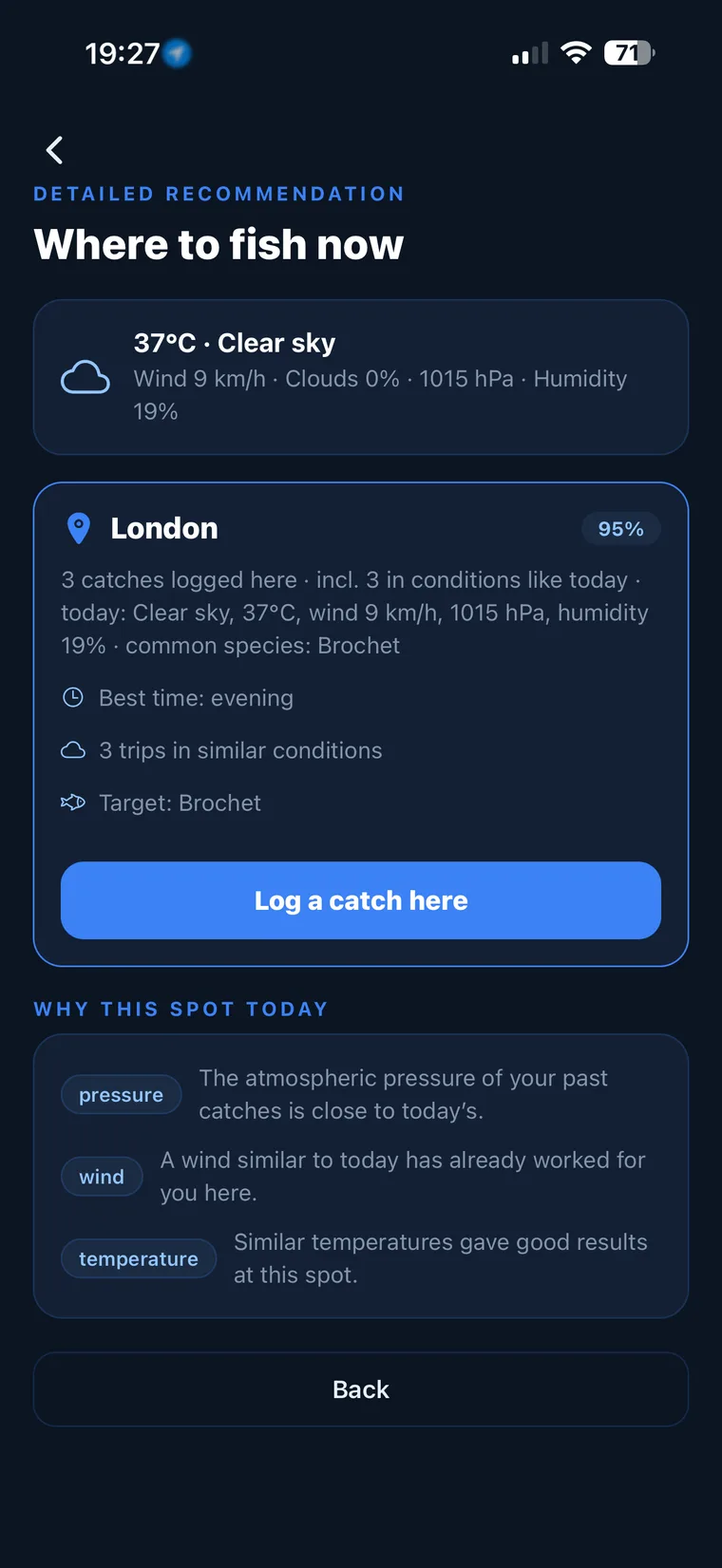
Not sure what to tie on?
Photograph your spot: CarnaFish reads the scene, cross-checks the conditions and gives you the zone, the lure and the retrieve. Free on iOS and Android.
Where it excels, where it is beside the point
Its windows:
- Feeding perch, when the shoal moves and you have to follow. Our guide to lure fishing for perch explains how to read those feeding spells.
- Shallow flats of 1 to 3 m: low weed, gravel pit margins, shingle beaches.
- Margin zander at dusk, when they move up onto the shallows. A fast cadence works better than you would think on an actively feeding zander.
- Clear water, where the fish sees the change of direction and follows it from a distance.
Where it has nothing to do:
- Cold water and apathetic fish. It is not built to hold a ten-second pause, and that is what would be needed.
- Depths beyond 4 m. Even in the sinking version, you spend more time going down than fishing.
- Very stained water. The side dart is a visual signal before it is a vibration: in murky water, a lure with a strong vibration covers better.
Twitchy or a long-pause jerkbait
The Lucky Craft Pointer 100 and the Iris Twitchy carry the same label but fish completely different things. The Pointer is a suspension lure: its value lies in stillness, on slow fish, in cold clear water. The Twitchy is a cadence lure: its value lies in continuous movement, on active, mobile fish.
In practice they share the season. The Pointer works from November to March, the Twitchy from May to October. Swapping one for the other in the wrong window gives you blank days that are hard to explain.
Within the SPRO range, the Iris Underdog answers a different logic again: it is a pike glidebait for tight spots, with heavier impulses and a far bulkier lure. Nothing to do with the shoal fishing described here.
And if you are torn between a fast cadence and a long pause when you reach the bank, CarnaFish analyses a photo of the spot and answers.
Key takeaways
- A compact format, so a short crisp dart: the lure stays in the feeding zone.
- The retrieve is a continuous cadence of three to five twitches per second, not a sequence with pauses.
- On a following fish, speed up instead of stopping.
- The sinking version lets you count the fall and find the active layer.
- A lure for clear water and active fish; unsuited to cold water and depths beyond 4 m.
FAQ
Should you pause with the Iris Twitchy?
Very little. One second every five or six twitches is enough, as a break in rhythm. This lure draws its value from continuous movement: long winter-jerkbait pauses actually make it less effective.
What size should I choose for perch?
The smallest version, around 7.5 cm, covers the vast majority of perch situations. Move up to the longer version when you are after bigger fish, when you need to cast far, or into a headwind.
How deep does it run?
Between 30 cm and about 1.5 m depending on version and retrieve speed. It is designed for shallow flats: beyond 3 to 4 m of water, another type of lure makes more sense.
Sinking or suspending version?
The suspending one to stay high on fish feeding near the surface; the sinking one when you need to reach a lower layer, cast far, or fish into a headwind. The sinking version also lets you count the fall to find the active layer.
Can it be fished with a clip?
Yes, a small round clip does not noticeably degrade the action. Avoid flat, long clips, which weigh the nose of the lure down and flatten the side darts.
Does it work for zander?
Yes, especially at dusk and dawn, when zander move up onto the shallows to feed. In the middle of the day and in cold water, when they are pinned to the bottom and unresponsive, it is not the right tool.
The full perch lure guideSeason-by-season strategy: which family of lure, when, and why.Go from theory to fish
CarnaFish reads your spot from a photo and gives you the game plan: zone, lure, retrieve. Free on iOS and Android.