SPRO KGB Lil Guy 120: Chad Shad glide in a castable size
Not sure this lure fits YOUR spot today? CarnaFish tells you in 10 seconds, from a photo.
Big glide baits have a flaw nobody likes to admit: they need a dedicated rod, a fresh arm, and a solid reason to believe. On the day the fish refuse everything and you have no appetite for heavy artillery, a twelve-centimetre glide bait does the same job in terms of trajectory, using the setup already in your hand. That is exactly the slot the KGB Lil Guy 120 fills.
The numbers, and what they imply
The manufacturer's table gives three columns: length, weight, class. It reads 4.72 inches, 0.9 ounces, class moderate fast sink. In metric that is 12 cm for 25.5 g, with a buoyancy rating that leaves nothing open to interpretation - the bait sinks, at a rate SPRO calls moderate to fast. That matters more than the length: it tells you the lure works below the surface from the moment it lands, and that you need to count down if you want to fish anything other than the top layer.
Twenty-five and a half grams is also the threshold below which a regular bass baitcasting setup handles the cast without complaint. SPRO makes a point of it: the Lil Guy is built to be fished on standard gear, with no dedicated swimbait rod. For comparison, the SPRO KGB Chad Shad 180 from the same family weighs nearly three times as much and does demand a specialised outfit.
A long glide from a small body
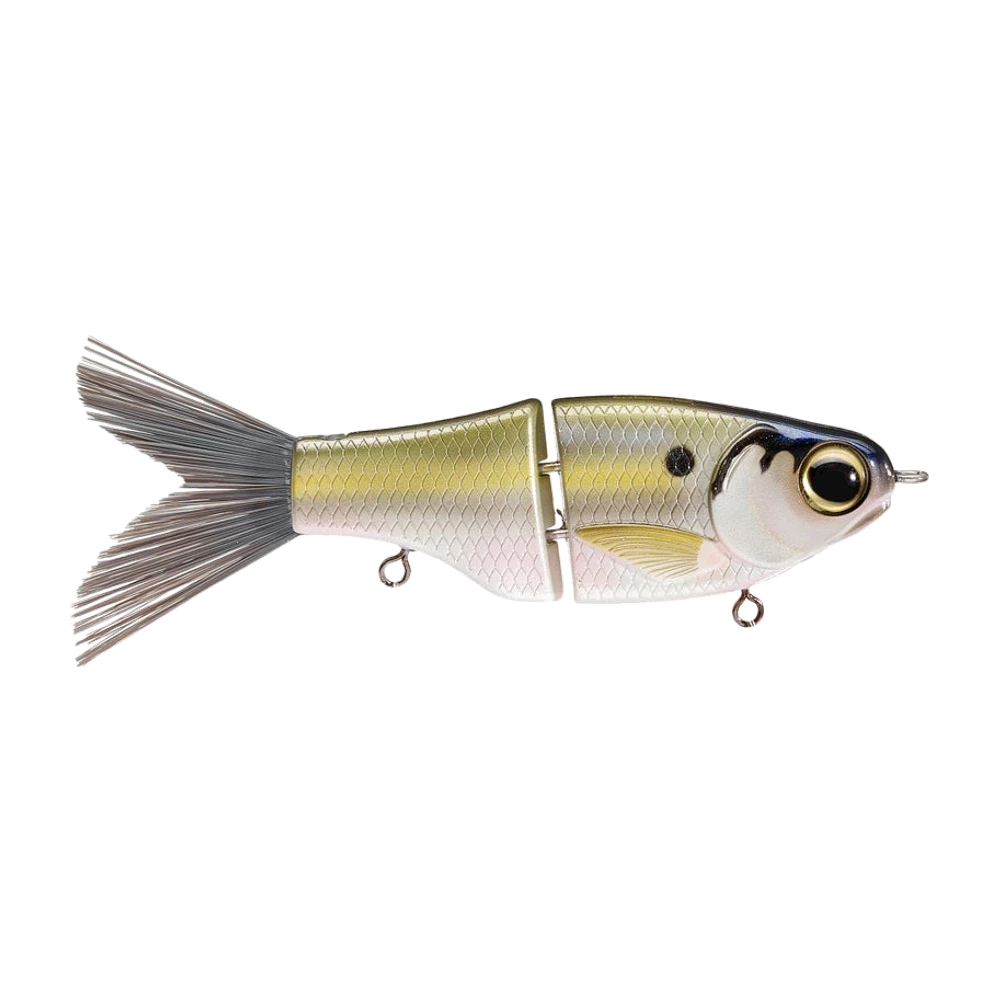
SPRO's central claim is that the Lil Guy produces a surprisingly long glide for its size, pulling predators in from a considerable distance. That is a manufacturer claim rather than a measurement, but it is consistent with the build: the body is jointed, and the product photo clearly shows the centre hinge and the pins linking the two sections.
The mechanical point of a two-piece body is simple. When you apply an impulse, the front pivots while the rear keeps running before it follows. The bait does not turn as one block: it folds, then straightens, and that second phase extends the sideways travel by several tens of centimetres. That extra run is what pulls a fish holding three or four metres off to the side.
Straight or chopped, both work
SPRO states the Lil Guy takes a straight retrieve as readily as a chopped one. In practice, a slow straight retrieve gives the most regular glide, the one that combs a bank sideways. Chopping it - short sharp rod taps with the reel slowed - breaks the trajectory and earns its keep when a fish follows without committing. Alternate the two on a single cast: ten metres of straight reeling to draw attention, then three sharp taps as the bait reaches the sweet spot.
When you see a fish glued to the lure in clear water, never shut the action down abruptly. Slow instead to a complete stop and let the bait start its descent: the sinking class now works for you, and plenty of fish that refused the glide will take a lure that drops away.
The countdown, and real depth
A 25.5 g moderate fast sink does not plummet like a stone, but it goes down decisively. On a bank spot, one to two seconds of countdown is enough to work below the surface without snagging. To cover a break at three metres, count four to five seconds, then start the retrieve as soon as you feel the line go slack.
SPRO does not publish a numeric rate of fall for this model, unlike its bigger sibling, whose sheet carries a figure in feet. So calibrate your counts yourself on the water rather than trusting a stated depth that does not exist in the documentation.
Not sure what to tie on?
Photograph your spot: CarnaFish reads the scene, cross-checks the conditions and gives you the zone, the lure and the retrieve. Free on iOS and Android.
Hooks and leader
The description states the bait comes with a pair of treble hooks mounted on swiveling hook hangers, a solution meant to limit the leverage a big fish applies to the anchor point during the fight. In the product photo, the two belly hangers are clearly in place and visibly of the swiveling type, but no treble is fitted to either. That is an observation from a product photo, not a contradiction of the spec sheet, which describes the retail unit.
For line, SPRO recommends 15 to 20 lb fluorocarbon, roughly 6.8 to 9 kg of breaking strain and somewhere around 0.33 to 0.40 mm depending on the brand. There is logic in that choice: fluorocarbon sinks, which helps an already sinking bait hold its line, and it takes abrasion from the wood this format so often works around.
The classic mistake
Pairing this lure with too stiff a setup. A very fast rod turns every tap into a violent jolt: the jointed body snaps instead of gliding, and the sideways travel disappears. A moderate-fast action rod that absorbs part of the impulse delivers noticeably wider glides. Across Europe this is the most common fault among anglers trying glide baits with their jerkbait gear.
One more point worth noting: a twelve-centimetre format regularly runs into pike on European waters. A titanium leader then becomes essential, exactly as it would with a Westin Swim Glidebait or a 6th Sense Speed Glide 100.
Colour by water clarity
- Clear water: the olive-gold back with pearly flanks from the photo, a baitfish livery that does not throw back too much light.
- Bright light, very clear water: a pale translucent finish, cutting contrast further and reassuring a wary fish in the middle of the day.
- Dirty water or low light: a solid dark tone, which plays the silhouette rather than any perceived colour.
SPRO does not list the full finish range in this model's description, so reason in terms of contrast and light conditions rather than by colour name.
Choosing the right glide bait size counts for nothing if the spot does not match. That is where CarnaFish helps: a photo of the spot, and the app suggests the zone, the depth and the type of presentation suited to current conditions. If you plan to use this size for pike, our guide to choosing a pike lure places glide baits among the other families.
Key takeaways
- 12 cm, 25.5 g and a published moderate fast sink class: the bait sinks, and depth is set by the countdown.
- It casts on a standard baitcasting setup, with no dedicated swimbait rod required.
- The jointed body carries the turn further and produces a long glide for such a small format.
- Two trebles on swiveling hangers per the manufacturer; in the product photo those hangers are empty.
FAQ
Does the Lil Guy 120 float?
No. The manufacturer's table has a class column, and it reads moderate fast sink. The bait starts dropping the moment you stop reeling.
Do you need a dedicated swimbait rod?
No, and that is the whole point of the model. SPRO presents it as fishable on standard bass tackle, since 25.5 g sits well within the casting range of a regular baitcasting setup.
What line should you use?
The maker recommends 15 to 20 lb fluorocarbon, roughly 6.8 to 9 kg. On a pike spot, add a titanium leader: fluorocarbon alone does not survive that set of teeth.
How does it differ from the Chad Shad 180?
The SPRO KGB Chad Shad 180 measures 17.8 cm for 68 g and needs a dedicated outfit. The Lil Guy applies the same glide logic in a size you can cast all day.
How long should you count down before retrieving?
One to two seconds along a bank, four to five to reach around three metres. Since SPRO publishes no numeric rate of fall for this model, calibrate your count yourself on the first cast.
What do you do when a fish follows without striking?
Stop the action rather than speeding it up, and let the bait begin its descent. The sinking class then creates the behaviour of prey dropping away, which often converts the fish that was hesitating.
The full bass lure guideSeason-by-season strategy: which family of lure, when, and why.Go from theory to fish
CarnaFish reads your spot from a photo and gives you the game plan: zone, lure, retrieve. Free on iOS and Android.