Strike King KVD Jerkbait 300: set the pause by water temperature
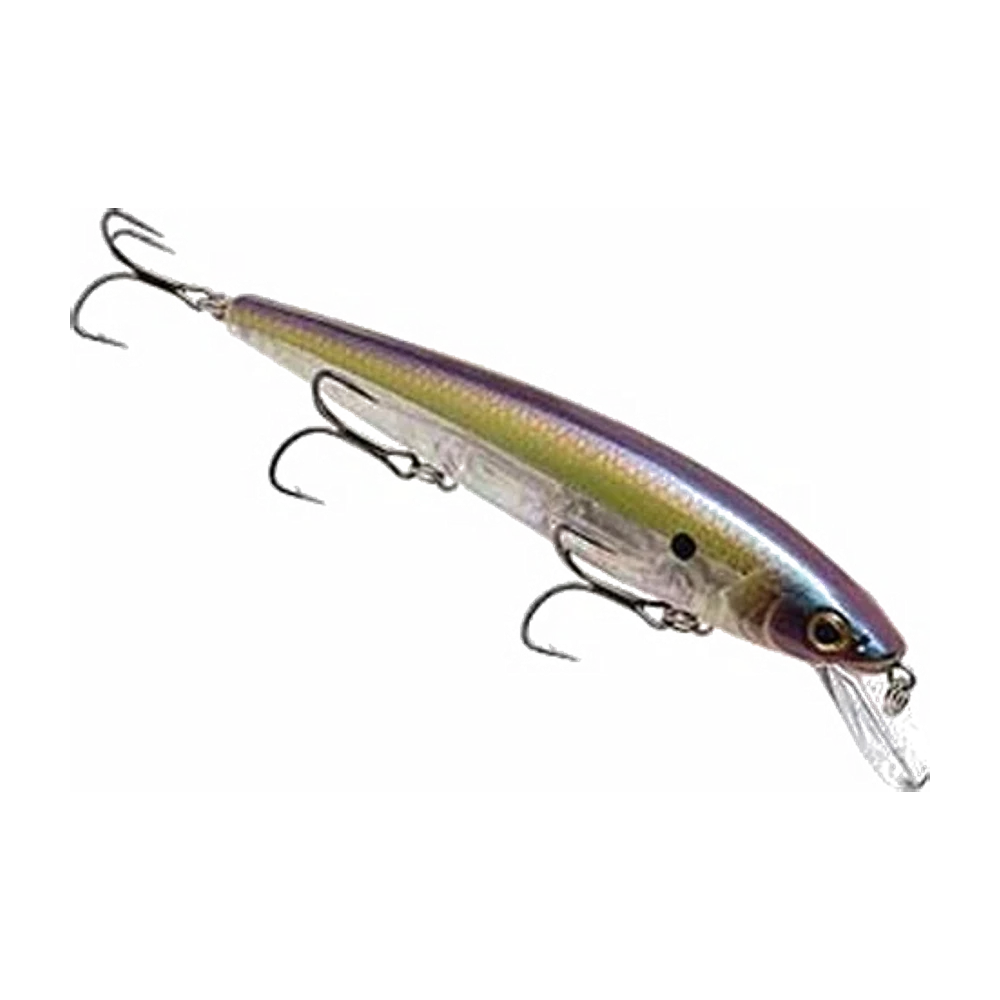
This lure shines under specific conditions. CarnaFish tells you in 10 seconds if today is one of them.
Two anglers, same boat, same jerkbait, same colour. One takes five fish in the morning, the other none. The difference almost never comes down to the lure: it comes down to the length of the pauses.
A suspending jerkbait is a two-part lure. The jerk places it and grabs attention; it is the motionless phase that forces the decision. And that phase has no universal length. It is set by one measurable, objective parameter: water temperature.
The KVD Jerkbait 300 is the deep model in the range, designed to work around two metres rather than in the top layer. That depth makes it particularly relevant in cold water, when bass and pike sit on drop-offs and no longer come up.
The pause scale
| Water temperature | Pause length | Jerk cadence |
|---|---|---|
| Under 8 °C | 8 to 15 seconds | 2 jerks, very soft |
| 8 to 12 °C | 5 to 8 seconds | 2 sharp jerks |
| 12 to 16 °C | 3 to 5 seconds | 2 to 3 jerks |
| 16 to 20 °C | 1 to 3 seconds | 3 fast jerks |
| Over 20 °C | under 1 second | continuous sequence |
Those times look long, and they are. At 6 °C, eight seconds of stillness on the end of a tight line is deeply uncomfortable. It is nevertheless exactly what separates a blank session from a good winter's day.
Two markers to adjust by. If you get bites during the jerk rather than during the pause, you can shorten. If you get follows that stop dead without an attack, lengthen further.
Balance: the detail that decides everything
A suspending jerkbait has to stay perfectly still during the pause, neither rising nor sinking. In practice that balance is sensitive to temperature, to salinity and above all to line.
- Thick fluorocarbon sinks and slowly pulls the lure down during the pause. In cold water that is often what you want: a lure settling very gently stays attractive.
- Braid floats and lifts the lure, which breaks the suspension. If you fish braid, extend your fluorocarbon leader to at least a metre.
- In very cold water the water is denser: most jerkbaits turn slightly buoyant. One or two dots of stick-on lead under the belly fix that.
Test it in a metre of clear water at the bank. Jerk twice, stop, and watch. The lure should hold station or sink very slowly. If it rises, add weight.
On the water: in winter, do not count seconds in your head — they shrink on their own. Count them out under your breath, or better, take one full breath per pause. Almost everyone claims eight seconds and does four.
The full sequence
- Cast beyond the spot, rod low, almost parallel to the water.
- Three or four fast turns to bring the lure down to its running depth. You feel the lip bite.
- Two sharp jerks of the rod tip, twenty to thirty centimetres each, keeping the rod low. The lure darts sideways.
- Take up the slack with half a turn of the handle, just enough to remove the loop.
- Stop for the length set by the temperature.
- Repeat until the lure is five metres from the bank, then slow down further: a lot of bites come at the end of the run.
Slack line during the jerk is essential. If your line is tight, the lure moves straight ahead instead of darting sideways. Always leave a slight bow before each jerk.
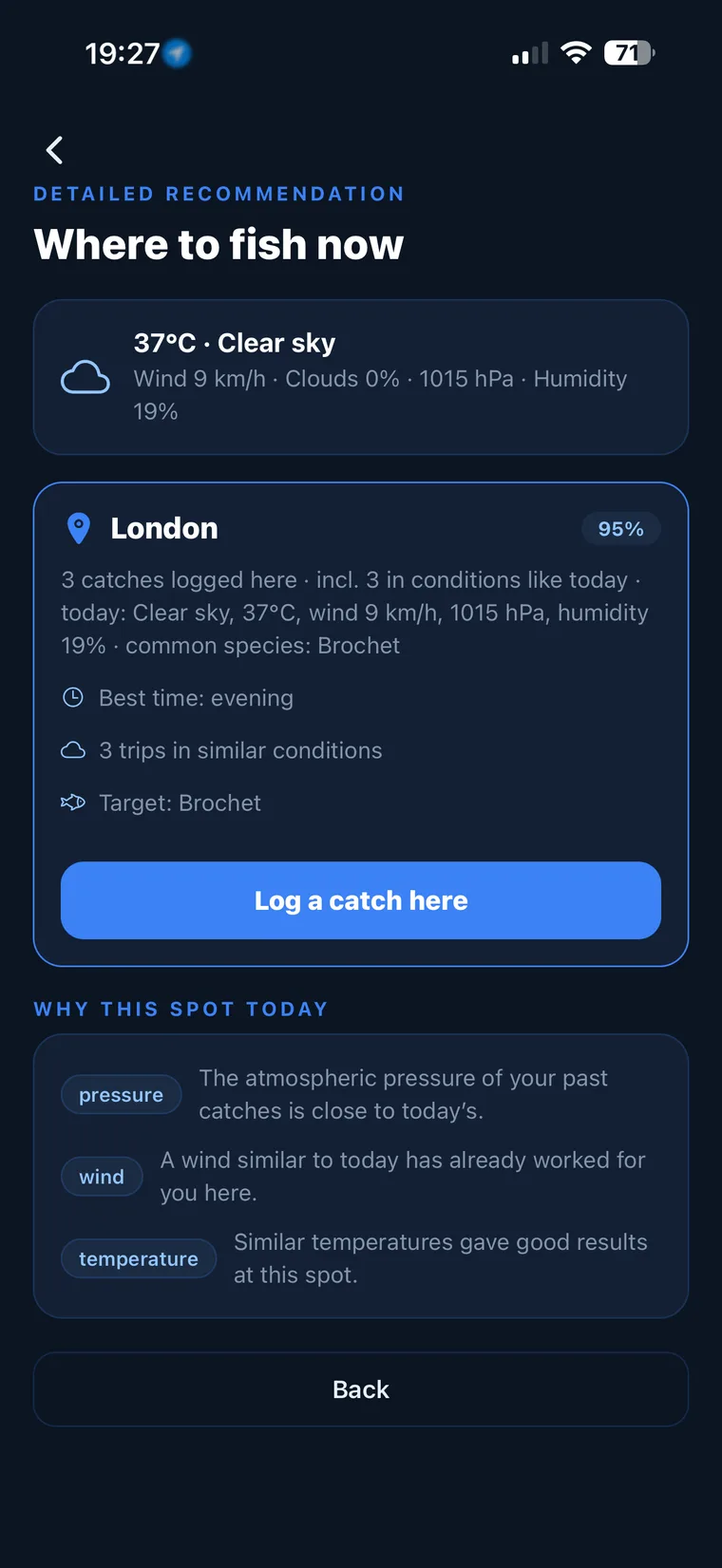
Not sure what to tie on?
Photograph your spot: CarnaFish reads the scene, cross-checks the conditions and gives you the zone, the lure and the retrieve. Free on iOS and Android.
The spots that justify a deep jerkbait
It works around two metres, which puts it on a precise set of spots: margin drop-offs, submerged flats, the edges of rocky points, the mouths of deep bays. In winter, bass group on this kind of structure and a lure hanging motionless just above them is one of the few approaches that works.
For pike it is excellent in late autumn and early spring, along 2 to 3 metre margins where the fish is posted and waiting. Fit a wire leader or fluorocarbon of 0.60 mm minimum.
It is useless in less than a metre of water — it ploughs — in dense weed, and in heavily stained water, where a mainly visual lure never gets noticed. In high summer on active fish it works, but it is not the best call: a crankbait or a topwater will cover more ground.
KVD 300 or a sub-surface jerkbait
A jerkbait working higher such as the Megabass Vision 110 stays in the top metre and suits shallow margins and fish holding in the upper layer. That is the spring and autumn choice over shallow ground.
The KVD 300 does the same job two metres lower. The difference is not trivial: in January a fish sitting at 2.50 m will not come up for a lure at 80 cm. The Rapala X-Rap Jerkbait and the Duo Realis Jerkbait 120SP cover neighbouring depth bands with slightly different actions — sharper for one, wider for the other.
So the right question is not "which jerkbait" but "how deep is the fish". Our beginner's guide to bass fishing covers that seasonal reading. And if you are unsure which layer to attack when you reach the bank, CarnaFish analyses a photo of the spot and answers.
Key takeaways
- Pause length is set by water temperature: up to 15 seconds below 8 °C.
- Always leave a little slack before the jerk, or the lure runs straight.
- Check the suspension at the bank and correct with stick-on lead if the lure rises.
- A drop-off and flat lure around 2 metres, not a shallow margin lure.
- Ineffective in heavily stained water, in weed, and under a metre of water.
FAQ
How long should I pause a jerkbait?
From under a second above 20 °C up to eight or fifteen seconds below 8 °C. Water temperature is the best marker: the colder it is, the longer the pause has to be.
How deep does the KVD Jerkbait 300 run?
Around 1.80 to 2.50 m depending on line diameter and casting distance. Thin fluorocarbon and a long cast put you at the deeper end of that range.
Why does my jerkbait rise during the pause?
Either you are fishing braid, which floats and pulls the lure up, or the water is very cold and therefore denser. Lengthen your fluorocarbon leader or add one or two dots of stick-on lead under the belly.
Does a jerkbait work in winter?
It is one of its best periods, provided you lengthen the pauses. A lure hanging motionless just above a fish posted on a drop-off remains one of the few effective approaches in cold water.
What line for a suspending jerkbait?
Fluorocarbon of 0.25 to 0.30 mm straight through, which sinks slightly and helps the suspension. On braid, allow at least a metre of fluorocarbon leader to offset the braid's buoyancy.
Can I fish pike with this jerkbait?
Yes, especially in late autumn and early spring along 2 to 3 metre margins. Always use a wire leader or fluorocarbon of 0.60 mm minimum, as pike frequently engulf this kind of lure whole.
The full bass lure guideSeason-by-season strategy: which family of lure, when, and why.Go from theory to fish
CarnaFish reads your spot from a photo and gives you the game plan: zone, lure, retrieve. Free on iOS and Android.