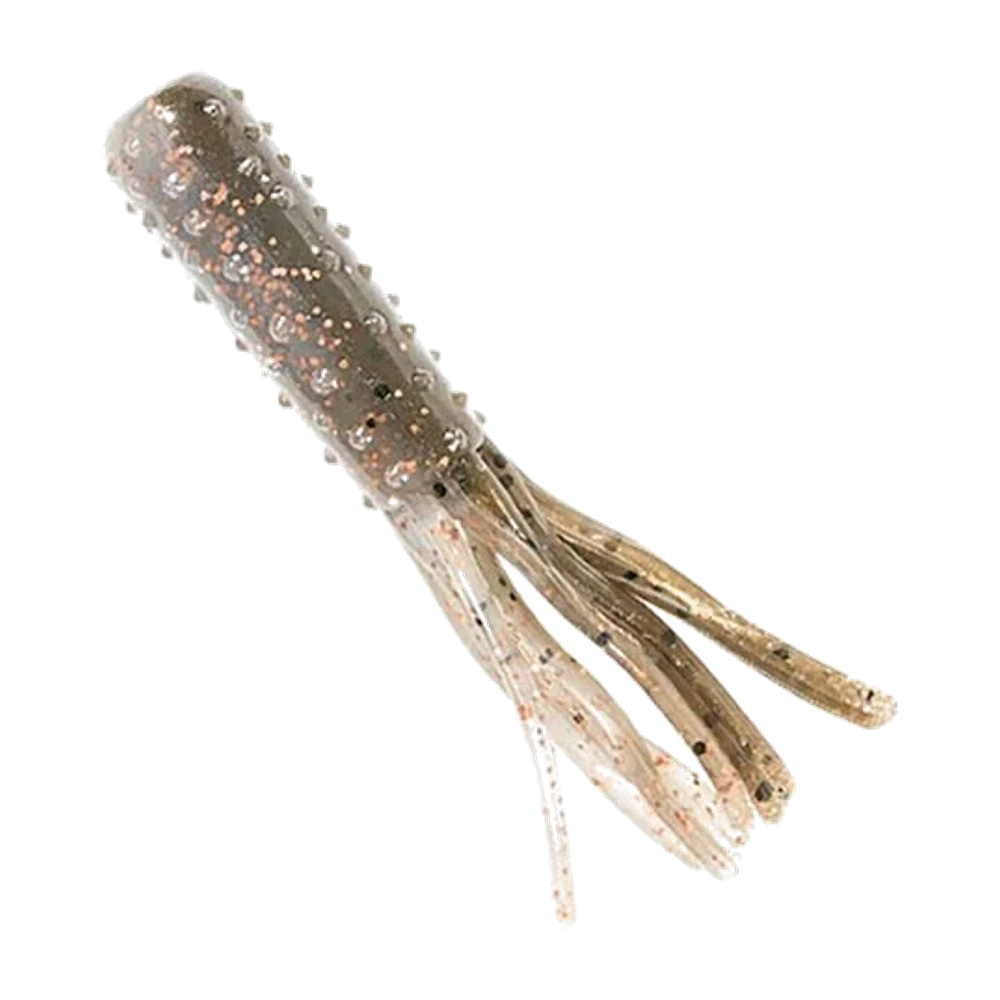
Z-Man TRD TubeZ: the tube that spirals down on a Ned rig
Not sure this lure fits YOUR spot today? CarnaFish tells you in 10 seconds, from a photo.
There is one situation where the classic Ned rig stalls: the perch is sat on a rocky bottom, it follows the lure, it noses it, and it leaves. The little truncated stick drops straight down, settles, and stops moving. When a fish is observing rather than hunting, that total stillness eventually loses its interest.
The TRD TubeZ answers exactly that problem without changing the rig. It is the same fishing principle — light jig head, short pulls, hard bottom — but the tube shape transforms two precise moments: the fall, which is no longer straight, and the stop, which is no longer really a stop.
If the rig itself is unfamiliar, our Ned rig page covers the setup and the adjustments. Here we only deal with what the tube shape adds on top.
What a hollow body does that the stick does not
A standard TRD is a solid, truncated cylinder. Its density is uniform, it drops on the axis and settles flat. That is precisely what is asked of it.
The tube is a hollow shell, split at the back into a skirt of tentacles. Three concrete consequences:
- The fall becomes helical. The lead sits inside the head, the skirt trails behind and acts as unbalanced fletching. Instead of dropping straight, the lure moves off to the side and turns slowly on itself over the end of the fall. It covers a circle instead of a point.
- The tentacles never stop. Z-Man's elastomer floats, so the rear filaments do not settle on the bottom: they stay suspended and wave at the slightest current, at the slightest vibration of the braid.
- The internal air pocket. Depending on how you insert the head, you trap a little air in the hollow body. That volume alters the resting posture and exaggerates the lift of the rear section.
The result: where the stick offers an inert lure that the fish has to decide to take, the tube offers a target that shivers permanently, even when you do nothing.
The retrieve: provoke the fall rather than retrieve
The mistake with this lure is to reel it back. Everything happens during the drops, so the retrieve consists of multiplying the drops.
- Cast and follow the line to bottom contact. Do not close the bail too early: that first long, free fall is often the most productive of the cast.
- Allow five to ten seconds of bottom contact, line just tight. The tentacles work on their own.
- Pull 20 to 30 cm with the rod, very slowly, scraping rather than lifting. You should feel the rocks.
- Release and let it drop back keeping light contact. It is on that short, spiralling fall that perch take most often.
- Take up the slack with the reel, without moving the lure, and start again.
A useful variation when a fish follows without taking: two small shakes of the rod tip on the spot, without moving the lure. The hollow body compresses slightly and the skirt opens then closes. It is a very low-amplitude signal, the one that still works when everything else has already been refused.
On the water: if you feel a soft weight during the fall, do not strike straight away — let the line come tight for a second. Perch inhale the hollow tube and spit it out fast because it fills with water; an instant hookset often pulls the lure back out of the mouth before the hook is engaged.
Choosing the head weight
The lure's whole behaviour depends on the lead. Too heavy and the spiral disappears and the tube drops like a stone. Too light and you stop feeling the bottom and fish blind.
| Depth / current | Head | Behaviour you get |
|---|---|---|
| 1 to 2 m, calm water | 2 g | Very slow fall, wide spiral, for wary fish |
| 2 to 4 m, light current | 3 to 3.5 g | Versatile compromise, clean bottom contact |
| 4 to 6 m or crosswind | 4 to 5 g | Fast drop, reduced spiral, contact first |
| Beyond that, or sustained current | Switch to something else | The tube loses its point, it just sinks |
Two practical markers: the head must be inserted right in the centre of the body, otherwise the lure spins constantly and twists the leader; and fine braid, 0.10 mm, transmits the spiral you would otherwise never notice.
Where it excels, and where not to take it
The TRD TubeZ is a hard-bottom lure for fish that are sat down.
- Riprap, groynes, dyke blocks in rivers or reservoirs: the skirt slips between the rocks without jamming as much as a paddle-tail shad.
- Gravel bottoms and margin flats in late summer, when perch are glued to the substrate and refuse lures swimming above them.
- Sight fishing in clear water, where you can tune pause length to the fish's reaction.
It is unsuited in three cases, though. Over silty or weedy bottoms, the tentacles sink in and disappear from view. In strong current, the skirt plasters against the body and the lure loses all its point. And for covering water fast over a big area it is a complete contradiction: a blade bait or a small shad covers ten times more ground per hour.
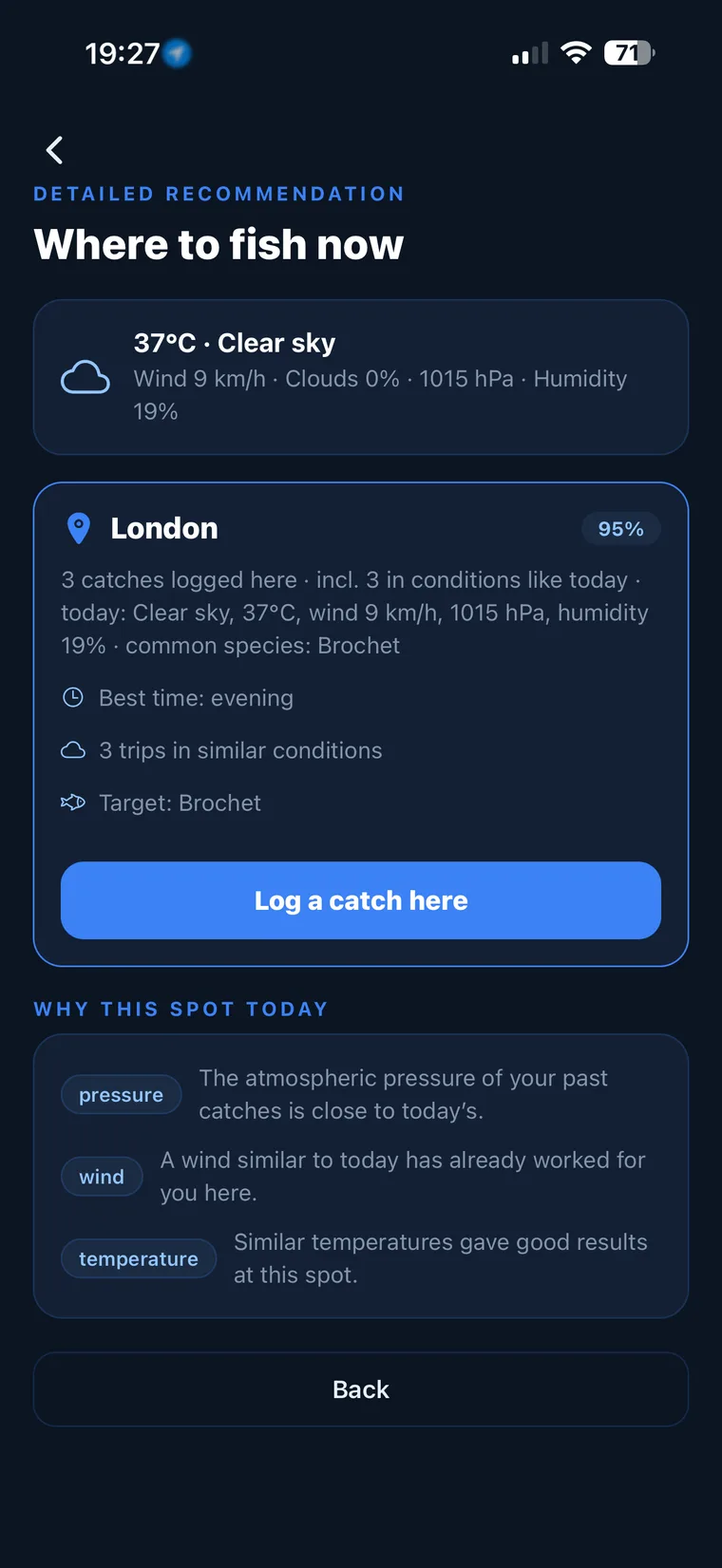
Not sure what to tie on?
Photograph your spot: CarnaFish reads the scene, cross-checks the conditions and gives you the zone, the lure and the retrieve. Free on iOS and Android.
Colours
- Rocky bottom, clear water: browns, dark greens, greys. The tube imitates a goby or a fleeing crawfish, not a baitfish.
- Slightly stained water: a natural body with a touch of bright colour on the tentacles is enough to create a focal point.
- Full sun, gin-clear water: translucent with flake. The lure then reads as a blurred silhouette rather than a solid object.
TubeZ, TRD stick or TRD CrawZ
All three fish on the same rig but cover three different fish moods.
The classic TRD Ned rig is still the benchmark when perch are active and you want a neutral profile that takes no risks. It is the lure for when you are unsure: it never puts a fish off.
The TRD CrawZ and its claws plays the defensive-crawfish card, with more volume and more water resistance. It is the right call over crawfish bottoms and on a fish that still accepts a firmer signal.
The TubeZ sits between the two and changes dimension: it adds a vertical movement — the spiral — that neither of the others has at all. It is the lure to reach for when the fish is there, visible or marked on the sounder, but is only following. Our guide to perch fishing with lures places these three profiles within a full session. And if you are unsure which head weight to rig when you reach the bank, CarnaFish analyses a photo of the spot and answers.
Key takeaways
- The fall is helical, not straight: the lure sweeps a circle and triggers on the way down.
- The floating tentacles keep waving while the body is still.
- Multiply short drops rather than reeling the lure back.
- A 2 to 5 g head maximum, inserted dead centre, with fine braid to feel the spiral.
- Avoid it over soft bottoms, in strong current, and for covering water fast.
FAQ
What jig head for the TRD TubeZ?
2 to 5 g depending on depth and wind. Under 3 m in calm conditions, 2 to 3 g gives the best spiral. Beyond 5 g the fall becomes straight and the lure loses its main asset.
Should I strike immediately on the bite?
No. Let the line come tight for a second before striking. The hollow body fills with water and perch spit it out fast; too early a hookset pulls the lure out before the hook has taken hold.
Can the TubeZ be fished on anything other than a Ned rig?
It also works on a small standard jig head or a short drop shot, but it is on a Ned rig that it gives its spiralling fall, because the lead sits inside the body.
Why is my tube twisting the leader?
The head is inserted crooked. An off-centre lead makes the lure spin constantly instead of spiralling on the drop only. Reposition it on the body's axis.
Does it work for species other than perch?
Yes, notably on zander holding on riprap and on bass during tough periods, but it is on hard-bottom perch that it is most consistent.
Is it suitable in a river with current?
Only in light current or in back eddies. As soon as the flow plasters the tentacles against the body, the lure produces nothing and a compact shad will be more effective.
The full perch lure guideSeason-by-season strategy: which family of lure, when, and why.Go from theory to fish
CarnaFish reads your spot from a photo and gives you the game plan: zone, lure, retrieve. Free on iOS and Android.