Deps Bull Flat: the creature bait that spirals down like a bluegill
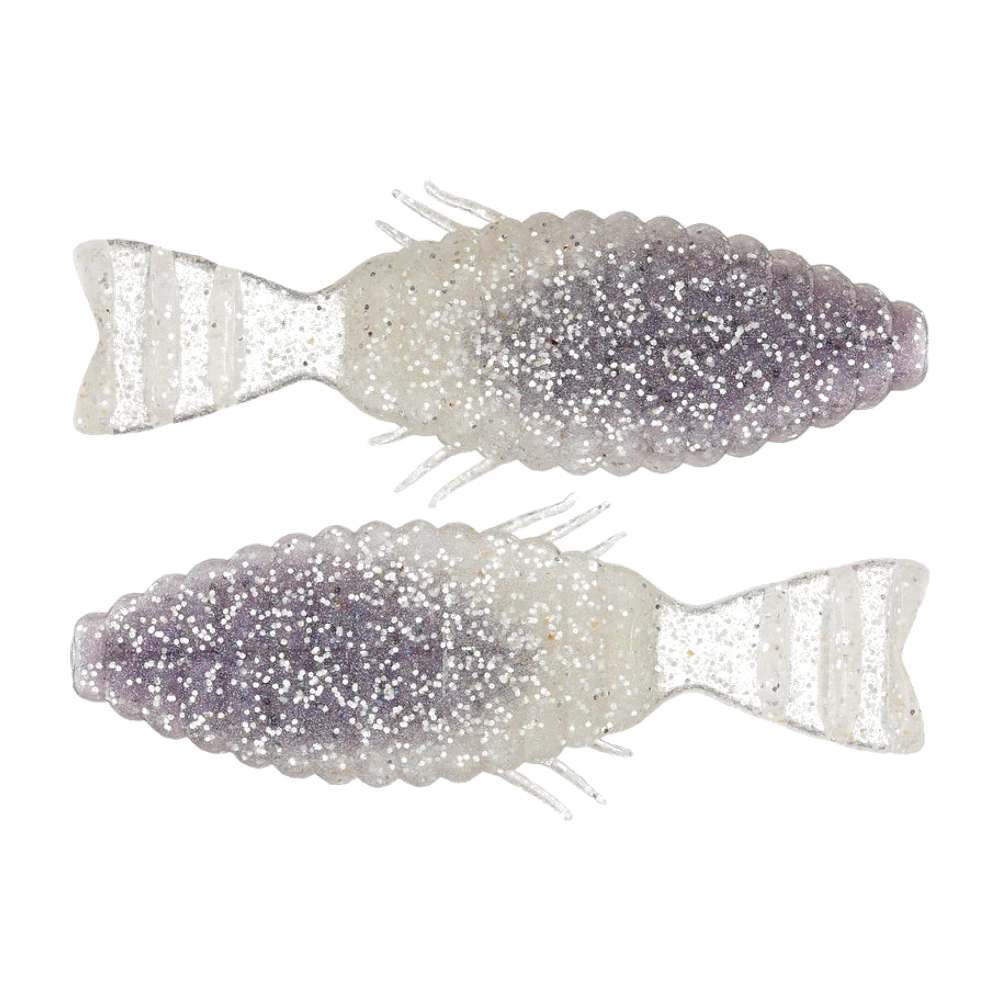
This lure shines under specific conditions. CarnaFish tells you in 10 seconds if today is one of them.
A bass holding under a dock is not watching a lure go past: it is watching a lure fall. And what it is waiting for is the particular descent of an injured bluegill, which drops neither straight nor flat but turning on itself in ragged lurches. That is exactly the behaviour Deps set out to reproduce with the Bull Flat, a creature bait whose entire design revolves around a single phase: the fall.
A bluegill profile, not a crawfish
First thing to understand, because it drives everything else: despite its side arms, the Bull Flat is not a crawfish imitation. Deps presents it explicitly as a body shaped on the bluegill profile, and the side appendages are described as fins, not claws. The difference is more than vocabulary: a crawfish-style creature bait is fished on the bottom, nose down, while a flat panfish imitation is fished mainly in open water and on the fall.
That detail explains the stated action. The wide, flat body, compressed on the flanks like a bluegill, creates asymmetric lift as it sinks. The result is a spiralling fall, described by the maker as an imitation of a dying panfish. The bait turns slowly around its axis on the way down, something no conventional shad produces.
The side arms add a second layer. Deps specifies that they generate micro-vibrations even when the bait is barely moving through the water. In practice that means a Bull Flat sitting on the bottom with nothing but current or a quiver of the rod tip keeps putting out a signal. That is the sort of detail that counts late in the day, on a fish that has already watched four lures go by.
Five sizes, and the hooks that go with them
Deps publishes a complete table, size by size, with the matching offset hook recommendation — rare enough to be worth repeating in full.
- 2 in, 5.1 cm, 10 per pack, offset hook size 4 to 6.
- 3 in, 7.6 cm, 6 per pack, hook size 1 to 2/0.
- 3.8 in, 9.7 cm, 6 per pack, 4/0 hook.
- 4.8 in, 12.2 cm, 4 per pack, 5/0 hook.
- 5.8 in, 14.7 cm, 4 per pack, 7/0 hook.
The hook recommendations deserve to be taken seriously on this particular bait. An offset that is too small on a body this thick does not leave enough room for the point to come through on the hookset; one that is too large weighs down the silhouette and chokes the rotation on the fall.
For Europe, the 3.8 is the most logical size for bass, the 4.8 on waters that produce good fish. The 2 and 3 in sizes step outside pure bass territory: rigged on a light drop shot they catch perch, provided you slow the action down even further.
A salt-free plastic, and what that changes
Deps lists a proprietary formulation carrying a crustacean scent, ultra-soft while keeping good tensile strength. But the genuinely structural point is the absence of salt.
Most American soft plastics are loaded with salt, to add weight, speed up the fall and give a salty taste that makes fish hold on longer. Deps did the opposite: with no salt, the Bull Flat is highly buoyant. The maker draws the conclusion itself by recommending the free rig, the weightless Texas rig and the Carolina rig — three setups where the bait needs to move freely without sinking.
The maker also notes a counter-intuitive point: weighted, the bait falls more slowly than a conventional soft plastic of the same size, and the spiral becomes tighter. So you keep a working descent even with weight added, which is exactly what you want in deeper water.
Deps publishes no unit weight, and I am not going to invent one: the mass of a soft bait varies too much with the density of the formulation to be estimated by eye.
If you fish the free rig and feel nothing, you are missing the main event. After the weight hits bottom, the bait still takes three to five seconds to spiral down behind it. Count them, rod tip low, line just tight. That lag is when the fish takes, not when you regain contact.
Not sure what to tie on?
Photograph your spot: CarnaFish reads the scene, cross-checks the conditions and gives you the zone, the lure and the retrieve. Free on iOS and Android.
The rigs that exploit it
Free rig
The rig the bait seems to have been designed around. A sliding bullet weight on the main line, stopped by the leader swivel, an offset hook at the end: the weight falls first and plants itself on the bottom while the bait keeps descending at its own pace, spiralling, well away from the weight. It is the only rig that lets the fall fully express itself.
Weightless Texas
Over shallow flats, scattered weed or around a dock, a weightless Texas rig turns the Bull Flat into a slow subsurface bait. It sinks very gradually, stays visible in the upper layer for a long time, and its natural buoyancy makes it glide above vegetation rather than bury into it.
Drop shot and bladed jig trailer
Deps names both explicitly. On a drop shot, nose-hooked or wacky depending on size, the bait hangs in place while the side arms work on the spot. As a bladed jig trailer, the wide body adds lift and widens the blade's amplitude — keep that to the 3 and 3.8 sizes, beyond which the trailer overpowers the head carrying it.
The classic mistake
Over-working it. The reflex when nothing is happening is to pull harder and more often. With this bait you need to do exactly the opposite: every pull interrupts the spiral and flattens the bait out. The right cadence is a short pull every five to eight seconds, and nothing in between. The arms work on their own.
For comparison, the 6th Sense Flipgill plays the same panfish-profile card with a more compact body, while the Reaction Innovations Sweet Beaver represents the dense creature bait school that sinks fast. If you want an honest crawfish imitation rather than a flat panfish, the O.S.P Dolive Craw covers that register.
Colour by water
- Clear water: the translucent pearl with heavy silver flake on the sample photographed. The lightly smoked purple back gives just enough contrast for the silhouette to exist without giving the game away.
- Lightly stained water: green pumpkin. It is the tone that most resembles a real bluegill seen from a distance, and it works over almost any bottom.
- Muddy water: a solid dark tone. Under a metre of visibility the fish detects the arms' micro-vibrations first; colour only confirms at the last instant, and contrast serves better than realism there.
A slow-falling bait is only worth anything dropped in the right place, because its strength is staying a long time in a small area. That is the whole point of CarnaFish: a photo of the spot, and the app suggests the zone and the presentation suited to the day's conditions. To lay down tackle and spot-reading fundamentals, our beginner's guide to bass fishing is a good starting point.
Key takeaways
- A bluegill profile, not a crawfish: the side appendages are fins and produce micro-vibrations even at rest.
- Salt-free plastic and therefore highly buoyant, designed for the free rig, weightless Texas and Carolina.
- Five sizes from 5.1 to 14.7 cm, each with an offset hook size recommended by Deps.
- Weighted, the bait sinks more slowly than a conventional soft plastic and the spiral tightens.
FAQ
Which Bull Flat size should I pick for bass?
The 3.8 in, 9.7 cm, covers most situations with a 4/0 offset. Move up to the 4.8 on water that produces good fish, and drop to the 3 in during tough spells or in very clear water.
Is the Bull Flat really buoyant?
Yes. Deps states that it is made with no salt and is therefore highly buoyant, which is precisely why the maker recommends the free rig and the weightless Texas rig.
Do I have to add weight?
No, and unweighted in shallow water is actually its main strength. Add weight only to reach a specific layer; the fall keeps working, just with a tighter spiral.
What offset hook size should I use?
Deps publishes recommendations by size, from 4 to 6 for the 2 in up to 7/0 for the 5.8 in, with 4/0 on the 3.8. Follow them — an undersized offset in this thick body costs you hooksets.
Is this bait any good for perch?
In the 2 and 3 in sizes on a drop shot, yes. Beyond that the body volume exceeds what a European perch usually attacks, and the bait returns to its original register, bass.
How long should I wait after it lands?
Three to five seconds minimum on a free rig, the time it takes the bait to finish spiralling down behind an already-settled weight. The vast majority of bites happen during that lag.
The full bass lure guideSeason-by-season strategy: which family of lure, when, and why.Go from theory to fish
CarnaFish reads your spot from a photo and gives you the game plan: zone, lure, retrieve. Free on iOS and Android.