Zoom Brush Hog: getting into cover without hanging up
One lure, endless conditions. CarnaFish reads your spot from a photo so you are not just guessing.
The biggest bass in a lake are almost never in open water. They are under something: a laydown, a mat of lily pads, a tangle of branches against the bank. It is the best water on the lake, and it is also where you lose three baits before you get a single bite.
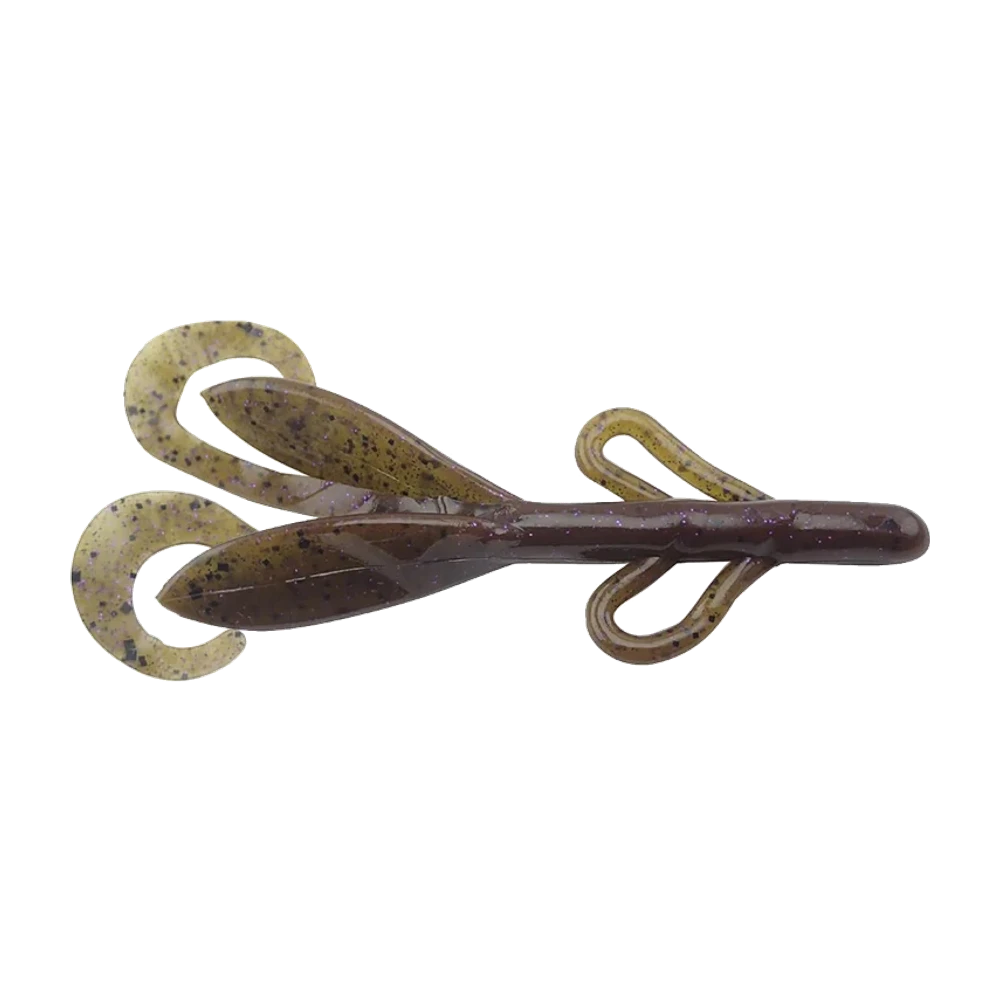
The creature bait exists for that. It is not an imitation of any particular animal — not a crawfish, not a baitfish, not a larva. It is a deliberately undefined profile, covered in moving appendages, built to be Texas-rigged and to drop down through cover without staying in it.
Zoom's Brush Hog is one of the oldest baits in that family, and its name says exactly what it is for: brush. A thick body, two large flat claws at the back, four small side appendages, and plastic soft enough that all of it moves the moment the bait travels.
The work happens on the fall
A creature bait does not catch on the retrieve. It catches while it drops.
When you let a weighted Brush Hog sink, the big rear claws start flapping under the water resistance and the small side appendages undulate. The bait comes down quivering all over, on a roughly vertical path but never perfectly stable.
That is the signal a bass sitting under a stump intercepts. It does not chase: it sees something falling through its lane, and it opens its mouth.
Hence the most important practical consequence: the decisive phase of your fishing lasts three seconds after the bait hits the water, and most anglers miss it because they have slack line and are looking somewhere else. Watch your line on every drop, and keep it semi-tight.
The Texas rig, step by step
- Slide a bullet weight onto the line, point down. Add a bead if you are fishing hard bottom.
- Pick a 4/0 wide gap hook, matched to the body diameter.
- Push the point into the nose of the bait five or six millimetres, bring it out, rotate the hook.
- Bury the shank in the body until the eye comes out of the nose.
- Push the point back into the back without bringing it through: it should stay just under the surface of the plastic.
- Check the alignment. The bait must be perfectly straight. A twisted bait spins on itself as it falls.
You can peg the weight with a stopper or leave it free. Pegged: the whole rig drops as one and penetrates cover better. Free: the lead reaches the bottom first and the bait then sinks on its own, more slowly, which is often better on difficult fish.
| Weight | Context |
|---|---|
| 5 to 7 g | shallow margins, sparse weed, calm water |
| 10 to 14 g | standard use, 2 to 4 m, medium cover |
| 18 to 21 g | thick vegetation mats, punching, strong wind |
On the water: when you feel the bait come up against a branch, do not pull. Let off completely, feed a little line, and let the bait drop down the other side. Nine times out of ten you get through. And the bite comes within the second, because you have just entered exactly where the fish is waiting for you.
Working it after the fall
If the fall produced nothing, what follows is simple and slow.
- Let the bait sit three to five seconds on the bottom.
- Lift the rod from 9 to 11 o'clock, slowly, to raise the bait thirty centimetres.
- Follow it back down while taking up the slack with the reel, line semi-tight.
- Pause again.
- Repeat, moving fifty centimetres per cycle.
Two variations: a shake on the spot, wrist only, without moving the weight, which makes the claws quiver without the bait travelling; and a stroke, a sharp wide rod snap that rips the bait off the bottom, for warm water and active fish.
The bite often shows up as simple weight, or as line moving off to the side. Set hard: you have to drive through the plastic before you reach the jaw, and a bass's jaw is hard. Braid in 0.30 to 0.40 mm with a 0.35 to 0.40 mm fluorocarbon leader is the standard for this fishing, on a powerful rod.
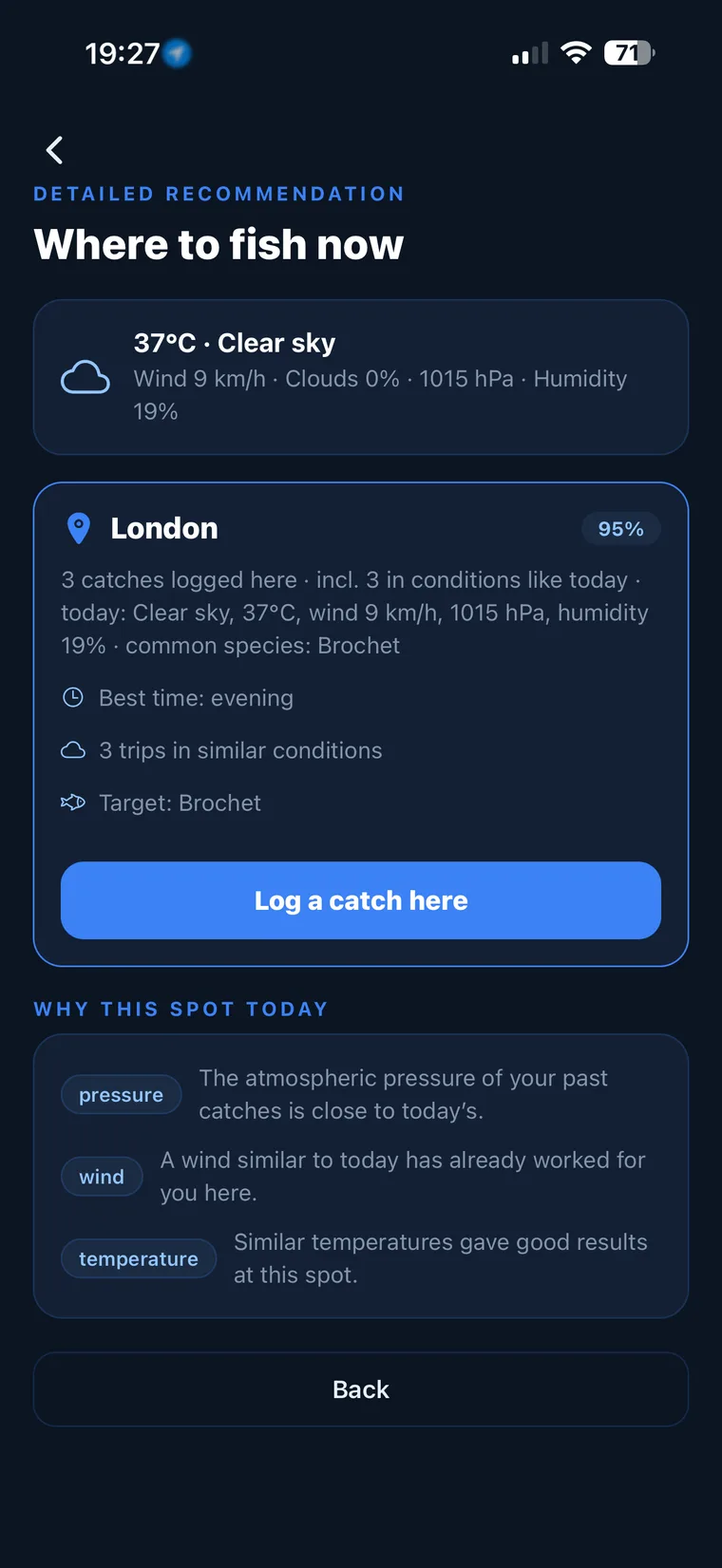
Not sure what to tie on?
Photograph your spot: CarnaFish reads the scene, cross-checks the conditions and gives you the zone, the lure and the retrieve. Free on iOS and Android.
Where it is the wrong tool
- Clear water and wary fish: the Brush Hog is a bulky, fairly aggressive bait. On educated bass in gin-clear water, a finesse worm on a drop shot or a Ned rig will go down better.
- Covering water fast: this is slow fishing, spot by spot.
- Bare deep flats: with no cover, the bait loses its main point.
- Very cold water: the appendages need movement, and a winter fish does not work the bait enough.
Brush Hog or craw: two takes on appendages
Against a crawfish bait like the Strike King Rage Craw, the difference is clear. The craw explicitly imitates a crayfish, with two wide claws that kick hard and a defensive posture on the bottom. It excels over hard, rocky bottom where crawfish are the dominant prey.
The Brush Hog does not look like anything in particular, and that is an advantage in vegetation: the fish does not compare it to a known prey item, it reacts to movement. Its longer profile also penetrates thick brush better than a wide craw.
Against the Keitech Crazy Flapper, which is softer and more detailed, the Brush Hog is cruder and tougher. Over twenty casts into branches, that counts.
Our beginner's guide to bass fishing explains when the Texas rig beats hard baits. And if you are unsure which weight to tie on when you reach the bank, CarnaFish analyses a photo of the spot and answers.
Key takeaways
- The bite almost always comes in the first seconds of the fall: watch your line.
- Texas rig on a 4/0 wide gap hook, point buried just under the skin of the plastic.
- Pegged weight to penetrate cover, free weight to slow the drop.
- On an obstruction, let off instead of pulling: the bait works its own way through.
- A powerful hookset is mandatory, with heavy braid and leader.
FAQ
How do you Texas-rig a Brush Hog?
Push the point into the nose about five millimetres, bring it out, rotate the hook, bury the shank in the body until the eye comes out, then push the point back into the back without bringing it through. The bait must stay perfectly straight.
What bullet weight should I use?
Between 5 and 7 g on shallow margins, 10 to 14 g for standard use in 2 to 4 m, and 18 to 21 g to punch through a thick vegetation mat or fish in strong wind.
When does the bite come on a creature bait?
Most often in the first three seconds of the fall, before the bait even reaches the bottom. That is why you keep the line semi-tight and watch it on every drop.
Should the bullet weight be pegged?
It depends. Pegged, the whole rig drops as one and penetrates cover better. Free, the lead reaches the bottom first and the bait then sinks more slowly, which is often preferable on difficult fish.
What tackle for fishing cover?
A powerful casting rod, 0.30 to 0.40 mm braid and a 0.35 to 0.40 mm fluorocarbon leader. The hookset has to drive through the plastic before it pins, and you need to get the fish out of the wood quickly.
What is the difference with a crawfish imitation?
The craw is more effective over hard, rocky bottom, where it matches a real prey item. The Brush Hog, with its undefined profile, works better in vegetation and slips into thick brush more easily.
The full bass lure guideSeason-by-season strategy: which family of lure, when, and why.Go from theory to fish
CarnaFish reads your spot from a photo and gives you the game plan: zone, lure, retrieve. Free on iOS and Android.