Berkley PowerBait MaxScent Flat Worm: winning the seconds that make the hookset
Rather not fish it blind? Photograph your spot — CarnaFish cross-checks the conditions and points you the right way.
In finesse fishing, the bite is rarely an attack. It is a fish inhaling the lure, holding it for a fraction of a second, and spitting it out if it does not find what it expects. The angler's whole problem sits inside that interval: between the moment the fish takes and the moment it lets go, you have to have detected and set the hook.
On a perch in four metres of water with a crosswind, those few tenths of a second are often not enough. The line barely moves, you hesitate, you strike too late.
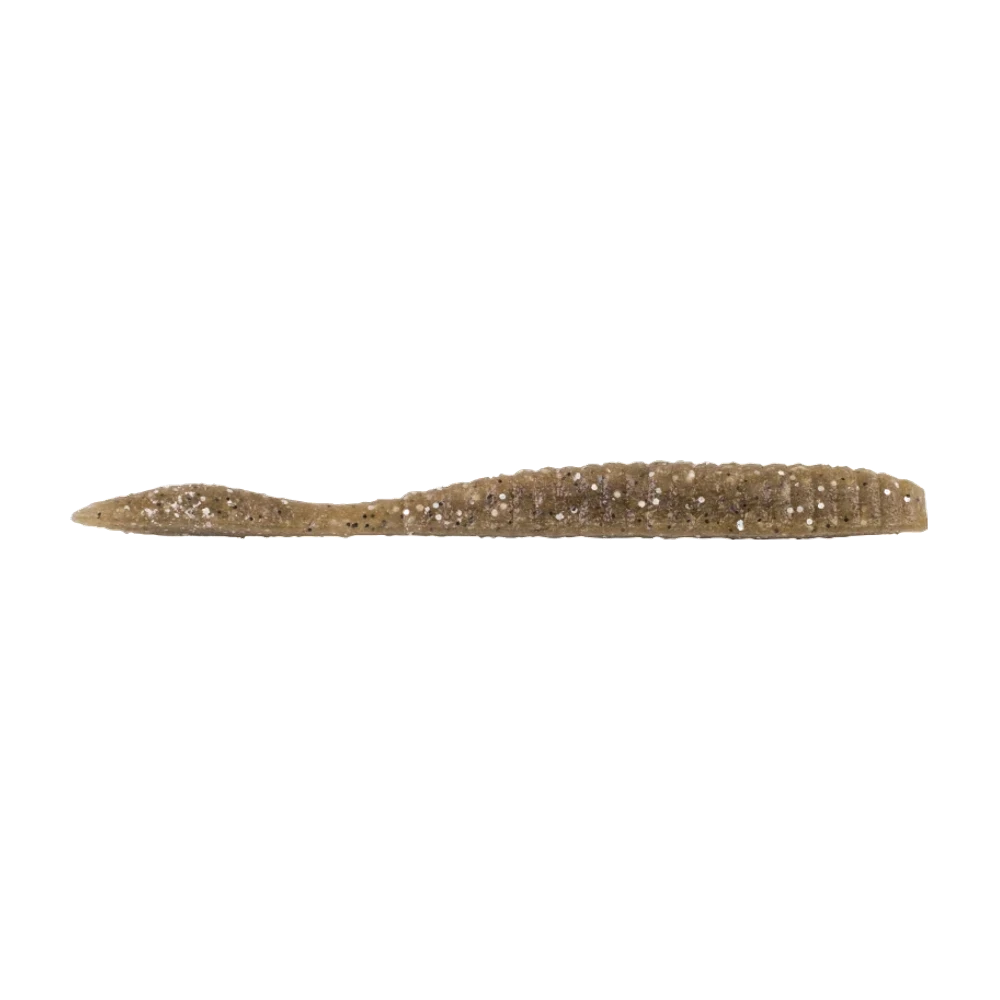
The Flat Worm plays on that window. MaxScent material is not a plastic with scent sprayed on the outside: the attractant is released by the material itself, continuously. A fish that takes the lure into its mouth finds a taste and a texture that give it no reason to spit immediately. You gain time, and time is exactly what you are short of.
A flat body, not round: this is not cosmetic
The second feature is geometric. Most finesse worms have a round section. The Flat Worm is flattened along its whole length, which produces three effects.
On the drop, it planes. A flat section offers lateral lift. Instead of dropping straight under the weight, the lure glides off to one side and sinks far more slowly. On a weightless or very light rig, the fall turns into a long horizontal glide, exactly what triggers a bass sitting under a jetty.
At rest, the edges quiver. The thin edges react to the slightest water movement. The lure looks alive even when you do nothing, which is useful since most of this fishing consists of doing nothing.
Under tension, it barely rolls. A round worm tends to spin on itself. The flat body stabilises and presents a broad flank, more visible from the side.
The material is soft and fairly tender. That is the flip side: it tears faster than a conventional plastisol, and it does not tolerate being stored with other soft plastics, which it can melt. Keep it in its bag or in a dedicated box.
Four rigs, four uses
| Rig | When | Setting |
|---|---|---|
| Drop shot | fish off the bottom, vertical or cast and retrieve | 5 to 12 g weight, 20 to 50 cm dropper |
| Ned rig | hard bottom, settled fish, cold water | 2 to 5 g jig head, lure cut in half |
| Wacky | shallow water, free fall under cover | size 1 wacky hook, no weight |
| Weightless Texas | cover, weed, cluttered margins | 2/0 to 3/0 EWG hook |
The drop shot is the most logical rig for perch: the lure stays in the layer of water you choose, and you work it without moving the weight. The ned rig takes over when the fish are glued to the bottom and refuse anything that lifts off.
The wacky rig makes the most of the planing: hooked in the middle, weightless, the Flat Worm sinks while both ends oscillate slowly along a very open track. It is the slowest presentation you can offer.
The retrieve: do less than you think
- Cast and let it sink on a semi-tight line, watching the line with your eyes. A large share of the bites comes here.
- Wait at least five seconds once it is on the bottom, doing nothing.
- Two or three quivers of the rod tip, wrist only, without moving the weight.
- Another pause of five to ten seconds.
- Move the rig forty centimetres, and start again.
The move must be minimal. On a three square metre spot, spending five minutes is not absurd.
On the water: with this material, do not set the hook on the first contact. Let the fish close on it and move off with it, count one second, then set the hook by sweeping rather than snatching. It is the opposite of the usual reflex, and it is exactly what the attractant lets you get away with.
The tackle that goes with it
The Flat Worm is fished light, and the tackle has to follow.
Rod. Length 1.95 to 2.20 m, around 3-14 g casting weight, a sensitive but not floppy tip. You need to see the bite as much as feel it.
Line. Fine braid of 0.08 to 0.10 mm for detection, with a fluorocarbon leader of 0.18 to 0.22 mm for perch, 0.22 to 0.25 mm for bass near cover.
Hooks. Fine wire on drop shot, size 1 or 2. A hook that is too thick in soft material tears the lure and does not hook any better.
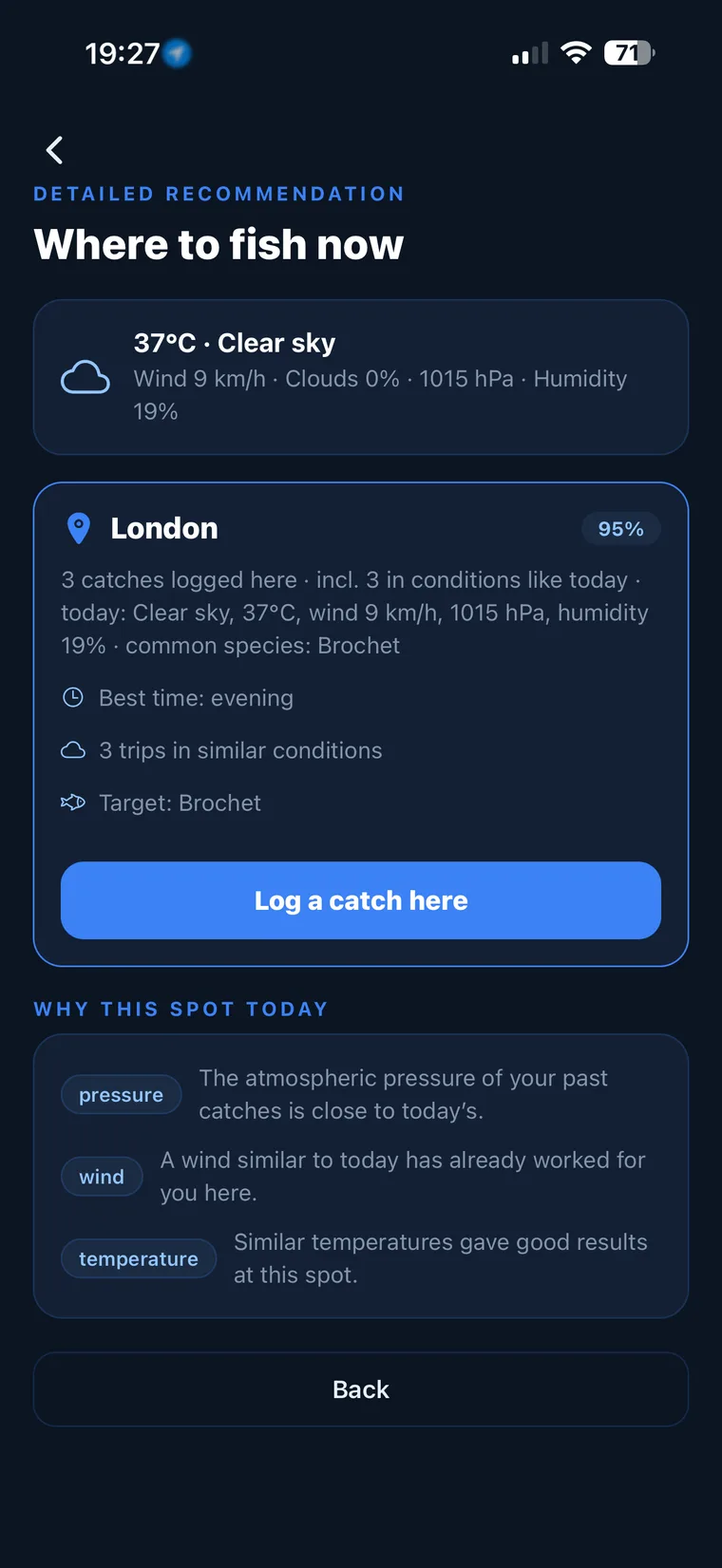
Not sure what to tie on?
Photograph your spot: CarnaFish reads the scene, cross-checks the conditions and gives you the zone, the lure and the retrieve. Free on iOS and Android.
Where this lure is the wrong choice
- Fast searching: you cover very little ground. To search, take a lure that swims.
- Heavily coloured water: this is a visual and scent lure, not a vibrating one. The fish has to find it close up.
- Where pike are present: the tender material and the fine line do not survive. You will lose as many lures as fish.
- In strong wind: detection becomes impossible with a light rig.
Flat Worm or classic round worm
Against a Yamamoto Senko 4, the logic is different. The Senko plays on plastic density: it is heavy, it casts on its own, and its shimmying fall is its main argument. It also drops faster.
The Flat Worm is lighter, sinks more slowly and more sideways, and makes up for its lack of mass with the attractant. On a very lethargic fish in cold water, it often comes out ahead. Where you need to cast a long way weightless, the Senko takes the advantage back.
Against the MaxScent The General, same material but a round, thicker profile: The General is more versatile on a Texas rig, the Flat Worm slimmer and better suited to drop shot and difficult fish.
Our guide to perch fishing with lures covers when to switch to finesse. And if you are torn between drop shot and ned rig when you reach the bank, CarnaFish analyses a photo of the spot and answers.
Key takeaways
- The attractant is in the material, not on the surface: the fish holds the lure longer.
- A flat body, so a planing descent and quivering edges at rest.
- Drop shot and ned rig for settled fish, weightless wacky to exploit the fall.
- Set the hook on a delay, not on the first contact.
- Tender material: store it separately and expect to change lures regularly.
FAQ
Is MaxScent really more effective than a scented lure?
The difference is in how it is released: the attractant is built into the material and keeps being given off, where a surface scent wears away after a few casts. In practice that mostly shows up as a fish holding the lure in its mouth for longer.
Which rig should you choose for perch?
Drop shot first, with a 5 to 12 g weight depending on depth and wind, and a 20 to 50 cm dropper. If the perch are glued to the bottom in cold water, switch to a ned rig with a 2 to 5 g head.
Should you set the hook immediately?
No. Let the fish close on the lure, count about one second, then set by sweeping rather than ripping. The material buys you that delay, and the hookup rate gains a lot from it.
Why does this lure wear out so fast?
Because MaxScent material is deliberately tender so that it releases the attractant and stays convincing in the mouth. It is an accepted trade-off: less durability, more effectiveness on difficult fish.
Can you store it with other soft plastics?
No. This material can react with conventional plastisols and deform them. Keep it in its original packaging or in a separate compartment.
What size should you take?
Sizes around 10 cm cover most situations for perch and bass. On difficult perch you can cut the lure down to shorten it without losing the attractant, since it is spread through the whole mass.
The full bass lure guideSeason-by-season strategy: which family of lure, when, and why.Go from theory to fish
CarnaFish reads your spot from a photo and gives you the game plan: zone, lure, retrieve. Free on iOS and Android.