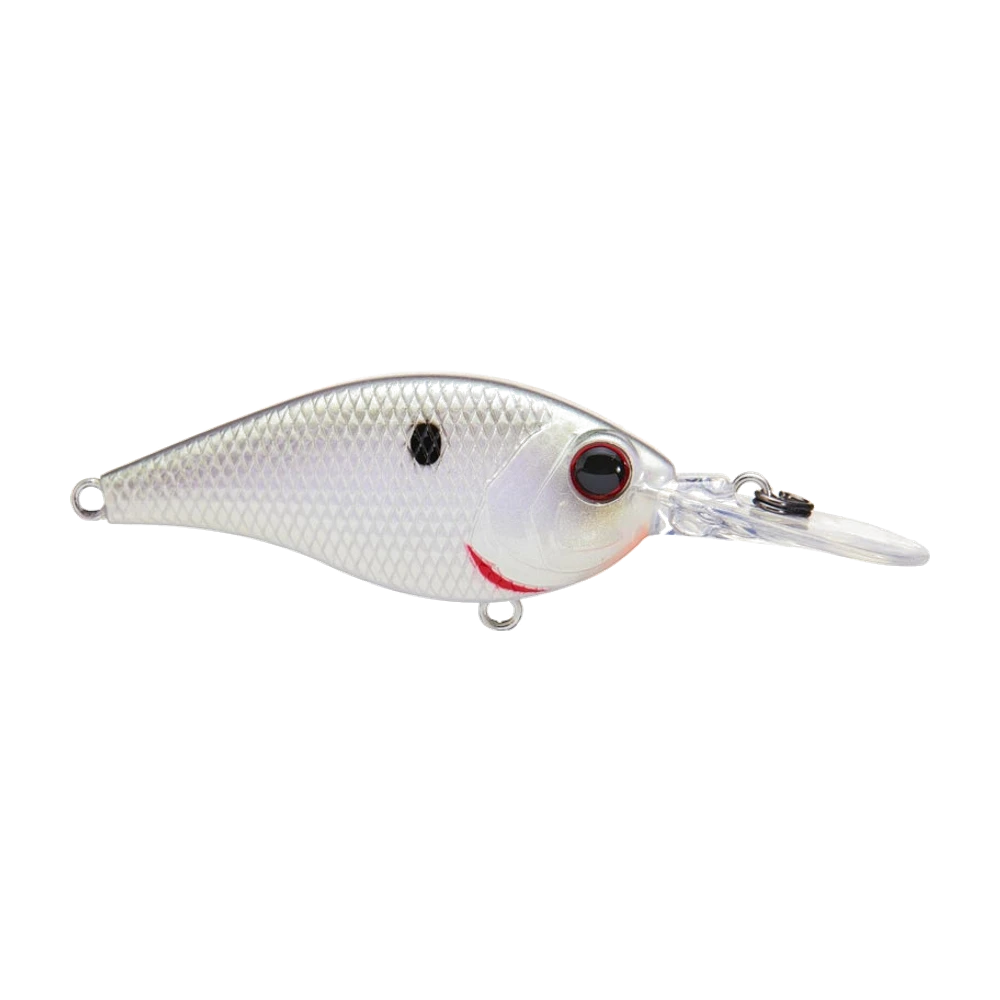
6th Sense PD10 Pressure Series: the flat-sided crankbait that reaches 10 ft
Before tying this one on, it helps to know if the spot actually calls for it. CarnaFish reads the scene from a photo.
Late summer on a lake that sees traffic every weekend. The fish are glued to breaks between six and ten feet, and everybody is running the same fat round crankbait that thrashes in every direction. Two months of that and they stop moving for it. That is precisely the scenario the 6th Sense PD10 Pressure Series is built around: keep the depth of a deep diver, but change the signal completely.
A flat body behind a deep bill
The vast majority of crankbaits that reach ten feet have round, full bodies. There's a reason: volume creates lift, lift supports a long bill, and the package produces that wide, noisy action that defines the deep crank. The PD10 Pressure breaks the pattern. It keeps the deep bill — rated 8 to 10 ft — but pairs it with a flat-sided body.
You feel the difference on the first cast: the lure doesn't waddle, it trembles. The wobble is tight, the track stays inside a narrow lane, and what pulls a fish in is no longer the amplitude of the movement but the flash thrown off by two flat surfaces on every oscillation. A round body diffuses light; a flat body returns it in hard glints. Shallow flat-sides like the Berkley Frittside have been exploiting that for years up top, and the PD10 moves it down the column.
Why "Pressure Series" isn't just a name
A fish that has received the same stimulus for six weeks ends up ignoring it. It doesn't necessarily flee, it simply stops reacting. Reaching for something bigger or louder changes nothing — that's amplifying the exact signal it learned to filter out. Reducing the amplitude and shifting the attraction onto flash, on the other hand, hands it something it hasn't catalogued.
In practice that means the PD10 Pressure is rarely the first lure of the day. It's the one you tie on when you know there are fish on the break, you've seen them on the graph, and three passes with a standard crank produced nothing. In that order, it delivers. For pure search work on untouched water, a wider round-bodied crank will find fish faster.
When it's not getting bit, don't change speed with this lure — change the angle. One pass cutting diagonally across the break and another running parallel at the same depth give the same fish two completely different presentations. With a deep flat-side it's almost always the angle, not the cadence, that unlocks things.
The weight transfer system, and what it demands of your setup
The PD10 Pressure carries an internal weight transfer system: a ball that slides back in the body on the cast to extend the flight, then returns to its swimming position. At 5/8 oz for 2.75 in the lure is dense, and that density combined with the transfer gives genuinely long casts. This isn't a comfort feature. The rated depth is only reached through the middle stretch of the retrieve, so the longer the cast, the more time the lure spends at the depth you want.
Two consequences for the setup. First, line diameter matters as much as the bill: 10 lb fluorocarbon runs noticeably deeper than 16 lb, because thick line drags and lifts. Second, avoid straight braid. It has no stretch, and on a crankbait armed with fine trebles that lack of give throws fish on the hookset and through the fight. Fluorocarbon from 0.25 to 0.30 mm, a moderate-action crankbait rod, and set the hook by reeling rather than sweeping.
The classic deep-crank mistake
A lot of anglers believe the bill must be in constant contact with the bottom. On a shallow squarebill like the 6th Sense PD4 Pressure Series, fair enough — deflecting off wood and rock is part of the technique. On a ten-foot flat-sided diver, permanent contact wears the paint, pushes the lure off its track and hangs up. Aim to graze instead: touch down once early in the retrieve to confirm bottom depth, then hold the lure just above it. The bites come in the foot of water above the substrate, not in it.
And in Europe, for zander
A 2.75 in crankbait at 5/8 oz running around eight feet with a tight tremble is also a fair description of a zander lure. The flat profile and understated action suit clear late-autumn water on reservoir flats and the lips of deeper holes. The sequence that works is a slow steady retrieve broken by one-second stops: the dense body holds its depth through the pause without climbing much, and the strike very often comes as you start reeling again. Same logic as a Rapala Shad Rap, with a denser body and a sharper flash.
For perch the PD10 is a little large; stay with the PD4 or a smaller flat-side.
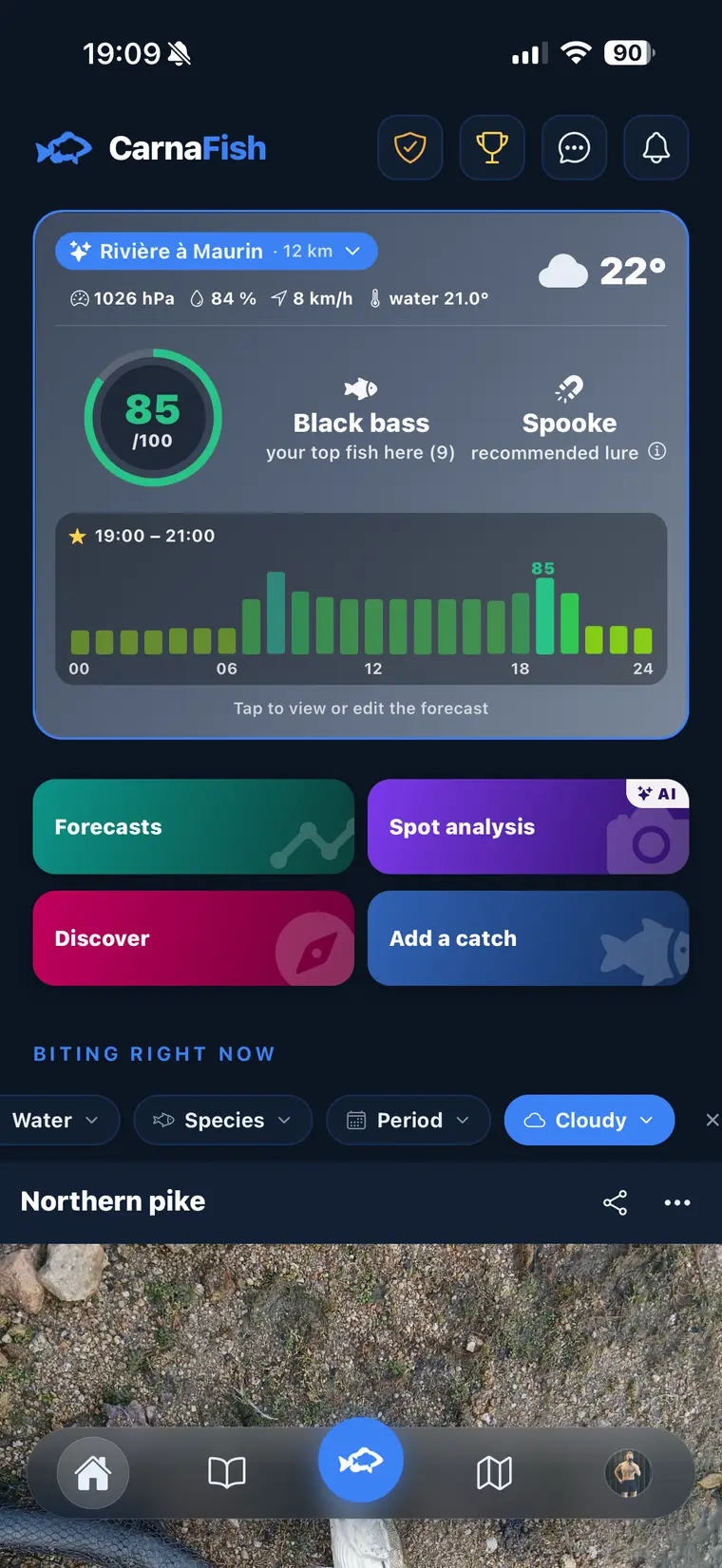
Not sure what to tie on?
Photograph your spot: CarnaFish reads the scene, cross-checks the conditions and gives you the zone, the lure and the retrieve. Free on iOS and Android.
Colors by water and season
- Clear water: a scaled natural roach or shad pattern. At ten feet in clear water, the flat sides already supply all the flash you need.
- Spring, hard bottom: a red-brown craw, which works consistently whenever crawfish are the dominant forage on rocky breaks.
- Stained water: chartreuse-dominant with a dark back, because past a certain turbidity flash stops carrying and you need colored mass instead.
A second-pass tool, not a front-line one
The PD10 Pressure doesn't have the versatility of a classic round crank and isn't chasing it. It owns a narrow slot: six to ten feet, on fish already located and already worked over. Next to a Lucky Craft Flat Cra-Pea, which plays the same flat-side card higher in the column, it rounds out a box rather than replacing anything in it.
Knowing what depth the fish are holding at before you pick the lure is half the job — and that's what CarnaFish does: a photo of the spot, and the AI suggests the zone, the depth and the lure family that fit the day's conditions. To dig further into reading deep structure, our beginner's guide to zander on lures also covers the other families that fish this water layer.
Key takeaways
- Flat body behind a deep bill: a tight wobble and broad flash at a depth dominated by wide-swimming cranks.
- A second-pass lure for located, pressured fish, not a search bait for untouched water.
- Thin fluorocarbon runs deeper than heavy line, and straight braid throws fish off fine trebles.
- Graze the bottom, don't plow it. The bite happens in the foot of water above the substrate.
FAQ
How deep does the 6th Sense PD10 Pressure actually run?
The maker rates it 8 to 10 ft, which corresponds to a long cast on thin fluorocarbon. On heavy line or a short cast, figure on a working depth closer to 6 to 8 ft.
What's the difference from a standard deep crankbait?
The body. Most deep divers have a round body producing a wide, noisy action; the PD10 has flat sides that give a tight tremble and a flash in hard glints. The signal reaching the fish is a different kind altogether.
Should the PD10 be fished in bottom contact?
Not continuously. Touch down once to find the depth, then keep the lure just above the substrate. Constant contact knocks it off its track and multiplies snags on a lure working at ten feet.
Braid or fluorocarbon for this crankbait?
Fluorocarbon, 0.25 to 0.30 mm. Braid has no stretch, and with the fine trebles of a crankbait that lack of give loses a lot of fish during the fight.
Does the PD10 Pressure work for zander?
Yes, it's one of its best European uses. Its size, density and tight tremble suit clear-water zander on flats and the edges of holes, on a slow retrieve with short stops.
PD10 or PD4?
They don't fish the same layer. The 6th Sense PD4 Pressure Series works between two and four feet along banks and cover; the PD10 drops to eight or ten feet on breaks. The two complement each other in the same box.
The full bass lure guideSeason-by-season strategy: which family of lure, when, and why.Go from theory to fish
CarnaFish reads your spot from a photo and gives you the game plan: zone, lure, retrieve. Free on iOS and Android.