Berkley Bullet Pop: the popper that casts far and still catches
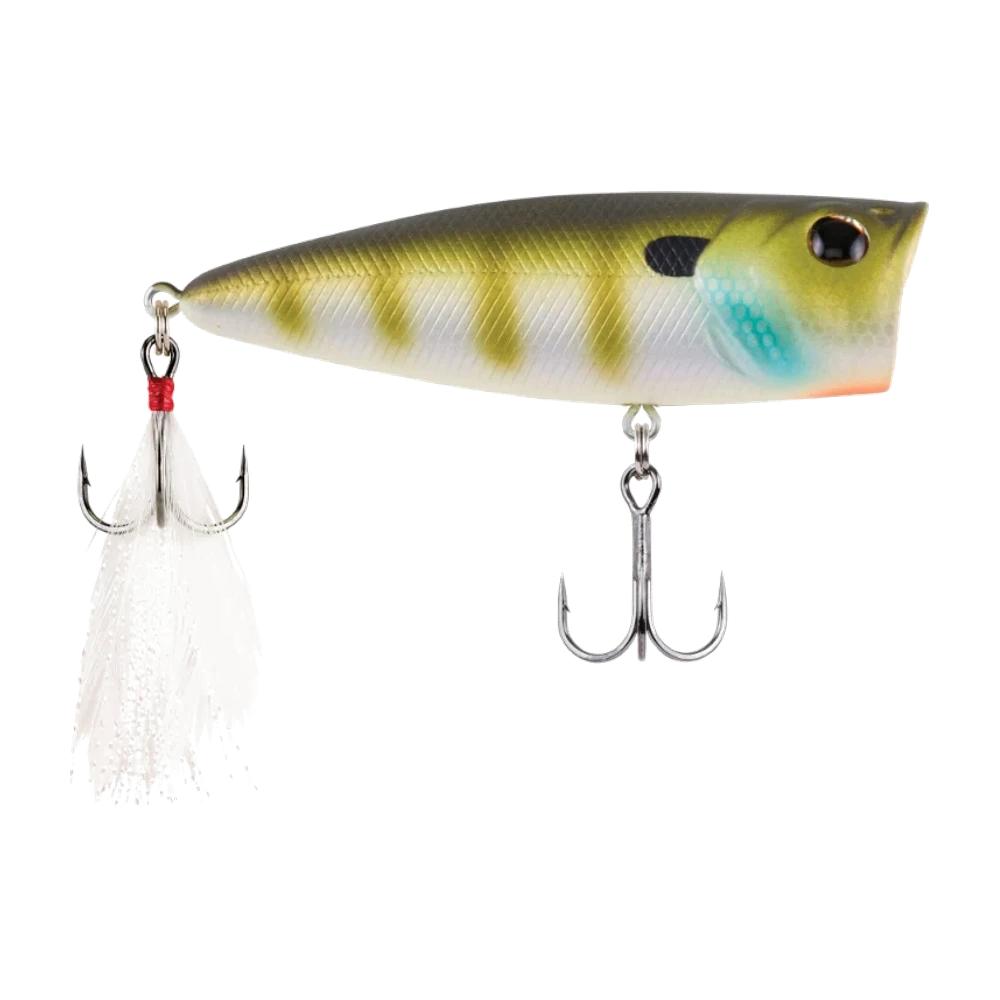
Before tying this one on, it helps to know if the spot actually calls for it. CarnaFish reads the scene from a photo.
Fish bust the surface forty metres out. By the time you wind your popper in, cast again and cover the ten metres you were short, it is over. Most poppers fish well, but short: hollow body, wide nose, a lot of air, not much range. You lose those fish for want of metres, not for want of technique.
The Bullet Pop attacks that problem with ballistics. A tapered bullet body, mass shifted to the rear on the cast, and a cup just deep enough to spit without braking. The result is a popper that covers ground, and that throws in a second action most of its rivals refuse: walking the dog.
Two lures in one body
The bullet shape is a deliberate compromise. A very deep, very wide cup makes a big plop but turns the lure into a parachute on the cast and locks it on its axis. The Bullet Pop reduces the cup volume and lengthens the body. What you lose in raw sound output you get back elsewhere:
- Range. The internal weight transfer parks the mass at the rear during flight, which stabilises the trajectory and adds real distance over a stubby popper of the same weight.
- Lateral freedom. A tapered body slides sideways instead of staying planted. That is what makes the zigzag possible.
- Consistency in wind. Where a light popper spins off course, this one stays on line and cuts through the chop.
The trade-off is plain: on flat, silent water, a big-cupped popper calls from further away. The Bullet Pop makes up for it with the number of metres fished per hour, not with sound volume.
The retrieve: rod angle decides everything
- Cast long, past the water you think holds fish. Range is this lure's argument — use it.
- Take up the slack until you feel the lure, without moving it.
- A burst of three pops with the rod high, tip at eleven o'clock, sharp wrist twitches. The lure spits upwards and announces itself.
- A one to two second pause. Short, unlike a finesse popper: here you are searching.
- A burst of six to eight twitches with the rod low, tip pointed at the water, steady cadence. The lure walks into a zigzag and covers ground while staying attractive.
- Alternate the two bursts all the way in. The bite most often comes as you switch from one mode to the other.
On the water: do not change lure to change action, change the height of the rod tip. Rod high, the pull is angled upwards: the cupped nose bites the water and throws a spray. Rod low, the pull is horizontal: the nose slides and the body breaks out to the side. It is the same wrist movement, the angle decides, and plenty of anglers miss half of what this lure can do simply because they never drop the rod.
Settings by context
| Context | Size | Dominant action | Line |
|---|---|---|---|
| Calm pond, bass on the edge | 6 cm | Pops, rod high, long pauses | 0.25 mm fluorocarbon |
| Big water, searching | 7 cm | Walking, rod low | Braid + 0.30 mm fluorocarbon |
| Sea bass busting on top | 7 cm | Fast walking, no pauses | Braid + 0.35 mm fluorocarbon |
| Crosswind, chop | 7 cm | Firm pops, brisk rhythm | Braid + 0.30 mm fluorocarbon |
Two points on the connection. A loop knot or a small fine snap lets the lure break out sideways; a tight knot on the ring kills the zigzag. And if you fish in salt water, rinse and check the trebles after every session: on a topwater taking repeated knocks, the points blunt fast and your drop-off rate climbs.
A word on the rod, because it matters as much as the lure on topwater. Too fast an action transmits hard jerks and makes the lure jump out of the water instead of gliding; a progressive action, in 2 m to 2.30 m, absorbs the movement and makes the zigzag far more regular. It is also what saves you on the hookset, giving the fish time to close its mouth before the tension builds.
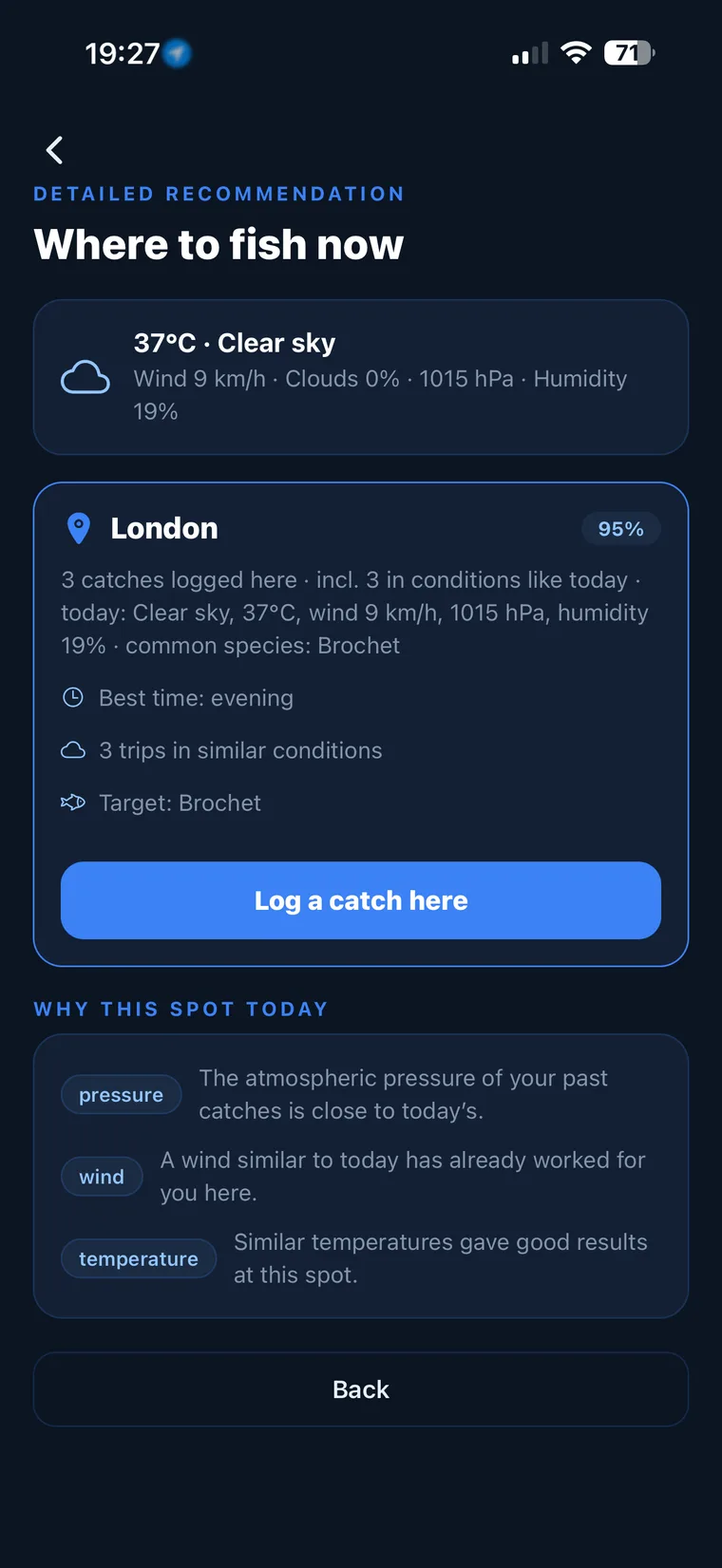
Not sure what to tie on?
Photograph your spot: CarnaFish reads the scene, cross-checks the conditions and gives you the zone, the lure and the retrieve. Free on iOS and Android.
Where it excels, where it is the wrong call
It is built for searching the surface over large areas: long pond margins, breakwaters, sea bass beaches, shallow flats in summer. It also comes into its own when you have to fish well off the bank, from a high bank or over a weed bed you cannot get close to.
Conversely, it is of little use on educated fish in clear, calm water, where a discreet popper worked slowly stays more effective. It is even less use on tiny, cluttered spots — under a low branch, between two jetties — where its range helps you not at all and its tendency to slide sideways takes it out of the spot in two twitches.
Bullet Pop against the other poppers
The Megabass Pop-X plays exactly the opposite role: small, discreet, nose-diving, built for a precise spot and a fish that has seen it all. Where the Pop-X fishes one square metre for five minutes, the Bullet Pop fishes thirty metres in one.
The Rebel Pop-R remains the benchmark for deep sound and a heavy spray: on flat water it calls from further off. But it casts less well and does not walk the dog anything like as readily. As for the Savage Gear Blast Popper, it aims bigger and further still, in salt water, with a profile and hardware built for powerful fish — the Bullet Pop stays an all-round freshwater and inshore size.
Our beginner's guide to bass fishing covers the time windows where topwater beats everything else. And if you are torn between a searching popper and a precision popper when you reach the bank, CarnaFish reads a photo of the spot and answers.
Key takeaways
- Bullet body and weight transfer: this is a popper that casts long and handles wind.
- Rod high it spits, rod low it walks. Same movement, two lures.
- Short pauses: this is a searching tool, not a finesse one.
- Loop knot or fine snap, never a tight knot that kills the sideways break.
- Poorly suited to educated fish on calm water and to tight spots.
FAQ
Can the Berkley Bullet Pop be walked the dog?
Yes, and it is one of its strengths. Rod low, tip pointed at the water, with steady wrist twitches, the tapered body breaks out sideways and zigzags. Rod high, the same movement produces a classic spray.
Why does it cast further than a classic popper?
The bullet profile offers less resistance to the wind and the internal weight transfer parks the mass at the rear during flight. The trajectory stays flat instead of ballooning, which translates into several metres gained on every cast.
Which of the two sizes should I choose?
The smaller one for ponds and calm margins, where discretion counts; the bigger one as soon as you need to cast far, search a large area, fish in wind or target sea bass. The bigger model remains perfectly acceptable for adult bass.
Should there be a pause between twitches?
Short pauses, one to two seconds only. This is not a finesse lure: its point is covering ground, and pauses that are too long cancel out the benefit of its range.
Does it suit shore fishing for sea bass?
Yes, particularly over visible feeding fish, where fast walking with no pauses works very well. Use a 0.30 to 0.35 mm fluorocarbon leader and keep an eye on the trebles, which blunt quickly against rock and salt.
How does it differ from a precision popper like the Pop-X?
They are opposite uses. A precision popper works a tiny spot at a crawl, on a wary fish. The Bullet Pop covers distance and looks for active fish: you move it a lot and rarely leave it still.
The full bass lure guideSeason-by-season strategy: which family of lure, when, and why.Go from theory to fish
CarnaFish reads your spot from a photo and gives you the game plan: zone, lure, retrieve. Free on iOS and Android.