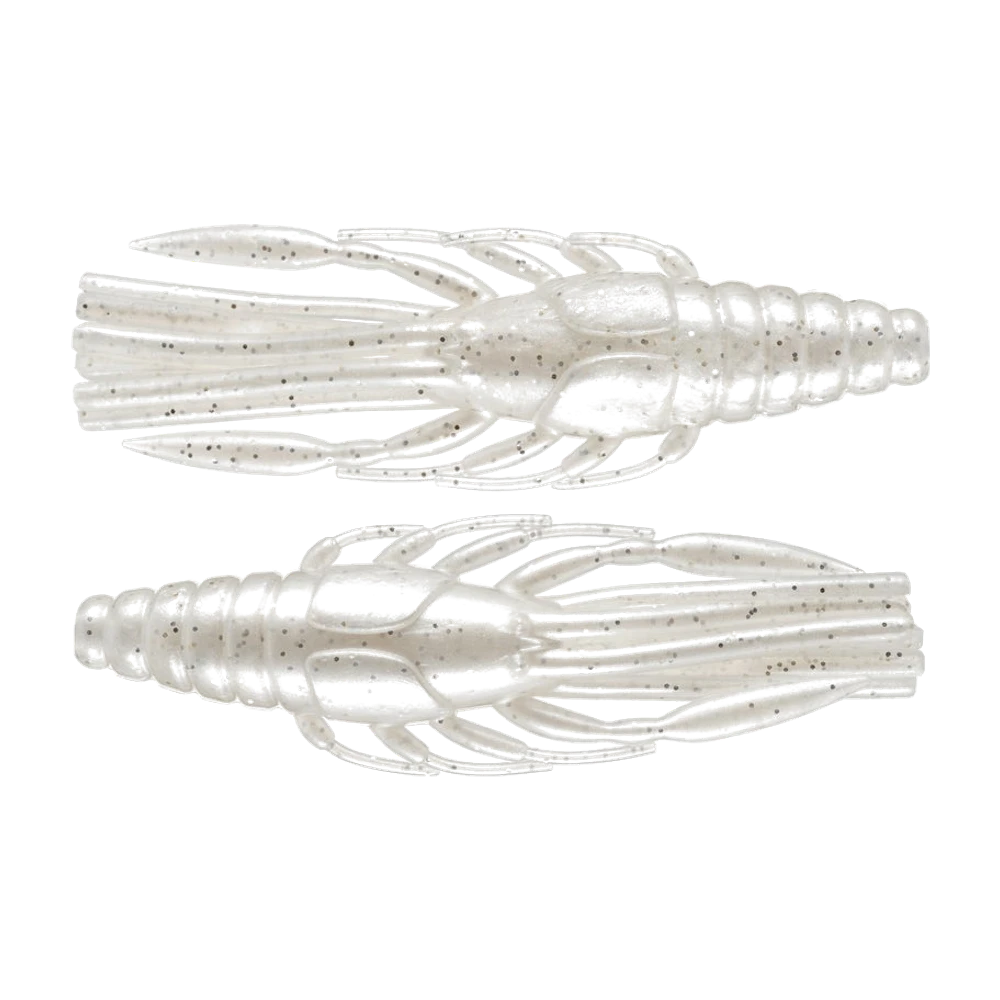
6th Sense Crube 3.0 Craw Tube: the tube that leaks bubbles
One lure, endless conditions. CarnaFish reads your spot from a photo so you are not just guessing.
Mid-July, three in the afternoon, a line of sunken stumps in six feet of water. You have already run a crankbait, a spinnerbait and a swimbait through it: nothing. The bass are there, but they are glued to bottom and they will not chase anything that moves fast. That is exactly the window where a tube dropped into the wood turns a blank day into a handful of fish — and 6th Sense built the Crube 3.0 for that narrow job, by borrowing from two lure families at once.
A body hollow for three quarters, and what that does on the drop
The core idea is easy to describe and hard to pour: the body is hollow across roughly three quarters of its length. Rig it, cast it, and that cavity traps air. On the way down the air escapes gradually and the Crube leaves a thin stream of bubbles behind it — a visual signature no solid soft plastic produces.
That detail is worth more than a catalogue line. A bass sitting under a stump sees a silhouette dropping into its field of view that is both moving and venting bubbles. Two signals arriving together, which reads a lot like a crayfish that just got flushed out of its hole in a panic. For it to work you have to let the fall happen: a tube you start retrieving before it reaches bottom releases almost nothing.
Fourteen appendages that work without you touching the rod
Behind the body, 6th Sense laid out fourteen appendages: thin legs, two wider claws and the usual set of tube tentacles. The count matters less than the spread of thicknesses. Appendages that are all identical beat at the same frequency and give you a repetitive motion; here the thin legs quiver on the slightest water displacement while the heavier claws only react to a firmer pull.
Practical upshot: the lure is alive even at a dead stop. Set it down on hard bottom, touch nothing for five seconds, and the current or the simple settling of the line is enough to keep the filaments working. That matters on pressured water, where every square yard of the bank has already seen three lures go past before lunch.
The material — a soft plastic and scent blend poured into the mass — pulls in the same direction. Soft enough for the appendages to move, tough enough to take several fish without tearing out at the hook eye, which is where cheap tubes let you down after two bites.
The dense top quarter: the detail that stops the tube sliding
The historic problem with tubes is the rig. A body hollow end to end will not stay on the shank: the hook perforates it, the tube slides down, and you end up with plastic bunched on the bend that no longer fishes. 6th Sense made the front quarter of the Crube dense. You pin the hook into solid material and the lure stays put.
Standard Texas rig
An EWG worm hook in 2/0 to 3/0, a 1/8 to 1/4 oz tungsten bullet left unpegged, 25-30 lb fluorocarbon. Cast, let it fall on a semi-tight line so you keep contact, then work it by lifting the rod a foot or so and letting it drop back. The bite comes almost every time on the drop.
Flipping into cover
With a 3/8 to 1/2 oz weight pegged tight to the nose, a 3/0 flipping hook and braid, the Crube presents vertically under low branches, docks and mats of floating vegetation. Think short and precise: two or three lift-and-drops per target, then move on. It is still a Texas rig, just a heavier-duty version of one.
Dragging on bottom
Out on big hard-bottom flats, dragging is the most under-used presentation of all: rod low, pull the lure sideways three to six feet very slowly, then take up the slack. The Crube scrapes along, kicks up a little substrate and lets its claws open. It is slow, it is boring, and it catches the biggest fish of the day.
The reflex to unlearn: setting the hook the instant you feel weight. With a hollow tube the bass inhales the lure and often holds it crosswise. Drop the rod, let him move off with the line for a second, then set with a sideways sweep. You will go from losing two fish in five to losing none.
Where and when it genuinely earns its place
The Crube 3.0 is not a search lure. It comes out when you already know where the fish are and they refuse to move: high summer on hard bottom, early fall as the surface cools, or in spring right after the spawn, when bass defend a tight patch of territory and a crayfish passing within reach triggers a near-automatic reaction.
In Europe the 3 in size also makes it a credible big-perch lure, especially on riprap and bridge pilings, on a light 3-5 g head with shorter hops. Do not count on it for pike: the size and the bottom-oriented presentation do not match how that fish hunts.
The classic mistake
Working it too much. A tube is not a swimbait: its value sits in the fall and the pauses, not in the path it travels. String hops together without letting it settle and you cancel the bubble effect, stop the appendages from opening, and end up fishing an inert lump of plastic. Count to three on every pause — it feels long on the water, and it is what the lure needs.
Not sure what to tie on?
Photograph your spot: CarnaFish reads the scene, cross-checks the conditions and gives you the zone, the lure and the retrieve. Free on iOS and Android.
Colors by water clarity
- Clear to lightly stained: Green Pumpkin, the universal brown-green of bass soft plastics, which reads as a crayfish and as gravel bottom at the same time.
- Dark, heavily stained water or low light: Black and Blue, a hard silhouette with just enough blue flash to stay findable at low visibility.
- Spring, warming water: a brown-orange craw tone, which matches the real color of active crayfish and works particularly well over rock.
A complement, not a replacement
The Crube 3.0 slots into a precise gap between two families you may already carry. Against a solid craw imitation like the Strike King Rage Craw it loses claw kick but gains the bubble drop and a more compact profile. Against a plain finesse tube like the Zman TRD TubeZ it adds the appendages a bare tube lacks. And if you want bulk to pull a big fish out of heavy cover, the Reaction Innovations Sweet Beaver is still the better tool.
Picking the right soft plastic counts for nothing if you drop it in the wrong place, which is the whole point of CarnaFish: photograph the water and you get a zone, a depth and a lure family that fit the day's conditions. For the groundwork on tackle and reading spots, our beginner's guide to bass fishing covers the rest.
The short version
- The three-quarter hollow body vents bubbles on the drop: always let the lure reach bottom before you work it.
- The dense front quarter lets you pin an EWG or flipping hook without the tube sliding down the shank.
- The fourteen appendages work even at a standstill, which makes this a pressured-water lure rather than a search lure.
- On the bite, let the fish move for a second before you sweep: the tube gets inhaled and often sits crosswise.
FAQ
What hook size for the Crube 3.0?
An EWG worm hook in 2/0 or 3/0 covers nearly everything. Pin it through the dense front quarter of the lure, not the hollow section, or the body will eventually slide down onto the bend.
Pegged or unpegged weight?
Unpegged for a standard Texas rig on open bottom: the lure keeps a slower, more natural fall. Pegged tight to the nose as soon as you are flipping into cover, so the whole rig punches through vegetation without opening up.
Do the bubbles really make a difference?
They add a visual signal no solid soft plastic produces, and they happen during the fall, which is when most bites on this type of lure come. In very murky water the effect is obviously less decisive.
Is the Crube 3.0 any good for perch?
Yes, in 3 in on a light 3-5 g jighead, especially on riprap and bridge pilings. Keep the hops shorter and the rhythm slightly quicker than you would for bass.
How many fish does one lure last?
The blend is deliberately denser than a standard finesse tube, so it takes several fish. Wear shows first at the hook perforation: shift the entry point slightly once the material starts opening up.
How fast should I work it?
As slowly as your patience allows. Short hop, two to three second pause, constant bottom contact. The moment you speed up you lose both the bubble effect and the appendage movement.
The full bass lure guideSeason-by-season strategy: which family of lure, when, and why.Go from theory to fish
CarnaFish reads your spot from a photo and gives you the game plan: zone, lure, retrieve. Free on iOS and Android.