Big Bite Baits Craw Worm: the slender craw that slows its own fall
One lure, endless conditions. CarnaFish reads your spot from a photo so you are not just guessing.
There are two families of soft craws. The wide, chunky ones built to displace as much water as possible under a heavy weight — and the slim, long ones designed to slide into the mouth of a fish that is hesitating. The Big Bite Baits Craw Worm clearly belongs to the second group. The name says it: it is as much a worm as a craw, and that compromise opens four distinct uses.
A long profile where others go wide
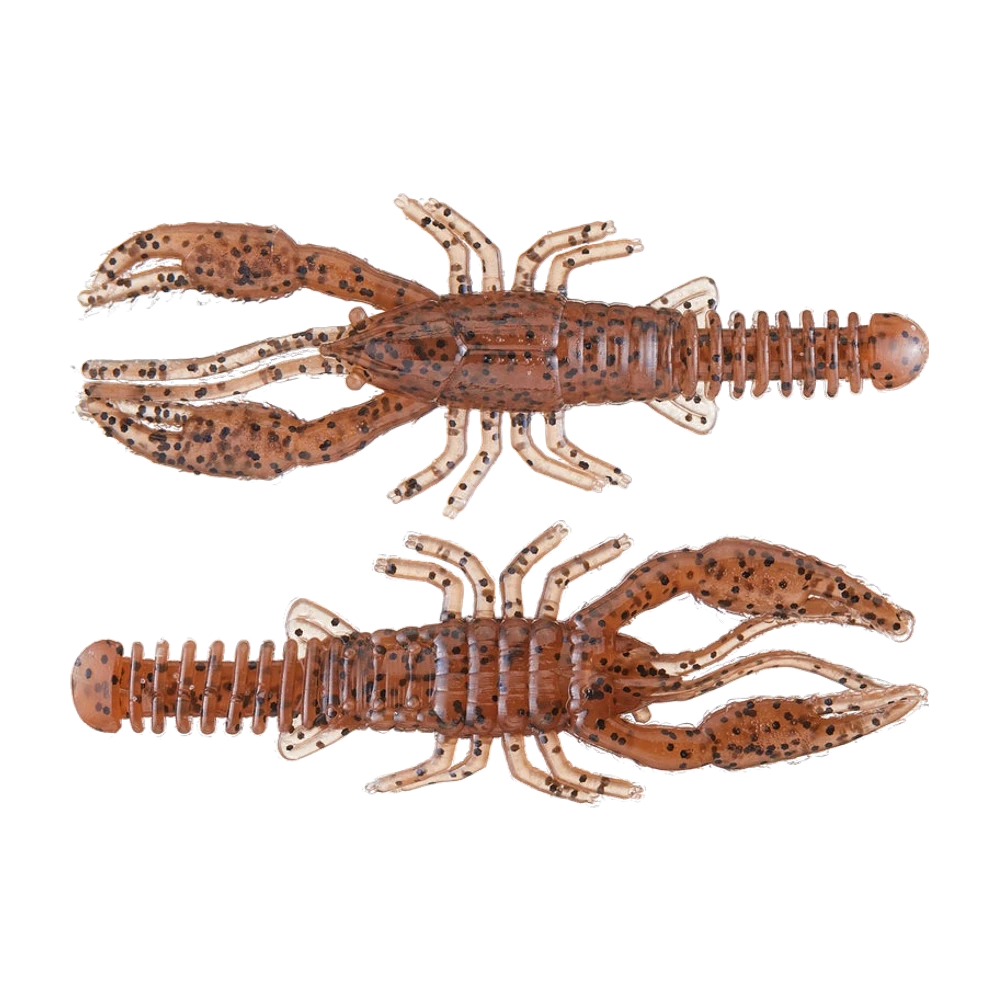
Laid flat, the Craw Worm surprises you with how slim it is. The carapace is segmented and finely moulded, with antennae, four pairs of legs and two split-tipped claws — yet the whole thing stays narrow. Behind the carapace, the body continues into a ribbed section ending in a small rounded bulb. That part, the one that looks like a worm, does not exist on a classic chunky craw.
That choice has a direct consequence on water displacement. A Strike King Rage Craw, with its wide claws slapping hard, sends a strong signal visible from a distance. The Craw Worm does the opposite: plenty of small appendages moving, but a discreet silhouette. In clear water and on pressured fish, that is often exactly what you need.
The two sizes, and what they change
Big Bite Baits offers the Craw Worm in 3 in (7.6 cm) and 4 in (10.2 cm), ten per pack in both cases. These are not two versions of the same bait, they are two tools.
The 3 in is a finesse size. On a 2/0 Texas hook with a 3.5 g weight it becomes a serious alternative to a worm when bass refuse bulk, and it even draws perch over hard bottom. The 4 in is the reference size for jig trailers and light flipping: it finishes a 10 or 14 g jig without doubling its bulk.
If you only take one size, take the 4 in and trim the first tail rib when you want it shorter. The reverse is impossible, and a shortened Craw Worm keeps all of its action — unlike many craws whose entire movement comes from the rear claws.
What the ribbed section actually does
The ribbed body section is not decoration. Each rib increases the surface in contact with the water and brakes the bait's descent. On a light Texas rig, that braking gives a noticeably longer fall than a smooth-bodied craw of the same weight. You feel the difference in the rod: the slack takes longer to come back.
Why does that matter? Because a bass following a sinking prey needs time to commit. Every half-second gained on the fall is one more chance. And that is exactly why you do not weight a craw the way you weight a swimbait: with this bait, the reflex should be to go lighter.
Big Bite Baits also loads the plastic with its in-house attractant, Bug Juice. It is a plus on tentative bites — the fish holds the bait a little longer — but it never replaces a good presentation.
Four rigs, four situations
Weedless Texas
The default rig. A 2/0 wide gap hook for the 3 in, 3/0 to 4/0 for the 4 in, with a 3.5 to 10 g bullet sinker. Fish it in contact with the bottom, in twenty-centimetre hops followed by a three to five second pause. The bite almost always comes on the pause.
Carolina rig
This is where the slender profile makes the most sense. Behind a 14 to 21 g weight and a 60 cm to 1 m leader, the Craw Worm rides off the bottom and comes alive on every drag of the sinker. A rig to bring back out on big gravel flats and soft breaks, when fish are spread out.
Jig trailer
On a football jig or a flipping jig, the 4 in adds silhouette without the heavy vibration of a big craw. It suits jigs dragged slowly along the bottom especially well, where a noisy claw can back a wary fish off.
Light flipping
The manufacturer describes it as usable for "lighter" flipping, and that is honest: the body has enough material to hold on a heavy wire hook, but this is not a punch rig bait for matted cover. To get through dense cover, a Big Bite Baits Craw Tube or a thicker creature is the right tool.
The classic mistake
Overweighting. The temptation is strong in wind or current, but a 14 g sinker on a 3 in Craw Worm cancels everything that makes the bait worth fishing: the slow fall and the appendage work during the descent. If you need weight to reach the bottom, step up a size with a moderate sinker instead.
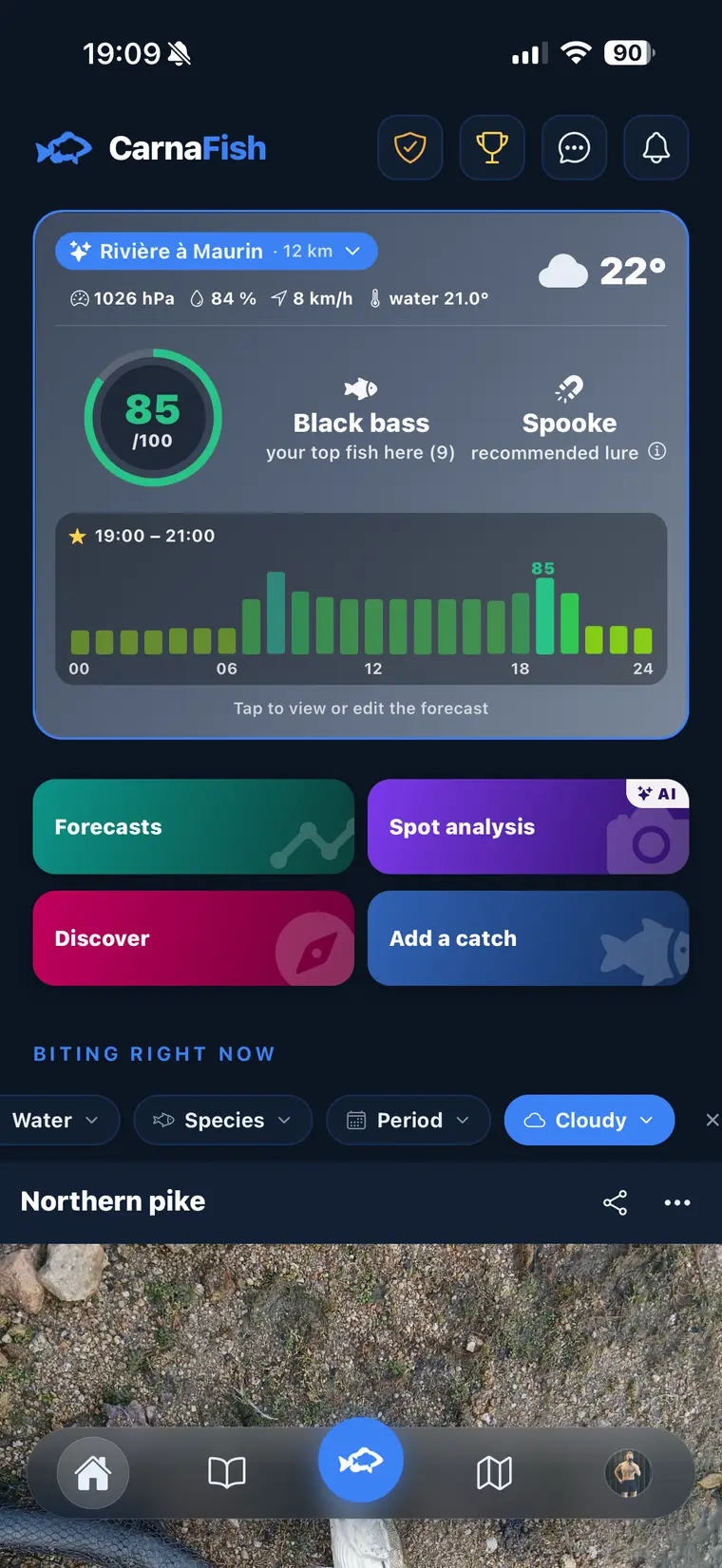
Not sure what to tie on?
Photograph your spot: CarnaFish reads the scene, cross-checks the conditions and gives you the zone, the lure and the retrieve. Free on iOS and Android.
Colour by bottom type and water
- Clear water, gravel or rock bottom: Cinnamon Brown with black flake, the colour in the photo. It is the most realistic crawfish shade over hard bottom in summer.
- Clear to lightly stained water, weed: Green Pumpkin, the universal that is never completely wrong.
- Dark water, heavy stain or low light: Black Blue, for a readable silhouette when colour no longer registers.
A bridge between the worm and the craw
In Europe as elsewhere, plenty of bass anglers switch between a worm when nothing bites and a big craw when things are good. The Craw Worm occupies the space between the two: discreet enough for tough days, craw-like enough to work rocky zones where fish are hunting exactly that. Paired with an O.S.P Dolive Craw for even finer presentations, it covers a large share of bottom situations.
Still, the best bait will never tell you where the fish are holding on a given day. That is exactly what CarnaFish makes easier: a photo of the spot, and the app suggests the zone and the presentation suited to current conditions. For tackle and spot fundamentals, our beginner's guide to bass fishing remains the right starting point.
Key takeaways
- Two sizes, 7.6 and 10.2 cm, ten per pack: the small one for finesse, the big one for jig trailers and light flipping.
- The ribbed tail section brakes the fall, giving a fish more time to commit.
- Slender profile means a discreet signal: an asset in clear water, a limit in heavy stain.
- Overweighting this bait kills its whole point; step up a size before stepping up the sinker.
FAQ
Which Craw Worm size should I pick?
The 3 in (7.6 cm) for finesse presentations on a light Texas rig or drop shot, the 4 in (10.2 cm) for jig trailers, Carolina rigs and light flipping. Both come ten to a pack.
Does the Craw Worm work for perch?
In 3 in on a light weight, yes, especially over hard bottom where perch hunt crayfish. In 4 in it is too bulky to call it a reliable perch bait.
How does it differ from a big-clawed craw?
The Craw Worm's split claws move a lot but displace little water, where a wide-clawed craw sends out strong vibration. Pick the Craw Worm in clear water or on wary fish, the other in stained water or on active fish.
What sinker weight on a Texas rig?
3.5 to 7 g for the 3 in, 5 to 10 g for the 4 in. The lighter you stay, the longer the fall lasts and the more time the appendages have to work.
Does the Craw Worm handle dense vegetation?
Rigged weedless Texas, it clears light to moderate vegetation. For a thick mat punched with a heavy weight it lacks material across the back: a thicker bait will hold the hook better on the set.
Does the Bug Juice attractant really make a difference?
It mainly helps on tentative bites, encouraging a fish to hold the bait a fraction of a second longer. It is not a bite trigger, just a little margin on the hookset.
The full bass lure guideSeason-by-season strategy: which family of lure, when, and why.Go from theory to fish
CarnaFish reads your spot from a photo and gives you the game plan: zone, lure, retrieve. Free on iOS and Android.