Cordell Big O: using buoyancy as a retrieve
Not sure this lure fits YOUR spot today? CarnaFish tells you in 10 seconds, from a photo.
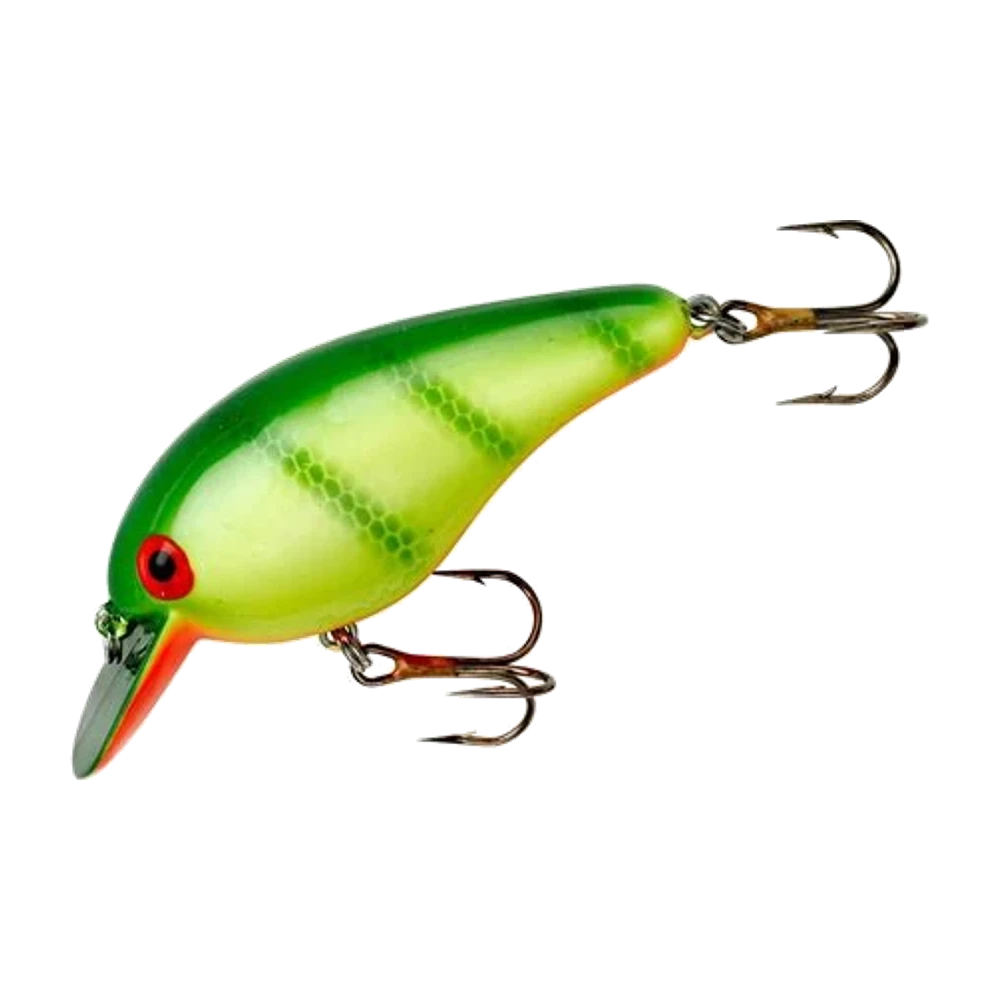
There is one question almost nobody asks when buying a crankbait: what does it do when I stop winding? On most models the answer is "not much" — it drifts up weakly, or it stops. On the Big O, the stop is an event.
That short round body, descended from crankbaits hand-carved from light wood, carries a considerable volume of air for its size. The moment you let go of the handle, it heads back up decisively, nose first, rolling on itself. A fish that was following at a constant speed suddenly sees its prey change direction and flee towards the surface.
That is this lure's central trigger. Everything that follows is about causing that rise in the right place, at the right moment, and not by accident.
A volume that moves a lot of water
The Big O is short and wide. That shape is anything but incidental.
- A very wide roll. The lure tips right over from one flank to the other. It is not a fine vibration you feel in the rod, it is dull, well-spaced thumps, very readable even with thick line.
- A strong pressure wave. A chunky body pushes more water ahead of it. The fish picks it up on the lateral line long before seeing it, which makes it a genuine stained-water lure.
- High buoyancy. That is the direct consequence of the volume. It explains the rise on the stop, but also the fact that you have to give it a few firm handle turns to get it down to its depth.
- A tendency to veer. On some retrieves the lure kicks briefly to one side for no apparent reason and then settles back. That small imbalance is wanted: it breaks the regularity and triggers bites.
The retrieve: wind, stop, let it rise
- Cast past your zone, five metres further if you can.
- Four or five fast turns to force the dive — it floats a lot, you have to make it go down.
- Medium, steady rhythm for three or four turns.
- A clean one to two second stop. Keep the line just tight, rod still. The lure rises, rolling.
- Firm restart: two fast turns to drive it back down. That precise moment is often when the bite comes.
- Repeat that cycle every four or five seconds all the way to the bank.
Stop duration is set by the mood of the fish:
| Behaviour observed | Stop duration | Note |
|---|---|---|
| Active fish, clean takes | 0.5 to 1 s | Just enough to break the rhythm |
| Follows without taking | 2 s | Lets the lure rise 40-50 cm |
| Cold water, slow fish | 3 s and more | Long rise, very slow restart |
| Cluttered bottom | Stop on contact | Buoyancy is what frees it |
On the water: do not count your stops in seconds, count them in centimetres of rise. On a spot where fish are pinned at 2 m and the lure runs at 2 m, a two-second stop takes it out of the useful zone. The higher the fish sit in the water, the longer you can stretch it.
Choosing size and line
The Big O comes in several sizes and, like most crankbaits, it is size that sets the depth — not speed.
The small model works around 1.2 to 1.8 m and suits margins and flats. The bigger model reaches 2 to 2.5 m and becomes the tool for gentle drop-offs and mid-depth gravel bars.
For line, fluorocarbon of 0.28 to 0.33 mm is the standard setting. Dropping to 0.25 mm gains about 30 cm of depth but cuts your margin over obstructions; going up to 0.35 mm shortens the dive and slows the rise, which is not necessarily a bad thing when you want long stops without leaving the zone.
A moderate-ratio reel will help: with a very fast ratio you will struggle to hold a constant speed on a lure that pulls this hard.
Its window — and what it does not do
It excels in stained water and in the pre-spawn, when bass move up onto flats and gravel margins in one to two metres. It is also a very good late-summer lure over stony bottoms, where its heavy roll and decisive rise imitate a crawfish taking off.
It is wrong in clear, calm water on educated fish: it does too much, and its wide roll is visible from a long way off. It is equally wrong as soon as you need to reach beyond 2.5 m — its buoyancy, which is its quality, stops it going down. Finally, it does not like vegetation: its wide action collects filaments and it loses all its point as soon as the lip loads up.
Not sure what to tie on?
Photograph your spot: CarnaFish reads the scene, cross-checks the conditions and gives you the zone, the lure and the retrieve. Free on iOS and Android.
Colours and bottom contact
On this lure, colour cannot be separated from the type of bottom you are scraping, because a large share of the takes come from a fish reading the lure as a crawfish taking off.
- Gravel or stone bottom, spring: brown-orange, dark red, craw pattern. That is the most consistent pre-spawn combination.
- Sand or light silt bottom, summer: bleak or shad imitation, silver flank, green back.
- Very stained water: mustard, chartreuse, black back. Contrast counts far more than realism.
- Very bright sky, clear water: drop the size before you change the colour — it is usually the bulk that bothers them, not the shade.
Big O or a tight-wobbling crankbait
The Bomber Model A is its exact philosophical opposite: tight action, high frequency, stable at speed, built to sweep. The Big O is never wound fast and sweeps nothing — it works a precise spot with an alternation of speed and stops. On unfamiliar water, you search with the Model A and you persist with the Big O.
Against the Rapala Fat Rap, which shares its chunky build and strong buoyancy, the difference is mostly in the action: the Fat Rap has a slightly livelier roll and a profile that tapers more towards the rear, the Big O a more central mass and a straighter rise.
If you need to go deeper with the same contact logic, a Strike King 3XD will reach the next layer. Our beginner's guide to bass fishing explains how to string these choices together over a day. And if you are unsure which size to tie on when you arrive, CarnaFish analyses a photo of the spot and answers.
Key takeaways
- Short, very buoyant body: the stop produces a decisive, nose-first rise.
- That rise is the main retrieve, not a side effect.
- Count your stops in centimetres of rise, not in seconds.
- Wide roll and a strong pressure wave: a stained-water lure above all.
- Too demonstrative in clear, calm water, pointless beyond 2.5 m.
FAQ
Why does the Big O rise so fast on the stop?
Because its short, wide body traps a lot of volume for a modest weight. That high buoyancy sends it back up the moment the pull stops, rolling on itself — an escape movement the fish reads immediately.
How deep does it run?
Between 1.2 and 2.5 m depending on size. Fine fluorocarbon adds around 30 cm, thick line takes the same away. Beyond 2.5 m, change lure rather than trying to force it.
Should I use it in clear water?
With reservations. Its wide roll and strong pressure wave are assets in stained water but become too conspicuous in clear, calm conditions. There, a tight-wobbling crankbait or a jerkbait will be the better call.
How do I free it when it touches an obstruction?
Stop winding and give a little slack. Its buoyancy lifts it up along the obstruction in most cases. It is the same gesture as your usual retrieve, which makes fishing rocky ground fairly comfortable.
What set-up for the Big O?
Straight to 0.28 to 0.33 mm fluorocarbon, a moderate-action rod and a moderate-ratio reel. The lure pulls hard: a stiff rod tears the trebles out and too fast a ratio stops you holding a constant speed.
Which colours in spring?
Craw tones, brown-orange and dark red, which match the bass's main food source in the pre-spawn over gravel bottoms. In summer, switch to bleak or shad imitations.
The full bass lure guideSeason-by-season strategy: which family of lure, when, and why.Go from theory to fish
CarnaFish reads your spot from a photo and gives you the game plan: zone, lure, retrieve. Free on iOS and Android.