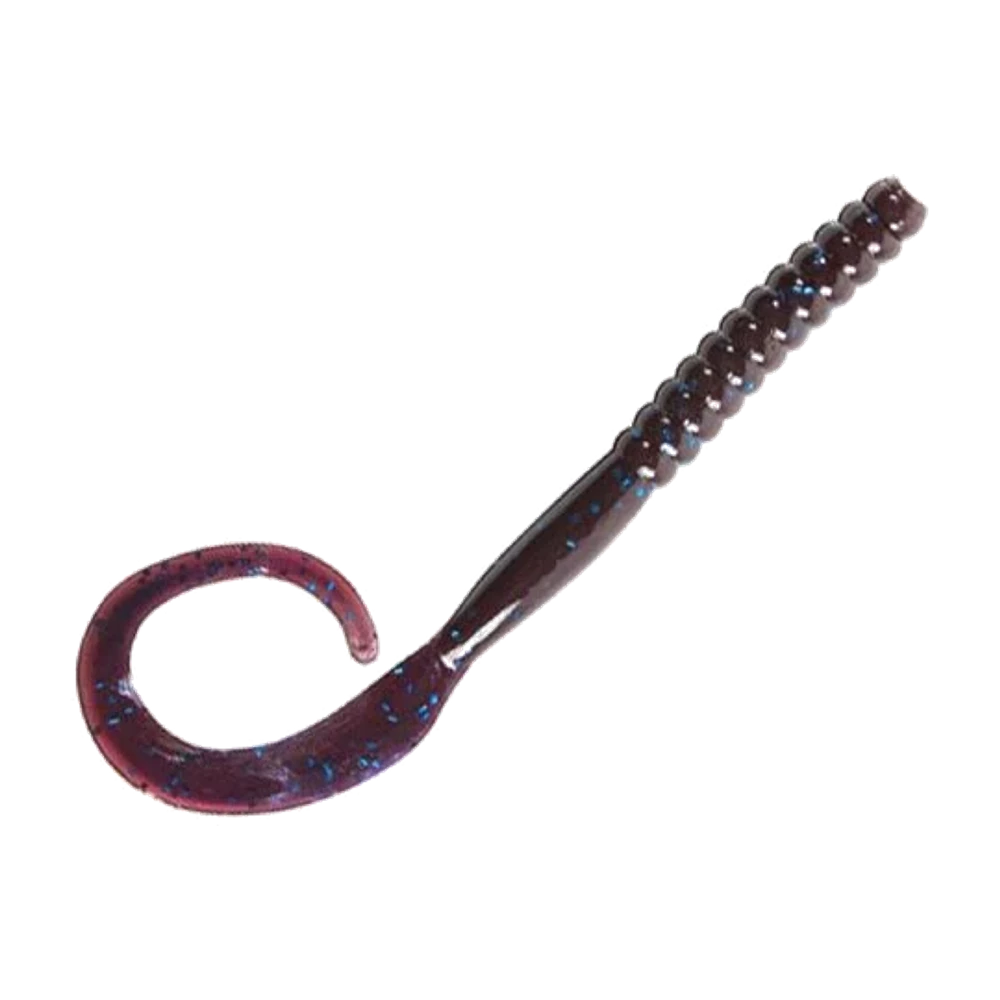
Culprit Original Worm: the ribbon tail that spirals on the fall
One lure, endless conditions. CarnaFish reads your spot from a photo so you are not just guessing.
In high summer, on a warm lake, bass pull off the margins and glue themselves to deep weed beds, drop-offs and old stumps between three and six metres. At those depths the fish is neither active nor really inactive: it is settled, thrifty with its movements, and it will not climb two metres for a small lure.
That is the classic big-worm window. Not a ten-centimetre finesse worm you have to present thirty centimetres from the fish's nose, but a long lure, visible from a distance, fished slowly across large stretches of bottom.
The Culprit Original is the archetype. Nineteen centimetres, a round slim body, and above all a flat, long tail making up nearly a third of the total length — that tail does all the work.
The ribbon tail: a propeller, not a wave
There is a common misunderstanding about this kind of tail. People picture it waving side to side like a paddle tail. That is not what happens.
The Culprit's tail is flat, twisted, and wider than the body. When the lure drops on a free or semi-free line, it does not beat left and right: it coils on itself and spins like a propeller around the lure's axis, like a strip of paper let go flat.
That movement has three concrete consequences.
It slows the fall. The tail's surface area brakes the drop noticeably. A worm this size on a 7 g bullet sinks far more slowly than a compact creature bait with the same weight.
It produces a rotating signal. The flash is not alternating left-right as on a hard bait, it turns. Seen from below it is a continuous, regular movement, very different from anything else in your soft plastic box.
It gives life at rest. Even with the lure sitting on the bottom, the tail stands proud and keeps quivering with the slightest current, while the body stays still.
Three rigs, three speeds
The Culprit takes three rigs that have nothing in common. Picking the right one matters far more than picking the colour.
| Rig | Weight | What you are fishing |
|---|---|---|
| Weightless Texas | none | Margins from 0 to 1.5 m, very slow fall, sighted fish |
| Weighted Texas | 5 to 10 g | Deep weed, stumps, drop-offs between 2 and 6 m |
| Carolina | 14 to 21 g on the main line | Bare flats, slow searching over large areas |
The Carolina rig is the most underused of the three. With a sixty to one hundred centimetre leader, the weight drags the bottom while the worm glides thirty centimetres above it, tail spinning. On a sandy or gravelly flat of four to six metres where you can see no obvious spot, it is the most effective way to fish it.
The retrieve on a weighted Texas rig
- Cast well past the spot and let it drop on a semi-tight line, rod tip at ten o'clock. Follow the fall with your eyes, on the line.
- On bottom contact, wait three seconds doing nothing. The tail finishes its rotation and settles.
- Lift slowly by forty centimetres, pulling with the rod and not with the reel. The worm lifts off, the tail starts spiralling again.
- Let it drop back with the rod following it. Never let the line go completely slack: half the bites happen on that second fall and are only visible on the line.
- Two lifts, then cast again. On a wide spot, shift a metre along with each cast.
- Set on a delay. On a long worm the fish often takes the lure by the tail. Drop the rod, pick up the slack, and set a second later.
On the water: when a fish comes off or you set into thin air twice in a row, do not change lure or colour — cut three centimetres off the tail. A shortened worm gets taken closer to the body, therefore closer to the hook, and the hookup rate goes straight back up.
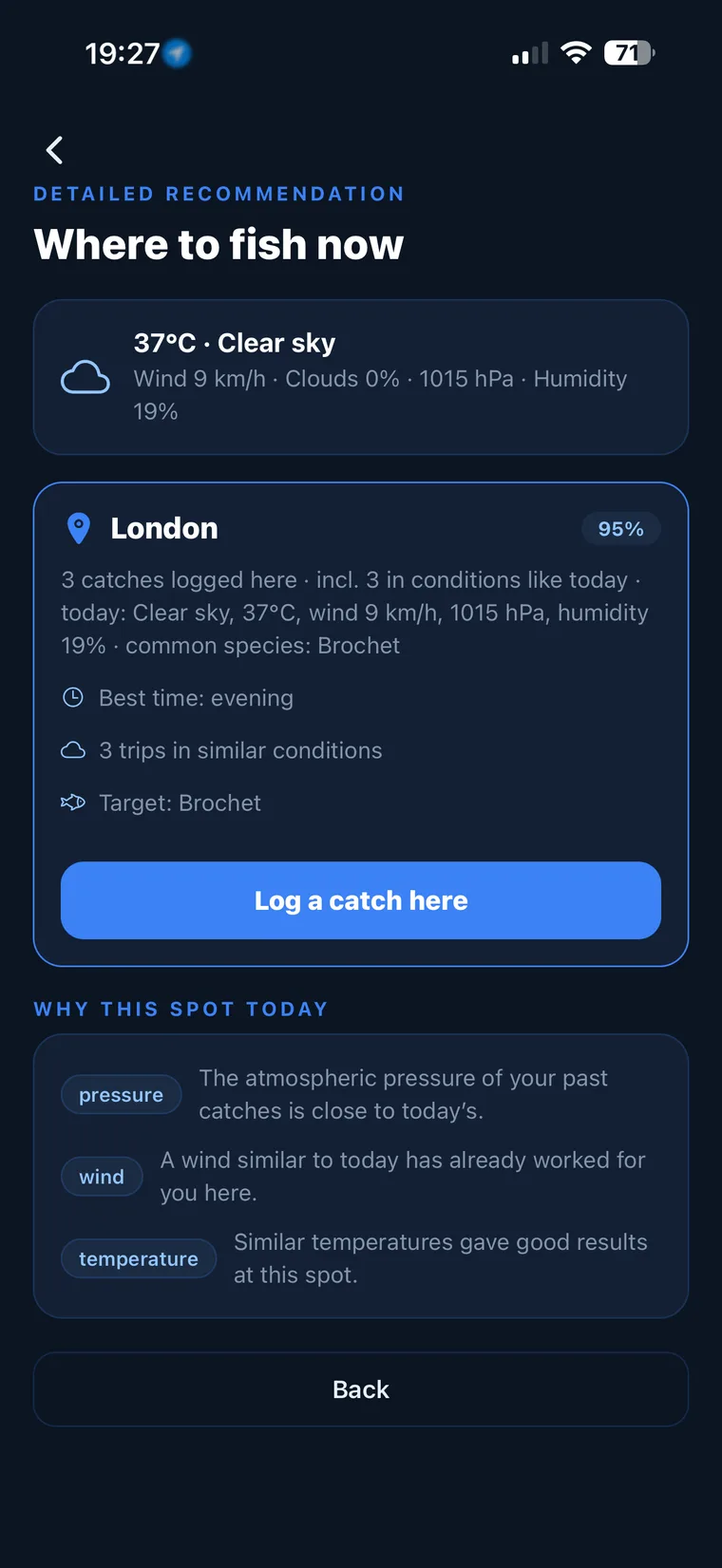
Not sure what to tie on?
Photograph your spot: CarnaFish reads the scene, cross-checks the conditions and gives you the zone, the lure and the retrieve. Free on iOS and Android.
When it wins, when it loses
Its ground is warm water and fish sitting at medium depth, from June to September. Deep weed, lily edges on old water, sunken stumps, drop-offs and flats from three to six metres. It is also very interesting in stained water, where its bulk and its slowness make up for the lack of visibility.
It wins on one point that is rarely mentioned: it sorts upwards. A nineteen-centimetre worm is not often attacked by thirty-centimetre bass. If you want bites, this is not the lure; if you want the biggest fish on a spot, it is.
It loses clearly in cold water, where its slowness turns into inertia and where bass no longer rise to a lure that long. It also loses on fish scattered in open water, where you need to cover ground quickly, and it has almost no use for perch or zander.
Culprit or Power Worm
The Berkley PowerBait Power Worm occupies the same segment with two differences that count. It is loaded with attractant, which noticeably lengthens the time a fish holds the lure in its mouth — a real advantage in cold water and on slow fish. It is also a little denser, so easier to cast into wind.
The Culprit answers with a proportionally thinner and wider tail, therefore a slower fall and a more pronounced rotation. On a fish you need to convince from a distance during the drop, it keeps the edge.
Finally, against a Roboworm Straight Tail, everything separates the two: the Roboworm is a lure for a fixed presentation to a located fish, the Culprit a lure for sweeping an area slowly. In practice you start the area with the Culprit, then come back with the finesse worm for the fish that followed without committing.
Our beginner's guide to bass fishing covers the periods when slow worm fishing takes over. And if you are torn between Carolina and Texas on a flat you are seeing for the first time, CarnaFish analyses a photo of the spot and gives you an answer.
Key takeaways
- The flat tail spins like a propeller on the fall: a rotating signal, not a sideways wave.
- It brakes the drop, which lengthens presentation time for a given weight.
- Three distinct rigs: weightless along margins, weighted Texas on structure, Carolina on bare flats.
- Set on a delay, and shorten the tail if you miss two fish in a row.
- A warm-water, medium-depth lure that sorts for the bigger fish.
FAQ
What weight should I use with a 19 cm worm?
From 5 to 10 g on a Texas rig depending on depth and cover density, and 14 to 21 g on a Carolina, where the weight rides on the main line rather than on the lure. In shallow margins, the weightless Texas gives the slowest fall.
Why do you miss so many bites on a long worm?
Because the fish often grabs the lure by the tail, far from the hook. Drop the rod, pick up the slack and set a second later; if the problem persists, cut three centimetres off the tail.
Does the Culprit work in cold water?
Much less well. Its size and slowness suit warm-water fish sitting at medium depth. Below 12 °C, a shorter profile and a fixed presentation are more productive.
What hook size for this worm?
A wide gap worm hook in 3/0 or 4/0 for the 19 cm version. The body is slim, so the gap has to be big enough to clear the point despite the lure's length.
Which colours should I favour?
June bug and black with flake cover most stained water, green pumpkin and translucent tones with a red edge work better in clear water. Colour choice matters less than rig choice.
Should I prefer Carolina or Texas?
Texas when you are fishing identified structure — a stump, a weed bed, a drop-off. Carolina when you have to sweep a bare flat with no visible spot: the weight drags the bottom and the worm glides above it, which covers far more ground.
The full bass lure guideSeason-by-season strategy: which family of lure, when, and why.Go from theory to fish
CarnaFish reads your spot from a photo and gives you the game plan: zone, lure, retrieve. Free on iOS and Android.