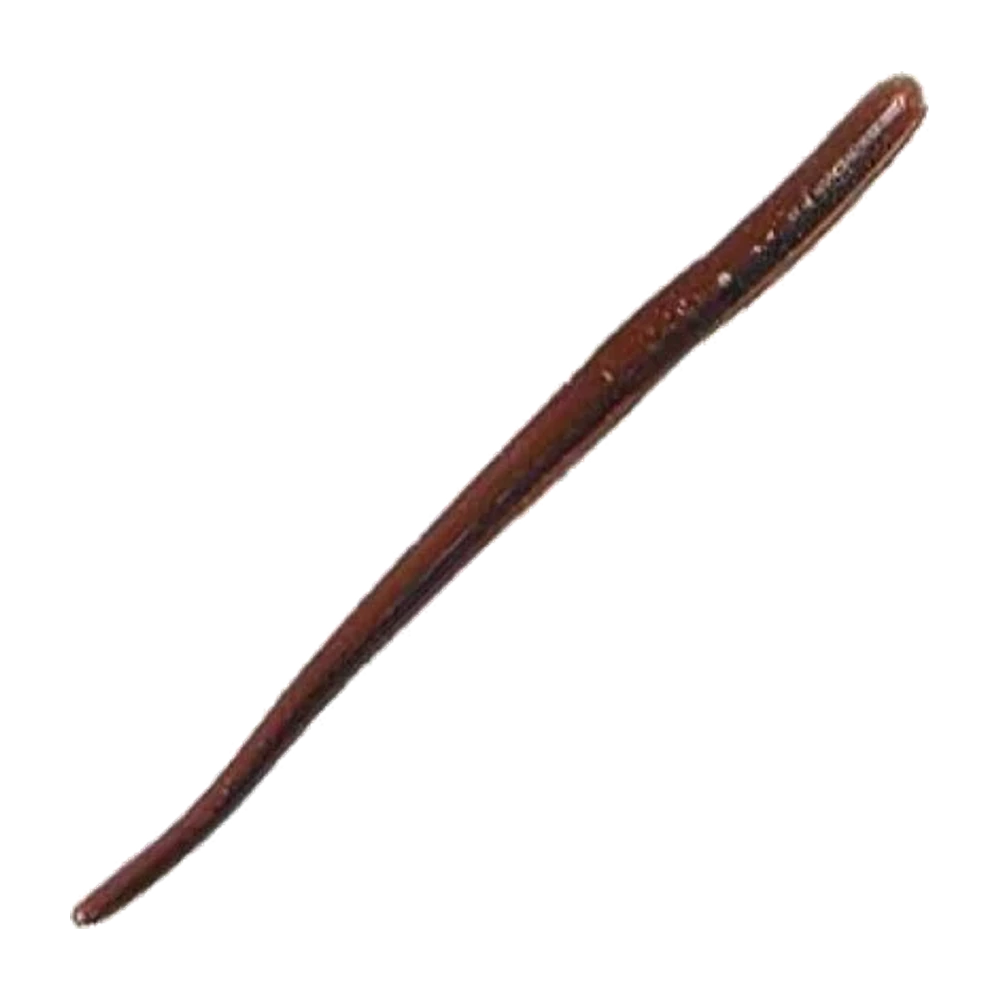
Roboworm Straight Tail Worm: the worm your line animates for you
This lure shines under specific conditions. CarnaFish tells you in 10 seconds if today is one of them.
You can see the fish on the screen, or you know it is there, seven metres down on a drop-off. You lower a soft plastic, you work it cleanly, and nothing happens. You slow down, you pause longer, still nothing. In clear water and on a fish that has seen plenty of anglers, this is not a question of going slower: it is that everything you do shows.
Every input you give travels up the line, and every movement driven from the rod has a regularity that nothing alive possesses. The fish is not refusing the lure, it is refusing your hand.
The Roboworm Straight Tail offers a way out: a straight worm with no active tail, moulded in exceptionally soft plastic, which starts moving under forces you do not control — the boat's drift, residual current, the simple tension of line going slack.
Why the softness of the plastic changes everything
A straight worm has no appendages. There is no paddle, no claws, no ribbon tail: the only possible motor is the deformation of the body itself. From there, the density and hardness of the plastic become the lure's main characteristics rather than manufacturing details.
A worm in hard plastisol needs a definite input to bend. A very soft worm bends under much weaker forces:
- The micro-drift of the line. A 0.16 mm fluorocarbon hanging over seven metres moves constantly, even when you touch nothing. The worm follows.
- Residual current. A flow too faint to feel in the blank is enough to make the whole length of the body undulate.
- The breathing of the line. Simply going from a tight line to a slack one produces a contraction then a release in the lure, in an S shape.
The result: the lure moves all the time, but never regularly. It is exactly the opposite of what a rod-driven presentation produces.
The drop shot, and the move not to make
The reference rig is a nose-hooked drop shot: a fine wire size 1 or 1/0 single hook, the point through the worm three millimetres from the tip, a palomar knot leaving the tag end running down to the weight. The knot and how to set the dropper length are detailed in our drop shot rig page.
The presentation comes down to four points, of which the third is the most important.
- Lower it on a tight line and stop as soon as you feel the weight touch down.
- Take up the slack until you feel the weight, without lifting it.
- Do nothing for fifteen to thirty seconds. The line lives, the worm undulates. That is the presentation.
- One very short shake, wrist only, without lifting the weight, then back to stillness.
The universal mistake on this rig is shaking continuously. A permanent shake transmits a regular vibration to the worm, and you fall straight back into the fault the lure was meant to fix.
On the water: time your stillness with a watch once in your life. What feels like thirty seconds of waiting usually lasts eight. On a clear-water fish sitting on a drop-off, the difference between eight and thirty seconds is the difference between a follow and a bite.
Settings: dropper length, weight, diameter
| Context | Worm/weight gap | Weight | Fluorocarbon |
|---|---|---|---|
| Perch over clean bottom, 3 to 6 m | 15 to 25 cm | 5 to 7 g | 0.14 to 0.16 mm |
| Bass on a drop-off, 4 to 8 m | 30 to 50 cm | 7 to 10 g | 0.16 to 0.18 mm |
| Fish suspended in mid-water | 60 to 100 cm | 7 g | 0.18 mm |
| Cluttered margin, 1 to 3 m | 20 cm | 5 g | 0.20 mm |
Two practical notes. A cylindrical weight passes through rock better and works free more easily than a teardrop, which stays the better choice over clean bottom. And the finer your fluorocarbon, the more the worm lives: it is mechanical, a stiff line restricts the passive undulations. Do not go below 0.14 mm, though, if there is structure nearby.
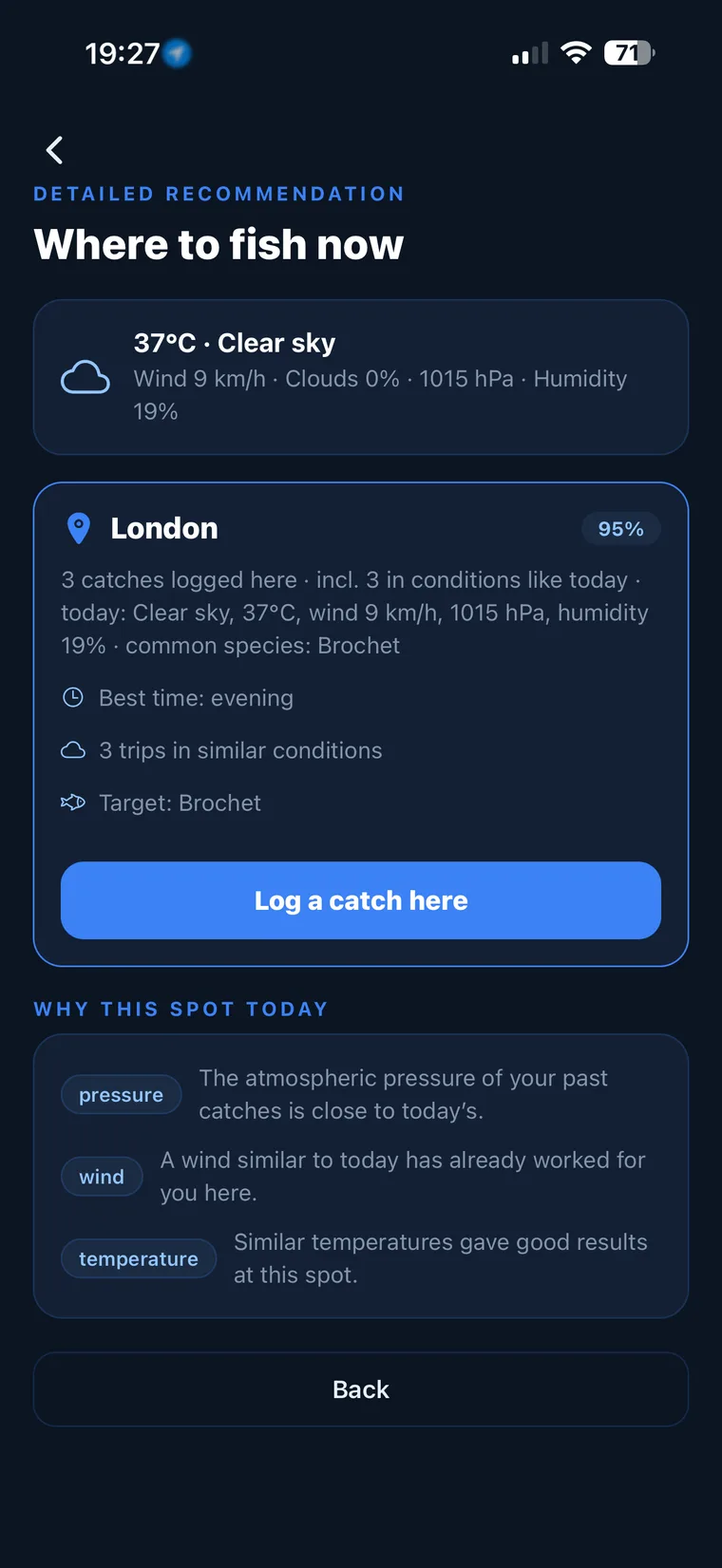
Not sure what to tie on?
Photograph your spot: CarnaFish reads the scene, cross-checks the conditions and gives you the zone, the lure and the retrieve. Free on iOS and Android.
Other rigs, and where not to use it
Away from the drop shot, a very soft straight worm behaves well on a 3 to 5 g shaky head, where it stands at an angle on the bottom, and on a split shot dragged very slowly over a sandy flat. It also takes a wacky rig, with one reservation: this soft plastic tears quickly on a centre hook-up without an O-ring.
Its blind spots are clear-cut. Dense weed: without a Texas rig it snags constantly. Very stained water: a discreet, silent worm has no way of announcing itself. Searching: at one spot every three minutes, you cover nothing. And on active pike or zander, a bulkier lure will always pay better.
Straight Tail or Zoom Finesse Worm
The Zoom Finesse Worm is shorter, denser and firmer. That relative stiffness gives it two concrete advantages: it holds on the hook better and it takes sharper presentations, which makes it a better choice on a shaky head and along cluttered margins.
The Roboworm takes the lead exactly where the lure needs to move without being asked: clear water, educated fish, a drop shot left down a long time, open water. It tears faster, which is the price of its softness.
Against a thick ribbon-tail worm such as the Culprit Original Worm, the contrast is total: the Culprit is a lure of bulk and slow Texas-rigged searching, the Roboworm a lure of fixed presentation and detail. They never replace each other, they are used at two different moments of the same day.
Our beginner's guide to bass fishing places the moment when finesse becomes the right call. And if you are unsure what dropper length to set on a drop-off you do not know, CarnaFish analyses a photo of the spot and answers.
Key takeaways
- The very soft plastic undulates under the influence of line and current, with no input from you.
- Nose-hooked drop shot, size 1 or 1/0 fine wire hook: that is the reference rig.
- Fifteen to thirty seconds of genuine stillness between shakes, not a continuous shake.
- The finer the fluorocarbon, the more the lure lives: 0.14 to 0.18 mm depending on structure.
- Unsuited to dense weed, stained water and searching.
FAQ
How do I hook a straight worm for a drop shot?
Nose-hooked: the point goes through the lure about three millimetres from the tip and comes straight back out, leaving the worm hanging free. That minimal attachment is what gives it full freedom to undulate.
How long should I leave the lure still?
Fifteen to thirty seconds between inputs, with a watch at least once to calibrate your perception. Almost every bite on this rig comes during the stillness, not during the shake.
What gap should I set between worm and weight?
Fifteen to twenty-five centimetres for perch over clean bottom, thirty to fifty for bass on a drop-off, and up to a metre if the fish are suspended in mid-water. That gap is the most decisive setting on the rig.
What fluorocarbon diameter?
From 0.14 to 0.18 mm depending on the amount of structure. Finer line lets the worm undulate more; stiff line restricts the passive action that is the whole point of this lure.
Is the Roboworm suitable for perch?
Yes, in the smaller size and on a short rig. An eleven-centimetre worm, twenty centimetres above a 5 to 7 g weight, over clean bottom in three to six metres, is a very effective presentation on settled perch.
Why does it tear so quickly?
Because its softness comes from a lightly loaded plastic, which resists tearing poorly. It is an accepted trade-off: you change lures more often but you get undulations that a harder plastic will never produce.
The full bass lure guideSeason-by-season strategy: which family of lure, when, and why.Go from theory to fish
CarnaFish reads your spot from a photo and gives you the game plan: zone, lure, retrieve. Free on iOS and Android.