Evergreen Last Ace: tune the fall rate, not the retrieve
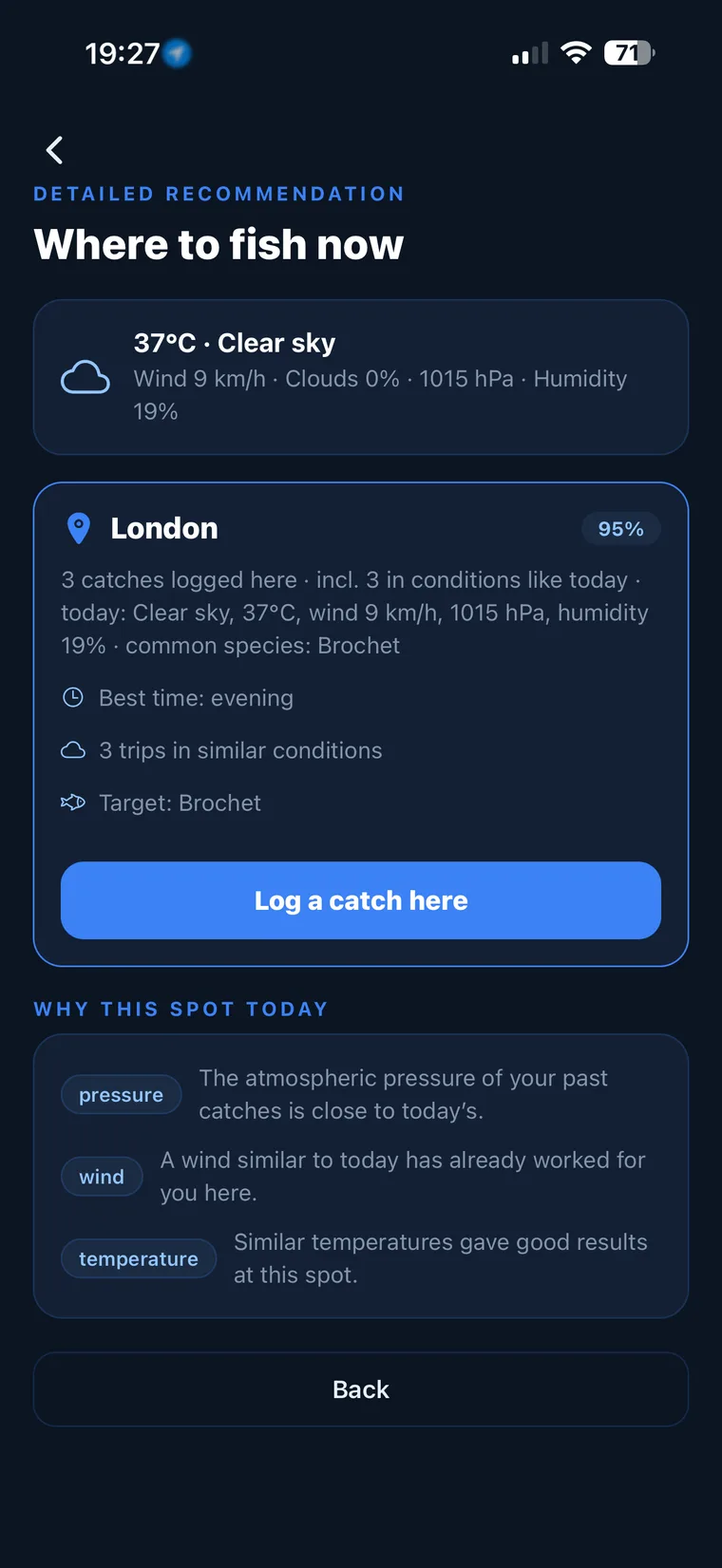
Rather not fish it blind? Photograph your spot — CarnaFish cross-checks the conditions and points you the right way.
There is one piece of faulty reasoning that costs a lot of fish in finesse fishing: believing that if you are not getting bites, the problem is the way you are working the lure. So you change the motion, shorten the pulls, shake it more. And most of the time, that was never the issue.
With a straight worm, the retrieve is almost incidental: the decisive variable is how fast the lure sinks. A bass sitting in three metres of water will intercept a prey item falling at ten centimetres per second and let the same prey item go past at forty. The Last Ace lends itself particularly well to this reasoning because it takes four very different rigs, covering four fall rates without ever changing lure.
Why the fall matters more than anything else
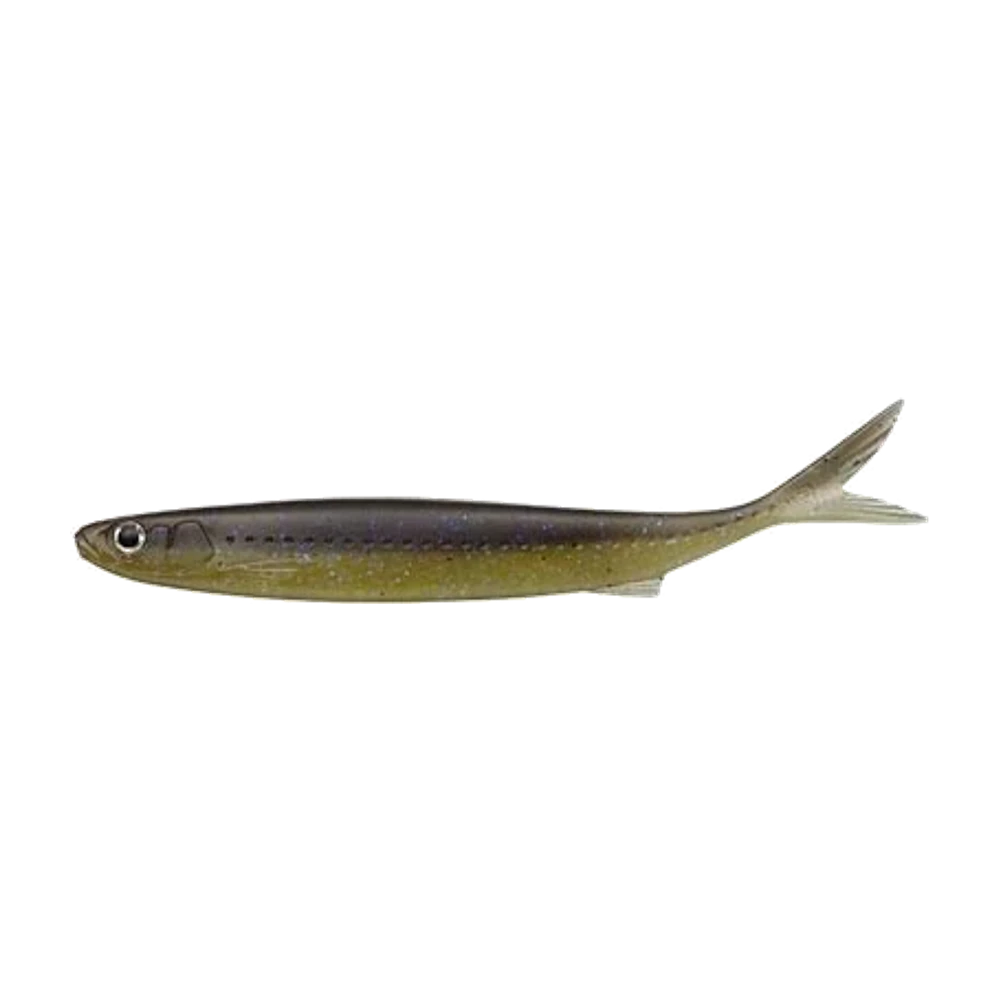
A straight worm has no appendages, no tail, no moving parts. What it offers is a slow undulation of both ends as it sinks, and a residual quiver when it is sitting still.
That undulation depends directly on the sink rate:
- Too fast, and the body stiffens under water pressure, the ends stop working and the lure drops like a stick.
- Too slow, and the lure stays in the area but never gets down to the layer the fish are holding in.
- Just right, and the two tips beat alternately, the body bends into a slight arc, and the lure stays in the fish's field of vision for several seconds.
That is why the same lure, rigged differently, gives opposite results on the same day. It is not the lure that changes, it is its speed.
Four rigs, four speeds
| Rig | Weight | Approximate fall | When to use it |
|---|---|---|---|
| Wacky on a 1/0 hook, unweighted | none | Very slow, almost gliding | Under 2 m, clear water, visible fish |
| Neko with a 1 g nail | 1 g in the head | Slow, nose down | 1 to 3 m, fish on the bottom |
| Neko with a 2 g nail | 2 g | Medium, faster contact | 3 to 5 m, a bit of wind |
| Drop shot | 7 to 12 g of lead | The lead falls alone, worm suspended | Fish off the bottom, slopes, vertical |
| Finesse jig head 2 to 4 g | 2 to 4 g | Fast, works the bottom | 4 to 6 m, searching |
The method that works on the water: start with the slowest rig the depth allows. If you get no bites after ten or so casts, speed up one notch. If you get follows but no bites, slow down further. You end up finding the day's window, and it stays stable for several hours.
On the water: with an unweighted wacky rig, never cast straight at the spot. Cast beyond it and slide the lure to the edge of the zone on the retrieve, then cut the tension and let it drop. The fall has to start exactly where you want it, not three metres short — an unweighted worm drifts enormously and almost always lands off target if you cast straight at it.
The retrieve: doing nothing, properly
- Cast and follow the line with your eyes. On the slow rigs you will not feel the bite: you will see it. Braid moving to one side or stopping its descent means a fish.
- Let it sink on a semi-slack line. No tension at all. The slightest control makes the fall vertical and kills the undulation.
- Once it is on the bottom, wait five seconds.
- Two small shakes of the rod tip, five centimetres of amplitude, without moving the lure.
- Lift gently half a metre, then let it drop back. That second fall very often triggers a bite, sometimes more than the first.
- Repeat two or three times, then cast somewhere else. Five minutes maximum on a spot.
Reading the bite
This is what separates anglers who catch fish on finesse from the rest. There are four signals to know.
- The line moving sideways during the fall, steadily and smoothly: the fish has taken it and is moving off. Set the hook once you have regained contact.
- The fall that stops too early. You were counting eight seconds of descent and it stops at five. The lure is in a mouth, not on the bottom.
- The line coming back or suddenly going slack: the fish has come up with the lure. Reel fast, then set.
- The sharp tap, rare in finesse and usually a perch.
In every case, a sideways progressive hookset, not a vertical snatch. On a fine wacky hook, a violent set tears the plastic or pulls the hook out of the fish's mouth.
Not sure what to tie on?
Photograph your spot: CarnaFish reads the scene, cross-checks the conditions and gives you the zone, the lure and the retrieve. Free on iOS and Android.
Where it shines, where it is pointless
Its windows:
- Heavy fishing pressure, when every active lure has been refused.
- Full heat and clear water, when the fish are lethargic.
- Post-spawn, when bass stay in the area but chase nothing.
- Visible spots: jetties, laydowns, rocky margins, where you can place the fall to the centimetre.
Its limits:
- Wind and chop. You can no longer see your line, so you no longer see the bites, and a heavy rig defeats the whole point of the lure.
- Current. The lure drifts and the fall becomes uncontrollable.
- Very coloured water. No sound or vibration signal at all; the fish never finds the lure.
- Searching large areas. Five minutes per spot does not scale.
Last Ace or a classic stick bait
The obvious comparison is the Yamamoto Senko 4. The Senko is denser and thicker: its fall is more pronounced, with that characteristic short shimmy. The Last Ace is slimmer, with finer ends, which gives a flatter descent and a longer undulation. On a fish that will accept a strong signal, the Senko remains unbeatable; on a fish that has already refused two Senkos that day, the subtler profile takes over.
Against a Zoom Finesse Worm, the difference is one of purpose: the Finesse Worm is designed for the shaky head and the drop shot, with a tapered tail that works under tension. The Last Ace is at its best with no tension at all, wacky or neko rigged.
For the hooking itself, our page on the wacky rig explains how to use an O-ring so you do not lose a worm per fish. Our beginner's guide to bass fishing places finesse across the season. And if you are unsure which rig to pick when you get to a spot, CarnaFish analyses a photo of the spot and answers.
Key takeaways
- The decisive setting is the fall rate, not the retrieve.
- Start with the slowest rig the depth allows, and speed up one notch if nothing comes.
- Let it fall on a semi-slack line: any tension makes the descent vertical and kills the undulation.
- The second fall, after a half-metre lift, often triggers more bites than the first.
- Unusable in wind, in current and in very coloured water.
FAQ
Which rig for the Evergreen Last Ace?
Unweighted wacky down to 2 m, neko with a 1 to 2 g nail between 1 and 5 m, drop shot when the fish are off the bottom, and a 2 to 4 g finesse jig head for searching beyond 4 m.
How do you know a fish has taken on the fall?
Watch the line rather than the rod tip. If it moves off to the side, goes slack suddenly or stops descending before the expected fall time, there is a fish on the end.
Do you need a hard hookset on a wacky rig?
No. A sideways, progressive set once you have regained contact. A fine wacky hook penetrates perfectly well without force, and a sharp set tears the plastic or pulls out of the fish.
How does it differ from a Senko?
The Senko is thicker and denser, with a more pronounced fall and a short shimmy. The Last Ace goes down flatter, with a longer undulation and a subtler profile for fish that are already educated.
How long should you stay on a spot?
Five minutes maximum, meaning two or three cycles of fall and lift. Beyond that, the fish that are there have seen the lure and you are losing fishing time.
Does the Last Ace catch perch?
Yes, especially on the drop shot and neko rigs in the smaller sizes. Perch bites are sharper than bass bites, but the hookset still has to stay measured to avoid pulling out.
The full bass lure guideSeason-by-season strategy: which family of lure, when, and why.Go from theory to fish
CarnaFish reads your spot from a photo and gives you the game plan: zone, lure, retrieve. Free on iOS and Android.