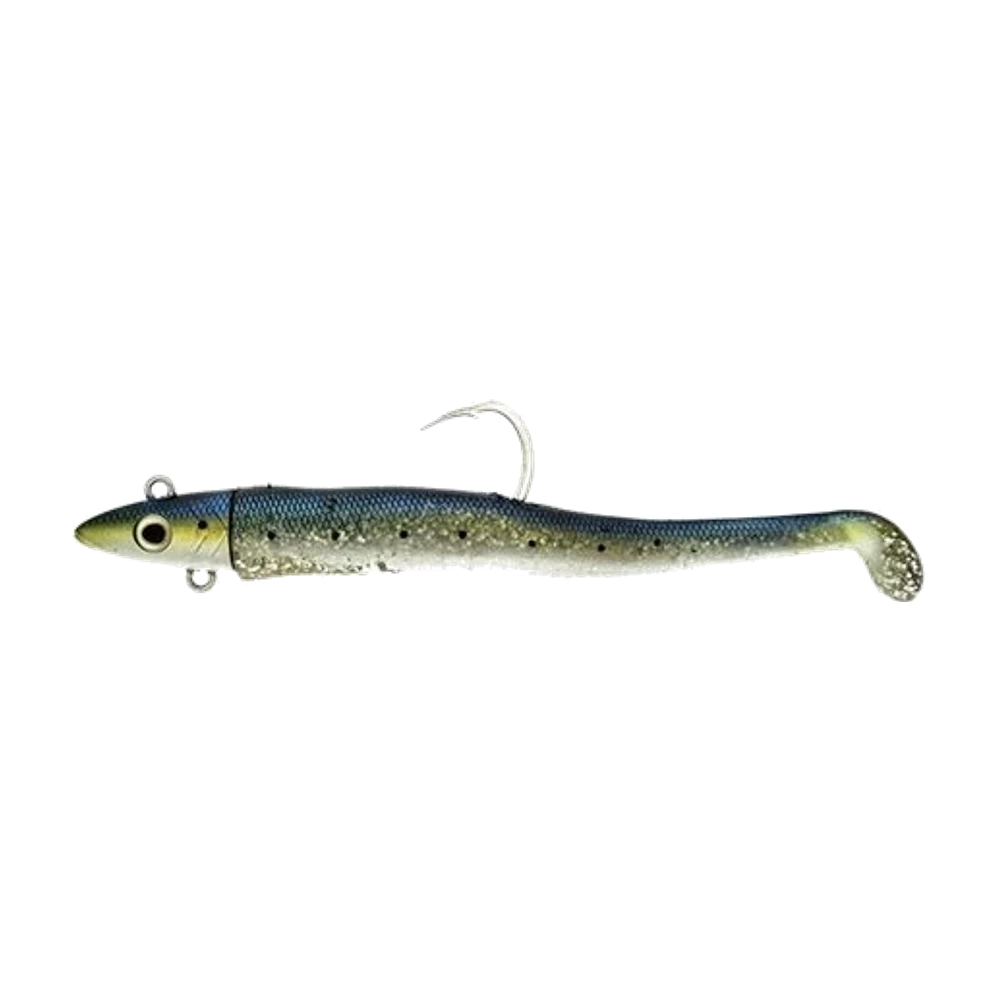
Molix Jugulo Shad: a dense plastic built for an offset rig
This lure shines under specific conditions. CarnaFish tells you in 10 seconds if today is one of them.
Fishing zander in rip-rap is expensive. A standard jig head with the hook point out of the back wedges between two blocks one cast in five, and you spend your day pulling, snapping off and retying. After an hour you end up fishing a metre above the bottom — which means a metre above the fish.
The answer is not to fish higher, it is to change the rig. And not every shad will take the same one. What sets the Jugulo Shad apart first is the density of its plastic: a firm, compact body that does not slide down the shank, that holds a hook point tucked into its back, and that sinks fast on its own, even rigged on a simple drilled ball.
So this page is about rigging and material, not retrieve speed.
What density actually changes
Dense plastic is not a manufacturing detail, it governs everything you can do with the bait.
- It sinks by itself. The body is markedly negatively buoyant. With a detached weight such as a cheburashka, the bait goes down straight and fast instead of gliding, which saves you time on deep spots.
- It holds an offset hook. Soft plastic slides down the shank on the first cast and exposes the point. A firm body stays put, which makes a weedless rig genuinely reliable over several fish.
- It stands up to teeth and rocks. The trade-off is accepted: the material is less expressive at very low speed than a soft shad, but it takes punishment.
- It transmits contact better. A dense body carries bottom information all the way to the rod. You feel the substrate: sand, gravel, blocks.
The tail, on the other hand, is sized to open the moment the bait lifts off. What matters here is not a continuous swimming action but the first instant of the pull, as the bait leaves the bottom.
The weedless rig on a detached weight, step by step
This is the rig that makes the most of that body. It comes together in five moves.
- Pick a wide gap weedless hook, 3/0 for an 8-10 cm body, 4/0 or 5/0 above that. The wide bend is essential for the point to clear on the hookset.
- Enter the nose over 5 mm, come out underneath, rotate the hook, then lay the shank along the body to find the exact exit point. Don't guess it: mark it.
- Push through the body at the marked point and tuck the point back into the back without letting it break through, leaving the shad perfectly straight. A twisted body will spin on the way up.
- Fit the cheburashka on the hook eye. The bait pivots freely around the weight, which accentuates the glide on the fall.
- Check the alignment at the surface over a metre of retrieve before you start fishing properly.
After that the retrieve stays plain:
- A tight drop to contact, counted.
- Two short rod-tip pulls, 30 to 40 cm each, no big sweeps.
- A controlled drop, the rod coming down at the speed of the bait.
- A one to two second pause on contact, then start again while moving forward very little.
On the water: on a weedless rig, delay the hookset by half a second and set with a sideways sweep, not upwards. The point has to get through the plastic before it enters the mouth. A reflex set at the sky pulls the bait out of the fish's mouth before the hook has ever cleared.
Choosing the weight and the size
| Depth | Cheburashka weight | Body |
|---|---|---|
| 2 to 4 m, calm | 5 to 10 g | 8 to 10 cm |
| 4 to 7 m | 10 to 14 g | 10 to 12 cm |
| 7 to 10 m or current | 14 to 21 g | 12 to 13 cm |
A standard jig head is still valid wherever the bottom is clean: the bait swims more horizontally and you set the hook faster. Our simple jig head page covers that case, and the Texas rig page goes through the weedless rig in detail.
Two tackle points count as much as the weight. 0.14 mm braid with no stretch, because a weedless hookset in ten metres of water demands direct transmission. And a 0.30 to 0.35 mm fluorocarbon leader, heavier than usual: it is rubbing on rock the whole time.
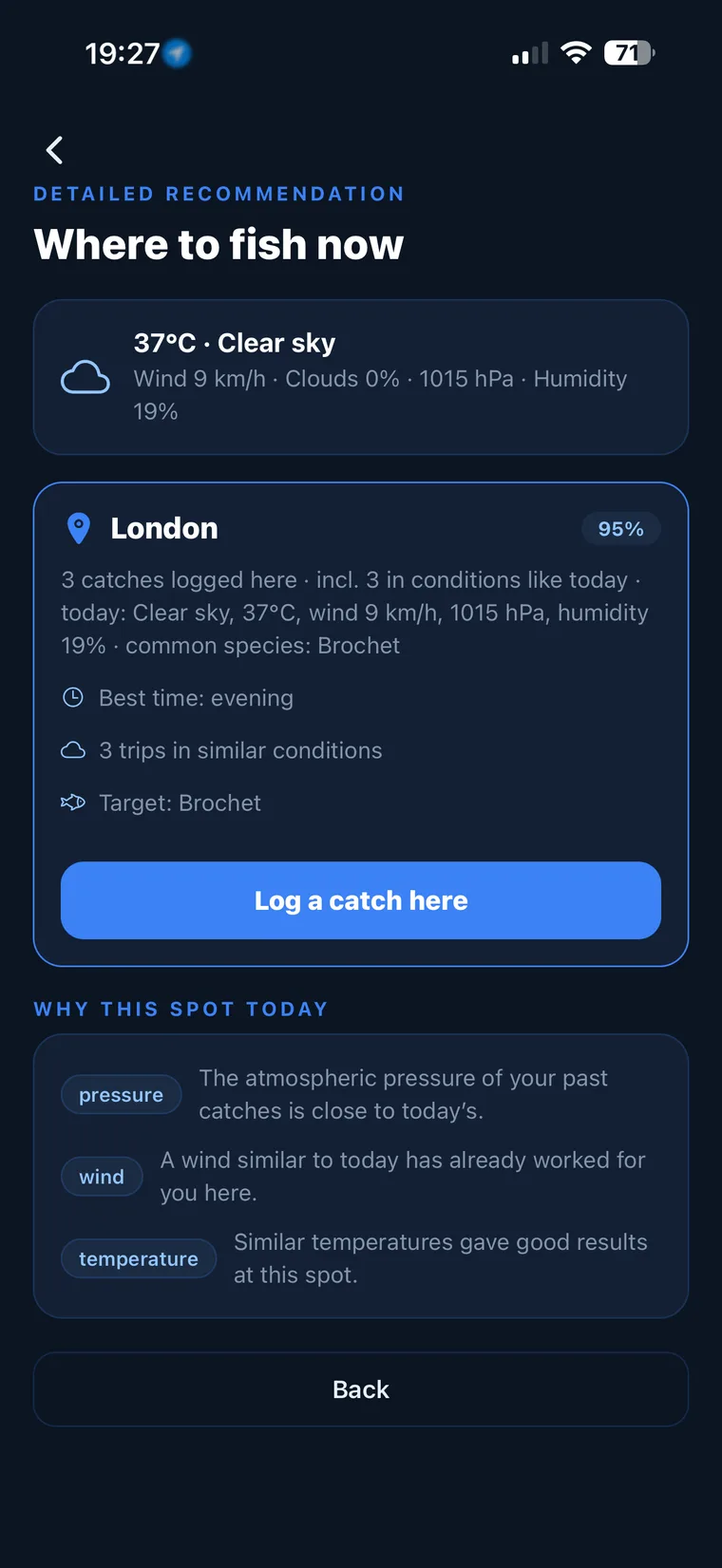
Not sure what to tie on?
Photograph your spot: CarnaFish reads the scene, cross-checks the conditions and gives you the zone, the lure and the retrieve. Free on iOS and Android.
Where this rig wins, where it loses
The combination of a dense body and an offset hook comes into its own in a specific context.
- Dam rip-rap, dykes, harbours: this is the main playground, with a spectacular drop in snags.
- Flooded timber and submerged branches, where a jig head does not survive.
- Deep holes in winter, thanks to the fast drop that cuts the dead time between spots.
- Drifting from a boat, where the bait follows the slope while keeping contact.
Against that there is a real cost. The hook-up rate is lower than with an exposed jig head, especially on soft bites in cold water. The straight-retrieve action is less expressive: this is not a bait to wind slowly and continuously. And over clean sand in open water, the offset rig brings nothing — you may as well go back to a jig head.
Jugulo Shad or a slow-swimming shad
The Fox Rage Fish Snax Impact illustrates the opposite approach: soft plastic, a tail that starts working at very low speed, a round jig head and a continuous straight retrieve. It is the right tool over open bottom when zander have stopped chasing. The Jugulo Shad is not trying to compete there; it lets you put a bait down in rocks where the other rig would not survive.
Within the Molix range, the Ra Shad sits on a more expressive body with a stronger action, to favour when you want a continuous signal rather than a controlled fall.
Our beginner's guide to lure fishing for zander revisits the choice between exposed and offset rigs. And if you are torn between weedless and jig head when you reach a rocky spot, CarnaFish analyses a photo of the spot and answers.
Key takeaways
- Dense plastic holds the weedless hook in place and sinks on its own: that is what makes the offset rig reliable.
- Cheburashka plus wide gap hook: the bait pivots around the weight and glides on the fall.
- Set with a sideways sweep half a second late, never upwards.
- 0.14 mm braid and 0.30-0.35 mm fluorocarbon: direct transmission and abrasion resistance on rock.
- Lower hook-up rate than a jig head: keep it for genuinely cluttered bottoms.
FAQ
Why rig the Jugulo Shad weedless rather than on a jig head?
Because a point tucked into the back slips between blocks without catching. On rip-rap you cut your lure losses by three or four and you can finally fish in contact with the bottom, where the zander actually sit.
Which cheburashka weight should I choose?
5 to 10 g down to four metres, 10 to 14 g to seven metres, 14 to 21 g beyond that or in current. Take the lightest that still lets you feel clear bottom contact on every drop.
How do I stop the bait spinning?
It is rigged crooked. Lay the shank along the body before you push the hook through, mark the exit point, and check that the shad is perfectly straight once it is on. A twisted body will not correct itself while fishing.
How do you set the hook on a weedless rig?
Wait half a second after the bite, then set with a sideways sweep, rod horizontal. The point has to pass through the plastic before it bites. A reflex vertical set often pulls the bait out of the mouth without hooking anything.
Is this shad any good on a slow straight retrieve?
Not really. Its firm plastic makes it less expressive at very low speed. For a slow, continuous retrieve over open bottom, a softer shad with a responsive tail will do better.
What body size for zander?
8 to 10 cm in normal conditions, which matches the usual prey. Go up to 12 or 13 cm in coloured water, in late autumn, or on areas holding big fish where you accept fewer bites.
The full zander lure guideSeason-by-season strategy: which family of lure, when, and why.Go from theory to fish
CarnaFish reads your spot from a photo and gives you the game plan: zone, lure, retrieve. Free on iOS and Android.