Gunki G Bump: the creature bait that works while you do nothing
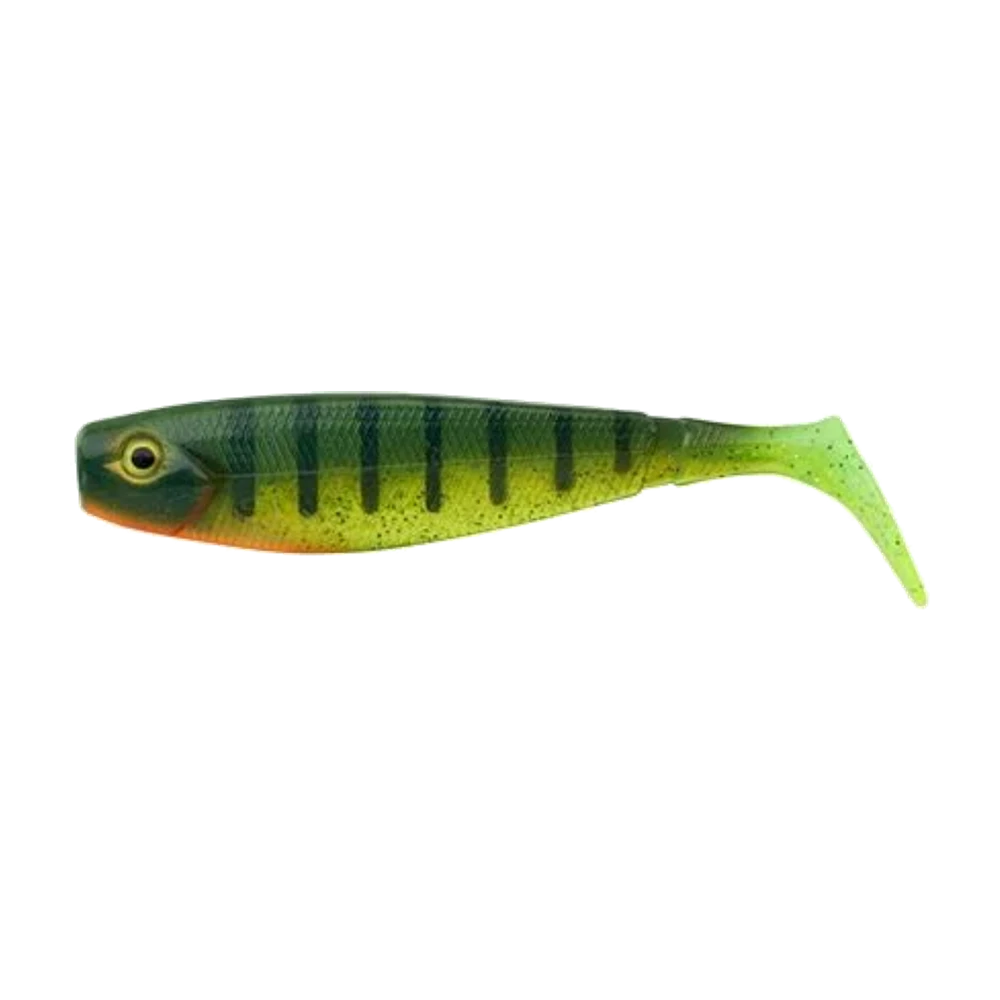
This lure shines under specific conditions. CarnaFish tells you in 10 seconds if today is one of them.
Every perch angler ends up meeting this situation: the sounder shows fish, the fish are there, glued to the bottom or to a piece of structure, and they ignore everything that goes past. Shad on a straight retrieve, ignored. Crankbait, ignored. You speed up, you slow down, nothing changes. These are not absent fish, they are settled fish that do not want to move.
In that precise case the problem is not the lure but the way it occupies time. A swimming shad has to move forward to be alive. The moment it stops, it becomes an inert piece of plastic. A creature bait like the G Bump is built for the opposite: its compact body carries fine appendages and flat claws that keep vibrating under the slightest water movement, including when the lure is perfectly still on the bottom.
It is a lure of patience, not of searching. And that is exactly why it unlocks situations that are stuck.
What makes a real creature bait
A lot of things get filed under "creature". The G Bump belongs to the crawfish and larva imitation sub-family, with three characteristics that matter on the water.
- A short, thick body that concentrates mass at the front. On a weedless rig, that bulk keeps the hook properly seated and gives the lure a pivot point when you pull it along the bottom: it tips and rights itself instead of sliding flat.
- Flat, thin claws that taper towards the tip. They do the work: on the drop they plane and slow the fall; at rest they respond to the smallest current.
- Antennae or side appendages, which multiply the vibration points and increase the perceived silhouette without adding compact bulk.
The key point is the gap between apparent volume and real volume. The lure looks big — visually it occupies the space of a crawfish — but it stays easy for a 30 cm perch to inhale, because most of its surface is made of soft appendages.
Three rigs, three different techniques
The G Bump does not have one retrieve, it has three depending on how you rig it.
Weedless, on a wide gap hook. This is the cover rig: sunken wood, boulders, sparse weed. You fish tight-then-slack near the bottom, the lure tipping from one contact point to the next.
On the drop shot. This is the pure insistence rig. The weight rests, the lure sits twenty to forty centimetres off the bottom, and you can make it quiver on the spot for a full minute without it moving an inch. On settled perch it is the most productive rig there is.
On a light jig head. For more mobile fishing, in 3 to 7 g, with a fall-and-lift action. The lure planes on the drop, which stretches out the presentation time.
Here is the basic weedless sequence, the one that works everywhere:
- Cast and let it sink on a semi-tight line. Do not close the bail too early: the fall phase, slowed by the claws, takes a big share of the bites.
- Wait for bottom contact — the line goes slack. Count two more seconds doing nothing.
- Pull slowly over a metre, rod horizontal, dragging the lure along the ground rather than lifting it. You should feel the cover.
- Stop dead and wait five to ten seconds. This is the step everyone cuts short, and it is the one that catches the fish.
- Give two small shivers of the rod tip without taking in line, then wait again.
- Start again, working metre by metre back to the bank.
On the water: with a creature bait, the bite is almost always weight, not a knock. You pull, and the line is simply heavier than before, as if the lure had picked up a leaf. If you wait for a definite jolt before setting, you will miss half the perch. At the slightest doubt about the load, tighten and set.
Choosing size and weight
| Context | Lure size | Weight |
|---|---|---|
| Perch in clear water, hard bottom, little current | The smallest (around 7 cm) | 3 to 5 g |
| Mixed perch and bass, sunken wood | Mid size | 5 to 7 g weedless |
| Bass on dense cover, stained water | The biggest (around 12 cm) | 7 to 10 g weedless |
| Vertical insistence on a located fish | Small or mid | Drop shot 7 to 14 g depending on depth |
The weighting rule is simple: take the lightest weight that still lets you feel the bottom. Every extra gram shortens the fall, and the fall is half the point of this lure. If you can no longer feel anything, it does not necessarily mean going heavier — start by checking your slack and your position relative to the wind.
Line-wise, 0.20 to 0.25 mm fluorocarbon straight through is fine for perch. For bass in wood, switch to fine braid with a 0.30 mm fluorocarbon leader: you need the sharp hookset and the abrasion resistance.
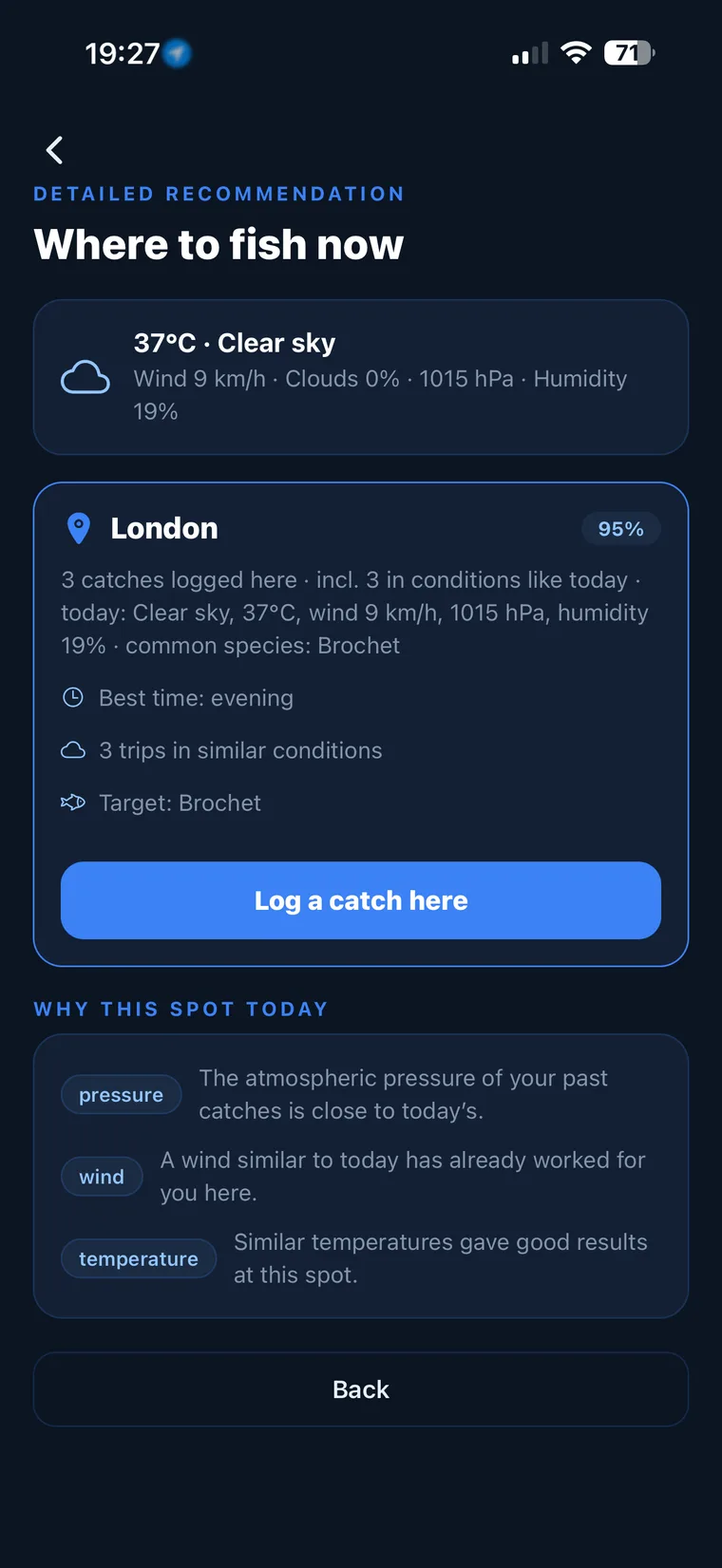
Not sure what to tie on?
Photograph your spot: CarnaFish reads the scene, cross-checks the conditions and gives you the zone, the lure and the retrieve. Free on iOS and Android.
Where it shines, where it is out of place
It shines on located, settled fish: a pile of boulders, a stump, the foot of a bridge pier, a summer weed edge, a winter hole. It also shines fishing from the bank on spots that have already been fished — when everyone has been through with a shad on a straight retrieve, motionless insistence is what is left.
It is unsuited to searching: you take three minutes to fish ten square metres, so you will never find fish with it. It is also out of place in strong current, where the appendages work constantly but the lure lifts off and you lose contact. Finally, over a perfectly flat, clean bottom with no feature at all, it has nothing to exploit: this is a structure lure.
G Bump or a classic shad
Compare it with a Gunki Grubby Shad and the division of labour becomes obvious: the shad swims, so it finds. You put it on a jig head, rake the area with a straight retrieve, and identify where the fish are holding. The G Bump takes over once the position is known but the fish refuses to follow. One is a search tool, the other a conversion tool.
Against a Keitech Crazy Flapper the difference is subtler: the Flapper relies on very wide claws that push a lot of water on the drop, the G Bump on a set of finer appendages that keep vibrating longer at rest. On genuinely apathetic fish in clear water, the more discreet profile often takes the lead.
For the rigs themselves, our drop shot page covers dropper lengths and knots, and the Texas rig page explains how to seat the hook in the body. Our guide to perch fishing with lures puts this kind of fishing back into a full day. And if you are unsure which rig to choose in front of a spot, CarnaFish analyses a photo of the spot and answers.
Key takeaways
- The appendages vibrate while the lure is still: that is the model's main point.
- Three rigs, three techniques: weedless on cover, drop shot to insist, light jig head to fall.
- Minimum weight: take the lightest one that still lets you feel the bottom.
- The bite reads as extra weight, not as a knock. Set on the doubt.
- A conversion tool on located fish, never a searching tool.
FAQ
Is the G Bump a perch lure or a bass lure?
Both, simply by changing size. The small sizes on a drop shot or light jig head target perch, the bigger ones rigged weedless are for bass in cover. The retrieve principle stays identical.
Which rig should I start with?
Weedless on a wide gap hook with a 5 g bullet weight: the most versatile and the most forgiving on snags. Move to the drop shot once you have located a specific fish that refuses to move.
How long should I leave the lure still?
Five to ten seconds between each move, longer in cold water. It is the step most anglers cut short, even though it is during that stillness that the appendages keep working on their own.
How do I recognise a bite on a creature bait?
Most often as extra weight as you pull, not as a jolt. The line simply gets heavier or moves slowly off to the side. At the slightest doubt, tighten up and set.
Do I need a heavy weight to feel the bottom properly?
No, the opposite. Take the lightest that still gives contact. Too heavy a weight crushes the falling phase, which is exactly when the claws plane and when a lot of bites happen.
Is it effective in a river with current?
Barely, as soon as the current is strong. The lure lifts off, you lose bottom contact, and working it on the spot becomes impossible. Keep it for calm areas, eddies and stillwaters.
The full perch lure guideSeason-by-season strategy: which family of lure, when, and why.Go from theory to fish
CarnaFish reads your spot from a photo and gives you the game plan: zone, lure, retrieve. Free on iOS and Android.