Illex Tricoroll: the pocket minnow for tight, overgrown rivers
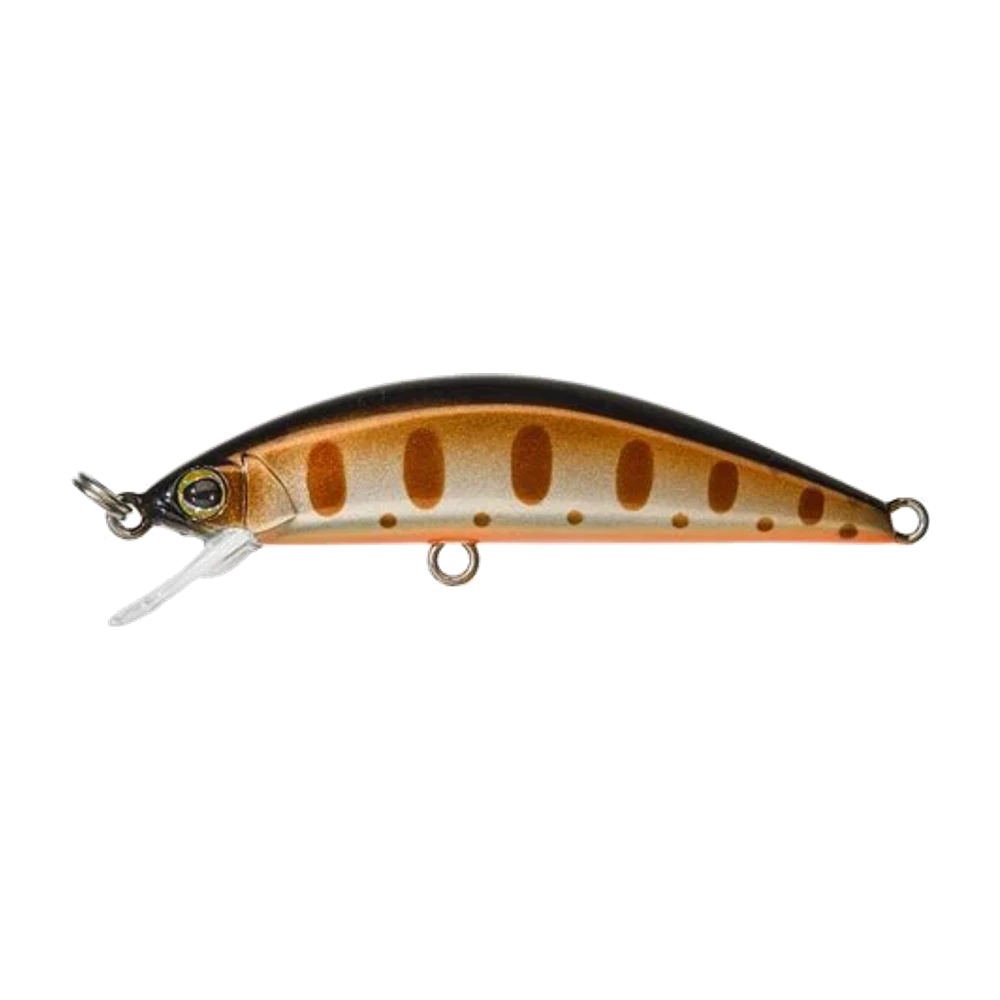
Before tying this one on, it helps to know if the spot actually calls for it. CarnaFish reads the scene from a photo.
A tree-lined trout river is fished to within a metre. The lie is two square metres, it sits under a branch fifty centimetres off the water, and you get one cast, sometimes two, before the fish settles. With a classic floating minnow the script is always the same: the lure lands, it floats, it drifts for a second on the surface, it takes two turns of the handle to bring it down to depth — and by then you have already crossed the lie.
The Tricoroll answers that problem with density. The sinking versions fish from the moment they land, with no run-up phase. On a short lie, that detail changes the number of bites.
It is a precision lure on a fast rhythm, not a lure for relaxed searching.
A compact body that responds before it moves
The Tricoroll is short and relatively thick for its length. That format has two direct consequences on the water.
First, the roll starts instantly. There is no lag between the first turn of the handle and the beginning of the swim. On a long, slim minnow you often need a metre of retrieve before the lure is truly working. Here it is immediate, which is exactly what you need when the whole lie is three metres long.
Second, it reacts to tiny twitches. A simple flick of the wrist is enough to make it kick out sideways and come back on line. You can work it in a handkerchief, without the room a 10 cm jerkbait demands.
The flip side has to be understood: its swim does not carry far. The signal it sends is fine, visual, short range. This is not a lure that fetches a fish from ten metres, it is a lure that convinces a fish you have already located.
Three retrieves for three lies
The same lure fishes in three very different ways depending on what is in front of you.
On a short, sheltered lie:
- Cast tight to the obstacle, aiming at the top of the lie.
- Close the bail immediately and give two fast turns to engage the swim.
- Two short pulls of ten to fifteen centimetres, wrist only.
- A one-second pause, during which a sinking version drops twenty to thirty centimetres.
- Wind on and take the lure out of the lie. If nothing happens, do not do it five times over: move to the next lie.
In a deep seam:
- Cast upstream, let it sink three to six seconds depending on the depth.
- Retrieve on a sustained straight wind, rod low, the lure holding its layer through speed.
- Hold a one-second stop every three metres. The brief drop often draws the bite.
Along a lake margin for perch:
- Cast parallel to the bank or at a bait school you have spotted.
- Alternate three fast turns and a two-second pause. The acceleration separates the lure from the school, the pause lets it drop back.
On the water: with this kind of small minnow, the bite almost always comes on the first or second pass. Work the same lie five times and you are not improving your odds, you are educating the fish. Three lies crossed once beats one lie scraped six times.
Floating, sinking, high density: which to pick
The range exists in several lengths and several densities. The choice is made on the depth of the lie and the strength of the current, not on the size of the fish you are after.
| Situation | Length | Density | What you gain |
|---|---|---|---|
| Shallow stream, low branches | 4.5 to 5.5 cm | Light sinking | Fishes from the splashdown without diving |
| Medium river, seam at 1 m | 5.5 to 6 cm | Sinking | Holds its layer on the retrieve |
| Fast seam or pool | 6 to 7 cm | High density | Fast sink, long cast |
| Lake margin, perch | 6 to 7 cm | Sinking | Distance and control of the layer |
The simple rule: the stronger the current or the deeper the lie, the higher the density you go. Too light a model in a fast seam comes out of the water; too heavy a model over twenty centimetres of water snags on the first cast.
The rigging: fine, but not too fine
The line. Fluorocarbon 0.14 to 0.18 mm on the small sizes, 0.18 to 0.20 mm as soon as there is timber about. Going below 0.14 mm gains you nothing in the swim and will cost you lures on the first snags.
The trebles. The stock hooks are fine wire, which matches the weight of the lure. If you replace them, keep the same diameter: a heavier treble sinks an already dense model too fast and destroys the swim balance.
The connection. Straight, a tight knot on the ring, or a micro snap if you change lures often. On a body this short, a big snap weighs proportionally a lot and slows the sideways kick.
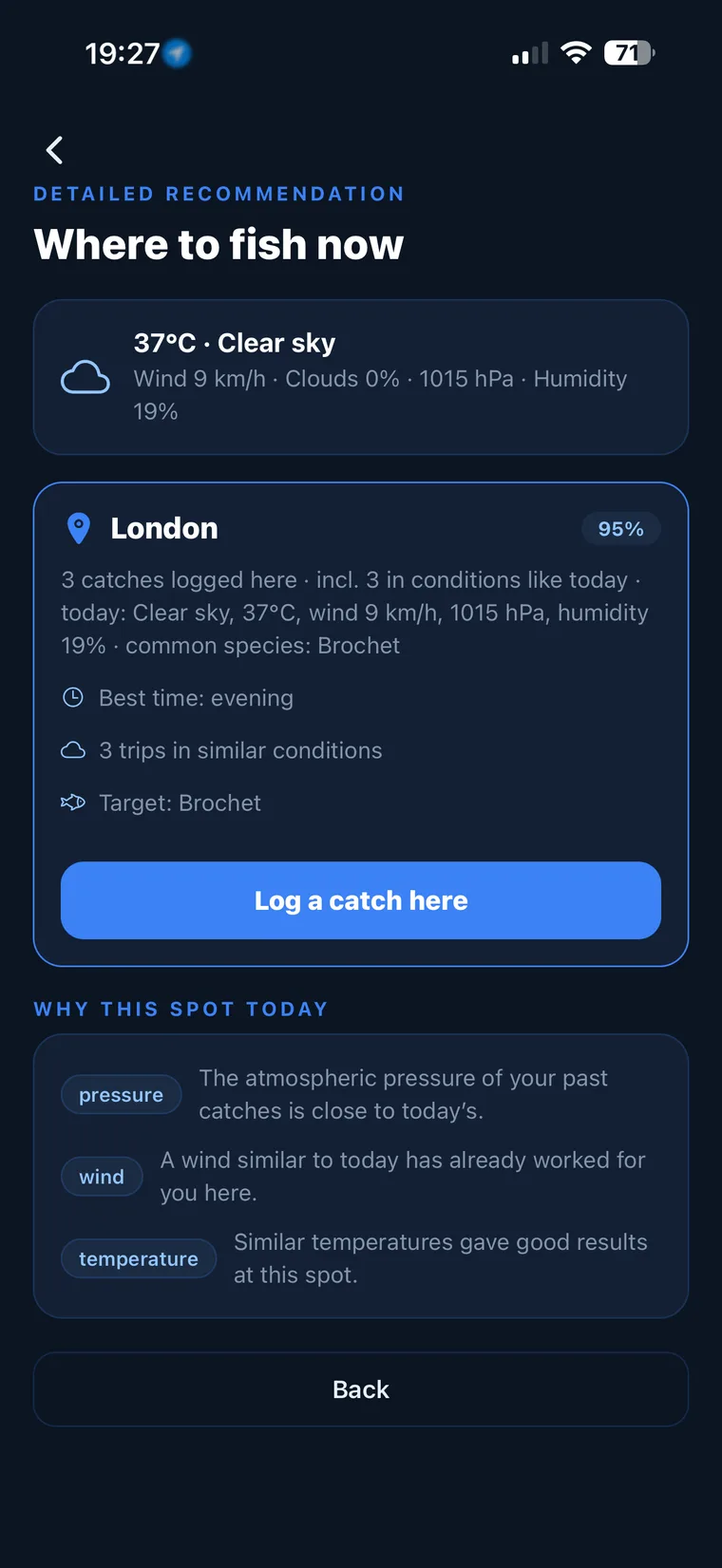
Not sure what to tie on?
Photograph your spot: CarnaFish reads the scene, cross-checks the conditions and gives you the zone, the lure and the retrieve. Free on iOS and Android.
Where it loses to other solutions
Three cases where you should leave it in the box:
- Searching large areas. Its signature is short, so you will spend twice as long as with a spinner or a spoon to cover the same zone.
- Coloured water after a flood. The fish is then hunting on vibration rather than sight: a strong-vibration or rattling lure is more relevant.
- A good fish in heavy cover. Fine hooks are a deliberate choice for river trout. Against a heavy fish in a stump, they bend.
Tricoroll or D-Contact: two ways of holding a seam
The Smith D-Contact is the benchmark of the category on trout rivers. It works on sharp pulls, with a very dense body that holds a deep seam and a decisive response to a flick of the rod tip. It is the lure for a strong current and downstream fishing, in permanent contact.
The Tricoroll is more versatile across the water column and easier to work in small movements. It accepts a simple straight retrieve, which makes it far more accessible when you are new to this kind of lure, and it slips better under low cover where there is no room for wide pulls.
On warier fish in very clear water, a DUO Realis Rozante 63 offers a slimmer silhouette and a more discreet swim: worth trying when the Tricoroll draws follows without triggering. And if you want a non-minnow alternative on the same beat, the Smith Pure sweeps far faster on an upstream retrieve.
Our guide to river trout fishing covers reading lies and the periods when this kind of lure takes over from the rest. And if you are unsure which density to tie on when you reach an unfamiliar beat, CarnaFish analyses a photo of the spot and answers.
Key takeaways
- The sinking versions fish from the splashdown: decisive on lies of two or three metres.
- The roll starts immediately and responds to tiny twitches, so you can work it in very little room.
- One or two passes per lie, no more. Persisting educates the fish.
- Density is chosen on depth and current, not on the size of the fish.
- Short signal: the wrong tool for searching fast or fishing coloured water.
FAQ
Which size of Tricoroll should you start with?
A model around 5.5 to 6 cm in a sinking version covers most medium rivers. That is the size that accepts both a simple straight retrieve and short pulls, without being too heavy for shallow water.
Sinking or floating version?
Sinking in almost every river situation: it fishes from the second it touches down, which counts on short lies. The floating version keeps its value over very cluttered or very shallow bottoms, where being able to let the lure rise avoids snags.
How long should you let it sink before retrieving?
Count three to six seconds in a seam of one metre to a metre fifty, less than a second on a surface lie. The principle is to adjust until you touch bottom occasionally without snagging on every cast.
What line should you use?
Fluorocarbon of 0.14 to 0.18 mm on the small sizes, 0.18 to 0.20 mm where there is sunken timber. Finer does not improve the swim and will cost you lures on the first snag.
What is the difference with the Smith D-Contact?
The D-Contact is denser and built for sharp pulls in a sustained seam, fishing downstream. The Tricoroll is more versatile across the water column, accepts a simple straight retrieve and works in very little room, which makes it easier under low cover.
Does it catch perch?
Yes, especially along lake or big-river margins in clear water. Go up in size for distance and alternate three fast turns with a two-second pause: that change of rhythm is what triggers.
The full trout lure guideSeason-by-season strategy: which family of lure, when, and why.Go from theory to fish
CarnaFish reads your spot from a photo and gives you the game plan: zone, lure, retrieve. Free on iOS and Android.