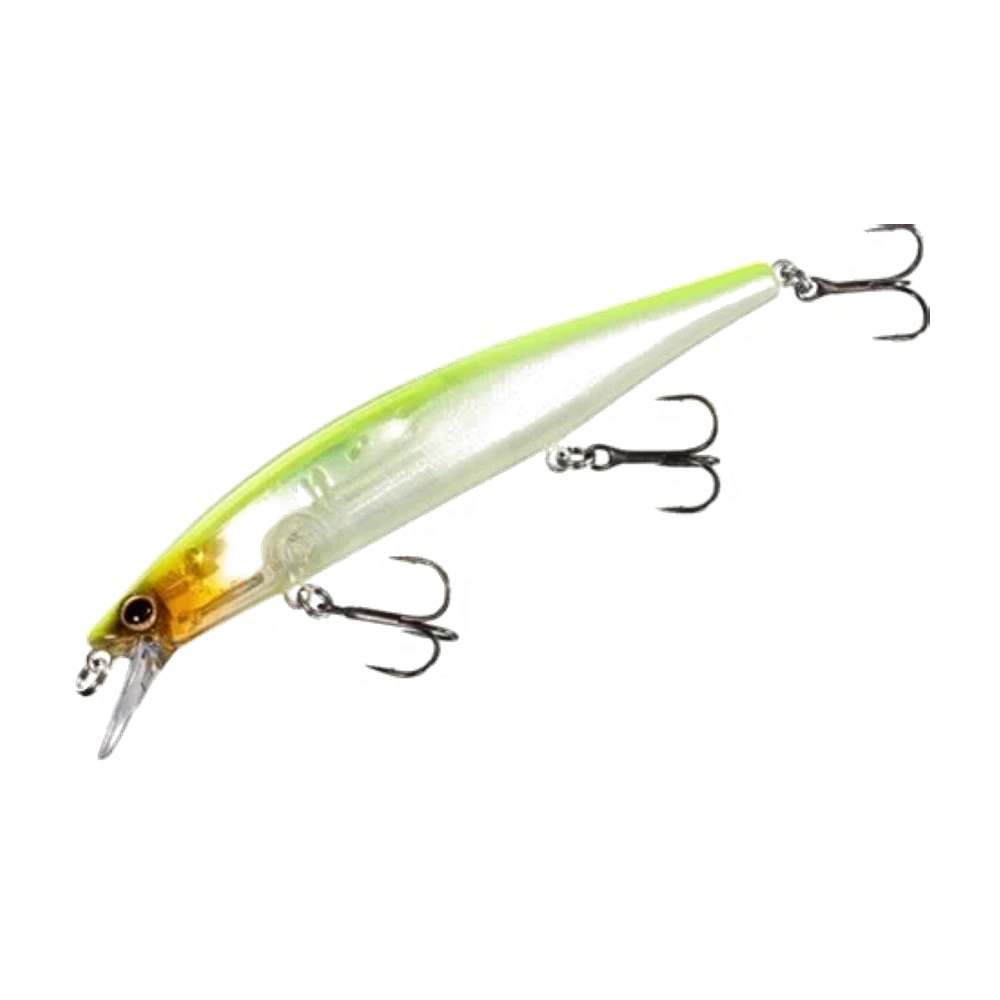
Shimano Bantam World Minnow: holding the current seam without leaving it
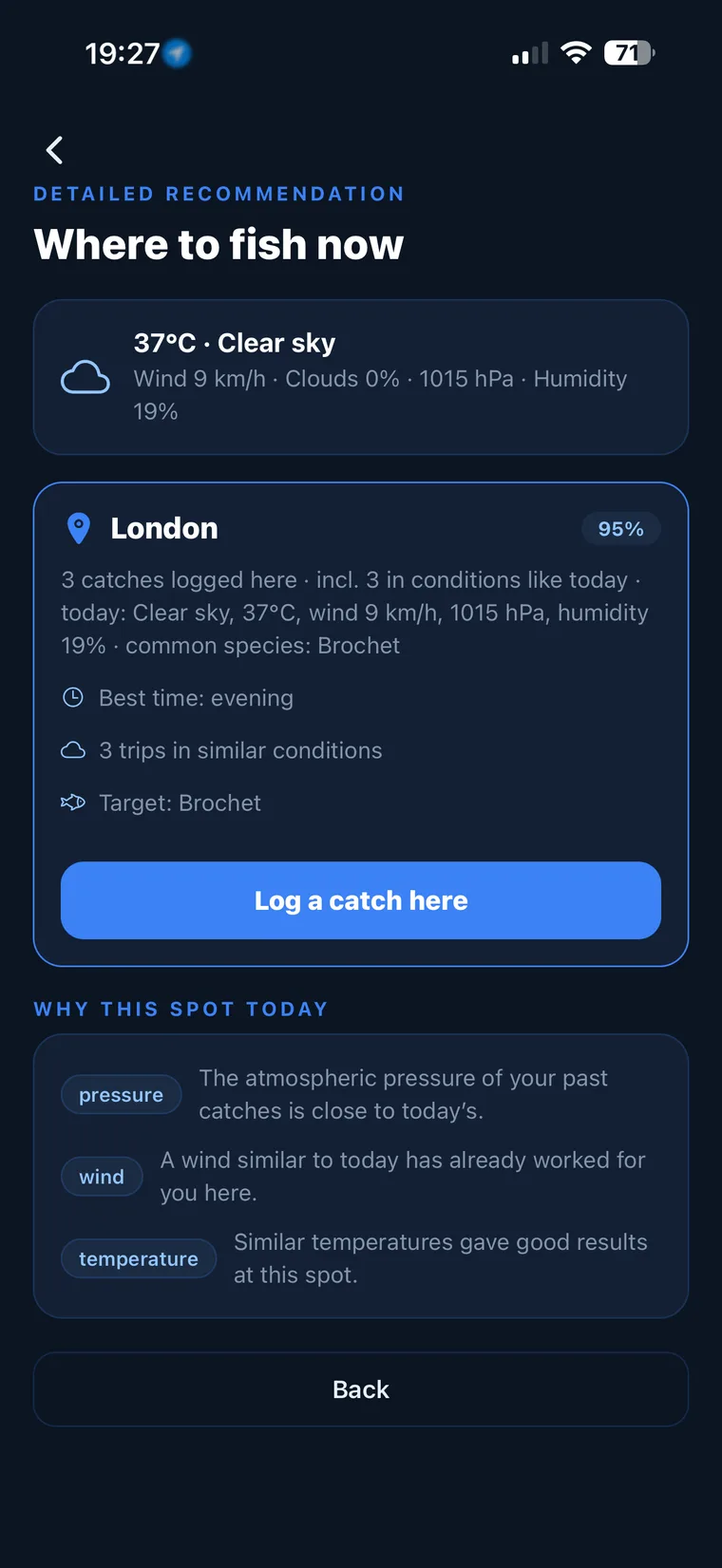
Not sure this lure fits YOUR spot today? CarnaFish tells you in 10 seconds, from a photo.
In a river, everything happens in a band of water fifty centimetres wide. The main seam runs around a boulder, cuts a gutter, and the fish are sitting in it or just alongside. A lure that leaves that band during the retrieve, even by half a metre, will never see a bite.
That is the real selection criterion for a river minnow, and it has nothing to do with the running depth printed on the box. What you need is a lure nervy enough to react to the first twitch, but stable enough to come straight back on line without drifting out of the seam. The World Minnow's compact format answers that brief exactly.
A minnow calibrated for current
Three characteristics separate it from minnows designed for big calm water.
- A short side dart. On every flick of the rod tip, the lure moves only twenty to thirty centimetres, then picks its line back up. A lake jerkbait would shoot seventy centimetres and leave the spot.
- A tight swim on a straight retrieve. Simply cranked, it vibrates at high frequency and low amplitude, which keeps it readable to a fish in current without making it unstable.
- A high running range, typically between thirty centimetres and one metre twenty. On most trout and perch rivers, that is most of the usable water column.
Depending on the version, the behaviour at rest ranges from slow floating to near-suspending. Check it by eye in a metre of water before you start: a lure that rises quickly is not fished the same way as one that holds its depth.
The short twitch against the current
- Stand downstream and cast upstream, at an angle, beyond the seam you are targeting.
- Take up the slack immediately. In current, the lure comes back faster than you think, and a slack line costs you the first three metres.
- Link two short wrist twitches, rod tip down, at a fast rhythm. The lure zigzags along the line of the flow.
- A pause of half a second to a second, no more. In current, a long pause drifts the lure out of the spot.
- Start again, following the lure back towards you. Keep twitching until it is at your feet: fish often follow a long way.
On the water: in a river, it is not the lure you are working, it is the current. Position yourself so the flow does the work while it holds the lure in place and you simply keep the line tight. On a well-chosen seam you can keep the minnow vibrating in front of a boulder for ten seconds without recovering a centimetre of line — no retrieve replaces that.
Reading the spot before you cast
| Type of spot | Angler's position | Retrieve | What you are targeting |
|---|---|---|---|
| Fast seam behind a boulder | Downstream, off to one side | Two twitches, very short pause | Fish sitting in the eddy |
| Gutter along an undercut bank | Downstream | Slow straight retrieve, isolated twitches | Fish tucked under the bank |
| Back eddy along the margin | Upstream, off to one side | Lure held in place, line tight | Fish holding the line between the two flows |
| Shallow running flat | Downstream, at distance | Steady straight retrieve, rod high | Fast searching |
| Pool at the tail of a rapid | Downstream, close in | Long twitches, one second pause | Deeper fish |
The line between the current and the back eddy — that line of bubbles and foam you can see on the surface — is the most reliable spot in a river. Run the lure along it, never across it.
Perch or trout: two different rhythms
For trout, the rhythm is nervy and a discreet approach comes first. You fish your way upstream, cast short, twitch fast, and never stay more than three or four casts on a spot. The bite is usually instant, within the first second. Fluorocarbon of 0.16 to 0.18 mm is plenty and stays discreet.
For perch, it is the opposite: they group up, they follow, and they often commit on the third pass. Slow down, stretch the pauses to two seconds if the lure allows it, and keep working the same spot. Go up to 0.20-0.22 mm to handle hooksets near structure.
Either way, set short. The hooks are fine, the mouths are fragile, and a pike-style hookset rips the lure out.
Not sure what to tie on?
Photograph your spot: CarnaFish reads the scene, cross-checks the conditions and gives you the zone, the lure and the retrieve. Free on iOS and Android.
Where it shines, where it does not fit
Its windows:
- Small to medium rivers, from headwater trout streams to mixed trout-and-perch beats.
- Clear, running water, where a tight swim and flash count.
- Spring and autumn, when fish are active and holding in the current.
- Windy lake margins, where chop creates agitation comparable to current.
Its limits:
- Deep water. Beyond a metre and a half, you are fishing above the fish.
- Still, very clear water in high summer, where a finesse soft plastic or a topwater will do better.
- Very snaggy spots. Two small bare trebles forgive little in submerged branches.
- Strong headwind. A lure of a few grams stops carrying.
World Minnow, sinking minnow or lake jerkbait
Against a Smith D-Contact, the difference is density. The D-Contact sinks, reaches the bottom of pools and is fished on a downstream drift: it is the tool for deep, fast rivers. The World Minnow stays high and works the first layer of water. On a wide, deep river the sinking model wins; on a shallow, technical beat the high-running minnow goes everywhere without snagging.
Against a Zipbaits Rigge 56, the use is close, but the Rigge is finer still and slower: it is the lure for difficult fish in very clear water. The World Minnow accepts a brisker rhythm and handles current better.
Finally, if you move onto a wider watercourse with good perch, a longer jerkbait such as the Illex Squad Minnow 95SP takes over: more range, more volume, and pauses you can genuinely exploit.
Our guide to river trout fishing covers where to stand according to the type of spot. And if you are unsure about your angle of attack as you arrive in front of a current seam, CarnaFish reads a photo of the spot and answers.
Key takeaways
- A short side dart: the lure stays in the seam instead of leaving it on the first twitch.
- Closely spaced twitches and pauses of a second at most; in current, a long pause drifts the lure away.
- The best spot is the dividing line between current and back eddy, to be fished parallel.
- A nervy rhythm and a discreet approach for trout, a slower rhythm and persistence for perch.
- Unsuited beyond a metre and a half of depth, in still water, and in strong wind.
FAQ
What depth does the Bantam World Minnow run at?
Between 0.3 and 1.2 m depending on the version and the rod angle. Rod high, you hold it in the top thirty centimetres; rod low with a steady retrieve, you reach the bottom of its range.
Should you fish upstream or downstream?
Both, depending on the spot. Upstream to come down a fast seam while keeping contact; across or downstream to hold the lure in place in front of an obstruction without recovering line.
How long a pause between two twitches?
Half a second to a second in current, up to two seconds for perch in calm water. Beyond that, the lure leaves the spot or rises too high depending on its buoyancy.
What line should you use?
Fluorocarbon of 0.16 to 0.18 mm for trout in clear water, 0.20 to 0.22 mm for perch and as soon as there is structure. Anything heavier restricts a lure weighing a few grams.
Is it suitable for lakes?
On windy, choppy margins, yes. In flat, calm, deep water it lacks range and running depth: a longer jerkbait suits better.
What is the difference with a sinking trout minnow?
The sinking model drops into pools and is fished on the drift, built for deep, fast rivers. The World Minnow stays in the first layer of water and passes over obstructions without snagging.
The full perch lure guideSeason-by-season strategy: which family of lure, when, and why.Go from theory to fish
CarnaFish reads your spot from a photo and gives you the game plan: zone, lure, retrieve. Free on iOS and Android.