Jackall Flick Shake Worm: the bent worm that quivers on its own
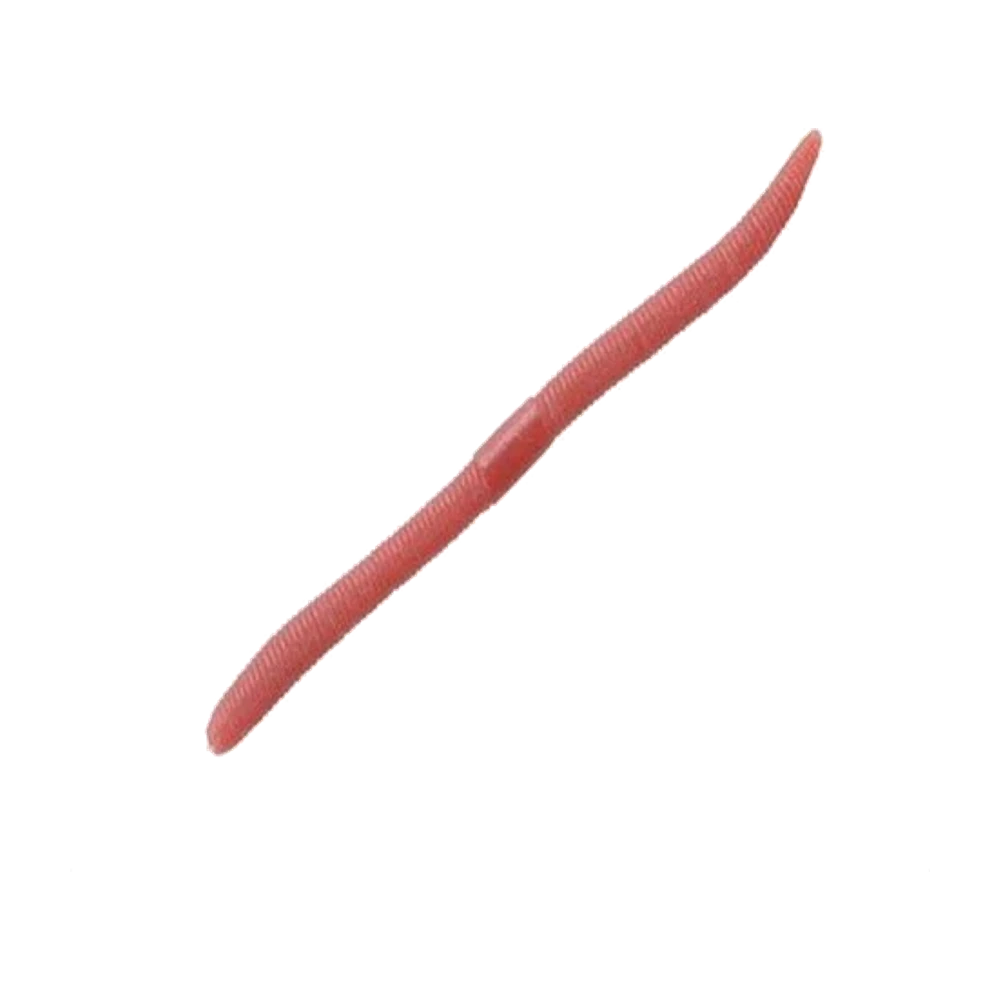
This lure shines under specific conditions. CarnaFish tells you in 10 seconds if today is one of them.
You are fishing a straight worm wacky style and doing everything right: hook through the middle, short twitches, semi-slack line on the drop. And yet between two twitches the lure does nothing at all. It hangs there, lifeless, on a loose line. The seconds in which a fish makes up its mind are exactly the seconds your lure is most motionless.
That is the problem the Flick Shake attacks head on, and it does it through geometry rather than material. The body is not straight: it is moulded with a permanent curve, in an arc. That curve is enough to turn a tiny twitch of the rod tip into an undulation that runs through both ends of the worm.
What a moulded curve changes
A straight worm hooked through its centre forms a symmetrical V. For it to move, the line has to pull: when you stop, everything stops. The Flick Shake is already deformed at rest. Two effects follow.
On the drop, the arc acts as a rudder. Instead of falling flat like an inert V, the worm tips from one side to the other and drifts slightly sideways. You get a slower, longer fall over the same depth of water, so more time in front of the fish's eyes.
On the twitch, the energy does not travel in a straight line. It runs into the curve, spreads out towards both tips, and comes back. A five centimetre twitch of the rod tip keeps the ends vibrating for two to three seconds after your rod has stopped. That is exactly the window of time a straight worm lacks.
The material plays its part too: the body is supple, heavy enough to cast properly despite its slim diameter, and far livelier than a rigid Ned-style plastic.
The rig: wacky or neko, and why it changes everything
Both rigs are covered in detail elsewhere — see our page on the wacky rig for the full method. What matters here is knowing which of the two actually exploits the curve.
- Wacky, the hook goes through the centre via an o-ring. The curve is then used symmetrically: both halves of the worm work identically. This is the rig for fishing open water, under a jetty, along a laydown, on fish sitting high.
- Neko, a nail weight is pushed into the head and the hook passes through the front third. The worm goes down head first, plants itself in the bottom, and the curve makes the tail beat upwards on every twitch. This is the rig for hard bottoms, drop-offs and deep spots.
Remember the principle: wacky exploits the curve horizontally, neko stands it up vertically. Same lure, two different working planes.
The retrieve, twitch by twitch
- Cast short and accurate. This lure is not for searching: you drop it on a spot you have identified, within a metre.
- Let it fall on a semi-slack line, doing nothing. Watch the line with your eyes. A good half of bites come here, on the first drop.
- Three small twitches of the rod tip, five to ten centimetres of amplitude, wrist only, rod at ten o'clock.
- Stop completely for three to five seconds. The worm keeps vibrating on its own. This is the heart of the method.
- Take up the slack without moving the lure, and start again two or three times in the same place before you wind it in.
On the water: with a curved worm, never let the line go completely tight between two twitches. Tension chokes the arc and kills the residual vibration — the lure becomes a straight worm again. Deliberately leave ten to fifteen centimetres of slack: that slack is what lets the worm finish its movement on its own.
Choosing the size and the weight
| Situation | Size | Weight |
|---|---|---|
| Perch, clear water, shallow spot | 4.8" | None, or a 0.9 g nail |
| Bass, margins, 1 to 3 m | 5.8" | None wacky, a 1.3 g nail neko |
| Adult bass, deep structure 3 to 6 m | 6.8" | A 1.8 to 2.5 g nail |
| Strong wind or long casts required | 7.8" | A 2.5 g nail minimum |
Two details that make the difference over time: always fit an o-ring for the wacky rig, otherwise the body tears on the second fish; and favour a wide gap single hook in size 1 to 2/0 depending on the worm, with wire fine enough to penetrate without a violent hookset. For line, 0.20 to 0.25 mm fluorocarbon straight through is enough, or fine braid with a fluorocarbon leader if you are fishing close to wood.
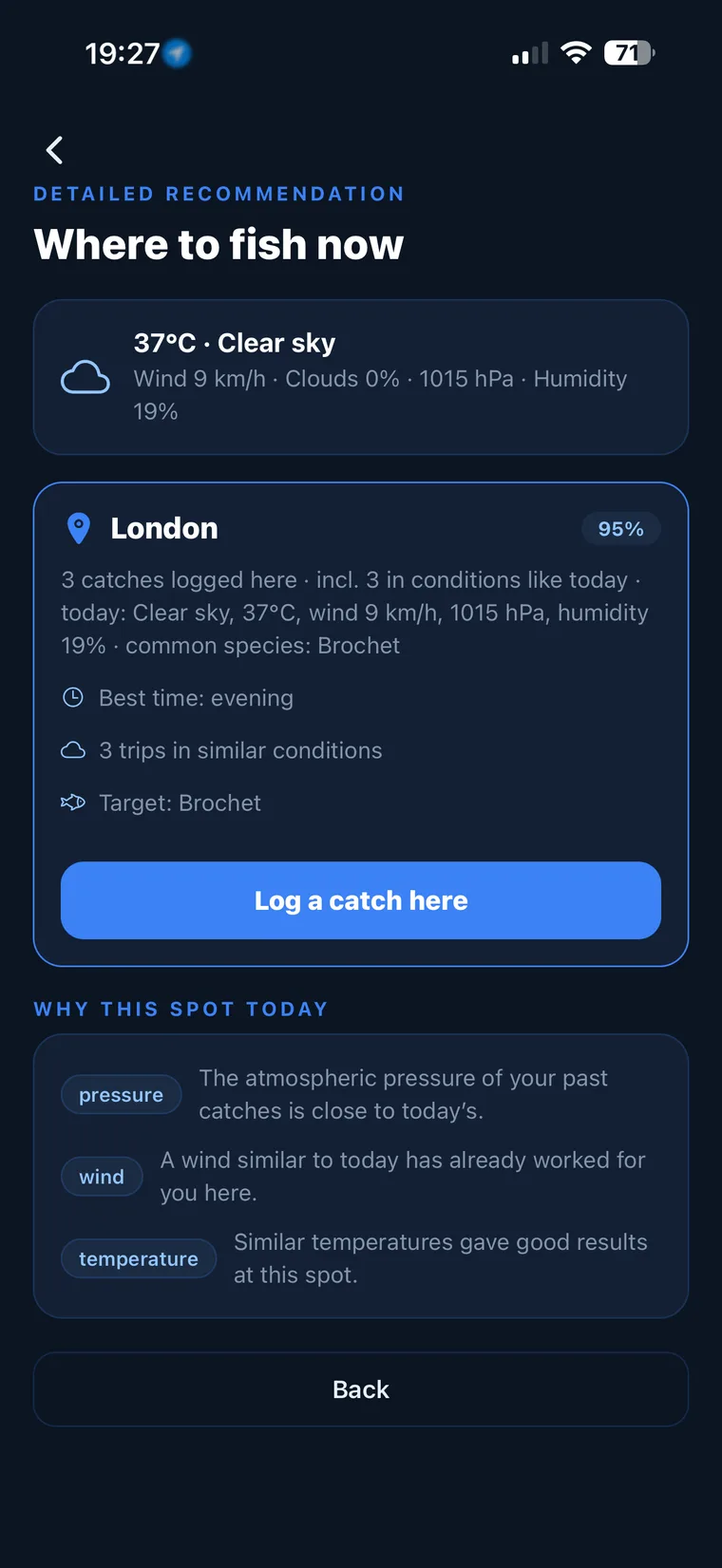
Not sure what to tie on?
Photograph your spot: CarnaFish reads the scene, cross-checks the conditions and gives you the zone, the lure and the retrieve. Free on iOS and Android.
Where it excels, where it is off the point
Its window is the fish you can see but cannot commit. Clear water, educated fish, heavily visited waters, periods of high pressure or post-spawn when nothing fast works. It is also an excellent second-pass lure: you search with a crankbait or a spinnerbait, you note a missed bite, and you come back over it with the Flick Shake.
Conversely, it is unsuited to broad searching: you cover very little ground per hour. It is also of little use in heavily stained or moving water, where its fine vibratory signature is unreadable to the fish, and in the middle of dense vegetation, where the exposed hook of a wacky rig snags constantly.
Flick Shake or straight stick bait
The Yamamoto Senko 5" is the benchmark straight worm for wacky rigging: a thick body, loaded with salt, a fast and regular fall, two ends that shiver briefly then stop. It catches plenty of fish on that decisive drop. The Flick Shake does the opposite: slimmer, slower to go down, and above all active during the pause thanks to its curve. On active fish the Senko is often quicker to pay off; on apathetic or wary fish the Flick Shake has the edge.
Against a Zoom Trick Worm, the difference is one of versatility: the Trick Worm stays flexible on a Texas rig and a drop shot, while the Flick Shake is specialised in working on the spot. If you want something even plainer and deeper, the Ned rig covers the same intention with less amplitude.
Our beginner's guide to bass fishing places these finesse approaches within the season. And if you are torn between wacky and neko depending on the bottom, CarnaFish analyses a photo of the spot and answers.
Key takeaways
- The body is moulded curved: the worm keeps vibrating two to three seconds after the twitch stops.
- Wacky to work horizontally in open water, neko to stand the tail up on a hard bottom.
- Always leave slack in the line: a tight line cancels the effect of the curve.
- An o-ring is compulsory for wacky, with a wide gap single hook in size 1 to 2/0.
- A lure for precise spots and second passes, not for searching.
FAQ
Why is the Flick Shake curved?
The curve is moulded deliberately so that the worm is deformed at rest. It turns a minimal twitch of the rod tip into an undulation running through both ends, and tips the lure from side to side on the drop instead of letting it fall flat.
Should you fish it wacky or neko?
Both work, but not on the same spot. Wacky works in open water, under jetties and along laydowns; neko, with a nail weight in the head, plants the worm in the bottom and makes the tail beat upwards over deep drop-offs.
What size should you use for perch?
The 4.8" suits well, rigged unweighted or with a very light nail. The bigger sizes are for adult bass and deep spots, where you need volume and mass to go down fast and cast far.
How long should the pause be?
Three to five seconds after each series of twitches. That is exactly how long the curve keeps the ends of the worm vibrating, and it is where most bites from wary fish happen.
Do you need an o-ring for the wacky rig?
Yes, unless you accept changing lure every two fish. The ring spreads the pull around the circumference of the body instead of concentrating it on the hook hole, and hugely extends the life of the worm.
What line should you use with this lure?
Fluorocarbon of 0.20 to 0.25 mm straight through is enough in open water. Close to wood or jetties, switch to fine braid with a metre of fluorocarbon leader: you keep the sensitivity you need to detect a bite on the drop.
The full bass lure guideSeason-by-season strategy: which family of lure, when, and why.Go from theory to fish
CarnaFish reads your spot from a photo and gives you the game plan: zone, lure, retrieve. Free on iOS and Android.