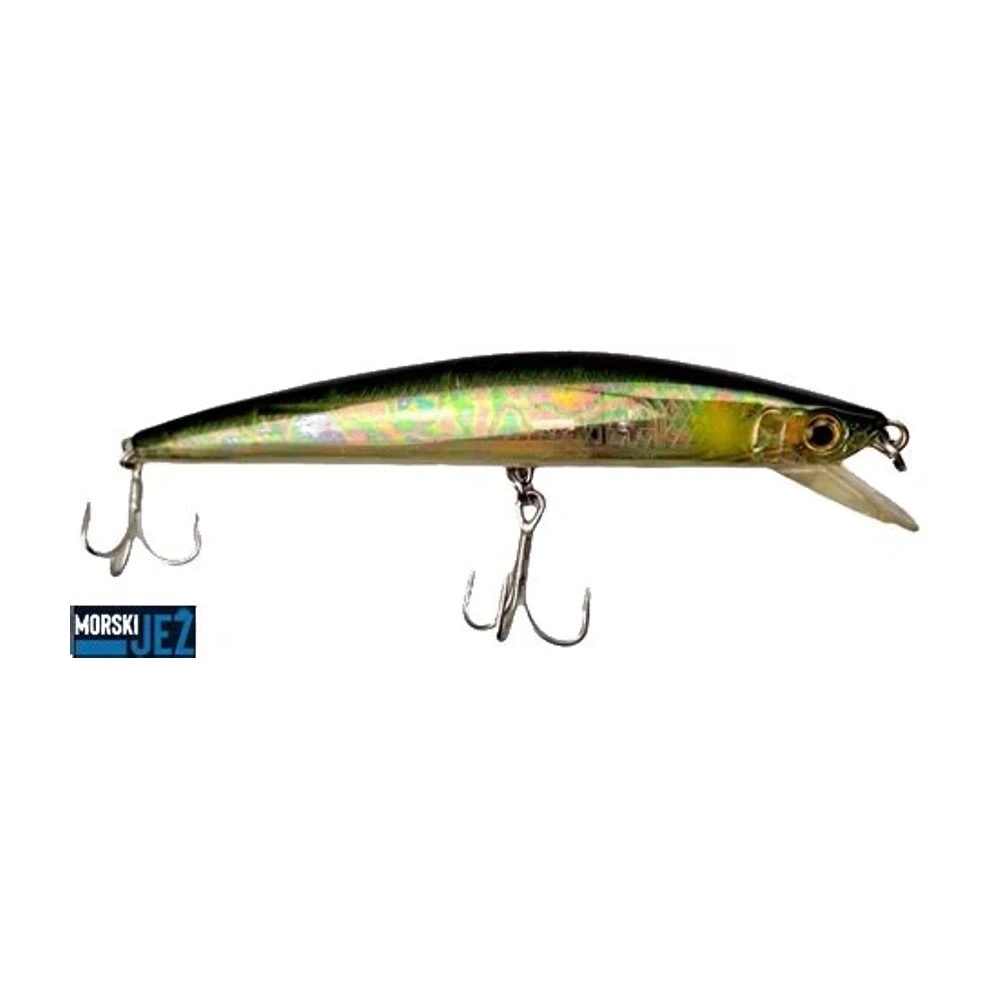
Maria Chase SW: the stickbait that holds in a rough sea
The right lure in the wrong spot still catches nothing. CarnaFish spots the zone that works, from a single photo.
There is one situation every shore bass angler knows: the sea gets up, a 20-knot crosswind chops the surface, and the stickbait that worked so well yesterday on an oily calm becomes unusable. It lifts off, it tumbles, it skids off the crest of a wave and lands any old how. You can tell the fish are there, you can even see scattered feeding frenzies between two rocks, but you can no longer present anything credible.
That is exactly the Chase SW's window. This is not a calm-sea stickbait, and it is actually mediocre in that role. It is a lure designed to stay engaged in the water when the water is moving, and that design difference completely changes the way you fish it.
Why it does not lift off in the wave
Most surface stickbaits have a round body and a density close to zero. They float high, they glide easily, and that is fine as long as the surface is smooth. As soon as there is a short swell, they come out of the water on every pull and lose contact.
The Chase SW plays on three parameters:
- Pronounced rear weighting, which drops the tail at rest and keeps part of the body under the surface. The lure moves forward rather than upward on each twitch.
- A body section taller than it is wide, which grips the water sideways. That is what produces the wide glide instead of a simple hop.
- An internal weight transfer system, which pins the weight at the rear on the cast then releases it on the retrieve. In practice, you gain 10 to 20 m of range in a crosswind.
The result is not a more spectacular action, it is a more reliable one. In 20 knots of wind, a lure that makes four clean glides out of five beats a lure that makes two magnificent ones and three failures.
The retrieve: walk it and never let up
On a calm sea, you walk a stickbait with soft twitches and micro-pauses. Here it is the opposite: the pause is your enemy, because it is during the pause that the wave takes control of the lure back.
- Cast across the wind or slightly into it, never straight downwind. You want the line to come tight on its own.
- Take up the slack immediately the moment the lure lands, two fast turns, rod tip pointed down and to the left or right depending on which side the wind is on.
- Give short, regular twitches, one pull per half turn of the handle, without chasing amplitude. The lure should sweep 30 to 50 cm each side.
- Do not pause while the surface is rough. You keep going right to the foot of the rock.
- Speed up sharply over the last three metres if you see a shadow following: it is the most effective trigger on this lure.
On the water: in chop, do not try to see your lure. Fish by feel, not by sight. If you feel a light, regular resistance in your wrist on every twitch, the lure is working. The moment that resistance disappears, it has lifted off — drop the rod tip 20 cm and slow down a notch instead of pulling harder, which would only rip it out further.
Choosing the size by the sea and the fish
| Conditions | Suggested size | Approximate weight |
|---|---|---|
| Slight sea, 40-50 cm bass over sand | 9 to 10 cm | 15 to 20 g |
| Choppy sea, crosswind, rocky spot | 11 to 12 cm | 25 to 30 g |
| Rough sea, long swell, hunting big fish | 13 to 14 cm | 35 to 40 g |
The logic is not "big fish equals big lure". It is "rough sea equals heavy lure". A 40 g lure on a flat sea looks enormous and gets refused; the same 40 g in a metre of short swell goes almost unnoticed and is the only thing that can hold its line.
Line-wise: braid of 0.15 to 0.25 mm depending on lure size, and a metre of 0.35 to 0.45 mm fluorocarbon leader. Over rock, step up the fluoro rather than the braid — it is the leader that takes the chafe.
The classic spot: rocky point, mid-flood
The Chase SW makes most sense off a point separating two coves, when the tidal current wraps round the obstacle and creates a seam of broken water on the sheltered side.
- State of tide: the two hours either side of mid-flood, when the current is strongest and the first metres of water cover the rock platform.
- Position: stand so that you cast into the current and retrieve across it. Your lure crosses the seam instead of following it.
- Zone to work: the dividing line between smooth and broken water, usually 15 to 30 m beyond the point. That is where the bass sits, sheltered, facing the current.
- Light: it works in broad daylight, which is rare for a topwater. The cover of the waves replaces darkness.
If you are new to this kind of configuration, our guide to reading a spot explains how to pick out those current seams from the bank before you even cast.
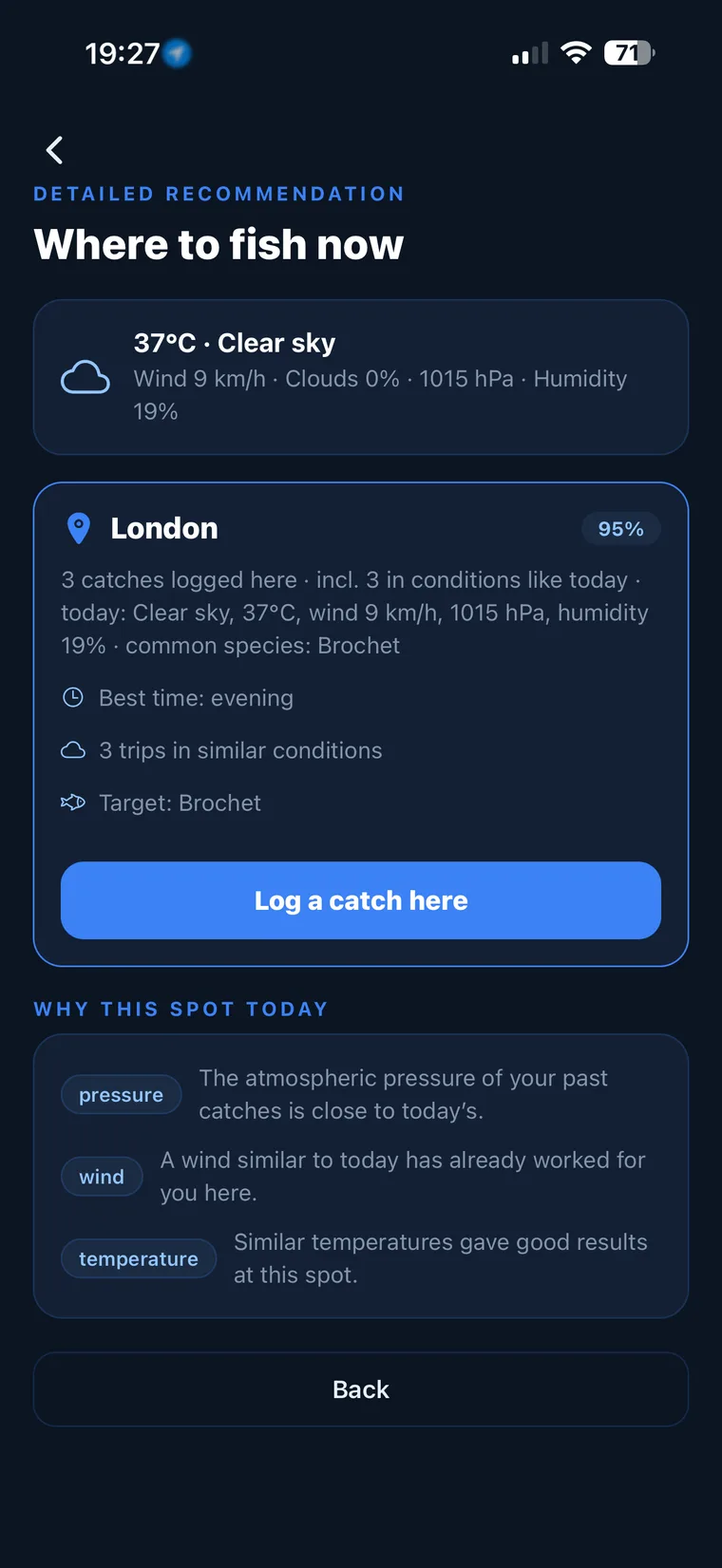
Not sure what to tie on?
Photograph your spot: CarnaFish reads the scene, cross-checks the conditions and gives you the zone, the lure and the retrieve. Free on iOS and Android.
Where not to use it
Let us be clear, this lure has obvious blind spots:
- Oily calm, clear water, full sun. Its rear weighting and heavy glide are too demonstrative. A light pencil will do far better.
- Shallow sandy bay bottoms, where 30 cm of water does not let the body stay engaged.
- Finesse fishing for small active bass, where the volume and the heavy trebles are out of proportion.
- Slow-current estuaries with stained water: the surface is the wrong level, you are better off going down.
Chase SW or a light pencil: two different seas
The Bassday Sugapen is the exact opposite: small, light, deliberately undersized, it excels on a flat sea on wary bass sipping at the surface over sand. As soon as chop builds, it becomes unplayable. The Chase SW starts where the Sugapen stops.
Against the Xorus Patchinko 140, the comparison is tighter: both handle a rough sea. The Patchinko favours a very wide glide and a higher float, which makes it deadly in a big but not very windy sea. The Chase SW, weighted further back, keeps more contact when the wind chops the wave crests. In practice, plenty of rock anglers carry both and choose by wind direction, not by the size of the fish.
To go further into the windows where topwater works, the guide to sea bass fishing with lures sets out how tide, light and water level string together. And if you are torn between surface and sub-surface when you reach your point, CarnaFish analyses a photo of the spot and answers.
Key takeaways
- A rough-sea lure: rear weighting and a tall body to stay engaged in chop.
- Work it without pauses, short regular twitches, fishing by feel rather than by sight.
- Size is chosen on the state of the sea, not on the size of the fish you are after.
- Classic spot: rocky point, current seam, the two hours around mid-flood.
- Wrong choice on an oily calm, in very shallow water and in a slow estuary.
FAQ
Does the Maria Chase SW float or sink?
It floats, but at a very steep angle: the tail drops noticeably and only the front of the body stays at the surface at rest. It is that rear weighting that stops it lifting off in the wave.
What size should I choose for shore bass?
The 11 to 12 cm covers most shore situations in a choppy sea. Drop to 9-10 cm on a calm sea and for small bass, step up to 13-14 cm when the swell is long and you are hunting a big fish.
Can it be used in broad daylight?
Yes, and that is one of its strengths. In a rough sea, the cover of the waves does the same job as low light: bass come to the surface in the middle of the day without hesitation.
Should I build pauses into the retrieve?
No, not when the sea is up. A pause lets the wave take control of the lure back and knocks it off its line. Keep the twitches coming right to the foot of the spot.
What leader should I use over rock?
A metre of fluorocarbon in 0.35 to 0.45 mm, joined to braid of 0.15 to 0.25 mm. The leader is what takes the chafe, so that is what you step up in diameter, not the braid.
How does it differ from a classic pencil?
A classic pencil floats flat and glides widely on a calm sea. The Chase SW keeps its tail submerged and gives up a little amplitude to hold its action as soon as there is wind and chop.
The full sea bass lure guideSeason-by-season strategy: which family of lure, when, and why.Go from theory to fish
CarnaFish reads your spot from a photo and gives you the game plan: zone, lure, retrieve. Free on iOS and Android.