Megabass Knuckle LD: the floating crankbait that makes no noise at all
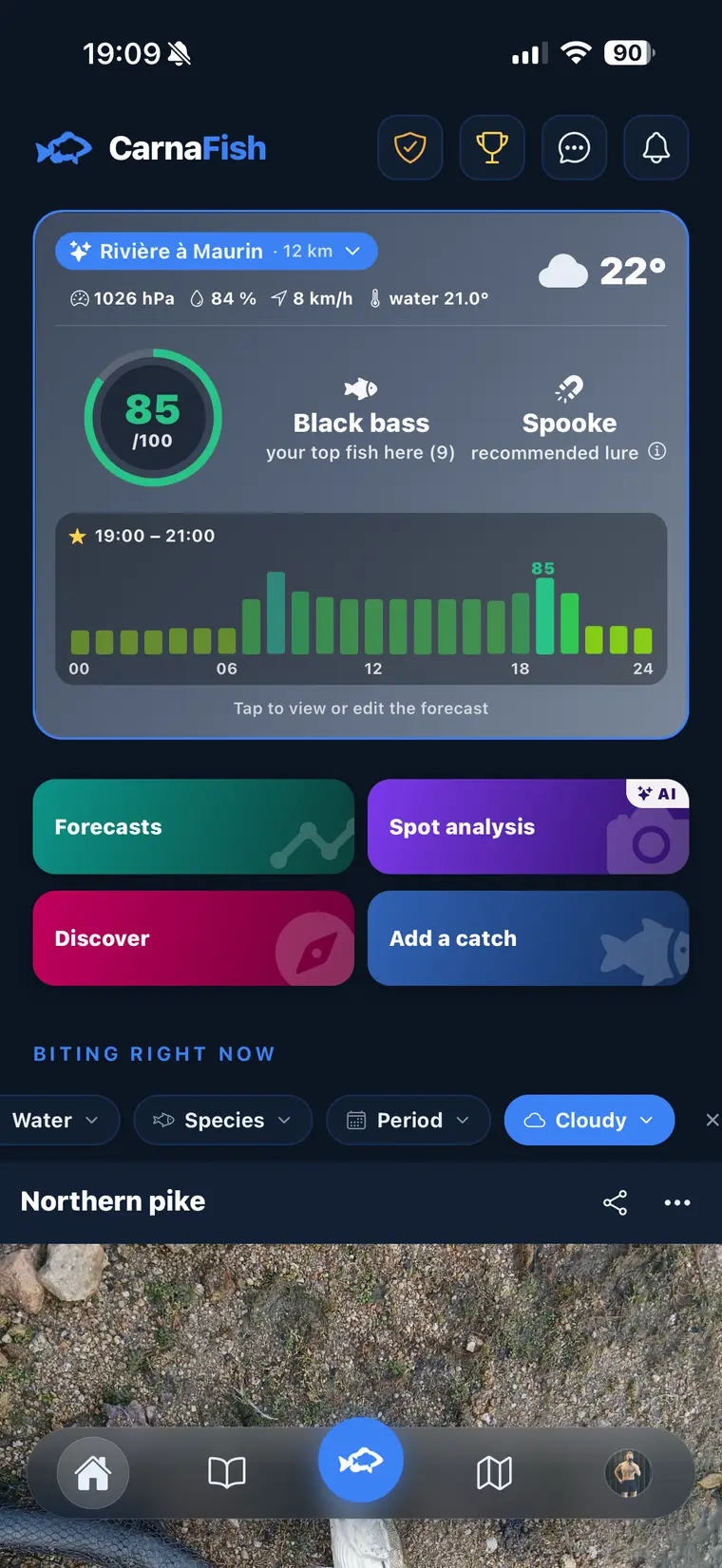
Before tying this one on, it helps to know if the spot actually calls for it. CarnaFish reads the scene from a photo.
There are lakes where a rattling crankbait simply stops working. Not because the fish have gone, but because they have linked that maraca sound to something that ends badly for them. The usual reaction on those waters is to drop down in size or slow everything down. Megabass offers another route with the Knuckle LD: keep the volume, keep the speed, and cut the sound.
What the table says — and what it leaves out
Three values in the spec table, and you have to read the whole header row before interpreting them. The first column carries the model name, not a measurement: "Knuckle LD Crankbait." Then come 2-1/3 in, which is 5.9 cm, 3/8 oz, which is about 10.6 g, and a class of Floating.
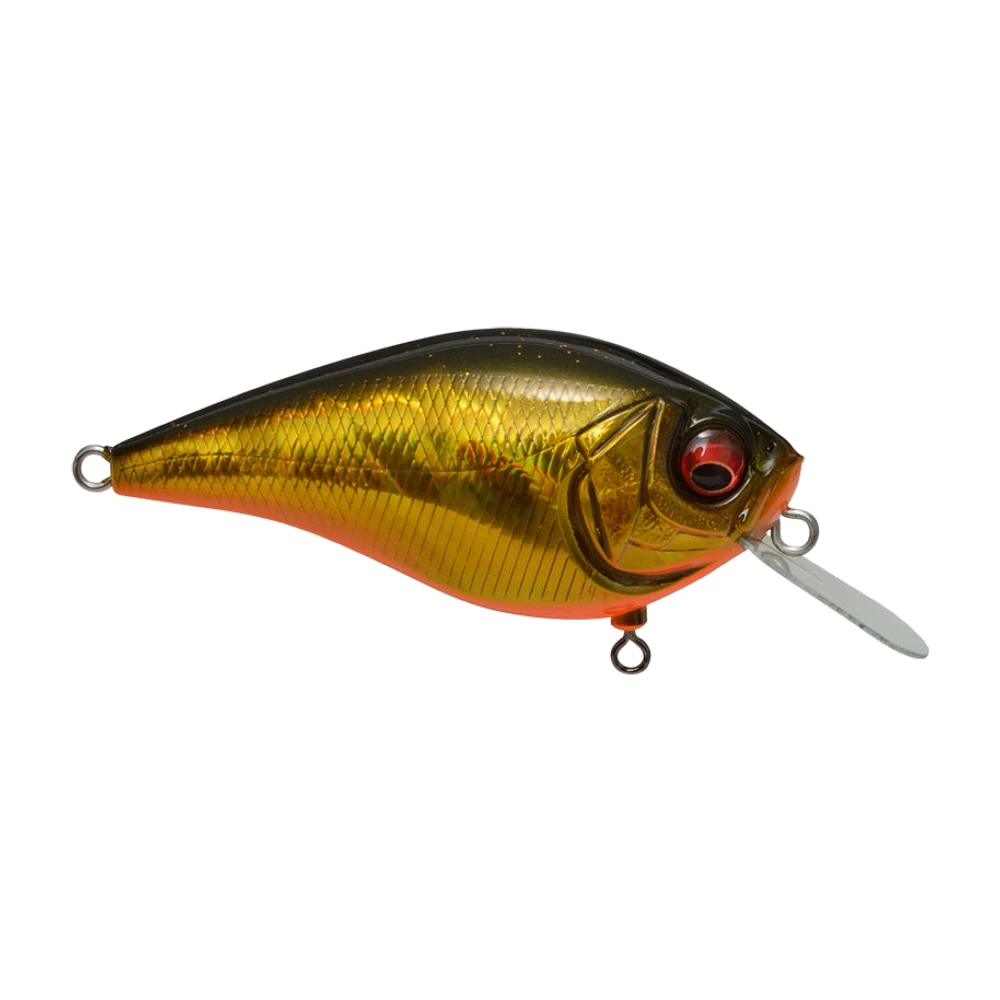
What isn't there matters just as much: Megabass publishes no running depth. No range, no maximum, nothing. The bait belongs to the Project Legend LD series, and the maker never explains what that suffix stands for. In the product photo, the lip is noticeably longer and set at a flatter angle than a squarebill's, which points towards a diver — but that's reading a silhouette, not a published figure. Don't buy this bait for a specific depth: buy it for what it does, and work out its depth yourself on the first pass, counting handle turns to the first contact over bottom whose depth you already know.
The bait derives from the Knuckle Squarebill, a model that already existed in the range. The lip is what changed, and with it the whole working window.
A circuit-board lip, and what that changes
Megabass specifies an ultra-thin circuit board lip — the same composite used for electronic boards, chosen here because it stays rigid at very low thickness. The payoff is twofold and quite real.
A thin lip presents less edge area to the water: it starts the swim earlier, within the first turns of the handle, and it produces a high-pitch wobble rather than a wide, slow sweep. The maker also describes a rolling action, meaning the body pivots on its long axis at the same time as it beats. In the rod you feel a fast, tight tremor, not the heavy thump of a thick-lipped crank.
The second gain is less obvious: a thin plate flexes slightly rather than shattering when it hits rock. That matters on a bait whose whole point is contact with cover.
A crankbait made deliberately mute
That is the stated design axis, and it is what justifies the model existing. Megabass describes a balancer system secured from multiple angles inside the body, whose only job is to stop any moving part from knocking against the wall. The claimed result is a genuinely silent approach.
On a conventional crankbait, weight-transfer balls slide in a tube and clack on every beat. That's a powerful signal, working for you in dirty water and against you on fish that thirty boats have covered this month. The Knuckle LD removes that component and leaves only the hydrodynamic vibration of the body.
When silence actually pays
Three situations where the difference shows up in the net rather than in the copy. On very clear water late in the season, when the fish sees the bait from a distance and has time to study it. On a stretch already fished that same morning, where you're following someone else through. And in cold water, when an aggressive sound signal pushes fish away instead of pulling them in.
Conversely, in stained or post-flood water, silence becomes a handicap: the fish locates with its inner ear first. A rattling crank does better there, and that's worth admitting.
A field marker: if you alternate a rattling crank and the Knuckle LD along the same bank and the noisy one gets twice the bites, shelve the silent one for the day. Silence isn't a quality in itself, it's an answer to a specific situation.
The swivel under the belly
It's the detail you notice in the hand, and it's clearly visible in the photo: under the chin, where the belly hook hanger sits, Megabass fits not a plain ring but a swivel. The stated goal is to improve the hook-up ratio and stop fish throwing the hook during the fight, by letting the hook rotate freely instead of levering against the body.
The sample photographed here is completely bare: no treble is fitted, front or rear, and both hangers are empty. The description doesn't state hook count or size either, so nothing lets you claim what the package contains. Check yours on opening, all the more since the belly swivel calls for a suitable split ring if you change hooks.
The mistake to avoid
Cinching the knot tight on the nose eye. On a thin-lipped crank whose swim starts early, a knot locked against the eye immediately throttles the amplitude and kills the roll. Loop knot or small clip, every time. Second mistake, specific to floating crankbaits: retrieving without ever stopping. The Floating class hands you a free tool — every time the lip bumps cover, a one-second stop backs the bait up and floats it clear, freeing it and very often drawing the bite right after.
Not sure what to tie on?
Photograph your spot: CarnaFish reads the scene, cross-checks the conditions and gives you the zone, the lure and the retrieve. Free on iOS and Android.
Colour by water
- Lightly stained water: the metallic gold with black back and orange belly photographed here. Gold works with the available light instead of throwing it back harshly, and the orange belly gives a contrast marker each time the body rolls on its axis.
- Clear water: a natural roach or bleak pattern, silver flanks and dark back, to stay consistent in front of a fish that has time to study it.
- Low light or heavy water: a solid dark tone. On a silent bait the silhouette becomes the only long-range signal, so it may as well be a clean one.
Against a squarebill and a true diver
The Knuckle LD doesn't fill the same slot as a classic squarebill like the Bomber Square A, whose thick square lip is built to deflect off timber in shallow water with a wide, noisy sweep. Nor does it fill the slot of a true diver like the Rapala DT6, which reaches a stated depth and holds it. It sits between the two with a signature of its own: tight vibration, marked roll, zero noise. Within the Megabass range its closest neighbour is the Megabass Griffon, smaller and more general-purpose, which the Knuckle LD complements rather than replaces.
That leaves the question that decides everything: how deep are the fish today, and along which bank. That's exactly what CarnaFish handles — a photo of the spot, and the app suggests the zone and the water layer to attack first. For spot-reading and tackle fundamentals, our beginner's guide to bass fishing covers the ground from scratch.
Key takeaways
- The table gives 5.9 cm / 2-1/3 in, about 10.6 g / 3/8 oz and a Floating class: it floats and backs up the moment you stop reeling.
- No running depth is published by Megabass; you have to establish it yourself on the first pass.
- The ultra-thin circuit-board lip produces a high-frequency wobble with a roll, not a wide sweep.
- Locked-down ballast removes every rattle: an asset in clear water on pressured fish, a handicap in dirty water.
FAQ
How deep does the Knuckle LD run?
Megabass doesn't say. The spec table stops at length, weight and the Floating class. The lip visible in the photo is long and flat-angled, which suggests a diver, but as long as the maker publishes nothing the only reliable method is counting handle turns to the first contact over bottom whose depth you know.
What's the point of a silent crankbait?
On heavily fished water or very clear water, rattling balls end up associated with danger and produce refusals. The Knuckle LD removes that component with locked-down ballast and leaves only body vibration. In stained water, though, a rattling crank still wins.
What does the circuit-board lip change?
It's far thinner than a moulded lip while staying rigid. The bait starts swimming within the first turns of the handle and produces a fast wobble with a roll on its axis, instead of the heavy slow sweep of a thick lip.
Why a swivel under the belly?
Megabass fits it to improve the hook-up ratio and limit lost fish: the hook pivots freely instead of levering against the body during the fight. It's clearly visible in the product photo, where most crankbaits make do with a fixed ring.
Does it come with hooks fitted?
The description states neither count nor size, and the sample photographed is completely bare, both hangers empty. Check yours on opening, and allow for split rings that suit the belly swivel if you change hooks.
Does it suit perch?
Yes, 5.9 cm matches what perch take in Europe along riprap and reservoir margins, especially in clear water where the bait's silence becomes an advantage. Just slow the retrieve down compared with a bass pass.
The full bass lure guideSeason-by-season strategy: which family of lure, when, and why.Go from theory to fish
CarnaFish reads your spot from a photo and gives you the game plan: zone, lure, retrieve. Free on iOS and Android.