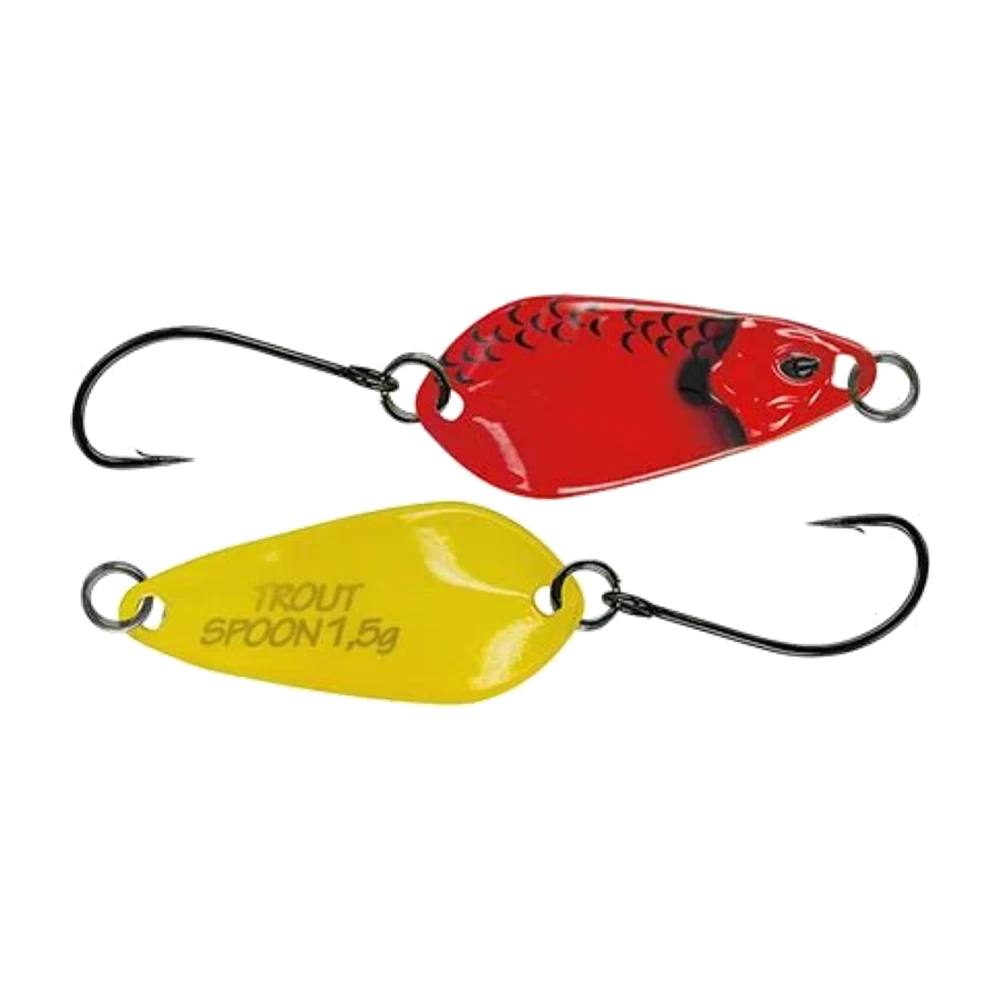
Molix Nano Spoon: the micro spoon for moving water, not stocked ponds
The right lure in the wrong spot still catches nothing. CarnaFish spots the zone that works, from a single photo.
A two-gram spoon in a river, and most anglers give up by the third cast. The wind blows it back, it lands eight metres out, the current lifts it straight to the surface, and it ends up spinning on the end of the line like a scrap of foil.
The reflex then is to go heavier. That is usually the wrong correction. On a low, clear headwater with trout that have already watched three anglers go past that morning, a seven-gram spoon empties the pool before it has even swum.
The real adjustment is not the weight of the lure: it is the angle you cast at and the tension you leave in your line. A micro spoon like the Nano Spoon is a lure you steer with the current, and once you have understood that, two grams stops being a handicap.
In current, you hardly retrieve at all
That is the fundamental difference from still-water use. A spoon needs a flow of water on its concave face to wobble. On a lake, you create that flow by reeling. In a river, the current supplies it for free.
In practice, a Nano Spoon cast across a current and simply held under tension wobbles on the spot without a single turn of the handle. It occupies the same patch of water for ten seconds, at the depth you decide, throwing flash continuously.
That is exactly the presentation a trout sitting behind a stone accepts: a prey struggling in the current without making headway, like a fry fighting to hold. A spoon wound back against the flow, by contrast, comes up too fast, rises to the surface and leaves the fish's window in two seconds.
The retrieve: the down-and-across cast and the tight swing
- Stand downstream of the spot, and cast up and across, around forty-five degrees to the bank. Never straight upstream, never straight across.
- Let it sink while following with the rod tip, bail closed, picking up only the slack the drift creates. Count two to four seconds depending on the depth you want.
- Lock up and tighten slightly. The spoon turns across the flow and starts wobbling on the spot. It will trace a natural curve towards your bank: that is the swing, the decisive phase.
- Touch nothing during the swing. Keep constant tension, rod tip low and pointed at the lure. That is where the great majority of the bites come.
- Only at the end of the curve, give three or four slow turns before casting again a metre further along.
The parameter you adjust is not speed, it is the rod angle. Tip high and line tight, the spoon rises. Tip low and line eased, it drops. You steer the depth to the centimetre without changing lure.
On the water: when your spoon reaches the end of the swing, right under your own bank, don't lift it out. Let it hang in the current for two or three seconds, motionless, just working the rod tip a few centimetres. Trout that have followed without committing attack almost systematically at that instant — and it is the only moment your lure is perfectly still in the middle of moving water.
The tackle limits you more than the lure
With the wrong outfit, a two-gram spoon is unfishable. Three things count.
The rod. You need a genuinely soft tip, ultralight power, 1.8 to 2.1 m on an overgrown river. A rod that is too stiff never loads with a lure of that weight, and you lose half your distance.
The line. Nylon or fluorocarbon of 0.12 to 0.16 mm. Braid is tempting for sensitivity but it catches the wind, floats on the surface and disturbs the drift: for this particular style, nylon is the better choice.
The reel. A small-diameter spool, filled properly. A half-empty spool multiplies friction and costs you two or three metres on every cast.
| Weight | Current | Use |
|---|---|---|
| 1 to 1.5 g | weak to none | Calm pools, very clear water, wary trout |
| 2 to 2.5 g | moderate | General use on a medium-sized river |
| 3 to 3.5 g | strong or depth > 1.5 m | Heavy flows, deep holes, late winter |
Perch: a second use in still water
Away from rivers, this spoon has a use many people miss: perch in open water, on vertical structure — quays, jetties, locks, canal edges.
The technique bears no relation. You cast short, let it sink in mid-water while counting, then work it back up with small twenty-centimetre pulls broken by free falls. The spoon flutters on the drop and that flutter is what triggers. On perch packed around a piling it is often more effective than a soft plastic, because the flash carries further in slightly stained water.
One useful detail: fit a single hook rather than a treble for this job. You lose a little hook-up rate but you unhook the perch without damaging them and you cut snags on concrete and ropes sharply.
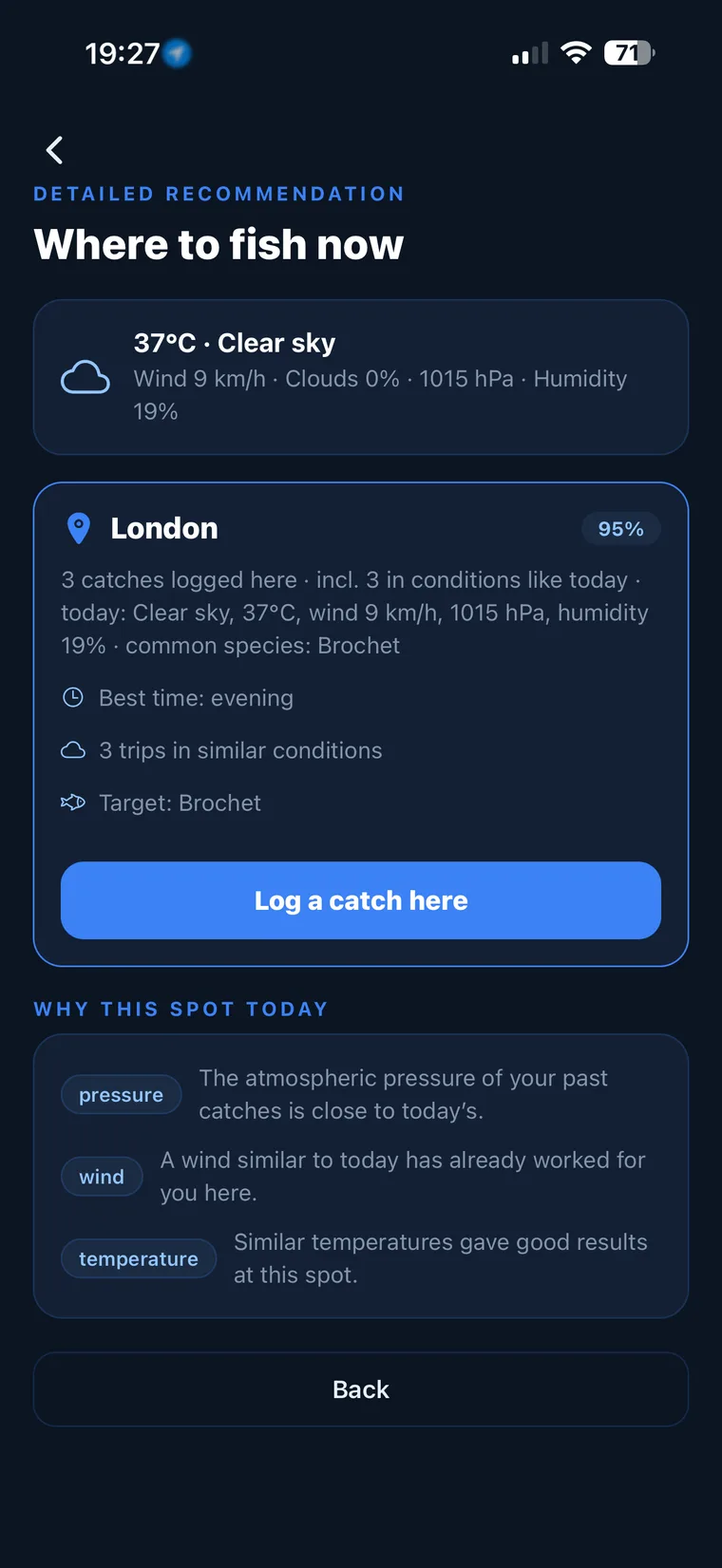
Not sure what to tie on?
Photograph your spot: CarnaFish reads the scene, cross-checks the conditions and gives you the zone, the lure and the retrieve. Free on iOS and Android.
Where it is no use at all
On big deep rivers, where two grams never reaches the productive layer. Move to a ten-gram spoon or a weighted lure.
In strong wind, where casting becomes impractical whatever your technique.
In very dirty water, because this lure works on flash and sight: under fifty centimetres of visibility, a spinner blade with a strong vibration carries far further — a Mepps Aglia no. 3 or a Rublex Celta makes more sense then.
On heavily educated brown trout in ultra-clear water, finally, where a spoon remains a conspicuous lure: the natural presentation of a worked minnow or a small sinking minnow bait often gets through better.
Nano Spoon or area fishing spoon
The Forest Miu and the Nano Spoon belong to the same technical family — spoons of one to three grams — but they are not fished in the same place and do not ask the same things of you.
The Miu is an area fishing spoon, designed for stocked ponds: still water, an ultra-slow and perfectly steady straight retrieve, constant colour rotation. Its whole point is keeping a wobble alive at a minimum retrieve speed, since on a pond you have no current to help you.
The Nano Spoon comes into its own where there is flow. The current does the work for you, you barely retrieve at all, and the active parameter is not colour but casting angle and line tension. If you mostly fish stocked ponds, take the Miu. If you fish flowing rivers or perch on vertical structure, take the Nano Spoon.
Our guide to river trout fishing covers reading the lies and where the angler stands, which matters more than the lure in this style of fishing. And if you are unsure what angle to attack from when you reach the bank, CarnaFish analyses a photo of the spot and answers.
Key takeaways
- In current, the flow creates the wobble: you barely retrieve at all.
- Cast at forty-five degrees upstream and let the swing work, tension constant.
- Depth is set by rod angle, not by lure weight.
- 0.12-0.16 mm nylon or fluorocarbon and an ultralight rod: without them the lure is unfishable.
- A genuine second use on perch, with vertical pulls along quays and jetties.
FAQ
How do you cast a two-gram spoon a long way?
An ultralight rod with a soft tip, fine nylon or fluorocarbon of 0.12 to 0.16 mm, a properly filled spool. A rod that is too stiff never loads at that weight and braid catches the wind: those are the two main causes of short casts.
Do you need to retrieve in a river?
Hardly. Once the lure is across the current, the flow is enough to make it wobble on the spot. You only retrieve at the end of the swing, when the spoon has come back under your own bank.
How do you set the running depth?
With rod angle and line tension, not with weight. Tip high and line tight, the spoon rises. Tip low and line eased, it drops. You adjust that way without changing lure.
Does it work for perch?
Yes, on vertical structure: quays, jetties, locks. Let it sink in mid-water, then work it up with small pulls broken by free falls. The flutter on the drop is what triggers.
What is the difference with an area fishing spoon?
Area fishing is done on still ponds, on a very slow straight retrieve, with constant colour rotation. The Nano Spoon is worked in the flow of a river, where the current replaces the retrieve and casting angle becomes the main parameter.
When should you switch to a heavier lure?
As soon as you can no longer reach the productive layer: a big deep river, very strong current, or wind that stops you casting. In those cases an eight to twelve gram spoon or a weighted lure does the job better.
The full trout lure guideSeason-by-season strategy: which family of lure, when, and why.Go from theory to fish
CarnaFish reads your spot from a photo and gives you the game plan: zone, lure, retrieve. Free on iOS and Android.