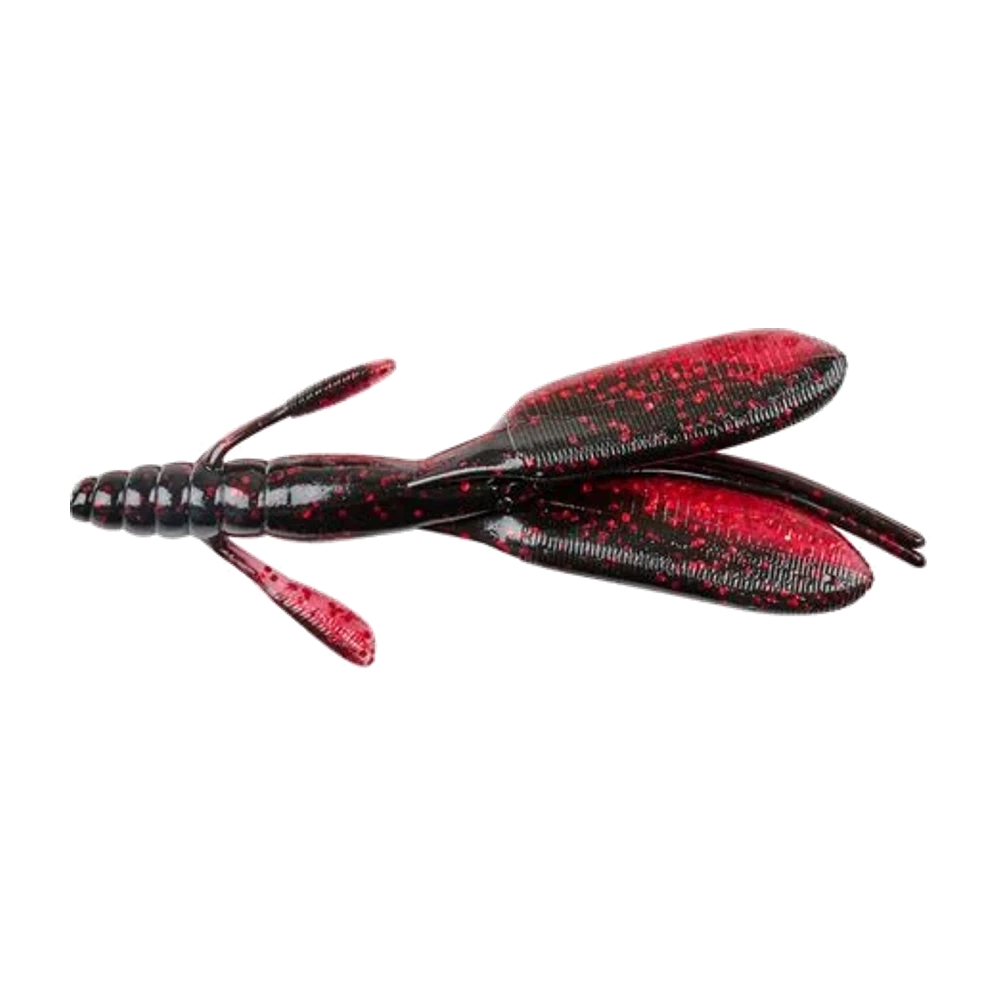
Nories Escape Twin: the creature bait that bets on the fall, not the vibration
Before tying this one on, it helps to know if the spot actually calls for it. CarnaFish reads the scene from a photo.
On heavily fished water, most bass have learned one simple thing: anything that thrashes about is suspect. They have watched hundreds of lures kick, vibrate, rattle and wriggle past. The big fish in those waters barely ever fall for a strong signal any more.
One trigger survives that pressure, because it looks like nothing artificial: an object sinking slowly and flat, silently, through the field of view of a fish holding on a spot. A craw dropping off a rock does exactly that. A soft plastic rigged too heavy does not.
The Escape Twin is built around that falling phase. It is not a creature bait that compensates with vibration: it is a creature bait that slows its own descent and stays readable while it sinks.
Two flat claws, and no appendages everywhere
The difference is obvious the moment you take one out of the bag. Where many creature baits pile on flappers, tentacles and fins, the Escape Twin sticks to a segmented body and two large flat claws.
That choice produces three behaviours:
Lift on the fall. The two claws offer a large horizontal surface. On the way down they press against the water and slow the bait — the sink rate is clearly lower than that of a compact soft plastic of the same weight. You gain one to two seconds of presentation per metre of descent, which over a three-metre spot makes a considerable difference.
A stable attitude. The bait does not fall head first: it glides more or less flat, claws spread. Seen from below by a fish sitting on the bottom, that is a broad, perfectly identifiable silhouette for the whole descent.
Very little vibration. The flat claws barely kick: they undulate. That is deliberate, and it is what sets it apart from every creature bait designed to send out a strong signal. Here the signal is visual and slow.
The material is dense and heavy, which helps you cast an unweighted bait and gives it a good grip on the hook. It is also firm enough not to slide down the shank on every bite.
Four ways to rig it, four different ways to fish
| Rig | Weight | What you get | When |
|---|---|---|---|
| Light Texas rig | 3.5 to 5 g | Maximum slow fall, very pronounced glide | Clear water, pressured fish, under 3 m |
| Standard Texas rig | 7 to 10 g | Controlled fall, clean bottom contact | Wind, depth, dense cover |
| Free rig / free sliding weight | 7 to 14 g | The weight hits the bottom, then the bait glides down on its own | The best use over hard bottoms |
| Jig trailer | The jig's own weight | Adds bulk and slows the jig's fall | Flipping, margins, sunken wood |
The free-weight rig is worth dwelling on: the sliding weight drops freely, reaches the bottom, and the bait — unweighted at that point — finishes its descent on its own, gliding. That gives you a slow fall right down on the bottom, exactly where the fish is sitting, and not five metres above it. It is the rig that makes the most of this bait's geometry.
For the hook, a wide gap of 3/0 to 4/0 depending on the size. The body is thick: too small a hook leaves too little point exposed and you miss hooksets.
On the water: the bite comes during the fall, not after. And yet almost nobody watches the line at that moment — everyone waits to feel the weight touch down. Keep your eyes on the point where the line enters the water throughout the descent: if it stops early or moves off to the side, strike immediately, without trying to feel anything in the rod.
The retrieve: do nothing, for a long time
- Lob it in rather than firing it flat, so the bait lands without slapping down on fish close to the bank.
- Let it sink on a semi-controlled line: neither tight nor completely slack. Too tight and the bait swings back towards you and stops gliding; too slack and you detect nothing.
- Once on the bottom, wait five seconds doing nothing. It is often at exactly that moment that a fish which followed the descent makes up its mind.
- Lift twenty to thirty centimetres, gently, then let it drop back while following it down. A fresh falling phase begins, and that is the one that counts.
- Repeat three or four times per cast at most, then cast somewhere else. Dragging the bait ten metres along the bottom achieves nothing: this bait fishes going down, not going forward.
On a vertical spot — the base of a tree, a drop-off, a bridge pillar — you can chain falls by working down in steps, releasing a metre of line each time.
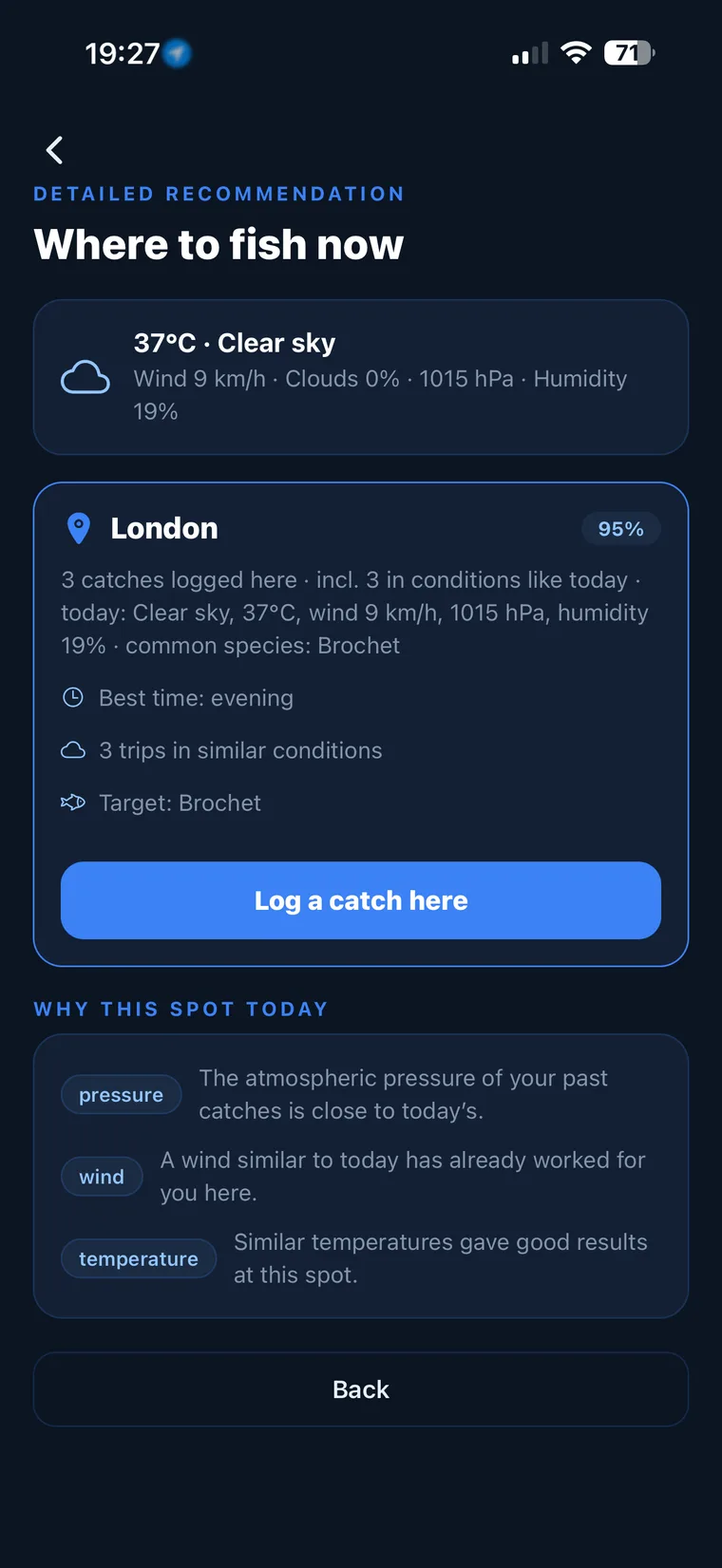
Not sure what to tie on?
Photograph your spot: CarnaFish reads the scene, cross-checks the conditions and gives you the zone, the lure and the retrieve. Free on iOS and Android.
Where it excels, and where you should not use it
Its conditions:
- Clear to moderately clear water, where the slow silhouette is visible and a strong signal works against you.
- Educated fish, on heavily visited waters, particularly in high summer and early autumn.
- Vertical spots from 1 to 4 m: laydowns, rocky margins, jetties, pillars.
- Hard bottoms — rock, gravel, stumps — where the free-weight rig is at its best.
Its limits:
- Very murky water. It plays on vision and almost not at all on vibration. Under forty centimetres of visibility, a hard-kicking creature bait will be far more effective.
- Fast searching. Three or four falls per cast covers very little ground per hour. This is not a locating lure.
- Strong current. The lift from the claws becomes a flaw: the bait drifts off instead of sinking vertically.
- Deep soft silt. The claws sink in and the silhouette disappears.
Escape Twin, Crazy Flapper or Brush Hog
Three creature baits, three opposite logics — confusing them means giving up two thirds of what they can do.
The Keitech Crazy Flapper plays on posture at rest: its claws rise vertically once the bait has landed, mimicking a craw in a defensive stance. That is the choice when you fish mostly motionless on the bottom, and it makes an excellent jig trailer.
The Zoom Brush Hog plays on vibration and getting through cover: plenty of appendages, a strong signal, and a profile shaped to push through branches on a Texas rig. That is the choice in stained water and cluttered ground.
The Escape Twin plays on the fall. It is after neither a static posture nor vibration: it wants to be seen while it drops, slowly, flat. If you fish vertical spots in clear water with wary fish, neither of the other two does that job as well.
The Texas rig remains the foundation for all three. Our beginner's guide to bass fishing explains how to choose between them by season. And if you are unsure what weight to fit when you reach the bank, CarnaFish analyses a photo of the spot and answers.
Key takeaways
- Two flat claws that brake the descent: the bait glides flat instead of dropping head first.
- Very little vibration, a lot of visual signal. It is the opposite of a classic creature bait.
- The free sliding weight rig is the one that makes the most of its fall, right on the bottom.
- Watch the line during the descent: that is where the bite comes, and you do not always feel it.
- Ineffective in very murky water, strong current, and for searching fast.
FAQ
How do you rig the Escape Twin?
Texas style on a 3/0 to 4/0 wide gap hook, with a 3.5 to 10 g bullet weight depending on depth and wind. A free sliding weight rig is often the best: the weight hits the bottom first and the bait finishes its descent gliding.
What is special about its claws?
They are flat and wide, which creates lift and slows the descent instead of generating vibration. The bait glides flat throughout the fall, offering a readable silhouette to a fish sitting on the bottom.
Can you use it as a jig trailer?
Yes, that is one of its classic uses. It adds bulk and slows the fall of the jig, which is particularly useful when flipping along margins and into sunken wood.
Does it work in stained water?
Less well than high-vibration creature baits. It relies on vision and slowness; under forty centimetres of visibility, a model with plenty of flapping appendages will be easier for a fish to locate.
What weight should I choose?
The lightest that still lets you keep contact: 3.5 to 5 g in clear shallow water, 7 to 10 g in wind or beyond three metres. Going heavier removes exactly the slow fall that makes this bait worth fishing.
What is the difference with a Brush Hog?
The Brush Hog piles on appendages to generate vibration and push through dense cover. The Escape Twin has very few and favours a slow, flat fall, aimed at wary fish in clear water on vertical spots.
The full bass lure guideSeason-by-season strategy: which family of lure, when, and why.Go from theory to fish
CarnaFish reads your spot from a photo and gives you the game plan: zone, lure, retrieve. Free on iOS and Android.