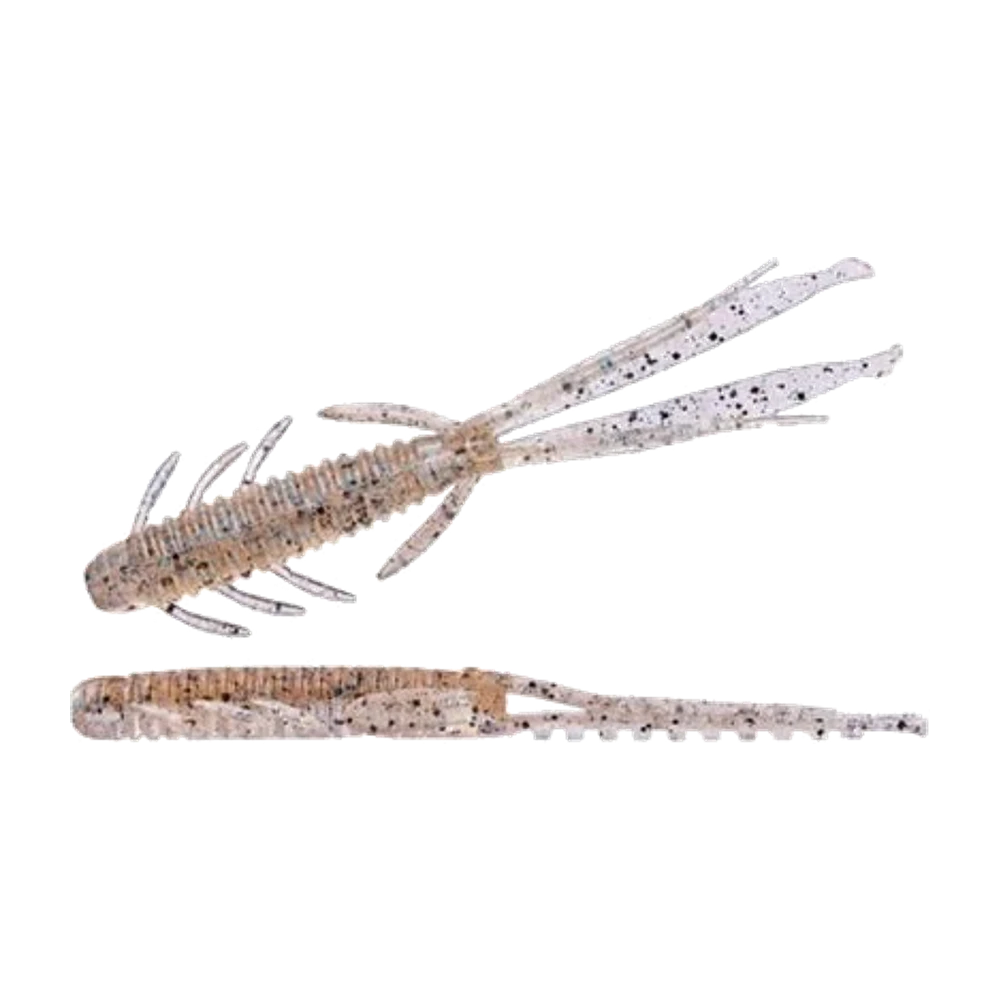
O.S.P DoLive Shrimp: a shrimp that flees backwards, not a craw
Not sure this lure fits YOUR spot today? CarnaFish tells you in 10 seconds, from a photo.
When a bass refuses everything, the reflex is to reach for a craw. That is often the right call — but not always, and for a reason people forget: a crayfish does not flee the way a shrimp does. A crayfish hugs the bottom, backs off in jerks with its pincers up, and stays glued to the substrate. A shrimp lifts off, glides and drifts through the water column, often halfway up, never adopting a defensive posture.
The DoLive Shrimp is built for that second behaviour. A streamlined body, slim appendages, and above all a mass distribution that makes it drop flat instead of nosing down. Rigged weightless, it takes several seconds to cover a metre, quivering the whole way down. That is exactly the image that puts a waiting bass into attack position.
Understanding that difference in silhouette stops you fishing it like a craw, which is the surest way to get nothing out of it.
Shrimp versus craw: two different rigs
The two families are not fished in the same plane.
| Craw | Shrimp | |
|---|---|---|
| Natural position | in contact with the bottom | in open water or just above it |
| Escape | backs off along the substrate | lifts off and glides |
| Typical rig | weighted Texas, jig trailer | weightless Texas, wacky, neko |
| Retrieve | dragged, hopped along the bottom | free fall, pauses, micro-pulls |
| Target zone | rock, gravel, dead wood | weed beds, shade, jetties, submerged trees |
The DoLive Shrimp falls squarely in the right-hand column. The density of the plastic is calculated so it sinks slowly with no added weight: that is the central feature of the lure, and adding a tungsten bullet from the start amounts to removing its main point.
Its lateral appendages are not decoration either. They create no vibration you could detect at range, but they maintain a micro-agitation while the lure is still, which counts enormously on a fish inspecting it from fifty centimetres before deciding.
The retrieve: the fall is the whole thing
- Find a vertical piece of cover: a jetty pile, a submerged tree, the edge of lily pads, a lock wall. The lure needs a vertical face to drop down.
- Cast short and precise, aiming 30 cm off the cover, not into it. A low, skipping cast that enters flat makes less noise.
- Let it fall on a controlled line. Do not wind anything. Follow the loop of line with your eyes: it should keep peeling off steadily.
- Wait for it to reach the bottom, or the end of the layer you wanted to treat — count five to fifteen seconds depending on the depth.
- Give two micro-pulls of 10 cm, very soft, then let it drop back the same way.
- Wind in and recast a metre further along. You do not retrieve this lure over the whole distance: you treat points.
On the water: strike when the line stops going down, not when you feel something. A bass that takes a falling shrimp comes up to it, which slackens the line instead of tightening it. The bite therefore shows as a drop that stops too early, or as a loop peeling off sideways. If you wait for something in your hand, you strike five seconds too late.
Rigs, in order of usefulness
Weightless Texas. The main rig. A wide gap offset hook in 2/0 to 4/0 depending on body size, point tucked back into the back. The lure stays weedless, drops flat, and hooks well provided you sweep sideways. Our Texas rig page covers the hook placement.
Wacky. Hook through the middle of the body, with an O-ring to protect the plastic. The fall becomes slower still and both ends fold up during the descent. This is the rig to pull out on fish that refuse the Texas, particularly in very clear, heavily fished water. See the wacky rig page.
Neko. A tungsten nail of 1 to 2 g inserted in the head, hook through a third of the way along. The lure noses down, touches bottom and stands vertically. Useful as soon as the depth goes past three metres or there is wind.
Lightly weighted Texas, 3 to 7 g, only when you have to reach beyond four metres. Past 10 g, change lure: you no longer have a gliding fall.
On tackle, a fine 0.12 to 0.14 mm braid and a 0.25 to 0.30 mm fluorocarbon leader are enough. The rod has to be fast enough to cast an unweighted lure without it helicoptering — a pendulum cast, arm low, is often more effective than an overhead one.
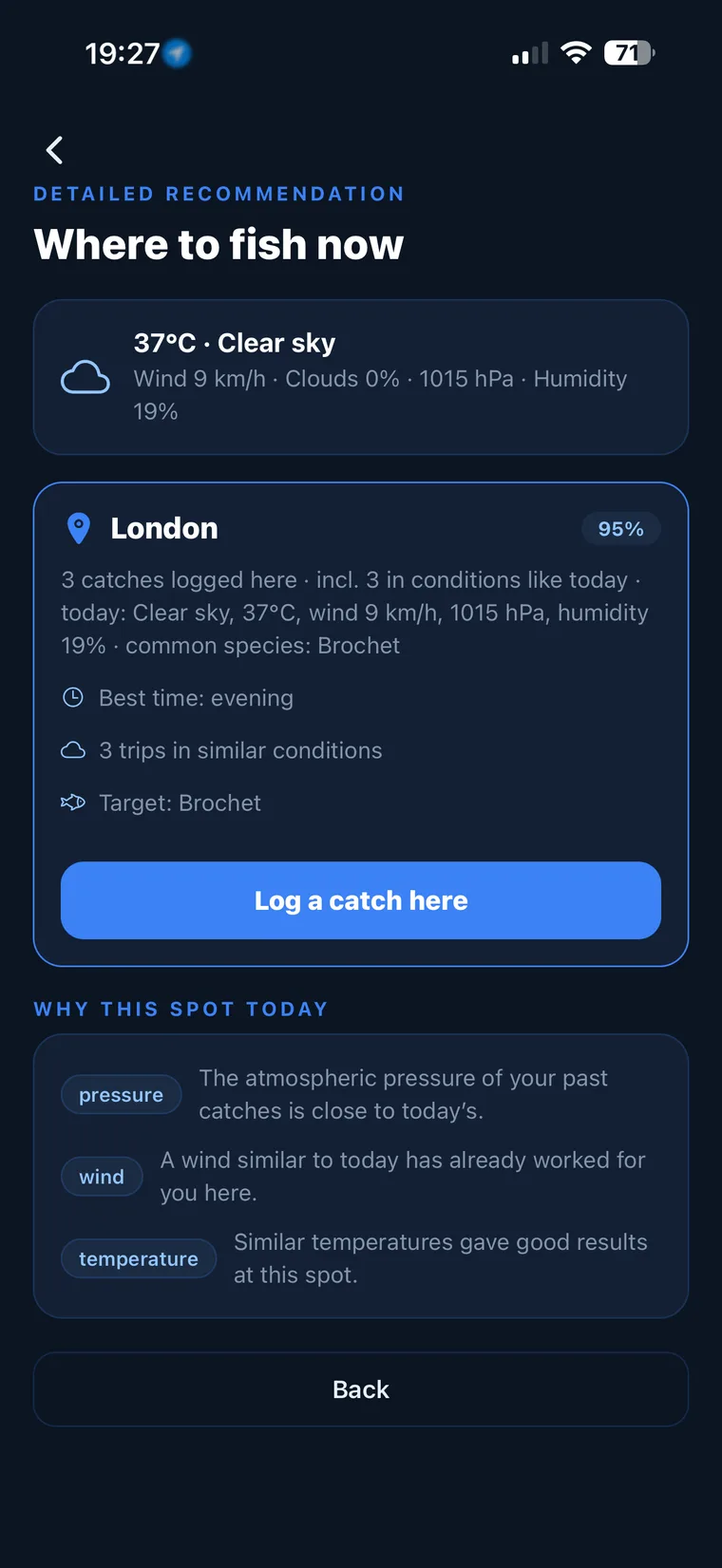
Not sure what to tie on?
Photograph your spot: CarnaFish reads the scene, cross-checks the conditions and gives you the zone, the lure and the retrieve. Free on iOS and Android.
Its windows, and its limits
The DoLive Shrimp comes into its own in clearly identified conditions.
- Clear water and heavy fishing pressure, when everything that vibrates has already been shown to the fish.
- Shaded vertical spots: under jetties, under low branches, against piles.
- Post-spawn in spring, when bass circle structure without chasing.
- Perch in the margins, on the shortest size and on a wacky rig, with bites that are often decisive.
Its limits are just as clear. It does not search: you treat points, not areas, and the fishing is slow by nature. It suffers in wind, because an unweighted lure does not cast far and reading the line becomes impossible in chop. It has nothing to offer in very dirty water, where the fish needs a vibration signal. Finally, the plastic is fragile: count on several bodies per session as soon as there are perch about.
Against a soft plastic craw
The Keitech Crazy Flapper is the opposite example, and it is not a competitor: its big flat pincers create water resistance that makes them flap under traction, which assumes contact with the bottom and a dragged retrieve. It excels over rocky bottoms, as a jig trailer, and when the bass are feeding on crayfish — typically in summer on stony drop-offs.
The DoLive Shrimp does the opposite: it lives in the water column, it needs no bottom contact, and its signal rests on slowness and a flat attitude. The two do not replace each other, they complement each other depending on whether the fish is looking down or up.
In the same house, the O.S.P DoLive Shad shares this slow-fall philosophy with a baitfish silhouette, best when the bass are following fry rather than invertebrates.
Our beginner's guide to bass fishing covers the moments when slow fishing takes over from searching. And if you are torn between wacky and weightless Texas when you arrive at a jetty, CarnaFish analyses a photo of the spot and answers.
Key takeaways
- A shrimp silhouette: the lure glides in open water, it is not built to crawl on the bottom.
- The default rig is the weightless Texas. Adding lead removes its point.
- The whole thing happens during the fall: follow the line with your eyes, strike on a drop that stops.
- You treat vertical, shaded points; you do not search areas.
- Ineffective in dirty water, hard to use in a steady wind.
FAQ
Should you weight the DoLive Shrimp?
No, in most cases. The density of the plastic is enough to make it sink slowly, and it is that gliding fall that triggers. Add a light weight only to reach beyond four metres or to fight the wind.
How do you detect a bite on the free fall?
Visually. Watch the loop of line: a drop that stops too early, suddenly speeds up or peels off sideways signals a take. Strike immediately, without waiting to feel anything in your hand.
Wacky or weightless Texas?
Weightless Texas first, because it goes through cover and hooks well. Switch to wacky when the fish refuse: the fall gets slower and the lure folds in two, which is often enough to convince in very clear water.
What is the difference with a soft plastic craw?
A craw is fished in contact with the bottom, under traction, with pincers that flap. A shrimp is fished in open water, on the free fall, with no contact. Silhouette, rig and retrieve all differ, and the two do not cover the same situations.
Is this lure suitable for perch?
Yes, especially on a wacky rig and in the shortest size, in the margins or along structure. Perch take this kind of lure on the fall with bites that are generally more decisive than a bass's.
Does the plastic last?
No, it is a soft, expressive plastic, so it is fragile. An O-ring on a wacky rig extends the life considerably, but pack several spare bodies as soon as the area holds perch or toothy fish.
The full bass lure guideSeason-by-season strategy: which family of lure, when, and why.Go from theory to fish
CarnaFish reads your spot from a photo and gives you the game plan: zone, lure, retrieve. Free on iOS and Android.