Palms Alexandra: the spybait that fishes a depth band by the count
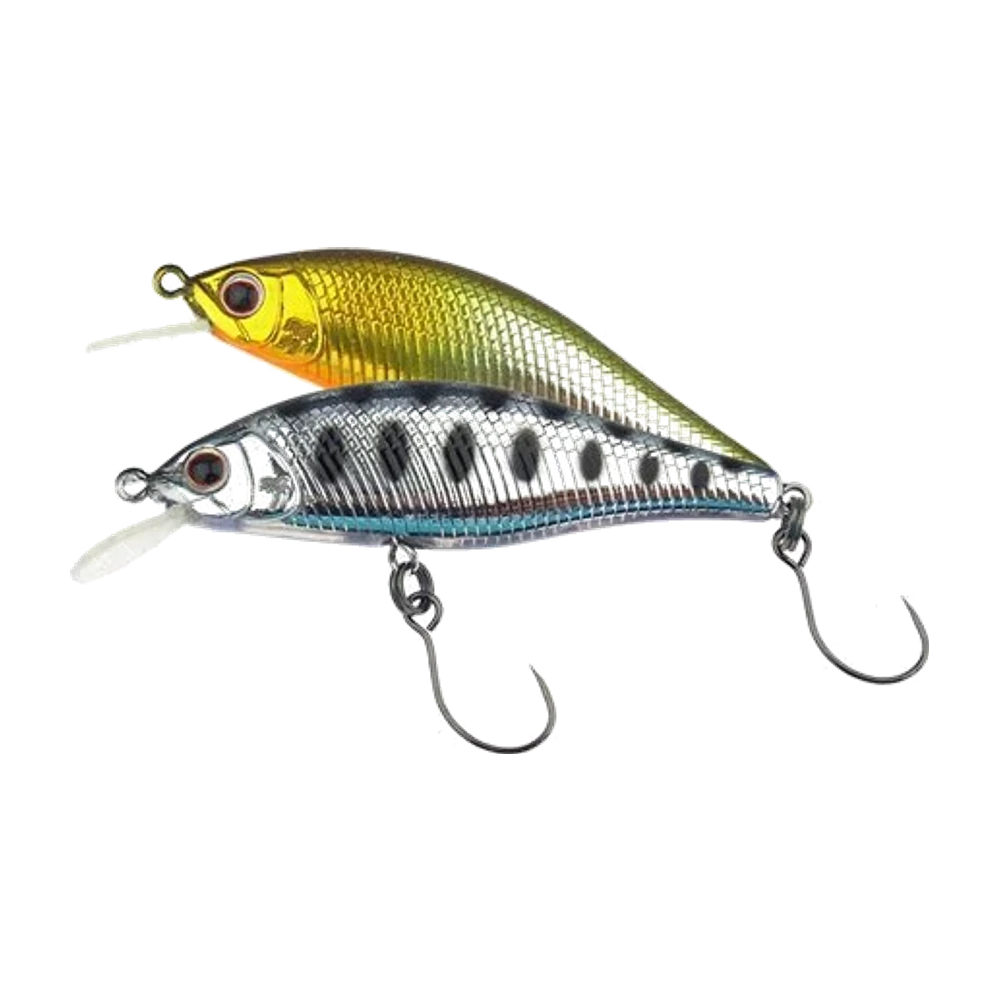
The right lure in the wrong spot still catches nothing. CarnaFish spots the zone that works, from a single photo.
Every perch angler runs into the same situation sooner or later: the fish are showing on the sounder or visible to the eye, somewhere between one and two metres down, they follow everything that goes past and they attack nothing. The crankbait runs too high, the jig head drops too fast and leaves too fast, the little jerkbait makes too much noise.
That gap in the tackle box is exactly what the spybait was invented to fill. The Alexandra is one of the models that established the category, and what makes it special fits in one sentence: it sinks slowly and horizontally, and it is retrieved so slowly that it resembles no other hard-lure technique.
If the family is new to you, the general principle, the way to count the sink and the tackle that suits it are covered in our page on the DUO Realis Spinbait 80. Here we assume you already know the technique and look at what the Alexandra does differently.
A slimmer profile, a weaker signal
The average spybait is a fairly dense torpedo body with two props. The Alexandra pushes the discretion slider further on three counts.
- The body is narrow and shallow in the flank. Seen head on, it presents very little surface. A fish inspecting it up close sees the outline of a fry, not a block.
- The roll is minimal. Where some spybaits give a visible body wobble, the Alexandra stays almost straight and leaves the work to the props.
- The props turn at very low speed. That is the key point: they start spinning as soon as the lure moves, including during the sink, without needing any pull on them.
The practical result is that the lure puts out a continuous but weak signal, a rustle rather than a vibration. That is what makes it effective on fish that refuse anything that "moves too much", and useless as soon as the water is coloured or ruffled.
The retrieve: count, then do nothing
The classic mistake is to work the lure. A spybait is not worked.
- Cast long, line straight but without pulling, rod tip low and pointed at the lure.
- Count the sink from the moment the lure touches down. A steady count, one second per unit. The Alexandra drops roughly 25 to 35 cm per second depending on size and line.
- Stop the count at your target band and start turning the handle, very slowly. About one turn per second, sometimes less.
- Change nothing. No twitch, no pause, no acceleration. You retrieve all the way back at the same speed.
- Set the hook by sweeping sideways, not by lifting sharply. Bites are soft, and the fish often closes down without any violent movement.
| Target band | Count before retrieving | Note |
|---|---|---|
| 0.5 to 1 m | 2 to 4 s | margins, very clear water, high fish |
| 1 to 2 m | 5 to 8 s | the most productive window for perch |
| 2 to 3 m | 9 to 15 s | drop-offs, deep jetties, late autumn |
On the water: when you get a bite, note the exact count and put the same cast back out on the same count. On a shoal of perch sitting in a band, the useful depth sometimes fits inside a thirty-centimetre window — it is not the lure that changes the result, it is the number you count.
The line is part of the lure
On a 7 g lure retrieved at snail's pace, the line weighs more heavily in the equation than on any other type of lure.
Diameter. Fluorocarbon of 0.16 to 0.20 mm is the right base. Heavier, and the drag of the line in the water slows the sink, opens the trajectory and keeps the lure from reaching its band. Finer, and you gain depth but lose hooksets on a fish taken a long way out.
Setup. A fine braid joined to a long fluorocarbon leader, two to three metres, is the most comfortable compromise: the braid carries the bite over distance, the fluorocarbon sinks and stays invisible near the lure.
Clip. Avoid it, or take the smallest one you can find. A heavy clip loads the nose and destroys the flat attitude of the sink, which is precisely what you are buying with this lure.
On trout, a use of its own
In rivers and reservoirs, the Alexandra has a second, less discussed job: trout holding in clear water, in deep pools where the fish will not come up.
The method shifts a little. In current you are no longer counting a vertical drop: you cast upstream at forty-five degrees, let the lure sink through its drift, and retrieve just enough to keep contact. The current spins the props on its own. It is a very fine contact game where the slightest unusual tension has to be struck.
Our guide to river trout fishing covers the reading of the lies that justify this slow approach rather than a spinner.

Not sure what to tie on?
Photograph your spot: CarnaFish reads the scene, cross-checks the conditions and gives you the zone, the lure and the retrieve. Free on iOS and Android.
Where it excels, where it is pointless
The good windows:
- Clear, cold water, typically from autumn through to early spring, when perch hold in a band above hard bottom.
- Educated fish on heavily fished spots: it is the least aggressive presentation you can offer with a hard lure.
- Windless days, where the line stays straight and the count stays reliable.
- Vertical structure: bridge pillars, jetties, rip-rap, clean drop-offs.
The windows to avoid:
- Stained or dirty water. The signal is too weak and the fish never detects it.
- Wind and chop. Line bow makes the count unusable and the lure rides up.
- Fast searching. You cover very little ground per hour; this is not a search lure, it is a conversion lure.
- Strong current. The lure lifts off and the props go wild.
Alexandra or DUO Spinbait
Both belong to the same family but they do not target the same moment. The Spinbait 80 sinks a touch more decisively and rolls more: it produces a slightly more readable signal, which makes it more versatile when the water is not perfectly clear, and its 90 size casts well in a light breeze.
The Alexandra takes the lead once you are already in the extreme situation: gin-clear water, fish you can see, repeated refusals. Its narrower silhouette and near-zero roll make it the last notch of discretion to try before changing technique altogether. Plenty of perch anglers carry both and switch mid-session without moving spot.
If you are unsure which depth band to aim for when you reach the bank, CarnaFish analyses a photo of the spot and answers. And if perch are your main target, our guide to perch fishing with lures places the spybait among the other options through the season.
Key takeaways
- Depth is set by the count during the sink, not by retrieve speed.
- Straight, slow retrieve, one turn per second, with no action added at all.
- 0.16-0.20 mm fluorocarbon and no heavy clip: the line is part of the setting.
- Narrower profile and weaker roll than the usual spybaits: this is the most discreet notch.
- Unusable in stained water, in wind or in strong current.
FAQ
How do I know what depth the Alexandra is running at?
You set it yourself by counting the seconds of sink before you start retrieving. Reckon on roughly 25 to 35 cm per second depending on lure size and line diameter, then reproduce the exact count that produced a bite.
Should a spybait be worked?
No. Any added action breaks the steady rotation of the props and the attitude of the body. The retrieve is straight and very slow, from the cast right back to the bank, with no twitch and no pause.
What rod should I use?
A light rod, around 2 to 10 g, with a progressive action. A rod that is too stiff pulls the lure away on a soft bite and loses perch, which often attack without much conviction.
Does the Alexandra work in coloured water?
Badly. The signal it puts out is deliberately weak, which makes it dependent on the fish seeing it. In stained water, a lure with a strong vibration covers ground far better.
What is the difference with a DUO Spinbait?
The Spinbait rolls more and puts out a slightly stronger signal, so it is more versatile. The Alexandra is narrower and more discreet: it comes into its own mainly when fish are already refusing everything else in very clear water.
Can it be fished in a river?
Yes, but differently: cast upstream at forty-five degrees, let it sink through the drift and retrieve just enough to keep contact. The current alone spins the props, and bites are detected by tension.
The full perch lure guideSeason-by-season strategy: which family of lure, when, and why.Go from theory to fish
CarnaFish reads your spot from a photo and gives you the game plan: zone, lure, retrieve. Free on iOS and Android.