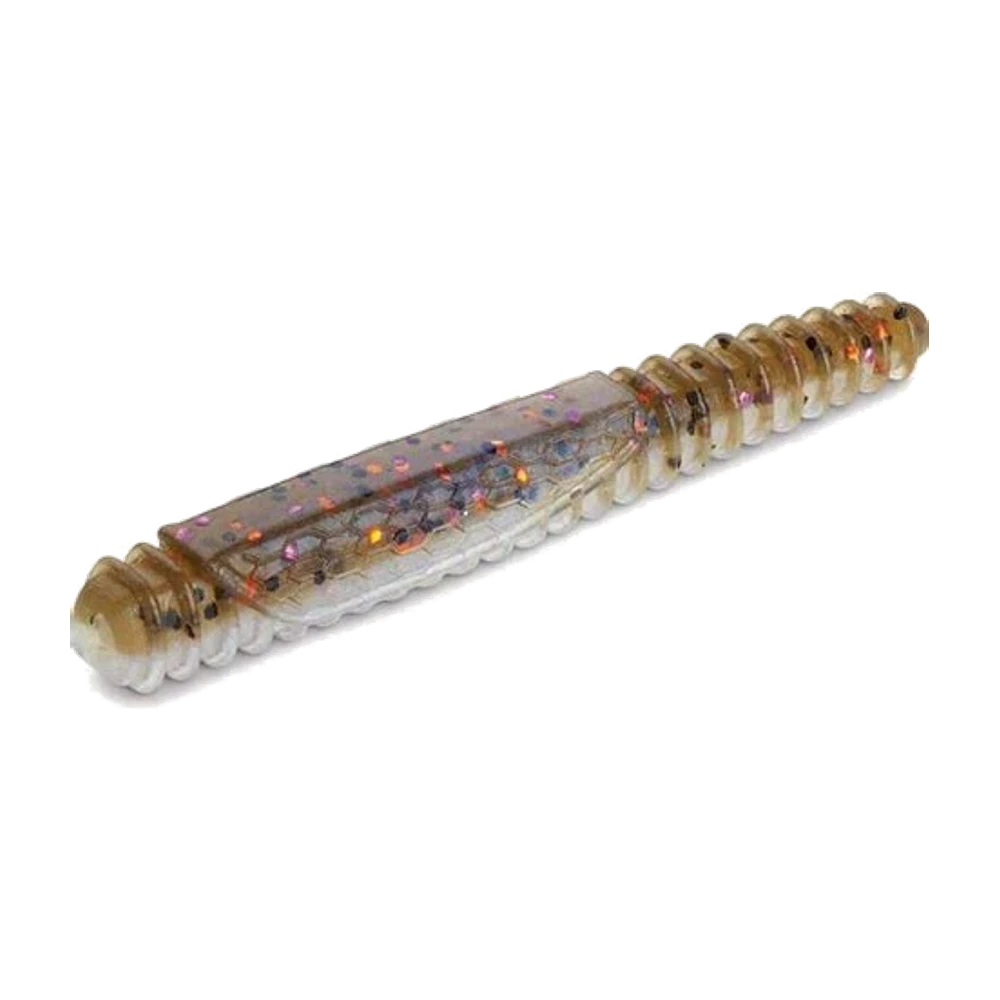
Rapala CrushCity The Ned BFG: the oversized Ned that sorts the big fish
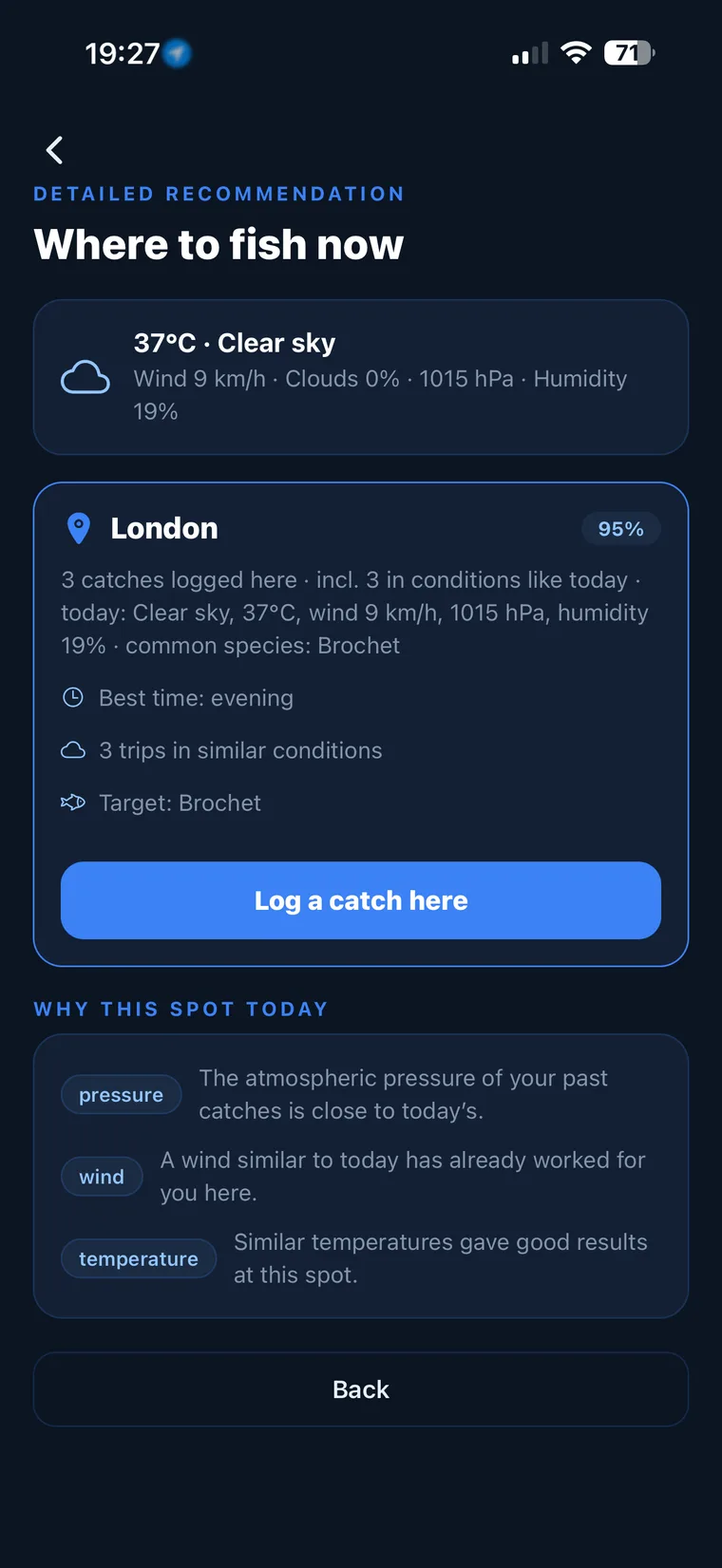
Before tying this one on, it helps to know if the spot actually calls for it. CarnaFish reads the scene from a photo.
The Ned rig has a flaw nobody talks about much: it works too well on small fish. You drop a 6 cm stick on a 3 g head, and you catch one 15 cm perch after another and thirty-centimetre bass while the big fish on the spot never move. You catch fish, but you do not catch the fish.
The Ned BFG answers that simply: keep the exact behaviour of the Ned rig, but on a volume the small ones can no longer be bothered with. This is not a new rig, it is a change of calibre inside a rig that already works.
The rig does not change, the calibre does
If the principle of the Ned rig is new to you, it is covered in our Ned rig setup page: mushroom head, single hook, a floating lure that stands up on the bottom. None of that is different here, and there is no reason to relearn it.
What changes comes down to three points.
The volume. Around 9.5 cm instead of the usual 6 to 7 cm, with a notably thicker body. It is not just longer: it is a profile a 15 cm perch cannot get in its mouth, and one it eventually lets go past.
The lure's own mass. Six grams of plastic is no longer negligible against a 3 or 5 g head. The practical consequence is that the lure drives the rig more: it slows the descent, it drags more, and it stays standing longer on the pause because there is more buoyant volume above the weight.
The undulating surface. A thicker body deforms more on every pull. The classic Ned puts out a small, discreet signal; this one puts out a discreet signal that is visible from further away, which counts in slightly stained water or over cluttered bottom.
The retrieve: drag, stop, do nothing
The commonest fault with this lure is fishing it like an ordinary soft plastic, with rod pulls. That is not it.
- Cast and let it sink on a half-tight line, without following with the handle. The lure drops with a slight glide.
- Wait for bottom contact, spotted by the line falling slack. Count the sink time: you will know what depth you are on.
- Drag it 20 to 40 cm, using the handle only, rod still and horizontal. You should feel the grain of the bottom through the blank.
- Stop completely, 5 to 15 seconds. The lure stands up vertically, tail upwards. That is the position that triggers.
- Repeat, and do not shorten the pauses as the retrieve goes on. In cold water, go up to 20 or 30 seconds.
Bites are rarely clean. Most often you feel a weight that was not there, or the line moving gently off to one side. Set the hook with a sideways sweep, no violent snap: the single hook is already exposed, it does not need force.
On the water: at this size, do not strike at the first contact. A big perch nips the lure by the tail before taking it in, and the body is nearly 10 cm long — the hook is still a long way from its mouth. Count two seconds while just keeping tension, then strike. You will go from two fish hooked out of five contacts to four out of five.
Choosing the jig head
The head weight determines both the sink speed and the angle at which the lure stands up. Too heavy and it lies down. Too light and it will not hold bottom.
| Depth / conditions | Mushroom head | What you get |
|---|---|---|
| 1 to 2.5 m, no wind | 2 to 3 g | very slow descent, near-vertical stand |
| 2.5 to 5 m, everyday use | 4 to 5 g | good compromise between bottom contact and glide |
| 5 to 8 m, or wind and drift | 6 to 7 g | positive contact, less pronounced stand |
Two points that matter. A bigger lure will take a heavier head without losing its verticality, unlike a classic Ned where going to 7 g lays the lure flat. So you gain a genuine depth range. And the hook has to be more open than on a standard Ned: a thicker body eats into the gap, and a hook that is too short turns bites into misses.
On line: fine braid of 0.10 to 0.12 mm and a fluorocarbon leader of 0.18 to 0.22 mm. You need to feel the bottom, and fine braid transmits better than thick braid for the same lure weight.
Not sure what to tie on?
Photograph your spot: CarnaFish reads the scene, cross-checks the conditions and gives you the zone, the lure and the retrieve. Free on iOS and Android.
Where it takes the lead, and where it has no business
Its window: deep, clean spots where you know there are big fish but where the small ones keep pestering you. Gravel plateaus, break-line edges, rip-rap, boulder fields, hard sand flats in late summer. It also excels in cold water, when an endless pause is the only thing that works.
It is unsuited, though, to bottoms heavily cluttered with dead wood or dense vegetation: the mushroom head with an exposed hook snags, and the rig is not weedless. It is equally pointless when the fish are high in the water column and active, where a swimming lure covers ten times more ground.
BFG or classic Ned
Against a Z-Man TRD on a Ned rig, the relationship is simple: the TRD gets more bites, the BFG gets bigger fish. On an unknown spot or a difficult day, the TRD is still the right first choice because it gives you the information. When you know the spot holds big fish and you no longer want to waste time on the small ones, you tie on the BFG.
Against the Z-Man TRD CrawZ, the reasoning is different: the CrawZ plays the crawfish imitation with claws that float, so a richer static signal, but a profile that stays small. The BFG plays volume and an elongated silhouette, closer to a small fish sitting on the bottom. On perch feeding on small roach, the elongated silhouette often beats the crawfish.
If you want a lure from the same range but swimming, the Rapala CrushCity Freeloader covers the opposite role: straight-retrieve searching up in the water column, where the BFG stays glued to the bottom.
Our guide to perch fishing with lures covers how to identify a spot that holds big fish. And if you are unsure what head weight to rig for the depth in front of you, CarnaFish analyses a photo of the spot and answers.
Key takeaways
- Same rig as the classic Ned, but a volume small fish can no longer get in their mouths.
- The thicker body stays standing vertically even with a 6 or 7 g head.
- Drag with the handle, rod still, then pause 5 to 15 seconds. The pause is the retrieve.
- Strike late, two seconds after the contact: the lure is long, the hook is a long way back.
- Avoid on cluttered bottom and on active fish up in the water.
FAQ
What is the difference with a classic Ned rig?
The rig is identical, only the calibre changes: around 9.5 cm with a thicker body, against the usual 6 to 7 cm. You get fewer bites but you select distinctly bigger fish, and you can use heavier heads without laying the lure down.
What jig head weight should I choose?
2 to 3 g down to 2.5 m, 4 to 5 g for everyday use between 2.5 and 5 m, and 6 to 7 g beyond that or in wind. Decide first whether you want a gliding descent or immediate bottom contact.
Does the Ned BFG catch bass?
Yes, and it is one of its best applications. The size matches what an adult bass eats, and the slow presentation on the bottom stays effective after a cold front or on heavily fished waters.
Do I need a specific hook?
A wide-gap single, more open than the one on a standard Ned. The thick body takes up part of the gap, and a hook that is too closed causes systematic drop-offs on soft bites.
How long should the pause be?
5 to 15 seconds in normal conditions, and up to 20 or 30 seconds in cold water. If in doubt, lengthen it: almost every bite arrives during the stillness, not during the pull.
Why am I missing so many bites?
Because you are striking too early. On a lure of nearly 10 cm, the fish often takes it from behind and has to reposition it in its mouth. Wait two seconds while keeping contact, then strike with a progressive sideways sweep.
The full perch lure guideSeason-by-season strategy: which family of lure, when, and why.Go from theory to fish
CarnaFish reads your spot from a photo and gives you the game plan: zone, lure, retrieve. Free on iOS and Android.