Sakura Trinis: letting the current work the minnow for you
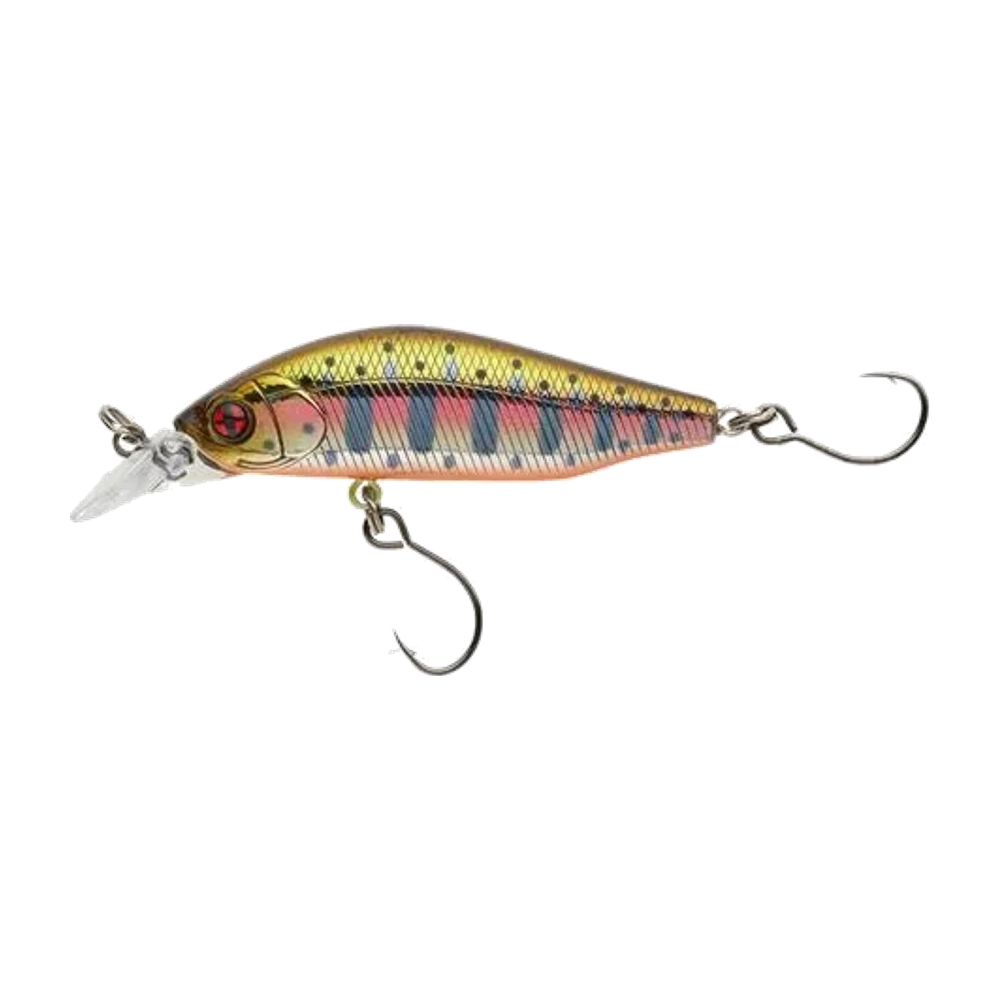
This lure shines under specific conditions. CarnaFish tells you in 10 seconds if today is one of them.
In rivers, almost everyone casts upstream, reels fast, and wonders why the trout follow all the way to their boots without biting. The reflex looks logical: we assume the lure needs speed in order to swim. In reality, on water running at a metre a second, a lure retrieved on top of the current travels at a speed nothing alive in that river ever reaches.
The small minnow changes scale the moment you reverse the reasoning: cast across, tighten up, and let the water do the work. The Trinis suits that exercise well because its action starts under very little pressure and it does not roll over in a fast flow. What you get is a lure that vibrates while staying almost on the spot, right at the tail of a rock.
This is fishing by placement, not by retrieve.
A minnow that holds in the current
The classic failing of a small minnow in a fast river is that it turns sideways, climbs to the surface and leaves the flow. Two features prevent that on the Trinis.
A short, angled lip. It generates enough bite to keep the lure nose-on to the current, without making it dive abruptly. The lure stays in the top 30 centimetres to 1 m and holds there even when the water speeds up.
Internal ballast that lowers the centre of gravity. The body resists tipping sideways: that is what lets you hold a tight line at 45 degrees to the flow without the lure going flat.
The resulting action is tight and high-frequency, closer to the shiver of a minnow pinned in the current than to the wide undulation of a fleeing fish. In clear, low water, that register is the one that gets through.
The retrieve: five positions in one seam
Pick a seam bordered by an obstacle: a rock, a pillar, a stump. You are going to work it in five stages, never reeling fast.
- Cast across, slightly upstream, two or three metres above the obstacle.
- Tighten immediately by taking up the slack. The lure should start working as soon as the line is straight: you feel a continuous vibration in the rod tip.
- Let it swing round in an arc, rod high, following it. Here you reel almost nothing — the current supplies all the relative speed needed. The lure sweeps the water below the obstacle.
- Hold it for ten seconds when the lure arrives right in the eddy, just behind the rock. It stays in place and vibrates. That is the position that triggers takes.
- Finish on a slow retrieve, working back up along the margin, with two or three small lifts of the rod tip.
For perch, in calmer water or in a lake, the same lure is fished the opposite way: two or three fast turns, a dead two-second stop, then start again. The Trinis barely rises during the stop, which gives a following fish time to make up its mind.
On the water: in a river, the casting point matters more than the retrieve. Before you cast, work out where your line is going to come tight, because that is where the lure will really be working — not where it lands. Shift your cast two metres upstream and the lure will pass through the spot instead of flying over it.
Sizes, line and depth
| Size | Weight | Use |
|---|---|---|
| ~4.5 cm | around 3 g | streams, low clear water, small perch |
| ~5.5 cm | around 4.5 g | medium river, the all-round size |
| ~7 cm | around 7 g | wide river, strong current, wind |
Line is decisive on a light lure like this. Fluorocarbon of 0.16 to 0.20 mm is the right compromise: it sinks slightly, keeps the lure in its layer, and shows little in clear water. Going above 0.22 mm kills the tight action of a small size; dropping below 0.14 mm gets risky the moment there are rocks about.
A clip is acceptable from 5.5 cm upwards, provided it is a fine one. On the smallest size, tie straight: the added mass at the front is enough to make the nose dip.
On heavily fished trout rivers, replacing the trebles with barbless singles makes unhooking easier and costs almost nothing in efficiency on a lure this size.
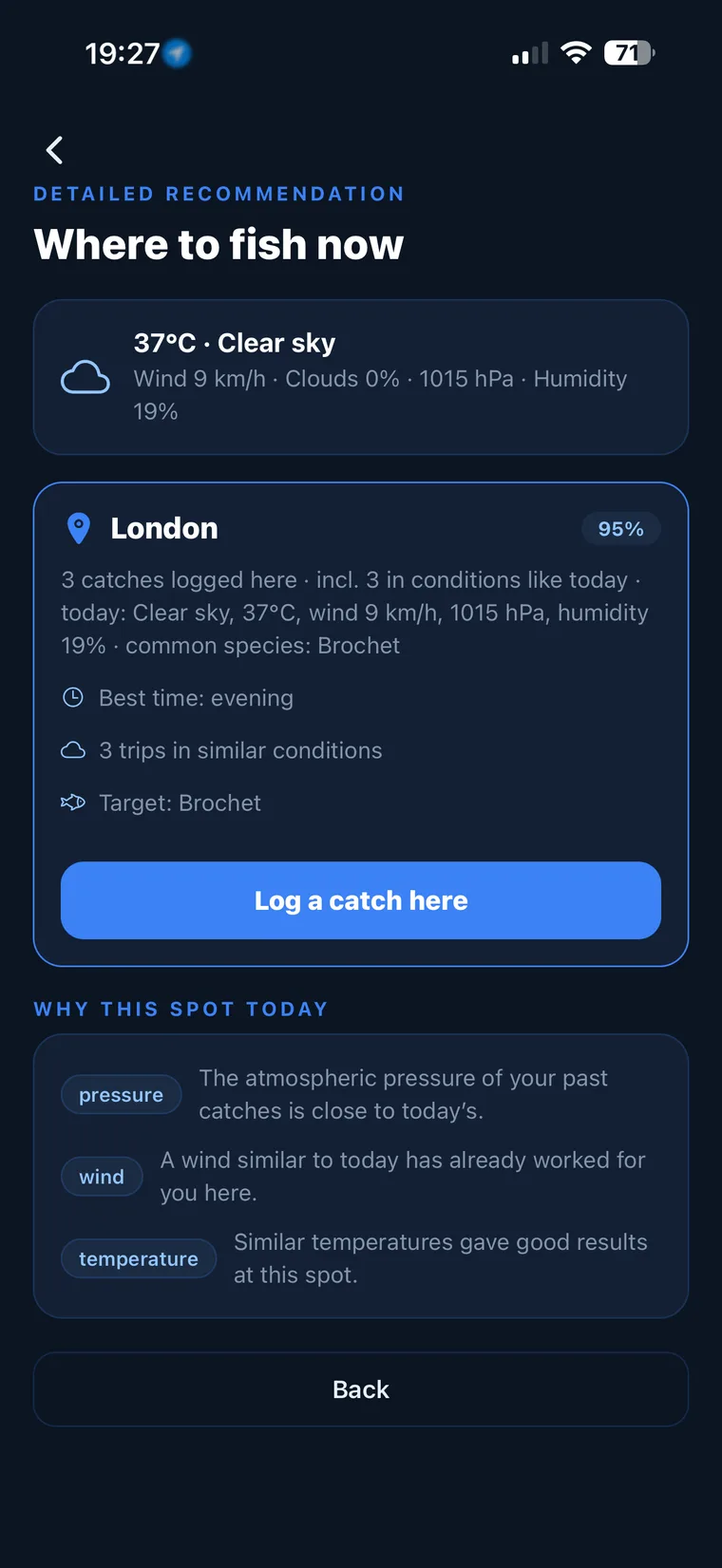
Not sure what to tie on?
Photograph your spot: CarnaFish reads the scene, cross-checks the conditions and gives you the zone, the lure and the retrieve. Free on iOS and Android.
Its windows, and the ones where it is out of place
The Trinis is a lure for clear rivers and tight spots.
- Upper-river trout water in low flow, when a spinner turns too fast and spooks fish.
- Margins and back-eddies: the lure holds a precise position that few lures can hold.
- River perch, or perch along lake margins on tight spots, where a bigger lure sits badly.
- Late summer afternoons, when fish take station at the head of a riffle.
Conversely, it is useless in a deep lake: it does not go down and does not cast far enough to search a big area. It is also out of place in heavily coloured water, where its tight action and small volume do not produce enough signal — a wide-vibrating lure or a spinner will do better. And in a strong headwind, its low weight severely limits casting distance.
Trinis, D-Contact or Tricoroll
The Smith D-Contact is a sinking model built to be worked sharply, jerked downwards, and to sink fast into a river pool. It demands constant input from the angler. The Trinis takes the other route: it works while staying more or less still in the current, and therefore suits spots where you want to keep at the same place for a long time.
The Illex Tricoroll shares the size and the idea of the versatile small minnow, in floating and sinking versions. Between the two, the choice comes down mostly to how well they hold in strong current and to the exact size of the spot you are working.
If you are after perch more than trout and want a deeper profile, the Lucky Craft Bevy Shad covers that role with a different silhouette. Our guide to river trout fishing covers reading seams of current. And if you are unsure where to place your cast when you reach the bank, CarnaFish analyses a photo of the spot and answers.
Key takeaways
- Cast across and let the current do the work: the relative speed is already supplied by the water.
- The lure holds its position behind an obstacle, vibrating on the spot. Stay there ten seconds.
- The casting point matters more than the retrieve: aim at where the line will come tight.
- 0.16-0.20 mm fluorocarbon, tied straight on the small sizes, a fine clip acceptable above.
- Pointless in deep lakes, in heavily coloured water or into a headwind.
FAQ
Should I retrieve the Trinis or let it drift?
In a river, a swing across the current is enough in most cases: the flow provides the relative speed and the lure swims without you reeling. You only reel to tighten the line and to finish the pass along the margin.
What size should I choose for trout?
The middle size around 5.5 cm covers the most situations. Drop to 4.5 cm in low, very clear water or on narrow streams, and go up to 7 cm on a wide river, in high water, or when wind gets in the way of casting.
Is the Trinis any good for perch?
Yes, especially on tight spots along the margins. The retrieve changes: two or three fast turns followed by a dead two-second stop, rather than the swing used on trout rivers.
What line should I use?
Fluorocarbon of 0.16 to 0.20 mm. Thicker and you restrict the tight action of a lure weighing a few grams; thinner and you break at the first rub on a rock. With braid, always add a fluorocarbon leader of at least a metre.
Should I swap the trebles for singles?
It is recommended on catch-and-release stretches or heavily pressured rivers: barbless singles do little damage to the fish and come out fast. On a lure this size, the loss of efficiency is marginal.
Why does my minnow come out of the water in the current?
You are reeling on top of the current, or your rod is too high with the line too tight. Drop the rod tip, stop retrieving and simply let the line work round in an arc: the lure will drop back into its layer and settle nose-on to the flow.
The full trout lure guideSeason-by-season strategy: which family of lure, when, and why.Go from theory to fish
CarnaFish reads your spot from a photo and gives you the game plan: zone, lure, retrieve. Free on iOS and Android.