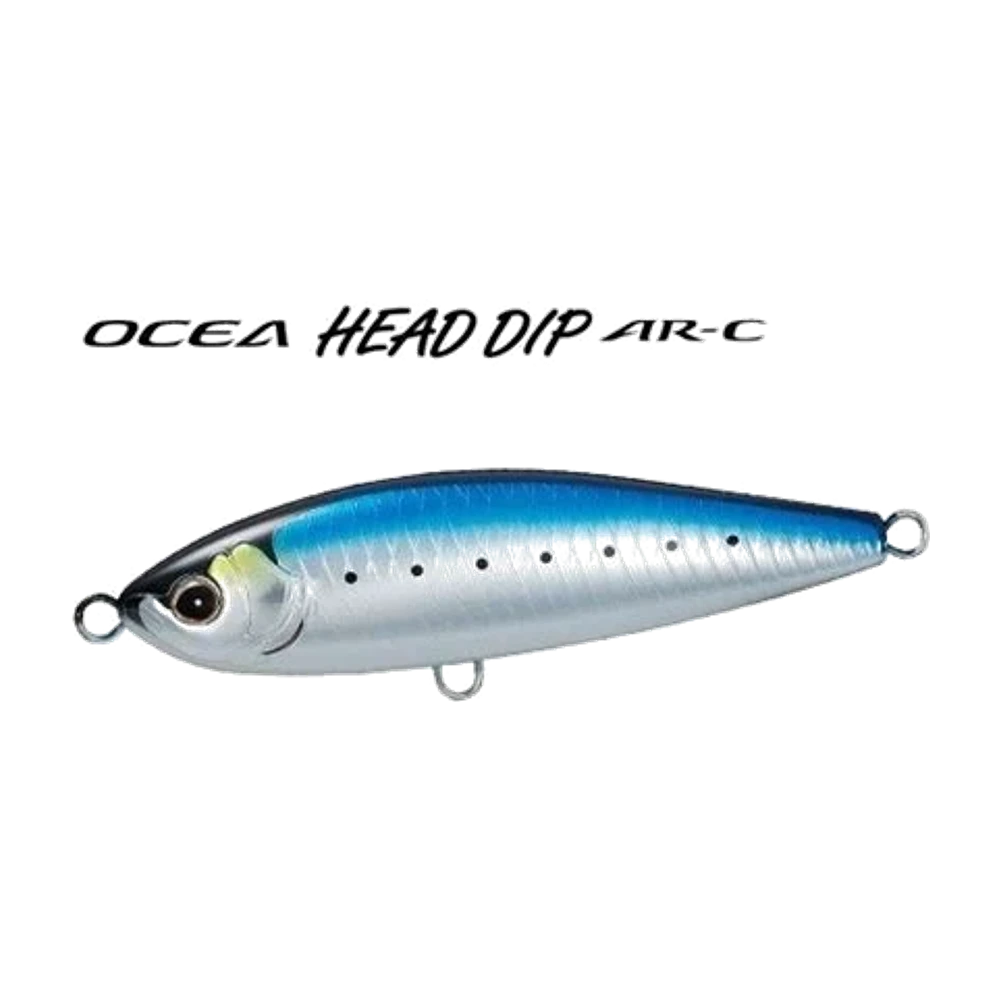
Shimano Ocea Head Dip: keeping contact in the waves
One lure, endless conditions. CarnaFish reads your spot from a photo so you are not just guessing.
A surface stickbait is a pleasure to work on a glassy sea. Put it in a metre and a half of short swell with current running across, and the same lure becomes unusable: it lifts off the surface, skates over the crest, spins on itself, and you spend more time restarting its action than fishing. That is frustrating, because these are exactly the conditions in which sea bass feed best — in the eddy behind a rock, in the current line off a headland, right at the edge of the white water.
The Ocea Head Dip is built for that problem. Its name states the solution: the head dives and stays under the surface, gripping the water continuously, so the lure keeps a mechanical hold on the flow even when the surface is a mess. You stop losing contact, so you can keep fishing where everyone else stops.
What "head dip" actually means
The difference from a standard stickbait comes down to mass distribution and head shape.
- The nose works below the surface, not on it. A traditional pencil skates along the top, slapping the water with the underside of its chin. Here the front section stays a few centimetres under and acts as a hydrodynamic anchor point.
- The body kicks out sideways on every impulse. Since the head is anchored and the tail is free, each twitch pivots the lure around that front point, giving a fast, wide zigzag.
- The wake is double. You get both a surface disturbance — the back cutting the water — and an underwater swirl produced by the submerged head. In the foam, it is the second one that stays readable when the first drowns in the ambient noise.
The consequence: unlike most surface lures, this one works better when things are moving. On a flat sea in high sun it is too heavy-handed, too loud — the exact opposite of the usual window.
The retrieve: brisk, rod low
Do not try to do delicate walking the dog with this lure. It asks for commitment.
- Cast across the current, never straight along it. You want the lure to cross the run, not swim up it.
- Rod pointed down, almost in the water, tip a few tens of centimetres off the surface.
- Retrieve continuously and briskly, adding a firm wrist twitch on every turn of the handle. The lure should zigzag clearly, not crawl.
- When a wave lifts the lure, speed up by half a turn instead of slowing down. That is the only way to make the head dive again before it starts skating.
- Do not pause in the middle of a run: the current will turn it sideways. Save the pauses for the calm, behind a rock or at the end of a drift.
Two variants depending on the mood of the fish. If bass follow without committing, accelerate hard over the last three metres: prey escaping triggers better than prey moving steadily. If they are feeding on the surface over a visible shoal, drop a notch in speed and widen the zigzag slightly.
On the water: if the lure comes out of the water and lands flat, your speed is not the problem, your rod angle is. A high rod pulls the lure upward on every twitch. Drop the tip down to the surface and the problem disappears without changing anything else.
Choosing the size and the power of the setup
| Context | Size | Setup |
|---|---|---|
| Shoreline, bass of 40 to 60 cm, moderate chop | 12 to 14 cm | 15-50 g rod, 0.20 mm braid, 0.50 mm fluoro |
| Rocky headland, hard current, big bass | 14 to 17.5 cm | 30-100 g rod, 0.25-0.30 mm braid, 0.60-0.70 mm fluoro |
| Boat, offshore feeding fish | 14 to 17.5 cm | Powerful rod, 0.30 mm braid minimum |
| Flat sea and clear water | Drop a size, or change lure | — |
One point worth noting: these lures are designed for powerful fish, and the stock hardware is often oversized for European sea bass. If you mostly fish from the shore for fish around 50 cm, swapping the trebles for models one grade finer clearly improves the hook-up rate without putting strength at risk. Conversely, never go below strong wire on a headland holding big fish.
Where it excels, and where it is useless
Its three home grounds:
- Rough seas and short chop, from the shore as well as from a boat. That is the window it exists for.
- Current lines and eddies around headlands, groynes and rocks breaking the surface, where a lure with no anchor point turns sideways.
- Crosswinds or headwinds, where its weight and compact profile still let you cast properly.
It is poorly suited to a glassy sea in very clear water: too much signal, too much water displaced, and a resident bass will refuse it. It is equally beside the point on fish picking tiny prey off the surface — slim sandeels, fry — where a discreet, slow lure will catch ten times more. Finally, it is no use at depth: it is a lure for the first thirty centimetres, full stop.
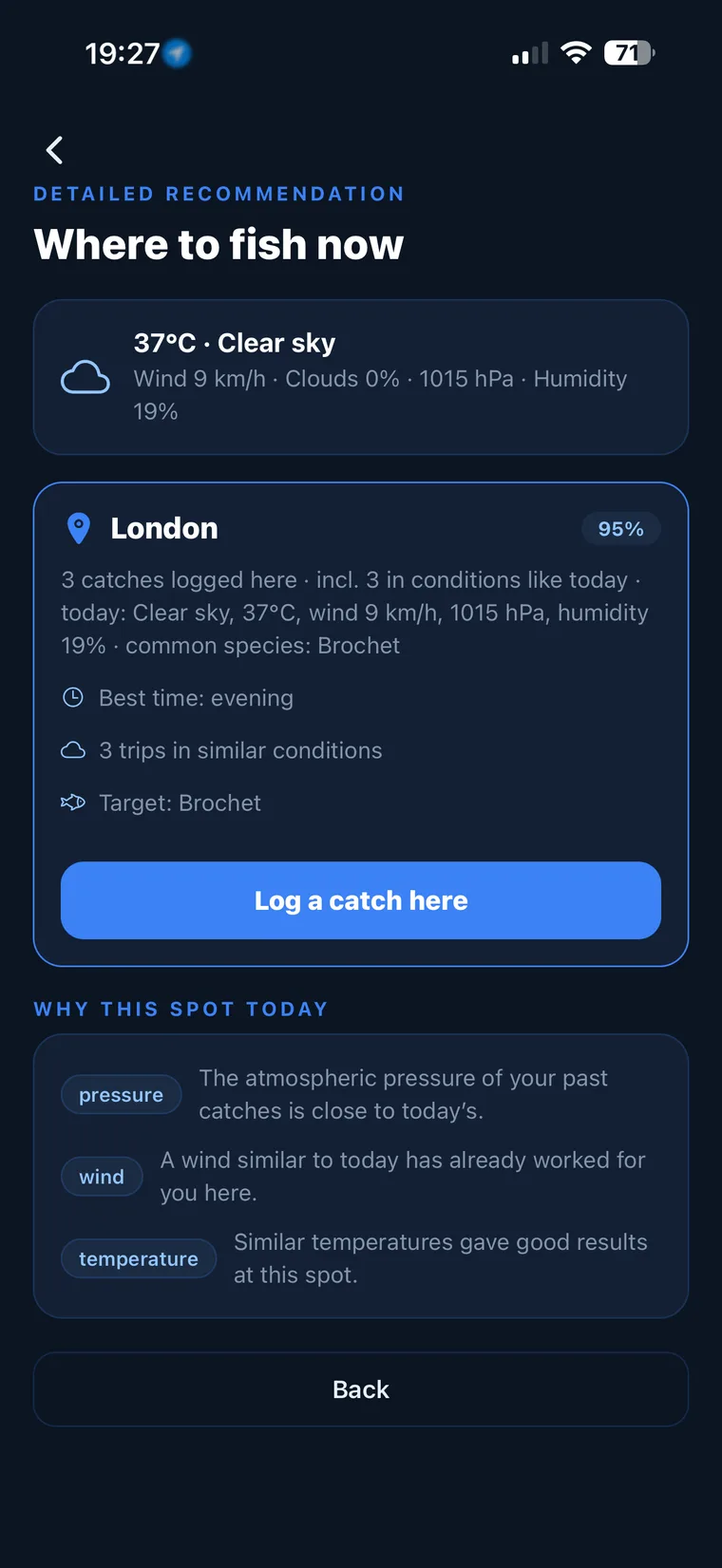
Not sure what to tie on?
Photograph your spot: CarnaFish reads the scene, cross-checks the conditions and gives you the zone, the lure and the retrieve. Free on iOS and Android.
Colours
- Bright weather, clear water: silver, sardine, sandeel. The underwater flash from the submerged head does a lot of the work.
- Rough sea, low cloud: dark back or a solid opaque colour. The bass sees a shape cut against the sky, the shade hardly matters.
- Coloured water after a blow: clean white or a bright colour, to make up for reduced visibility.
Head Dip or classic stickbait
The Xorus Patchinko 140 is the reference surface stickbait for sea bass in Europe, with a wide walk-the-dog and a marked lateral glide. It is more versatile, easier to work, and better as soon as the sea is manageable. Its limit is well known: in short, broken swell it lifts off and loses its rhythm.
A slimmer saltwater pencil such as the Duo Realis Pencil 130SW plays in yet another register — smaller profile, more delicate retrieve, suited to wary fish and small prey.
The Ocea Head Dip does not claim to replace either. It is the tool for hard conditions: it gives up finesse for control, and it lets you keep fishing the surface on a day when everyone else switches to a jig. When the surface stops producing altogether, the logical next step is to go down with a Tackle House Contact Britt on a slow jigging retrieve. Our guide to lure fishing for sea bass explains how to chain those two layers on a single tide. And if you are unsure whether to attack the surface or the bottom on an unfamiliar spot, CarnaFish analyses a photo of the spot and answers.
Key takeaways
- The head stays submerged and acts as an anchor point: the lure keeps contact when the surface is a mess.
- Rod low, tip at the water, brisk retrieve with one twitch per turn of the handle.
- When a wave lifts the lure, speed up instead of slowing down.
- Cast across the current, not along it, and avoid pauses in the middle of a run.
- A poor choice on a glassy sea, on small prey, and for anything happening below the sub-surface.
FAQ
What does "head dip" mean on a stickbait?
That the head of the lure stays submerged while it swims instead of skating on the surface. It grips the water continuously and acts as a pivot, which lets the lure hold its path even in disordered chop.
How do I work this lure from the shore?
Rod pointed down, continuous brisk retrieve, a firm wrist twitch on every turn of the handle. The lure should zigzag clearly. Cast across the current rather than along it.
Why does my stickbait jump out of the water?
Almost always because the rod is too high: every twitch then pulls the lure upward. Drop the tip to the surface before you touch the retrieve speed.
What leader for sea bass with this lure?
Fluorocarbon of 0.50 to 0.70 mm depending on the lure size and the nature of the spot. In rocky ground or on big fish, stay above 0.60 mm: abrasion on rock is the real risk, not breaking on the hookset.
Should I change the stock hooks?
For European sea bass fished from the shore, trebles one grade finer improve hook-ups with no real risk. On a headland holding big fish or from a boat, keep strong wire.
Does it work on a calm sea?
Less well. It displaces a lot of water and its signal becomes excessive on a smooth surface in clear water. In those conditions a slimmer pencil and a slower retrieve convert far better.
The full sea bass lure guideSeason-by-season strategy: which family of lure, when, and why.Go from theory to fish
CarnaFish reads your spot from a photo and gives you the game plan: zone, lure, retrieve. Free on iOS and Android.