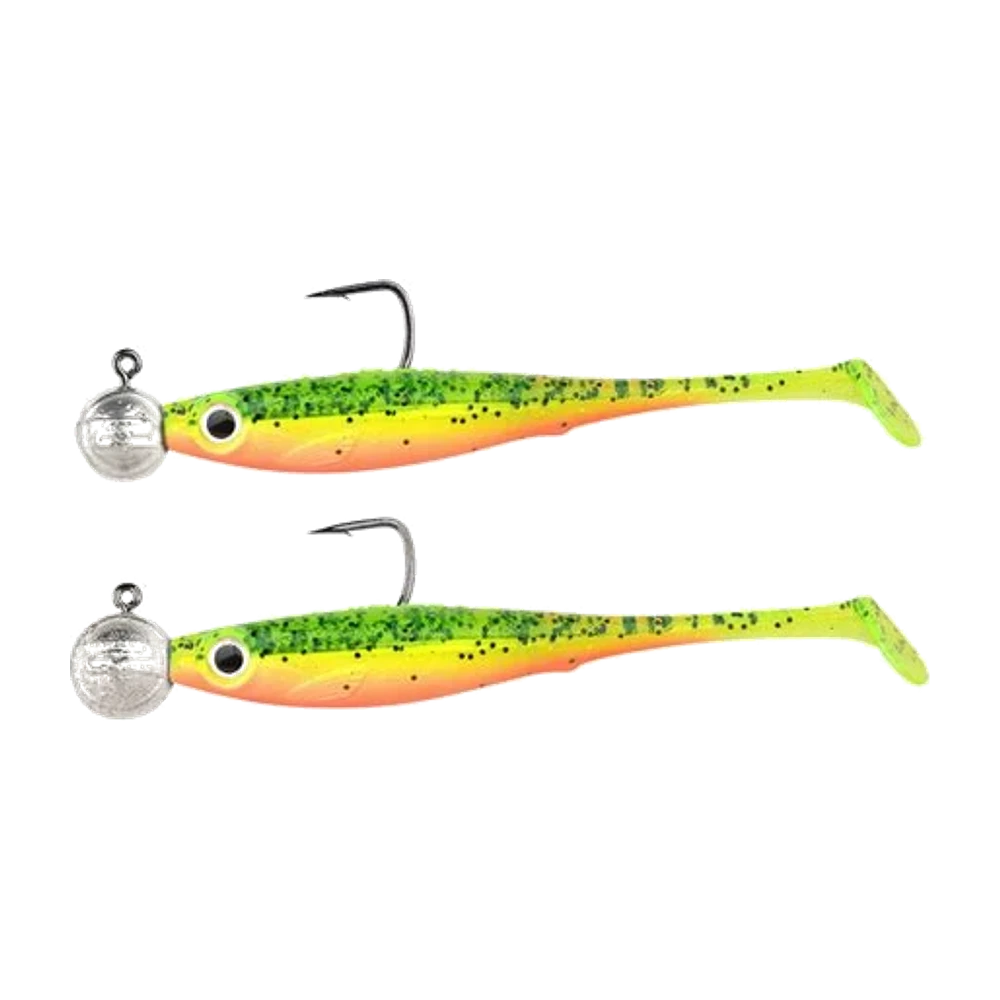
SPRO Iris Pop Eye: the popper that walks as much as it splashes
The right lure in the wrong spot still catches nothing. CarnaFish spots the zone that works, from a single photo.
A fish that comes up on your popper and misses it is frustrating. A fish that comes up, inspects it from ten centimetres away and drops back down without touching it is worse — because you know it had made up its mind, and something in the retrieve made it change.
Nine times out of ten, that something is monotony. The classic popper has one register: it makes noise, it stops, it makes noise again. A pike sitting under a lily pad or a bass on the edge of a weed bed has heard that sequence dozens of times.
The Iris Pop Eye is interesting precisely because it can do something else. Depending on how much wrist you put into it, the same lure produces either a clean spray or a silent zigzag across the surface. And it is the alternation between the two, within one single cast, that decides hesitant fish.
Two lures in one body
The shape of the head explains everything. The mouth is cupped — that is what throws the water — but the body stays narrow and the centre of gravity sits fairly far back. In practice:
- A sharp, firm pop, rod tip low: the cup bites into the water, the lure brakes dead and throws a spray in front of it. A strong signal, audible from a distance.
- Light, regular taps, rod tip at 45°: the cup no longer bites, the lure pivots and swings alternately left and right. That is a classic walk the dog, but with a little slap of water at each change of direction.
- A medium tap: a dull plop followed by a half-glide. That is the middle ground, and it is often the most productive on flat calm water.
That versatility has a cost. The spray is not as violent as that of a very wide-mouthed popper, and the walk is not as wide as that of a dedicated stickbait. Where a compact popper such as the Megabass Pop-X does one thing and does it perfectly, the Iris Pop Eye does two things correctly. It is a Swiss army knife, not a specialist.
The two-stage retrieve
This is the sequence that produces best, on pike as on bass.
- Cast beyond the spot — weed edge, stump, gap in the lily pads — and let the rings disperse for three to five seconds.
- Three sharp, spaced pops, one second between each. That is the calling phase: you are announcing your presence to everything within ten metres.
- A three-second pause, lure motionless.
- Switch to walking: six to eight light taps at a continuous cadence, taking up the slack all the way. The lure zigzags on the spot, silently, like a wounded prey trying to get away.
- A dead stop. This is very often where the fish attacks.
- Start the sequence again further along the retrieve, and repeat all the way to the rod tip.
On the water: when a fish comes up and refuses, do not cast straight back to the same place. Let the area settle for thirty seconds, then come through again using nothing but the walking phase, without a single pop. A fish that refused the noise very often accepts the silence — but only if you have not hammered it in the meantime.
The topwater hookset, the real difficulty
On a popper you lose more fish at the hookset than with any other family of lures, and the cause is always the same: you set on the image, not on the feel.
Three simple rules:
- Never set on what you see. A spray of water on your lure does not mean the fish has it in its mouth.
- Wait until you feel the weight in the rod. Half a second, sometimes a full second. That is a long time when a pike has just exploded under your nose, and it is still the only method.
- Set sideways, not upwards. A vertical hookset pulls the lure out of the water; a sideways one drives the trebles into the corner of the jaw.
One consequence for tackle: avoid an overly stiff rod. A little give in the tip absorbs head shakes and stops the lure being torn free at the moment of the strike.
Setups by target fish
| Species and context | Version | Line | Dominant rhythm |
|---|---|---|---|
| Bass, clear water, margins | Small size | 0.30-0.35 mm fluorocarbon | Walking, rare pops |
| Bass, stained water, dense weed | Large size | 0.40 mm fluorocarbon | Firm pops |
| Pike, weedy flat, summer | Large size | 20-30 cm titanium leader | Calling pops then walking |
| Pike, flat calm and wary fish | Large size | Fine titanium, round clip | Almost nothing but walking |
The point not to overlook for pike: a steel or titanium leader is compulsory, and it must stay short and supple. A stiff 40 cm leader pulls the nose of the lure down and kills the walk. Twenty to thirty centimetres of fine titanium is invisible in the spray and restricts almost nothing.
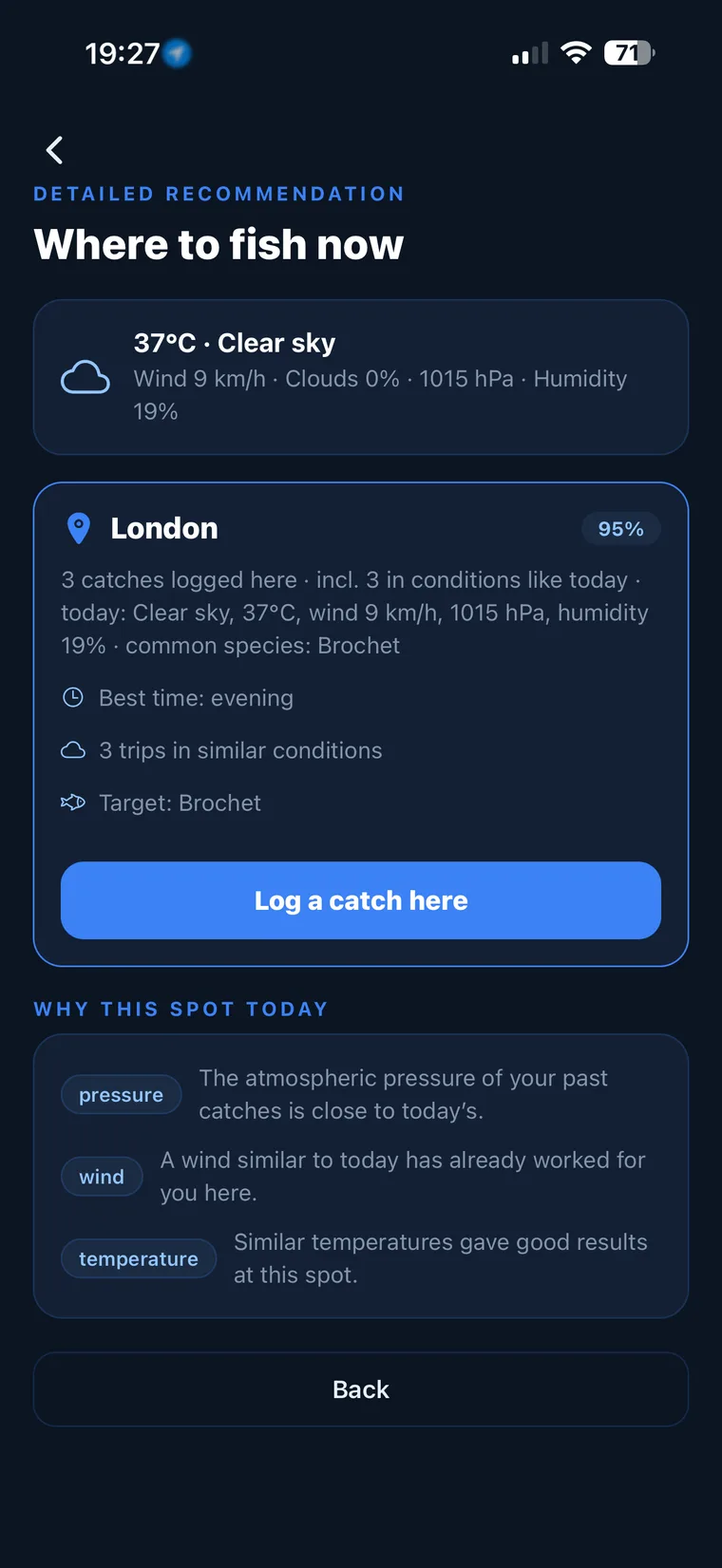
Not sure what to tie on?
Photograph your spot: CarnaFish reads the scene, cross-checks the conditions and gives you the zone, the lure and the retrieve. Free on iOS and Android.
Where it excels, where it has no place
Its windows:
- Weedy flats of 1 to 3 m in summer, at dawn and dusk. That is the prime setting for the pike popper, covered in our guide to choosing a pike lure.
- Gaps and open lanes in a weed bed: wherever there is open water, but surrounded by vegetation.
- Bass margins in stained water, where the sound signal calls before the visual one works.
- Flat calm water at first light, where the silent walking phase makes all the difference.
Where it has nothing to do:
- Dense, continuous vegetation: the exposed trebles catch on everything. That is frog territory, not popper territory.
- Cold water, below around fifteen degrees. Fish stop coming up, whatever the quality of the retrieve.
- Large windy waters to be covered fast: the popper is slow, targeted fishing, not searching.
- Heavy chop: the spray is lost and the walk becomes unreadable for the fish.
Pop Eye or frog
That is the real question as soon as you talk about topwater over weed, and the answer comes down to one criterion: the density of the vegetation.
The SPRO Bronzeye Frog goes literally everywhere. Hollow body, hooks laid flat against the back, it slides over a mat of lily pads without ever fouling. Its drawback is mechanical: the hook-up rate stays lower, because the fish has to crush the body to free the points.
The Iris Pop Eye is the opposite. Its trebles catch on the smallest stem, but the moment a fish touches it, it is hooked. Over open water, a gap, a clean weed edge or a sandy flat, it converts distinctly better.
The practical rule: a continuous mat and you take the frog; open water or clear gaps and you take the popper. And if you are unsure which type of topwater to tie on when you reach the bank, CarnaFish analyses a photo of the spot and answers.
Key takeaways
- Two retrieves in one lure: a clean spray on a firm pop, a silent walk on light taps.
- The winning sequence is calling pops, pause, then continuous walking, then a dead stop.
- On a fish that has refused, come back with walking alone after letting the area settle.
- Set the hook on the feel of weight, never on the spray, and set sideways.
- A short, supple titanium leader is compulsory for pike; in dense weed, take a frog instead.
FAQ
How do you walk the dog with the Iris Pop Eye?
Rod tip down at 45°, short light wrist taps at a steady cadence, taking up the slack between each. If the lure throws water instead of zigzagging, your taps are too firm.
Why do I miss so many topwater bites?
Because you are setting on what you see. Wait until you feel the weight of the fish in the rod, usually half a second after the spray, then set sideways rather than upwards.
Do you need a steel leader for pike?
Yes, it is essential. Use fine titanium over 20 to 30 cm: short enough not to pull the nose of the lure down and supple enough to let the walk happen. A long, stiff leader kills the zigzag.
Popper or frog over a weed bed?
The frog when the vegetation is dense and continuous, because it goes through without fouling. The popper as soon as there is open water, gaps or a clean edge, because it converts bites far better.
What time of day should I use it?
Dawn and dusk first of all, from early summer to early autumn. It also works in the middle of the day under cloud on flat calm water, but returns drop sharply below around fifteen degrees.
Which of the two sizes should I choose?
The small one for bass in clear water and for wary fish, the large one as soon as you are after pike, need to cast far, or the water is choppy. On pike, too small a profile multiplies the missed strikes.
The full bass lure guideSeason-by-season strategy: which family of lure, when, and why.Go from theory to fish
CarnaFish reads your spot from a photo and gives you the game plan: zone, lure, retrieve. Free on iOS and Android.