SPRO Rat Wakebait: four rat sizes for fishing the wake
One lure, endless conditions. CarnaFish reads your spot from a photo so you are not just guessing.
A summer night on a quiet tree-lined arm. You can hear nothing but your own line, then the lure starts scraping the surface with a steady, soft noise that carries a long way in the dark. Thirty seconds later, the explosion. Fishing a rat lure is not folklore: it is one of the few approaches that triggers fish refusing everything else, and SPRO's Rat Wakebait comes in four versions.
Four sizes, and a table to read all the way across
The manufacturer's table has five columns: model name, total length, length without the tail, weight and class. Converted to metric, the four versions come out like this.
- Rat 25: 12.7 cm overall, 6.4 cm of body, 8.9 g.
- Rat 30: 15.9 cm overall, 8.3 cm of body, 14.2 g.
- Rat 40: 19 cm overall, 10.2 cm of body, 28.3 g.
- Rat 50: 25.4 cm overall, 13.3 cm of body, 70.9 g.
Two observations on that reading. First, total length includes the soft tail, which accounts for between 40 and 50 per cent of the figure depending on size: if you are judging lure bulk, the column without the tail is the one that matters. Second, the numbering roughly tracks body length without matching it exactly - do not look for a conversion rule, just take the figures from the table.
Across the full range the spread is considerable: the Rat 50 weighs nearly eight times the Rat 25. The 30 and the 40 cover most freshwater situations in Europe, the 25 earns its place on average fish or in very clear water, and the 50 stays a specialist's lure.
What the Class column actually says
All four rows carry the same value: waking. That is a usage note - the lure is built to run at the surface pushing a wake - and not a measured buoyancy the way floating or sinking would be. So there is no numeric density to draw from it, and I am not going to invent one for you.
What the description does state clearly is the behaviour: SPRO describes a gentle wake humping along the surface, and an effortless walk-the-dog action delivered by the square bill. That is the description to trust, not a shelf label.
Sound matters as much as sight. On calm water at night, slow down until you can hear the lure working from the bank yourself. If you cannot hear it, the fish probably cannot detect it ten metres away either.
How to work it
The square bill does nearly all the work. A slow straight retrieve is enough to produce the wake: the jointed body then sweeps left and right behind the bill while the long soft tail trails and undulates. You do not need to supply the rhythm with the rod the way you would on a standard stickbait.
Keep the rod tip high to hold the lure right at the surface, low if you want it to dig in a little more. The speed window is narrow: too slow and the bill no longer engages, leaving the lure floating lifelessly; too fast and it abandons the zigzag and ploughs a straight line. Between the two lies a band of a few reel turns per second where everything happens.
The hookset, where it all goes wrong
The most common mistake in surface fishing is striking at the noise. You see the blow-up, you lift the rod, and you pull the lure out of the mouth of a fish that had not taken it yet. Wait until you feel the weight in the rod, then set sideways, never upwards. It is exactly the same discipline as with an Arbogast Jitterbug or an Evergreen Combat Rat.
Not sure what to tie on?
Photograph your spot: CarnaFish reads the scene, cross-checks the conditions and gives you the zone, the lure and the retrieve. Free on iOS and Android.
Build, hooks and wear parts
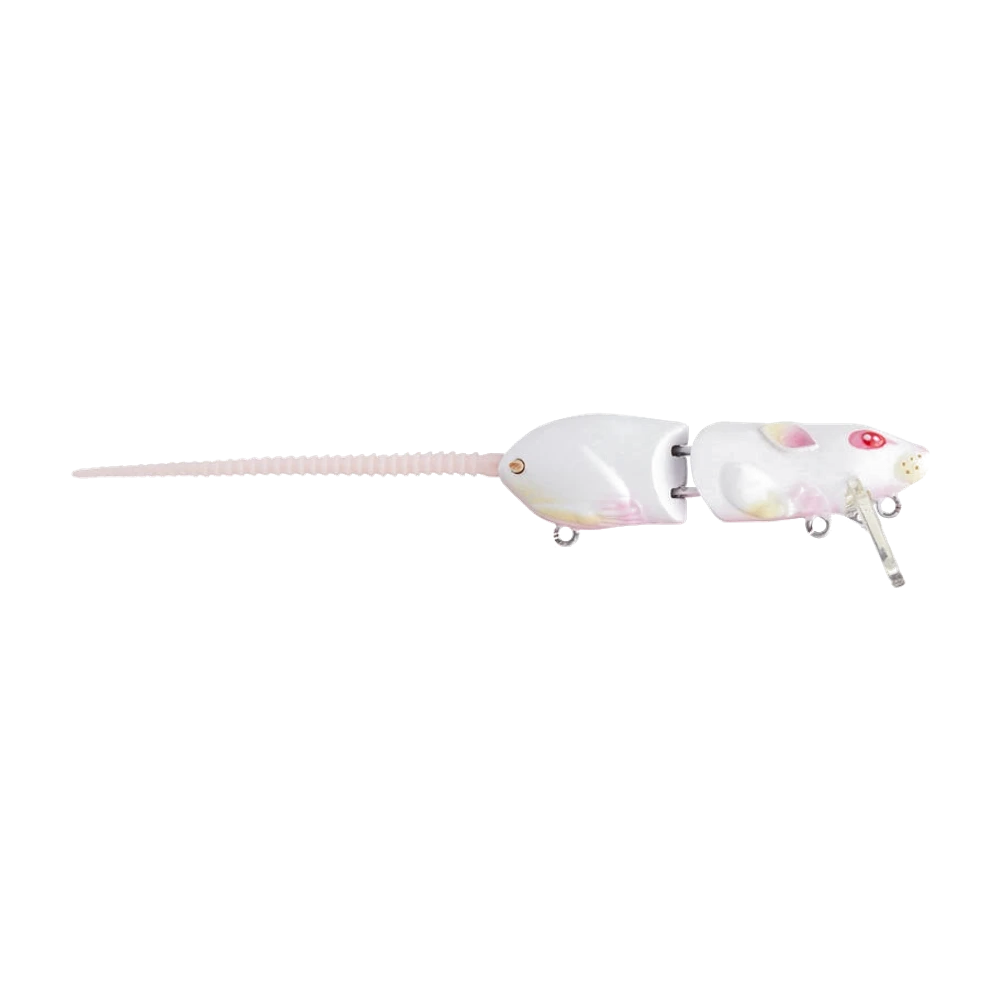
SPRO states the body is made from multiple composites, with a feel and sound close to wood, and a durable square bill. The tail is a long soft TPE part, and the maker sells it separately: that is useful information, because it is the piece that suffers most from teeth and missed strikes.
On hooks, pay attention to the note the manufacturer publishes. SPRO flags a supplier transition in progress: the size 30 Rat may arrive with size 5 Gamakatsu Black Nickel trebles or with size 5 Gamakatsu Nano Alpha coated trebles. That note explicitly covers the size 30 only - for the other sizes, no hook size is published.
In the product photo the three split rings are in place, one at the front and two under the belly, but no treble is fitted to any of them. That is an observation from a product photo, not a specification: the retail unit is described as coming armed.
On a pike spot
Across Europe a surface rat lure meets pike as often as bass, especially at dusk on backwaters and shallow pond tails. A titanium leader then becomes mandatory, and you have to accept that a strike on a jointed lure of this size chews through the soft tail quickly. Keep spares, exactly as you would with a Savage Gear 3D Rad Rat.
Colour by light
- Low light, dawn and dusk: the albino white from the photo, which stays detectable both as a silhouette and as a reflection as light fades.
- Clear water in broad daylight: a natural grey-brown, more credible when the fish really sees the lure before deciding.
- Full darkness: all black, which cuts the sharpest outline against even a faintly lit sky - it is the contrast working, not the colour.
A surface lure only makes sense when fish are willing to come up, which depends on season, time of day and the structure of the spot. That is exactly what CarnaFish helps you settle: a photo of the spot, and the app suggests the zone, the depth and the type of presentation consistent with current conditions. To pick the right time of year, our guide to predator fishing through the seasons places surface fishing in the calendar.
Key takeaways
- Four sizes from 12.7 to 25.4 cm overall, that is 8.9 to 70.9 g: read the column without the tail to judge real bulk.
- The Class column reads waking for all four sizes, a surface usage rather than a measured buoyancy.
- The walking action comes from the square bill: slow straight retrieve, no rod work needed.
- Size 5 Gamakatsu trebles are stated for the size 30 only, in two possible finishes during the transition.
FAQ
Which Rat Wakebait size should you start with?
The Rat 30, 15.9 cm overall for 14.2 g, stays the most versatile: it casts on an ordinary baitcasting setup and matches the most credible prey size on most European waters.
Does this lure float?
The manufacturer's table classes it as waking, which describes a surface usage with a wake rather than a measured buoyancy. The description says the lure pushes a gentle wake at the surface, but no numeric density is published.
Do you need to work it with the rod?
No. The square bill alone produces the left-right sweep on a slow straight retrieve. Your job is to find the right speed and hold the rod tip at the right height.
What hooks come fitted?
SPRO states size 5 Gamakatsu trebles, in Black Nickel finish or Nano Alpha coating, for the size 30 only. The other sizes have no published hook size in the description.
Can the soft tail be replaced?
Yes, the manufacturer offers it as a spare part. It is the component most exposed to teeth and missed strikes, so keep a replacement if you fish this lure seriously.
Can you fish for pike with a rat lure?
Yes, and it is an effective approach at dusk in Europe. Fit a titanium leader without exception, and accept that the soft tail wears out faster than it would in bass fishing.
The full bass lure guideSeason-by-season strategy: which family of lure, when, and why.Go from theory to fish
CarnaFish reads your spot from a photo and gives you the game plan: zone, lure, retrieve. Free on iOS and Android.