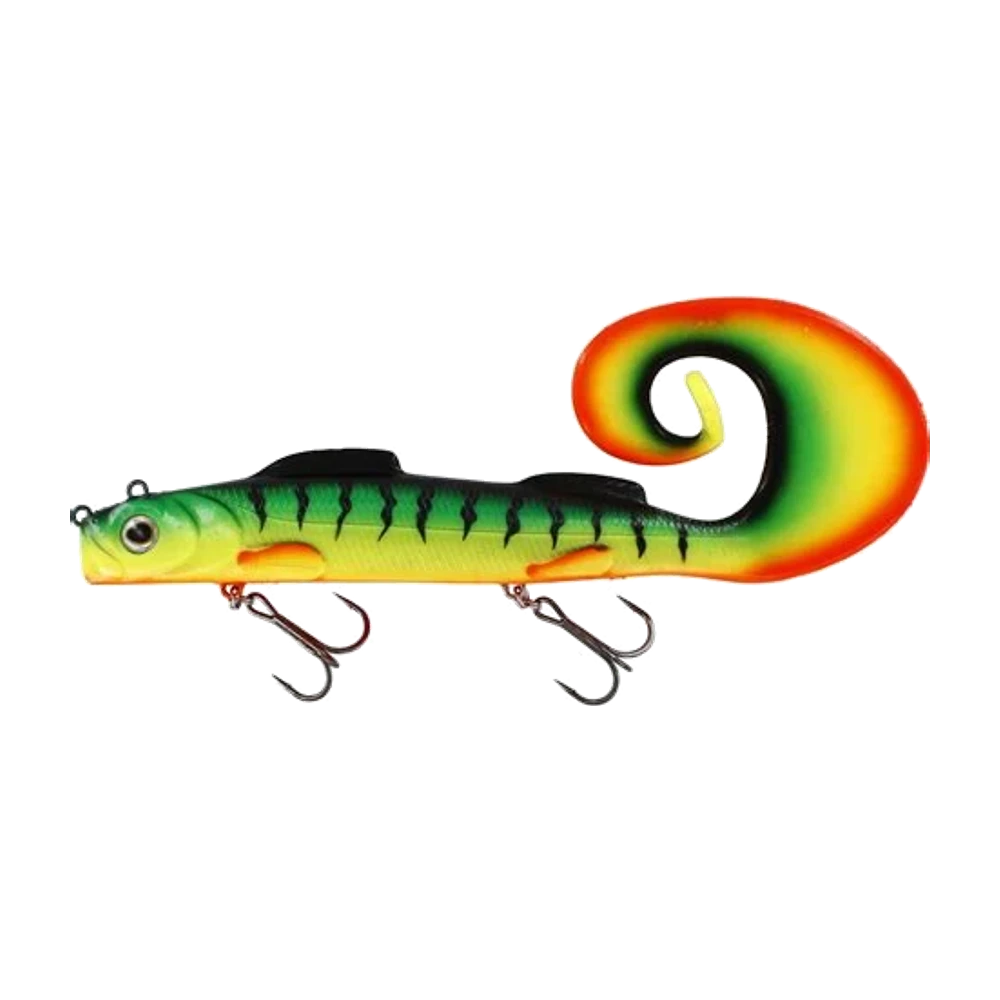
Westin MonsterTeez: moving up to a giant shad without breaking everything
Not sure this lure fits YOUR spot today? CarnaFish tells you in 10 seconds, from a photo.
Late October, on a big water, you have spent the day throwing 12 cm shads. You have caught three sixty-centimetre pike and you have seen, on the sounder or with your own eyes, two far bigger marks that never moved a metre. Those fish do not put themselves out for a fry when a 25 cm roach is passing within reach.
A very big shad is not about showing off. It is a way of filtering the fish at the door, accepting fewer bites in exchange for a much higher average size. The MonsterTeez belongs to that category of lures that are not fished like the others, and that are very unforgiving of improvisation in the rigging.
What moving up to a giant format really changes
It is not just a bigger silhouette. Three physical parameters flip at once.
- The mass of water displaced. A 25 cm body pushes a volume that bears no comparison with a 12 cm one. The signal a lateral line picks up carries far further, which counts enormously in stained water or at night.
- The useful swimming speed collapses. The lure works fully at a speed where a standard shad does almost nothing. You fish at a crawl, and that is intentional.
- The loads on the cast and the hookset explode. An undersized setup does not break on the fish, it breaks on the cast — on the first slightly sharp load-up.
There is also a less obvious tactical consequence: you can no longer pile up casts. Over a day you will make perhaps a third of your usual number. So you have to choose your spots rather than sweep water.
Rigging: this is where it is won or lost
Hook placement on a giant shad is where most anglers lose their fish. A pike very often attacks from behind or crossways, and a body that long leaves a lot of plastic between its jaws and your hook.
| Rig | Weight | Target depth | Use |
|---|---|---|---|
| 8/0-10/0 single hook with belly weight | 20 to 40 g | 1.5 to 4 m | Weed, margins, gliding retrieve |
| Wide jig head 40 to 60 g | built in | 3 to 6 m | Plateaus, drop-offs, classic lift-and-drop |
| Jig head 60 to 80 g | built in | 6 to 8 m and beyond | Vertical, holes, catfish |
| Unweighted on a single hook | none | 0 to 1.5 m | High swimming over submerged weed, in summer |
In every case, a rear stinger is not optional. A treble or a double on a wire strand at mid-body or level with the tail turns missed bites into landed fish. Our pike stinger rig piece covers the wire length and the hooking point to respect so you do not kill the action.
On the water: place the stinger so that its hooking point falls two thirds of the way back along the body, not on the tail. On the tail it damps the beat and you lose most of the vibration; too far forward and it does not cover the zone the pike actually bites. Two thirds is the compromise that keeps the action intact.
The retrieve: few movements, plenty of amplitude
- Cast two-handed, with a slow, loaded-up swing. No sharp movement: a 200 g shad whipped off the rod tears the line or the tip off.
- Let it drop on a tight braid, rod at forty-five degrees. The descent is a fishing phase, not dead time: plenty of bites come there.
- One single long pull of the rod, wide, over a metre to a metre and a half. Not three little jerks.
- Take up the slack while tracking the descent, without letting the line go completely slack. You should feel the lure diving back.
- Hold two to four seconds on the bottom, then start again. On passive fish, stretch that to eight seconds.
For catfish, change the rhythm: hold the lure fifty centimetres off the bottom in the vertical, with very slow thirty-centimetre movements and long pauses. A catfish rises to the lure; it does not chase it.
The tackle that holds, and the tackle that fails
This is not a lure you hang on the Sunday all-rounder.
- Rod: 80 to 150 g casting weight minimum, 2.20 to 2.60 m long, semi-parabolic action. Too stiff and it breaks on the cast, too soft and it will not set the hook.
- Braid: 0.40 to 0.50 mm equivalent strength, a clearly heavier diameter than standard pike use. That is not for the fish, it is to absorb the inertia of the lure.
- Leader: 0.80 to 1.00 mm fluorocarbon for pike, or titanium, over 60 to 80 cm. A fine leader is cut instantly at this prey size.
- Reel: size 5000 to 8000, with a genuinely progressive drag.
- Snap and swivel: high-strength models, changed regularly. This is the part that lets go first.
Set the hook backwards and upwards, with plenty of amplitude, and set it a second time three seconds later. The first one places the hook, the second drives it through the jaw.
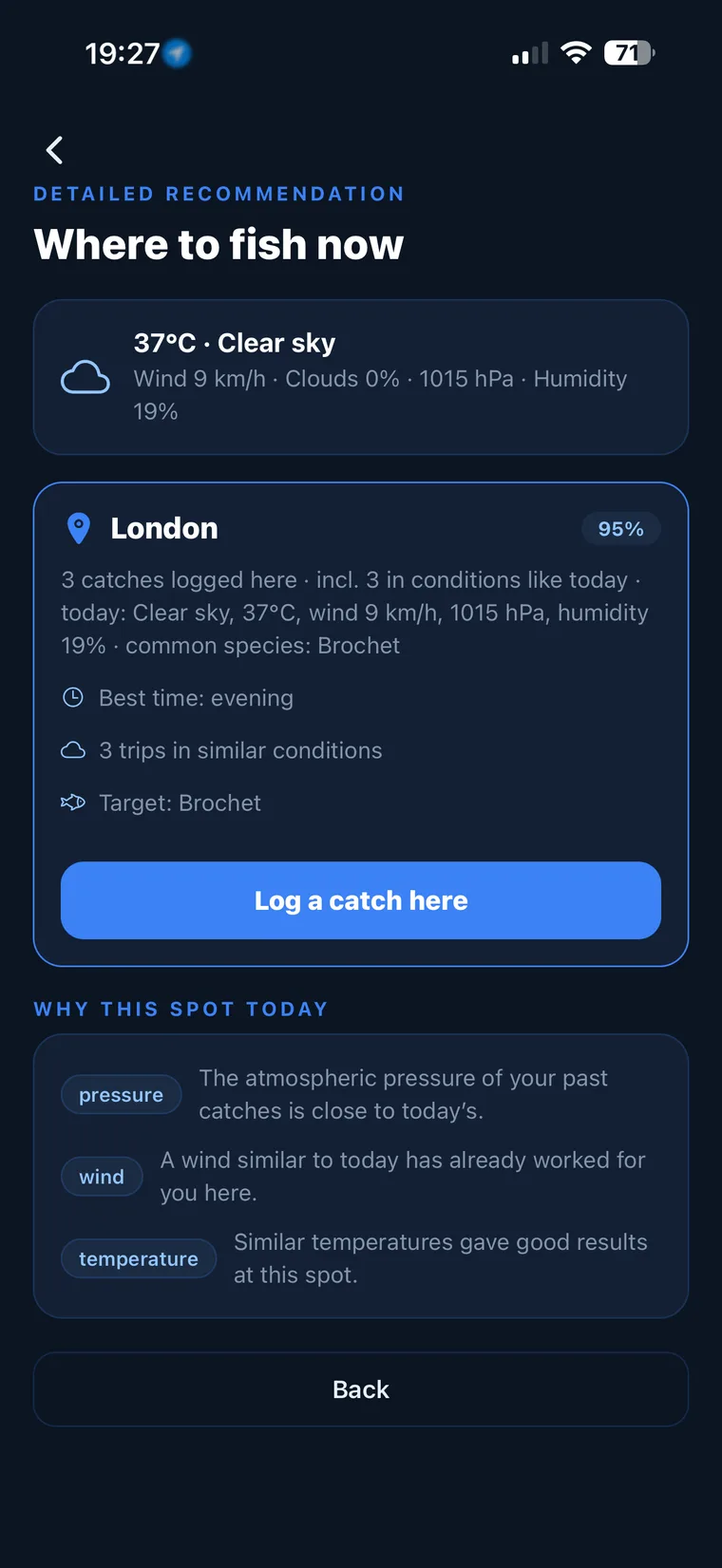
Not sure what to tie on?
Photograph your spot: CarnaFish reads the scene, cross-checks the conditions and gives you the zone, the lure and the retrieve. Free on iOS and Android.
Where and when it pays
- Autumn and early winter, when pike are building reserves and selecting big prey.
- Big waters and reservoirs, where fish are scattered and a long-range signal counts.
- Stained water or low light, where vibration replaces sight.
- Catfish in holes, fished vertically over deep zones.
It is wrong, on the other hand:
- On small rivers and narrow canals. You have neither the depth nor the distance you need.
- In high summer on warm, active fish, where a medium format brings far more bites for a perfectly decent average size.
- If you are after action. A blank day is a normal result with this lure. You have to accept that before you set off.
MonsterTeez, Twin Teez or Shad Teez
The Westin Shad Teez is the working format: versatile, it covers the majority of pike and zander sessions with a far higher bite count. The Westin Twin Teez plays a different card, the twin tail and a more vibrant action at low speed, in intermediate sizes.
The MonsterTeez replaces neither: it opens a category of its own, big-fish fishing with an unwieldy lure. In practice you take the Shad Teez to fish and the MonsterTeez to go after one specific, identified fish on a known spot. Alternating them within a day is a good tactic in itself: search with the medium format, then run the giant back over the spots that produced.
Our guide to choosing a pike lure places these three formats across the season. And if you are unsure what weight to rig in front of an unknown deep spot, CarnaFish analyses a photo of the spot and answers.
Key takeaways
- The very big format filters the fish: fewer bites, a far higher average size.
- Rear stinger compulsory, pinned two thirds of the way back and never on the tail.
- One long wide pull, then a tracked descent and a two to four second pause.
- A dedicated setup: 80-150 g rod, heavy braid, 0.80-1.00 mm leader or titanium.
- Wrong on small waters and on days when you are after numbers.
FAQ
What jig head for a 25 cm shad?
20 to 40 g as a belly weight for a high, gliding action, 40 to 60 g on a jig head to fish between 3 and 6 m, and 60 to 80 g beyond that or vertically for catfish.
Do you really need a stinger?
Yes. On a body that long, pike often bite well away from the main hook. A stinger placed two thirds of the way back converts missed bites into fish without restricting the paddle beat.
What rod should you use for a giant shad?
A 2.20 to 2.60 m rod rated 80 to 150 g, with a semi-parabolic action. Too stiff a rod handles the casting inertia badly, too soft a rod will not set the hook at distance.
Does the MonsterTeez catch catfish?
Yes, mainly vertically over holes, worked very slowly fifty centimetres off the bottom with long pauses. A catfish rises to the lure rather than chasing it, so stay high and be patient.
Does this format scare off average pike?
It puts some of them off, which is the point. You still catch 60 to 70 cm fish on it regularly, but you lose a lot of bites from small fish in exchange for a higher average size.
How does it differ from the standard Shad Teez?
The Shad Teez is a versatile working format that gives far more bites and is fished with standard tackle. The MonsterTeez is a selection tool, reserved for known spots and for the periods when pike are looking for big prey.
The full pike lure guideSeason-by-season strategy: which family of lure, when, and why.Go from theory to fish
CarnaFish reads your spot from a photo and gives you the game plan: zone, lure, retrieve. Free on iOS and Android.