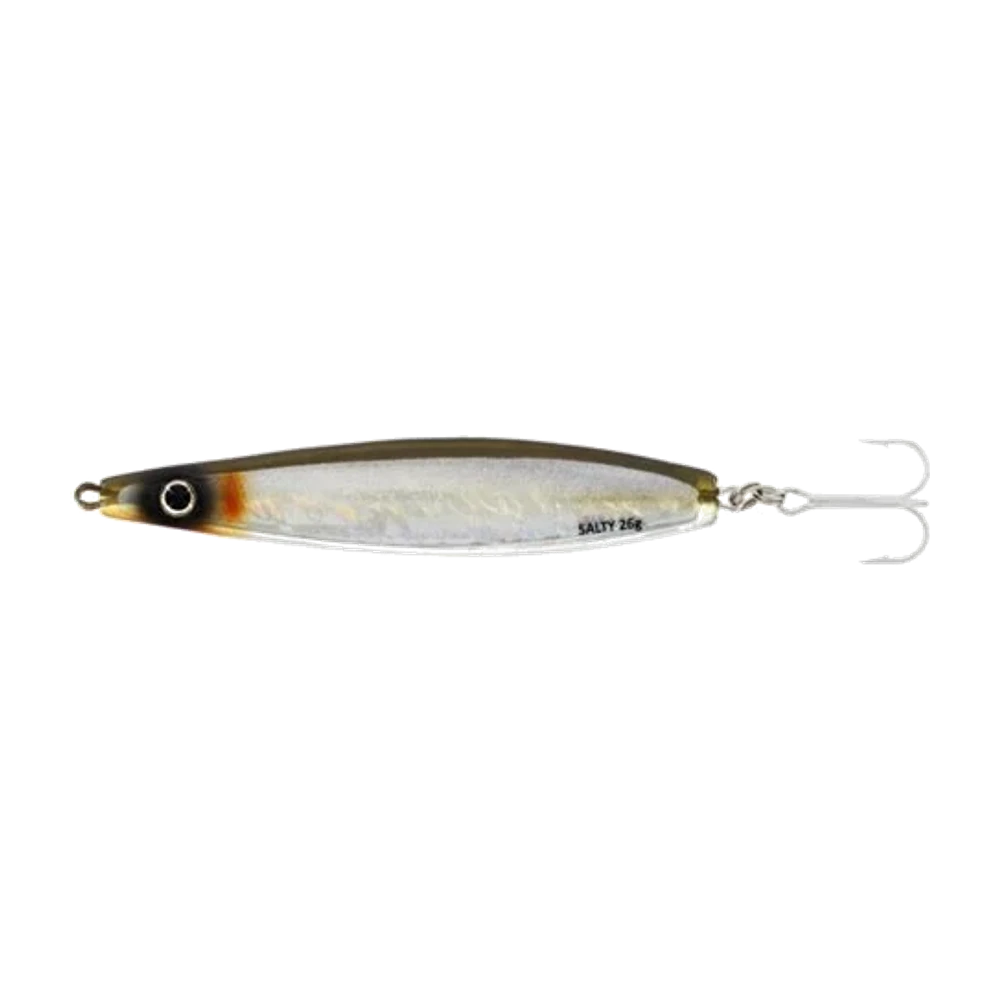
Westin Salty the Sandeel: the soft sandeel that sinks fast and stays in the mouth
Before tying this one on, it helps to know if the spot actually calls for it. CarnaFish reads the scene from a photo.
On a rocky point on the ebb, you get a twenty-minute window during which the bass are hunting sandeel right on the bottom. The current is running, you have seven metres of water, and your lure passes two metres too high every single time. By the time it has sunk, it's already out of the seam.
That is exactly the problem the Salty the Sandeel solves. Its material is loaded with salt, which makes it noticeably denser than a standard soft plastic. For the same head weight, the whole rig sinks faster and holds its depth better in current. You spend less time waiting to reach the bottom and more time fishing the zone where the fish actually are.
The second effect of the salt is less visible but just as useful: a bass that takes it holds the lure in its mouth longer before spitting it out.
What the density really changes
Two lures of the same length on the same jig head don't sink at the same rate if their material doesn't have the same density. In shore fishing, that gap translates directly into fish.
- A faster, more vertical drop. You reach the bottom before the current has pushed you out of the seam, which is the precondition for fishing a point or a narrow channel.
- Less lead for the same depth. You can drop a step in head weight for the same conditions, so you keep a more natural action and a better feel for the bite.
- Less surface drift at the moment the lure lands, which matters when you're casting into the wind off a rock.
The body itself stays slim and elongated, with a discreet tail. It doesn't send out a hard vibration: it's the silhouette and the sink rate that do the work, not the noise. If you're used to feeling your lure thumping through the handle, this one will feel "dead" to you. It isn't — it's just imitating a sandeel properly.
Fishing the current: the retrieve that works
- Cast upstream, never straight across. Aim thirty to forty degrees above the zone you want to fish.
- Let it sink on a semi-tight line while counting. Note the number of seconds to bottom contact — you'll use it on every following cast.
- Let the current carry the lure, reeling only enough to keep contact. The lure should drift, not be towed.
- Every five or six seconds, give two short flicks of the rod tip, then let it drop back until it touches bottom again.
- When the drift comes round below you, the lure lifts naturally in the seam: that's when a large share of the bites arrive. Don't reel in too early.
Vertically from a boat or a deep quay wall, the same logic applies in simpler form: drop to the bottom, two one-metre lifts, a controlled drop, a two-second pause on contact.
On the water: count your drop on every single cast, and note when the count changes. If you're touching bottom at twelve seconds and suddenly it's eight, you've just passed over a rocky rise or a sandbar. That's where you keep working, not three casts further along.
Choosing the head weight
| Current / depth | Jig head | Note |
|---|---|---|
| Calm water, under 3 m | 8-12 g | Slow drop, gliding action, ideal in clear water |
| Moderate current, 3-6 m | 15-25 g | The most versatile setting from the shore |
| Strong current or over 7 m | 30-45 g | Vertical or tight drift, bottom contact essential |
A common mistake is going heavy "to be sure of touching bottom". You touch bottom all right, but the lure noses down and ploughs instead of gliding. The right head is the lightest one with which you still clearly feel contact.
Over very snaggy ground, swap the jig head for a weighted weedless hook: you lose a little feel and you cut your snags by two thirds.
Not sure what to tie on?
Photograph your spot: CarnaFish reads the scene, cross-checks the conditions and gives you the zone, the lure and the retrieve. Free on iOS and Android.
When it takes the lead, and when it's the wrong choice
It excels on bottom and mid-water fishing where sandeel are genuinely present: surf beaches with current, rocky points, channels between islets, deep breakwaters. Late summer and autumn, once the sandeel shoals have settled, are its best window.
It is, however, unsuited to surface feeding activity. When bass are smashing bait on top, a lure that sinks fast is a handicap: it drops straight under the shoal. In that case a stickbait or a popper works far better. It's also of little use in very coloured water, where its subtlety becomes a flaw.
One last practical point: the salted material is more vulnerable to abrasion on rock and keeps badly in contact with other soft plastics. Store these lures in their original packaging, not loose with the rest of the box.
Salty the Sandeel, Crazy Sand Eel or Line Thru Sandeel
The Fiiish Crazy Sand Eel runs on a dedicated jig head and gets its effectiveness from a very wide undulating action, readable even on a slow retrieve. That's the pick when you want to cover water on a straight retrieve and the fish are active.
The Savage Gear 3D Line Thru Sandeel is a line-through lure: the line runs through the body so the fish can't use it as a lever to throw the hook. Its selling point is lure durability and the number of fish you keep on, not sink rate.
The Salty the Sandeel differs from both on one precise point: it's a bare soft plastic, denser, that you rig however you like and that sinks faster for a given weight. You pick it when the problem is reaching the bottom in current before you're pushed out of the seam, not when the problem is the swimming action on a straight retrieve. A simple jig head rig is all you need to get the most out of it.
Our guide to lure fishing for sea bass covers which stages of tide to favour. And if you're unsure what head weight to tie on when you get to a point, CarnaFish reads a photo of the spot and answers.
Key takeaways
- The salted material is denser: faster, more vertical drop, less lead for the same depth.
- Count your drop on every cast — it's your free echo sounder.
- Cast upstream and let it drift; don't tow the lure across the current.
- Take the lightest head with which you can still feel the bottom.
- No use on surface feeding activity, and vulnerable to abrasion: store it separately.
FAQ
Why does the Salty the Sandeel sink faster than another soft plastic?
Its material is loaded with salt, which raises its density. For the same head weight, the rig drops faster and is pushed less by the current, which lets you reach the bottom before you've been carried out of the seam.
What jig head should you use for bass from the shore?
Between 15 and 25 g covers most situations in 3-6 m with moderate current. Drop to 8-12 g in calm, shallow water, go up to 30-45 g in strong current or beyond 7 m.
Can you feel the lure during the retrieve?
No, and that's normal: the tail is discreet and sends no strong vibration into the handle. Contact comes from the weight of the jig head and from touching bottom, not from the swimming action.
When should you switch to a topwater?
As soon as bass are visibly feeding on top. A dense soft plastic then drops under the shoal and becomes counterproductive; a stickbait or a popper suits better for as long as the activity lasts.
Does the salt damage other lures in the box?
Salted material copes badly with prolonged contact with other soft plastics and degrades faster through abrasion. Keep these lures in their original packet rather than loose.
How do you know the lure is drifting properly in the current?
You should keep light, continuous contact without the line being tight. If the lure lifts immediately when you stop reeling, you're too light; if it drags and ploughs along the bottom, you're too heavy.
The full sea bass lure guideSeason-by-season strategy: which family of lure, when, and why.Go from theory to fish
CarnaFish reads your spot from a photo and gives you the game plan: zone, lure, retrieve. Free on iOS and Android.