Yo-Zuri 3D Inshore Twitchbait: fishing 80 cm of clear water
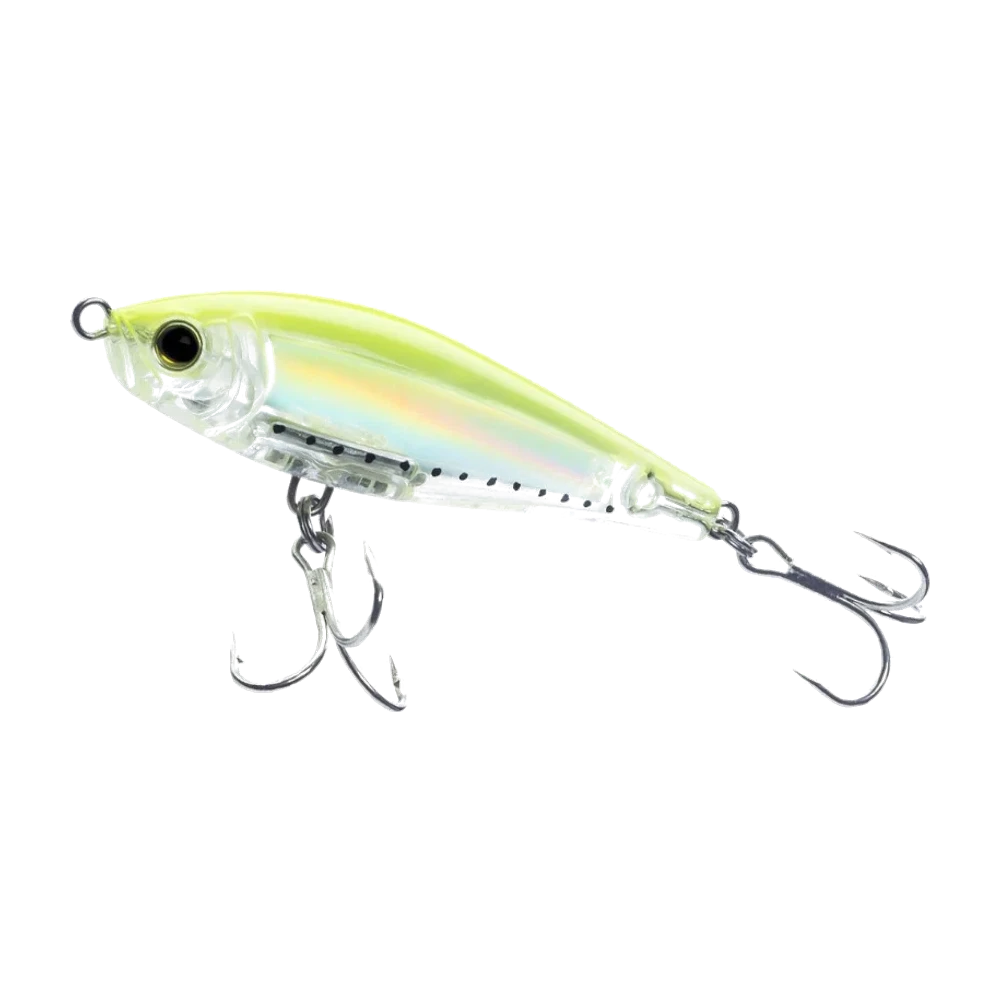
One lure, endless conditions. CarnaFish reads your spot from a photo so you are not just guessing.
High tide, an average coefficient, the back of a bay. The water has covered the mudflat and there's 80 cm over the weed. You can see the bass: wakes moving slowly, sometimes a tail breaking the surface. It's the most exciting situation in shore fishing for bass, and it's also the one where most fish get missed — because in 80 cm of clear water, everything shows. The lure that dives too deep, the one that arrives too fast, the one dragging a tight line across the flat: all refused.
This twitchbait was designed for that exact band of water. It stays high, reacts sharply and barely glides, three qualities that are useless anywhere else but decide everything here.
Three design choices made for shallow water
A short working depth. It runs between 30 cm and 1 m, no more. On a do-everything lure you'd see that as a limitation; here it's the specification. You don't have to correct with rod angle, it won't drop into the weed.
A very fast return to level. After each twitch it settles in a fraction of a second instead of continuing to slide. On a bass you can see coming, that quick stillness gives you the ability to stop the lure dead a metre from the fish — impossible with a long-gliding jerkbait.
Neutral or very slightly floating buoyancy. At rest it holds its depth or rises imperceptibly. That matters in 80 cm: a sinking lure plants itself in the eelgrass at the first pause.
The retrieve: fish the fish, not the zone
This is placement fishing, very different from conventional searching.
- Look first. Stand still for three minutes before casting. Look for wakes, showers of shrimp, tails breaking the surface. In this water, an angler who walks spooks more fish than he catches.
- Cast beyond and ahead. Aim two metres in front of the fish and three metres beyond its track, never on top of it. The lure has to cross its path, not land on its head.
- Two sharp twitches, short, wrist only, rod tip low and to the side. The lure darts 20 to 30 cm each way.
- A one-second pause, no more. Bass decide fast in shallow water.
- Stop dead if the fish commits. Counter-intuitive but very effective: a lure that suddenly freezes in front of a bass triggers more often than one that accelerates.
- Set the hook to the side, not upwards. In 80 cm, a vertical hookset rips the lure out of the mouth.
On the water: in very shallow water, your line is more visible than your lure. Always keep at least a metre of slack between the rod tip and the lure during the pauses, and fish with the sun behind the fish where you can — the shadow of a tight line across a pale bottom turns off more bass than any colour mistake.
The tidal window
| Phase | What's happening | Usefulness of the lure |
|---|---|---|
| End of the flood | Bass move onto the mudflat, very mobile | Excellent, fish are searching |
| High slack | Fish spread out, calm clear water | Best moment for sight fishing |
| Start of the ebb | They drop back towards the exit channels | Excellent, on the gutters |
| Half ebb | Not enough water left over the weed | Useless, time to move spot |
So the useful window lasts about three hours around high water. Past that, this lure has no ground left. Our guide to reading a spot explains how to find a mudflat's exit gutters before the water comes up.
The approach counts as much as the lure
In less than a metre of water, how you behave on the bank is part of the result, and no lure adjustment will rescue a botched approach.
- Don't wade if you can avoid it. Every step on a mudflat sends out a pressure wave bass feel twenty metres away. If you have to go in, slide your feet rather than lifting them.
- Stay low and use the ground as a screen. A standing silhouette on an open bank is outlined against the sky and turns fish off before your first cast.
- Fish close in first. The reflex is to launch it 40 m; the most accessible bass are often eight metres out, in the water you're about to walk through.
On the same bay flat, that discipline changes your bite count far more than a colour change.
Not sure what to tie on?
Photograph your spot: CarnaFish reads the scene, cross-checks the conditions and gives you the zone, the lure and the retrieve. Free on iOS and Android.
Its blind spots
- Any fishing deeper than a metre. It doesn't go down, full stop.
- Rough sea, strong wind, swell. It's too light and too high in the water, it blows out.
- Distance. Its profile and moderate weight cap it around 40 m.
- Heavily coloured water: this is a visual lure above all, and it loses a lot in water with 30 cm of visibility.
- Dense weed reaching the surface: even running at 30 cm, the trebles collect it. Switch to a Texas-rigged soft plastic.
3D Inshore Twitchbait or 3DB Jerkbait
Both come from the same house and look alike in a photo. On the water, they don't do the same job.
The Yo-Zuri 3DB Jerkbait is a jerkbait in the classic sense: a deeper working range, a longer glide after each jerk, the ability to sit still for several seconds. It's a searching lure and a cold-water lure, where the long pause does the work. In 80 cm of water over weed, its glide carries it out of the zone and its running depth becomes a handicap.
The Twitchbait trades that glide for sharpness and a high running band. It gives you exact control over where the lure stops, which is the skill that matters when you're fishing a visible fish rather than a zone.
If you want to cover the same mudflat but at slightly lower water, a slow, high-running lure like the Ima Sasuke takes over on a straight retrieve with no animation at all. And to plan your session around the tide, our guide to lure fishing for sea bass sets out how the phases follow each other. If you're unsure how much water you have when you reach your bay, CarnaFish reads a photo of the spot and answers for you.
Key takeaways
- A deliberately short running band, 30 cm to 1 m: that's a specification, not a limitation.
- Very fast return to level after each twitch, which lets you stop the lure in front of a fish you can see.
- Three useful hours around high water, then the spot empties.
- Slack line and line shadow matter more than colour in shallow water.
- Wrong tool for rough seas, distance, coloured water and weed reaching the surface.
FAQ
How deep does the 3D Inshore Twitchbait run?
Between roughly 30 cm and 1 m. It's designed not to go any deeper, which keeps it out of the weed on a bay flat covered by less than a metre of water.
What's the difference with the 3DB Jerkbait from the same brand?
The 3DB Jerkbait runs deeper and glides a long way after each jerk, which makes it a searching lure and a cold-water lure. The Twitchbait reacts more sharply and settles fast, so you can control exactly where it stops in front of a visible fish.
How do you set the hook in water that shallow?
By pulling to the side, rod low, rather than upwards. A vertical hookset in 80 cm of water pulls the lure out of the bass's mouth before the hooks get a hold.
Should I fish at high tide or low tide?
The useful window is around three hours either side of high water: the end of the flood, the slack, and the start of the ebb. Below that there's no longer enough water over the weed and the spot empties.
Which colour works best in clear water?
Translucent and pearl shades, or shrimp and sandeel patterns. In clear shallow water, a colour that's too opaque or too flashy gets spotted before it gets attacked.
Can you swap the trebles for single hooks?
Yes, and it's recommended over weed: singles rigged point up cut snagging significantly without costing you hook-ups on decisive takes in clear water.
The full sea bass lure guideSeason-by-season strategy: which family of lure, when, and why.Go from theory to fish
CarnaFish reads your spot from a photo and gives you the game plan: zone, lure, retrieve. Free on iOS and Android.