6th Sense Clobber Minnow: the small minnow built to show on live sonar
This lure shines under specific conditions. CarnaFish tells you in 10 seconds if today is one of them.
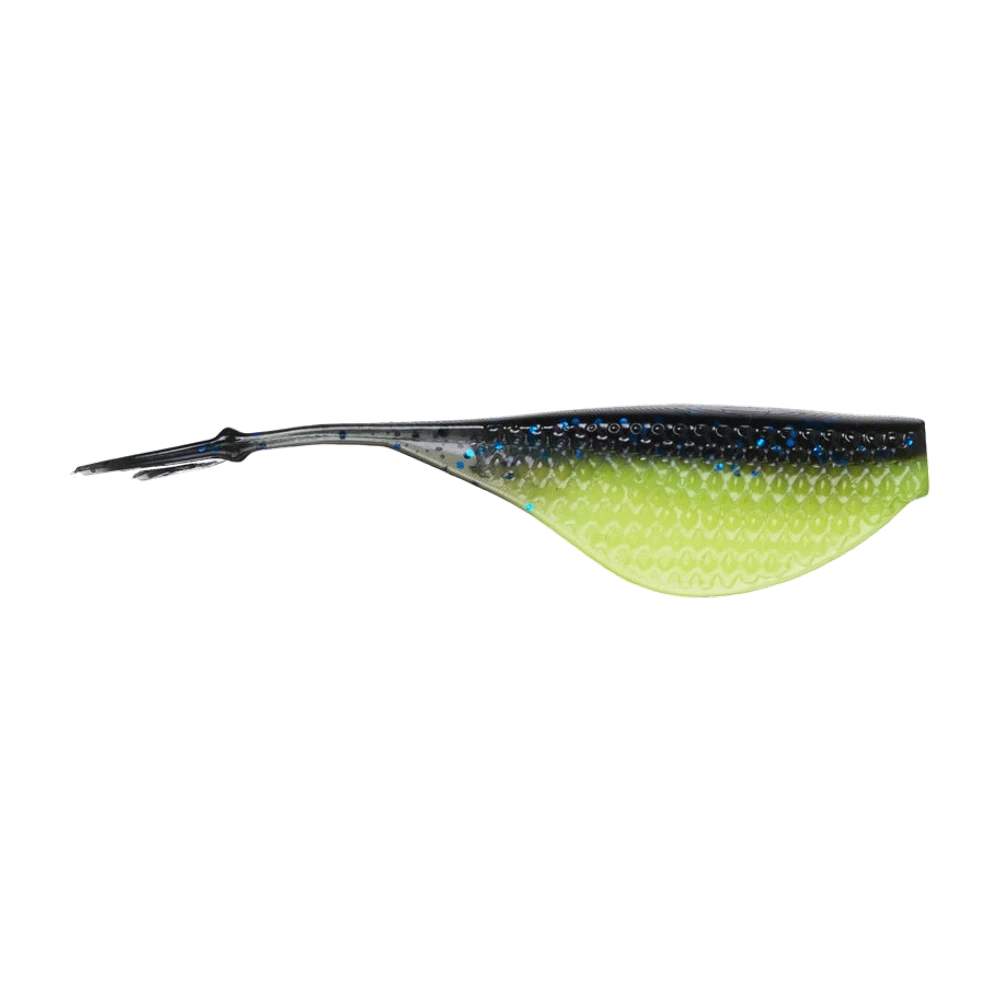
You spot a fish on the sonar, four metres under the boat, perfectly still. You drop your soft plastic right on top of it — and you cannot see the bait on the screen. The fish does not move either. The problem is not your drop: it is that your bait is too thin in the flank to return anything. The 6th Sense Clobber Minnow is drawn around that exact detail, and it explains an unusual profile for a 5 cm lure.
A short body that is deliberately deep in the flank
On a classic soft minnow you chase slimness: a cylindrical, discreet body that slides. The Clobber Minnow does the opposite — it is thick and above all tall, with wide flat sides, a volume that reads as a small bluegill or a young shad rather than a slender minnow. That has two consequences.
The first is visual. A flat flank throws light in flashes as the bait rolls, and that intermittent flash is exactly the signal that pulls a fish out of a holding position. The second is acoustic: a broad side reflects the sonar pulse far better. On forward-facing sonar the bait shows up clearly on screen instead of melting into the background, and you can adjust its height within a few centimetres of the fish you located. That is a huge comfort difference on this kind of sight fishing, where everything depends on presenting the bait just above the fish and never below it.
The split belly, and why it matters on the hookset
The other feature shows up when you pinch the bait: the belly is split along its length, so the body collapses easily under pressure. On a small soft plastic rigged on a thin hook, that is often where everything is decided. A solid, dense body acts as a cushion — the hook point has to drive through the plastic before it reaches the fish's mouth, and on a soft bite or a fish that sucks without clamping down, it never gets there. With a construction that folds, the point comes through immediately.
It sounds like nothing, but across a finesse day with fifteen subtle bites, it is the difference between five fish and ten.
A habit worth building with small soft plastics like this: do not strike upwards, reel into it. Drop the rod, take up line quickly and let the fish hook itself against the pull of the line. On a thin-wire hook and a small mouth, a hard strike tears out more fish than it hooks.
A presentation that comes down to two moves
The fluke style forked tail does not work on a continuous retrieve: it reacts to the twitch. Every small pull of the rod tip spreads the two points and closes them again, sending out a short sharp vibration followed by a glide. So the rhythm that works is always the same: two or three short taps, then a clear pause of two to four seconds while the bait glides back down.
The bite comes on the pause in the vast majority of cases. Keep the line just taut without pulling, and watch the line rather than the rod: when a fish takes the bait on the drop, you will see the line stop or move sideways before you feel a thing.
On a straight retrieve the Clobber Minnow still works, but without standing out: its tail is not built to generate a continuous beat. If you want a steady swimming action on the reel, a Z-Man Slim SwimZ or a Keitech Shad Impact 2 do that better.
Rigs
Finesse jighead
This is the main use. A round or slightly oval head, thin-wire hook, just enough weight to reach the depth without speeding the drop up: the slower the glide, the more credible the bait stays. At 3 to 6 m a light head is plenty; if you go deeper or the wind pushes you off, step the weight up gradually rather than all at once.
Thin-wire crappie style jig
The small jigs built with very fine hooks for soft-mouthed fish suit this bait perfectly, because they weigh little and do not kill the glide. This is the rig to favour on cautious perch and on fish you can see on screen that refuse everything else.
The mistake that kills the presentation
Rigging the bait crooked. A flat-sided soft plastic is very unforgiving: if it is not perfectly straight on the hook shank, it spins on the drop, twists the line and loses all of its glide. Thread it on slowly, check the alignment from the side and from above, and do not hesitate to pull it off and start again. Sold in twelves, you can afford to.
Not sure what to tie on?
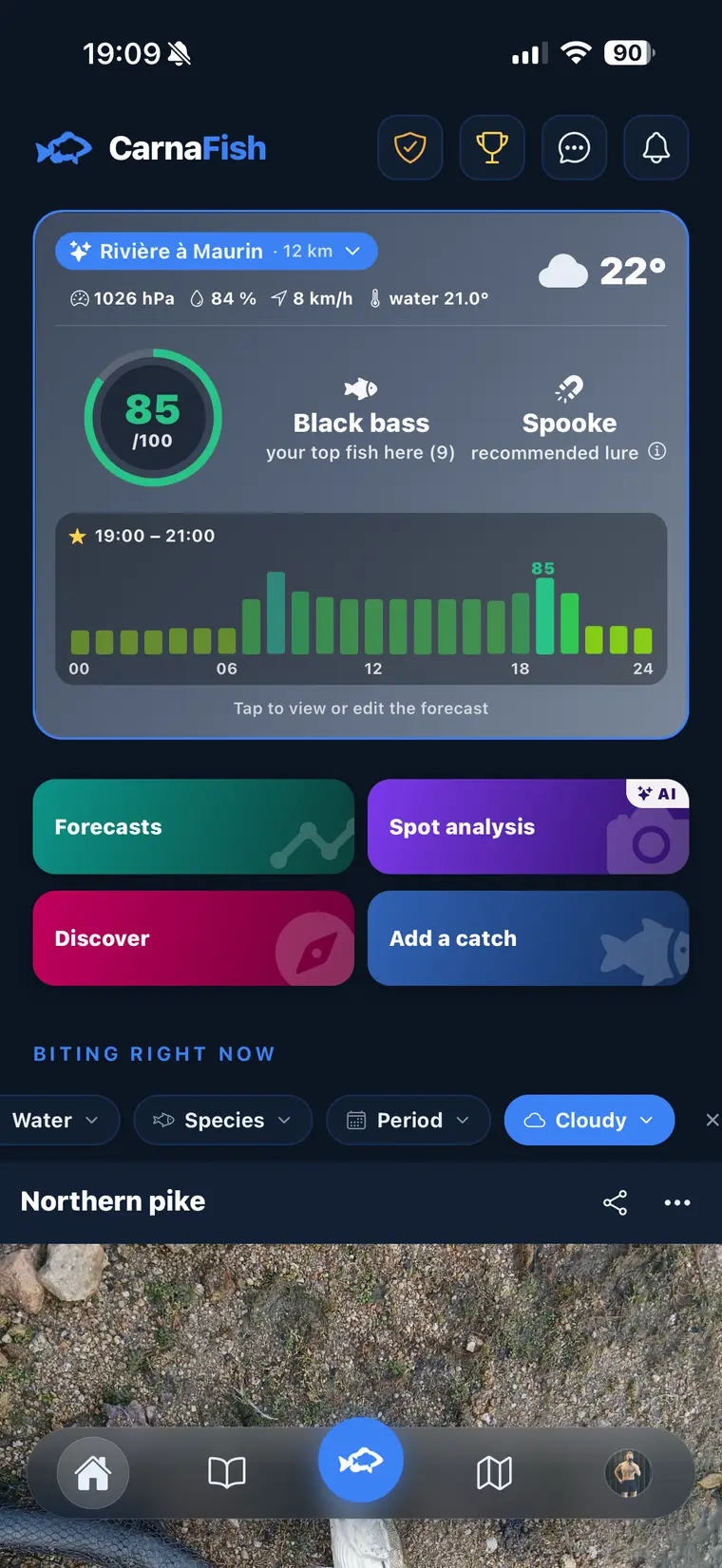
Photograph your spot: CarnaFish reads the scene, cross-checks the conditions and gives you the zone, the lure and the retrieve. Free on iOS and Android.
Colour by clarity and use
- Clear water, standard fishing: a translucent glitter pattern. The flat flank catches the flake and throws it back in flashes with every roll, without an over-defined silhouette.
- Sight fishing on sonar: pearl white or solid white. It is the colour you track best on screen and by eye when fish are shallow, and it mimics a young shad well.
- Pressured fish, heavy traffic: a dark blue-green or a dark natural tone, playing on silhouette rather than flash.
What it complements in the box
The Clobber Minnow is not a small shad: it is a minnow you have to work. So it logically complements a paddle tail like the Keitech Shad Impact 2 for the straight retrieve, and a longer, glidier bait like the Zoom Super Fluke when you want the same forked-tail mechanics in a big format for bigger fish. On a drop shot, the Z-Man Finesse ShadZ remains the better choice thanks to a slimmer body that nose-hooks more cleanly.
None of this finesse matters if you are fishing the wrong zone: knowing where the fish are holding before you drop a 5 cm bait is the real time saver. That is exactly what CarnaFish makes easier — a photo of the spot, and the app suggests the zone, the depth and the kind of presentation that suit the day. To dig into the basics of finding fish on light lures, our guide to perch fishing with lures covers the other families worth knowing.
Key takeaways
- The tall, flat-sided body is built to be seen, by eye and on forward-facing sonar.
- The split belly collapses on the hookset and lets the point through, which changes the conversion rate on soft bites.
- The cadence is always the same: two or three short taps, then a long gliding pause.
- Rigged crooked it spins and loses all its value. Check the alignment every time you re-rig.
FAQ
What is a tall body actually for on a 5 cm bait?
Two things: throwing light in flashes as the bait rolls, and reflecting the sonar pulse. On a sight fishing presentation where you follow your bait on screen, a wide flank makes it far more legible than a thin cylindrical body.
What jighead weight should I use?
The lightest that lets you reach the depth you want and still feel contact. The appeal of this bait is its glide on the pause, and a heavy head removes it. If drift stops you keeping contact, step the weight up gradually.
Do I need live sonar to fish this bait?
No, it works perfectly well on standard searching along a drop-off or a bank. The broad flank is simply an extra advantage if you are sight fishing, not a requirement.
Does it suit perch in Europe?
Yes, that is one of its best uses here: a 5 cm profile on a light head matches exactly what an active perch eats, and the split belly helps on the suction-style bites typical of the species.
Why does my bait spin on the drop?
It is rigged crooked on the hook. A flat-sided body does not forgive the slightest misalignment. Pull it off, thread it back on slowly, and check the alignment from the side and from above before you cast again.
How long does a bait like this last?
The split belly is also its weak point: re-rigging through the same hole eventually tears the body along the split. That is the accepted trade-off of the design, and it is why it comes in packs of twelve rather than singly.
The full bass lure guideSeason-by-season strategy: which family of lure, when, and why.Go from theory to fish
CarnaFish reads your spot from a photo and gives you the game plan: zone, lure, retrieve. Free on iOS and Android.