6th Sense Masterclass Panorama: the flat-sided shad in five sizes
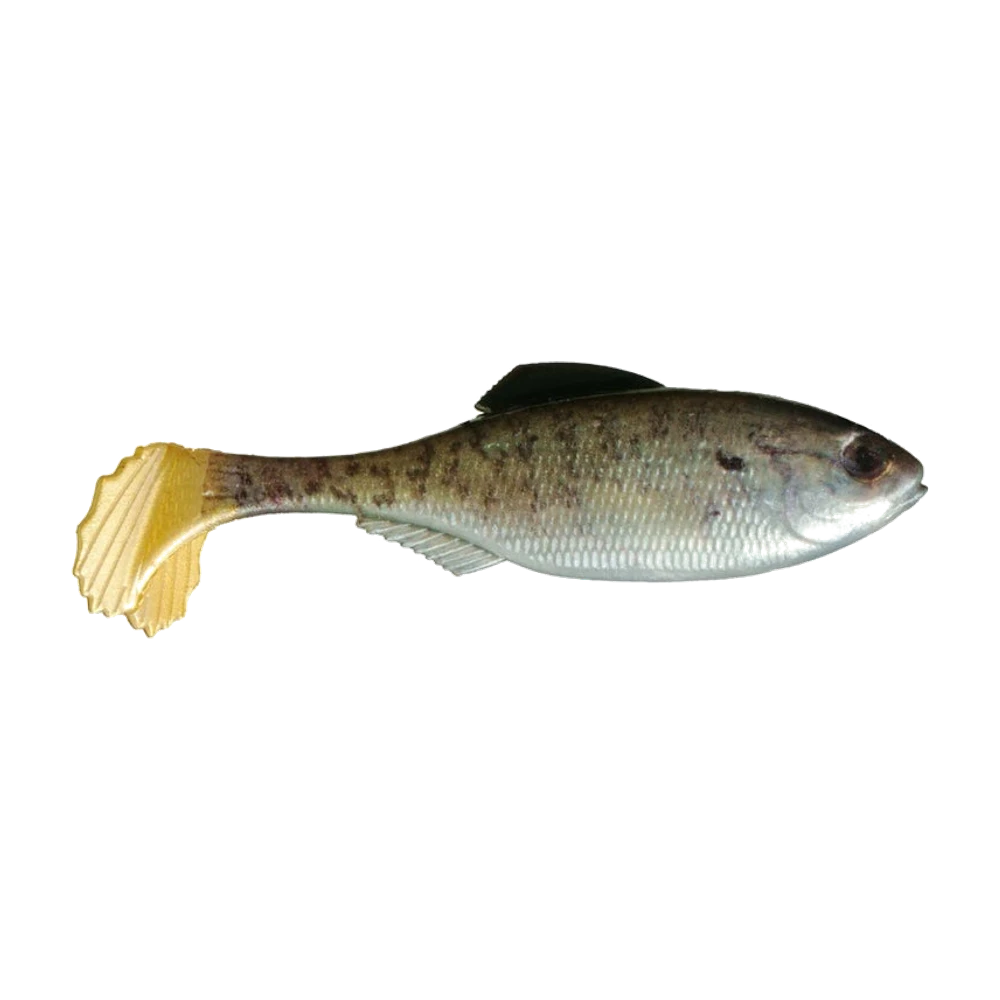
This lure shines under specific conditions. CarnaFish tells you in 10 seconds if today is one of them.
A school of baitfish exploding at the surface, tails flicking everywhere, and your casts going straight through it without triggering a thing. In that situation the predator is not looking for one more baitfish: it is looking for the one that cannot keep up with the group. A flat-sided shad, worked slowly just off the edge of the school, tells exactly that story. The Masterclass Panorama is built for it, and it comes in five sizes so the silhouette can match whatever forage is present.
Two constructions, not just a size range
The important thing to understand before buying is that the Panorama is not one lure offered in five lengths. There are two different constructions.
The three small sizes — 5.8, 7.4 and 8.9 cm — use a solid body. The plastic runs solid from back to belly, giving a durable bait that is easy to nose-hook and perfectly suited to a small hook or a light jighead.
The two large ones — 10.9 and 15.2 cm — use a split belly. A slit runs along the underside and houses the hook shank. That is what makes a genuinely weedless Texas rig possible on a bait this wide: the point tucks into the back, the shank disappears into the slit, and the silhouette stays clean. It also improves hooksets, since the plastic opens on its own under tension.
In other words, the small sizes are finesse baits and the large ones cover and volume baits. They are not the same tools.
A wide flank in thin plastic
The profile is deliberately flat and tall, the shape of a baitfish seen from the side. Two effects follow. First light: a wide flank throws far more flash than a cylindrical body, which matters enormously in clear water under sun. Second softness: 6th Sense chose a thin plastic that starts undulating under very little pull. You do not need to retrieve fast for the bait to work.
That is exactly what makes it an injured-baitfish imitation rather than a search shad: at slow speed the body rolls slightly, the tail quivers, and the whole thing reads as a fish that can no longer swim straight.
On an active bait school, do not cast into it. Cast three metres to the side and bring the lure back slowly, parallel to the school. A predator hunting by sight will pick the isolated silhouette over a meal in the middle of a hundred others every single time.
Choosing your size without guessing
- 5.8 cm / 2.3 in: difficult perch and bass on heavily pressured water. A 2 to 5 g jighead, or nose-hooked on a drop shot rig.
- 7.4 cm / 2.9 in: the most versatile freshwater size, equally good on perch and bass. A 3 to 7 g jighead.
- 8.9 cm / 3.5 in: when the forage is already grown, or to cover more water. Still manageable on light tackle.
- 10.9 cm / 4.3 in: the first split-belly size. The bass size for cover and weed edges, Texas rigged weighted or weightless.
- 15.2 cm / 6 in: reserved for big fish and big water. In saltwater, this is the size that genuinely interests a good sea bass.
The rigs, size by size
Jighead
The default on the three small sizes. Pick the lightest weight that reaches your target depth: the plastic is thin and an overweighted head crushes the undulation rather than using it. Over clean bottom, a light round head is plenty.
Texas rig in the split-belly versions
A wide-gap straight-shank hook, 4/0 for the 10.9 cm and 6/0 to 8/0 for the 15.2 cm. The belly slit takes the shank, the point tucks into the back. Fish it weightless for a very slow gliding fall above a weedbed, or with a 5 to 14 g bullet to drop faster along structure.
Drop shot
Nose-hooked on a single hook, in the 5.8 or 7.4 cm size, 20 to 40 cm above the weight. That is the most effective presentation on fish marked on sonar or on a precise vertical target.
The mistake that wastes the bait
Overweighting it. This is the recurring error on every thin-plastic shad, and it is particularly costly here. A heavy head makes the bait nose down, stiffens the body and removes the roll that defines the Panorama. You end up with a generic shad, having paid for its softness.
Second error: retrieving too fast. Past a certain speed the thin plastic pins back and the tail loses its amplitude. If you want to cover water quickly, use a thicker-plastic shad — a Keitech Swing Impact 4 will hold a fast retrieve much better.
Not sure what to tie on?
Photograph your spot: CarnaFish reads the scene, cross-checks the conditions and gives you the zone, the lure and the retrieve. Free on iOS and Android.
Colors by water
- Clear water: translucent silver finishes, which let light through and amplify the wide-flank effect. That is the default over a visible bait school.
- Lightly stained water: an olive back or a shiner tone, natural enough not to alarm but contrasted enough to be tracked across two metres.
- Low light, dawn or deep water: full white, the most readable silhouette once the bait's detail stops being visible.
Where it belongs in a shad box
The Panorama bets on soft plastic and a flat profile. Against a Keitech Easy Shiner 4 it offers a taller, more reflective silhouette but handles a brisk retrieve less well. Against a Z-Man Slim SwimZ it is bulkier in profile while staying just as soft. And for pure fall action, an O.S.P Dolive Shad remains more specialised. The Panorama is the shad to reach for when fish are looking at silhouettes from the side and refusing anything that swims too well.
It still has to land where the fish are holding, and that is exactly what CarnaFish does: a photo of the spot, and the app suggests the zone, the depth and a presentation suited to current conditions. For perch water and tackle, our guide to perch fishing with lures covers the sizes and rigs that work.
Key takeaways
- Two different constructions: solid body up to 8.9 cm, split belly in 10.9 and 15.2 cm. The rig follows from that choice.
- Thin plastic and a wide flank: the bait works at the slowest speeds but pins back if you speed up.
- Minimum weight is mandatory. A heavy head kills the roll that gives this lure its whole value.
- Cast beside a bait school, not into it: the isolated silhouette is what the predator is hunting.
FAQ
What is the difference between solid body and split belly?
The solid body, used up to 8.9 cm, is solid plastic throughout, which gives a durable bait that is easy to nose-hook. The split belly, on the 10.9 and 15.2 cm sizes, provides a slit that houses the hook shank for a weedless Texas rig and improves hooksets.
Which size should I choose for perch?
The 5.8 cm on difficult fish, the 7.4 cm in normal conditions. Beyond 8.9 cm the size leaves the proportions of a perch's prey, even if a big perch may still take it.
Can it be fished in saltwater?
Yes, 6th Sense intends it for salt as well. In European waters the 10.9 and especially the 15.2 cm match the size that genuinely interests a good sea bass. Rinse and dry the rig at the end of the session in that case.
Which jighead should I use?
The lightest one that reaches your target depth: 2 to 5 g for the 5.8 cm, 3 to 7 g for the 7.4 cm, 5 to 10 g for the 8.9 cm. An overweighted head stiffens the body and kills the undulation.
Does the Panorama handle a fast retrieve?
No, that is not its ground. The thin plastic pins back past a certain speed and the tail loses amplitude. To cover water quickly, switch to a thicker-plastic shad.
Does the thin plastic tear too easily?
It is more fragile than a standard shad, which is the price of that softness. On the solid-body sizes, a silicone bait stop behind the jighead extends the bait's life considerably.
The full bass lure guideSeason-by-season strategy: which family of lure, when, and why.Go from theory to fish
CarnaFish reads your spot from a photo and gives you the game plan: zone, lure, retrieve. Free on iOS and Android.