6th Sense Speed Wake: the wakebait that holds speed
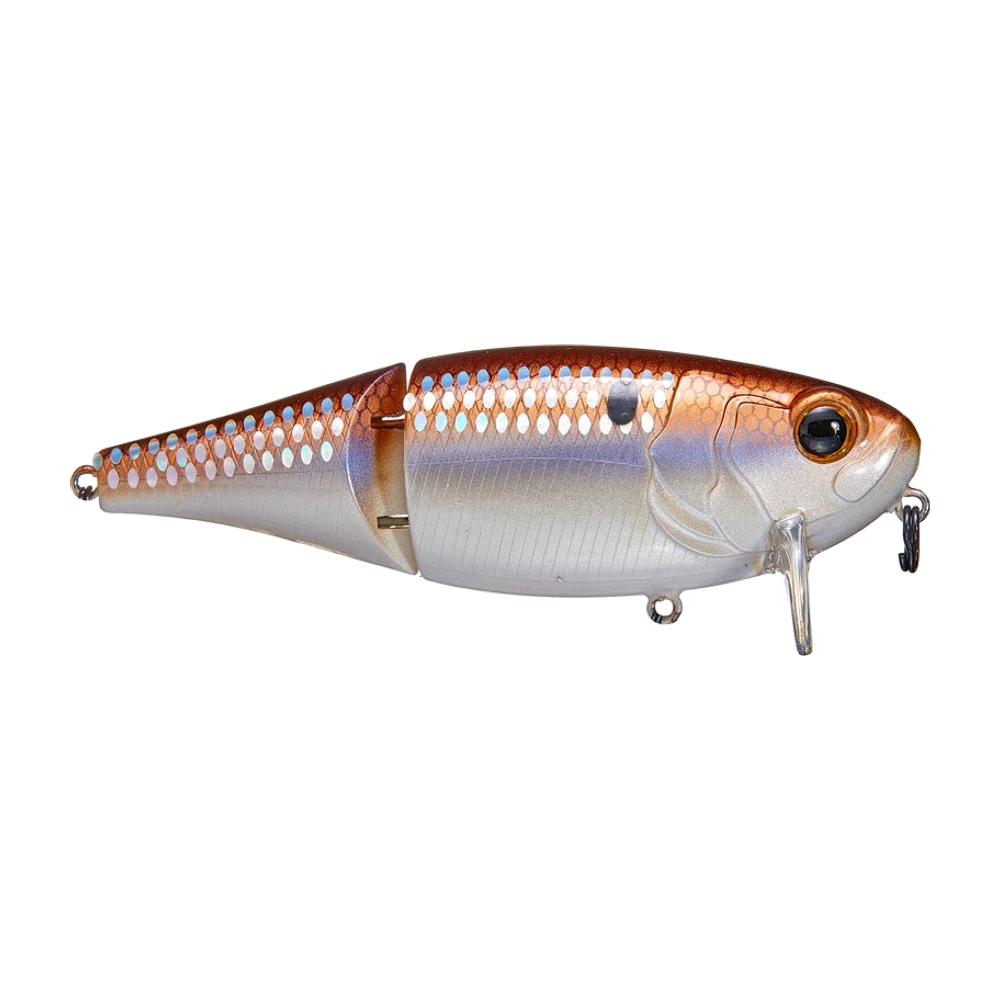
This lure shines under specific conditions. CarnaFish tells you in 10 seconds if today is one of them.
There is a precise moment in a summer day when fish refuse anything slow. Noon, white sky, water at seventy-five degrees, and bass that follow your lure without ever committing. The only thing still triggering them is speed — prey fleeing so fast the fish has no time to think about it. The problem is that nearly every topwater blows out of the water when you speed up. The 6th Sense Speed Wake is built around exactly that problem.
Keeping the lure in the water: the real design brief
A wakebait works a couple of inches under the surface and pushes a bulge of water ahead of it, a V-wake visible from the bank. It is that wake, not the lure itself, doing the calling: the surface disturbance travels a long way and fish holding on cover come out to see what moved.
The family's classic flaw is blowing out. Above a certain speed, a wakebait's bill no longer bites enough water, the lure rears up, breaks the surface and finishes the retrieve skating on top, making noise without resembling anything. 6th Sense state they designed the Speed Wake specifically for fast fishing so it stays below the surface without breaking out. In practice that is what allows a retrieve distinctly faster than a conventional wakebait's, and that is the whole point: you can fish at the speed the fish demands instead of the speed the lure tolerates.
Three spots where it belongs
6th Sense cite grass, stumps, trees and clear water. In practice that boils down to three situations.
The grass edge. You run parallel to the outer limit of the vegetation at a brisk pace, the lure passing a foot and a half off the edge. Fish holding in the weed see the wake coming from a distance and move out to intercept. This is the lure's most productive presentation, and the one most forgiving of a sloppy cast.
Around wood. Isolated stumps, laydowns, branch tangles. The lure passes over and alongside without grabbing as long as it keeps moving. Important nuance: the Speed Wake carries three hooks, which is dense hardware for a 4 in body. It noticeably improves the conversion rate on missed surface strikes, but it also multiplies snags the moment you slow down or pause in wood. Fish it moving and accept losing one now and then.
Clear water in bright daylight. This is the most interesting case. In clear water, a fish sees a slow lure coming from a long way off and has all the time it needs to refuse. Speed removes that analysis. A Speed Wake burned through transparent water at midday is one of the few presentations that still work when nothing else does.
The classic mistake: slowing down when nothing bites
Every angler's instinct, when a presentation produces nothing, is to slow down. On a fast wakebait, you need to do the exact opposite. A Speed Wake reeled too slowly no longer pushes enough water to create a readable wake, and it becomes an unremarkable little sub-surface crankbait.
The right method is to increase speed up to the blow-out threshold, then back off one notch and stay there. You find that threshold on the first cast by watching the lure: as long as it keeps a steady wake and stays submerged, you can speed up. The moment it rears up, you have gone too far.
The best strikes on this kind of lure come in the last two yards, once a fish has followed and the lure reaches the edge. Never snatch the lure out of the water: keep reeling right to your feet, and be ready for a fish to materialise out of nowhere at the end of the retrieve.
Rigging and hooks
Thirty-pound braid: casting distance matters on this lure, and low-stretch line is essential to set a hook at thirty yards on a sub-surface strike. A yard of 20 lb fluorocarbon leader, stepped up to 50-60 lb if pike share the spot — a 4 in lure fleeing fast near the surface is an excellent summer edge bait for pike.
The three stock hooks are black nickel and described as very sharp. They do not need replacing, but they do want regular checking: a lure you drag past wood and grass dulls its points far faster than an open-water bait. Avoid oversizing if you do replace them: with three hooks on a 4 in body the split rings already sit close together, and one size up causes fouling on every cast.
One point to know before buying: 6th Sense list the Speed Wake as sub-surface rather than topwater, and the published information does not specify how it behaves at rest. So do not build your presentation around a three-second pause the way you would with a floating popper — this lure is made to move, and it works by moving.
Not sure what to tie on?
Photograph your spot: CarnaFish reads the scene, cross-checks the conditions and gives you the zone, the lure and the retrieve. Free on iOS and Android.
Colours by light and surroundings
- Clear water over grass: a bluegill or roach imitation, with those textured gill plates catching the light. Bluegill is the forage 6th Sense explicitly cite as the reference for this lure.
- Dark bottom or green water: a dark natural back, green or brown, that does not clash with the surroundings. Sub-surface, a fish mostly sees a silhouette against the sky.
- Overcast skies or last light: a contrasting white. As light drops, the wake stays visible but the silhouette blurs, and a pale belly helps a fish frame its strike.
What it complements in the box
Against a Morethan Crosswake, a Japanese wakebait built for sea bass and current, the Speed Wake is stockier and more tolerant of speed, but less refined on a slow retrieve in calm water. Compared with a Baby 1-Minus, which also works just under the surface, it casts much further thanks to its density and holds its wake at speeds where the Mann's starts to break out. Against a Riser Bait the logic is close, but the Speed Wake is clearly speed-oriented where the Riser Bait takes varied cadences better.
And if you want outright noise rather than a wake, the same brand's Scramble plays in a different register: tail prop and internal knockers, built to call from a distance over a blow-up rather than to run an edge fast.
Still, knowing which edge to run, and at what hour, weighs more than the choice of model. That is exactly what CarnaFish is for: a photo of the spot, and the AI suggests a zone, a depth and a presentation style matched to the conditions. To learn to spot a productive edge before you cast, our guide to reading a fishing spot lays out the method.
Key takeaways
- Designed to stay submerged at high speed, where a conventional wakebait rears up and breaks out.
- Speed is the main adjustment: find the blow-out threshold on the first cast, then back off one notch.
- Three hooks on a 4 in body: excellent conversion on missed strikes, but guaranteed snags if you pause in wood.
- Listed as sub-surface by the maker, with no published word on behaviour at rest: this lure is fished moving.
FAQ
Does the Speed Wake come in several sizes?
6th Sense list a single format, the Speed Wake 100, given as 4 in for 7/8 oz — about 10 cm and 24.5 g — in the sub-surface class. Variation is in the colours.
What is the difference between a wakebait and a topwater?
A topwater works on the water and makes noise: a pop, a slap, a prop churning. A wakebait works a couple of inches below and pushes a V-wake, a subtler signal that carries a long way and disturbs a wary fish in clear water less.
How fast should I reel it?
Fast — that is the lure's whole principle. On the first cast, find the speed at which it starts rearing up and breaking the surface, then stay just below it. Reeled slowly, it loses its wake and holds no particular advantage.
Can you fish it in sunken wood?
Alongside and over it, yes, as long as it keeps moving. With three hooks on a 4 in body, the slightest slowdown against a branch ends in a snag. In a dense tangle, a Texas-rigged soft plastic remains the right tool.
Does the Speed Wake work for pike?
Yes, it is a good summer and early-autumn edge bait for pike over shallow weed. Fit a heavy 50-60 lb fluorocarbon leader without exception: a pike hitting a fast-moving lure leaves no margin on a thin leader.
Should I replace the stock hooks?
No, they are black nickel, described as very sharp, and they are fine. Just check the points regularly, because rubbing grass and wood dulls them quickly. If you do replace them, keep the same size: one size up makes the hooks foul each other on such a short body.
The full bass lure guideSeason-by-season strategy: which family of lure, when, and why.Go from theory to fish
CarnaFish reads your spot from a photo and gives you the game plan: zone, lure, retrieve. Free on iOS and Android.