Dirty Jigs JT Kenney Grass Wizard: the jig that splits a grass bed
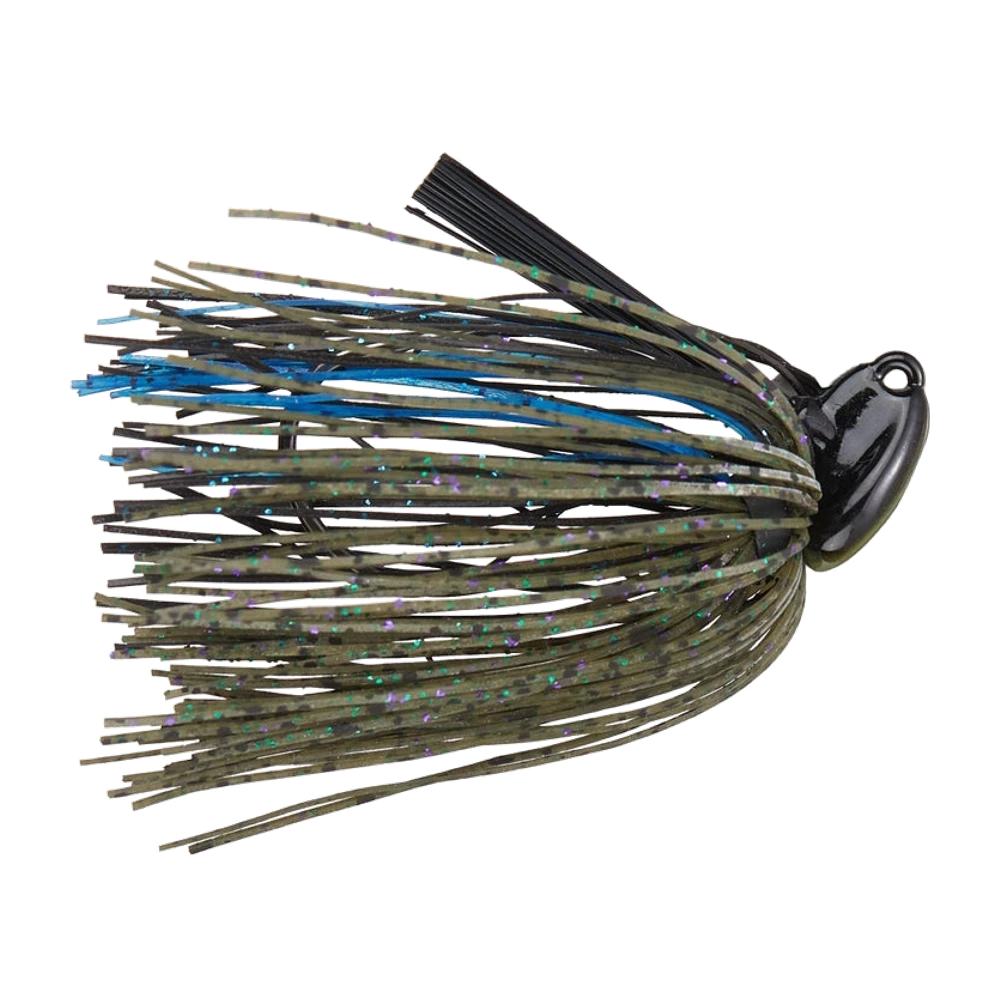
The right lure in the wrong spot still catches nothing. CarnaFish spots the zone that works, from a single photo.
A standard jig pitched into a thick grass bed comes back with a green cork on the end of the line, and the angler strips it clean for the fifteenth time that morning. The problem is neither the weight nor the trailer: it is the shape of the head. JT Kenney, who built much of his career fishing vegetation, drew this jig with Dirty Jigs to fix that exact point.
An arrow-shaped head, weighted under the belly
Two geometric choices define this lure entirely, and they work together.
The first is the arrow profile. The head is pointed and tapered, drawn to part stems rather than gather them. A round or half-sphere head leans on the vegetation and packs it in front of itself; a fine point opens a gap and lets the mass follow in its wake. In mid-depth grass the difference is counted in how many times an hour you strip the lure clean, and that number often decides the day.
The second is the belly weighting. The lead is not spread around the line tie but concentrated under the shank. That deliberate imbalance acts as a keel: during the fall the jig settles hook-point-up and holds that attitude all the way down. It is exactly what you want in vegetation, where a jig that rolls over presents its point to the first stem it meets.
The result is a lure that drops fast, straight and threading its way through — and that arrives on the bottom in the right position, ready to hook.
The toothpick keeper, a detail worth having
Dirty Jigs makes a point of its toothpick bait keeper collar, and that is not filler. On a flipping jig the trailer creeps backward cast after cast; by the fifth pitch it hangs crooked and the whole package spirals down instead of falling straight.
The angler sees none of this. He goes on fishing with a lure that no longer does what he thinks it does, and blames the absence of fish.
The fine-pointed collar runs through the nose of the trailer and locks it mechanically. In practice, you can pitch to the same spot ten times in a row without reaching up to slide the plastic back. On a technique where rhythm matters — fifty to a hundred pitches an hour along an edge — that detail changes more than a colour ever will.
Pitch the jig and count the fall in your head, keeping just enough tension to see the braid. If the fall stops before the count you expect, that is a bite, not a stem. Nine flipping bites out of ten show up on the line and never on the rod tip.
Exposed point and weed guard: a deliberate trade-off
Dirty Jigs fits a sharpened Mustad hook, chosen to penetrate quickly when you set through a wad of vegetation. The maker describes an exposed hook combined with a weed guard, and claims a better hook-up and landing ratio in dense cover.
It is worth understanding what that means on the water. A point fully buried in the trailer is extremely weedless but forces you to set hard so the point can clear the plastic before it reaches anything. An exposed point protected by a fibre guard bites immediately, at the cost of a few extra hang-ups on the toughest stems. The Grass Wizard picks the second camp: it snags slightly more, it hooks distinctly better.
The trailer and its job
The trailer sets the fall rate as much as head weight does. A craw with wide flat pincers such as a Strike King Rage Craw or a Zoom Z-Craw slows the drop and keeps the appendages beating the whole way down: that is the rig to favour when fish are sluggish and need time to come up.
A compact trailer with slim appendages does the opposite: it lets the jig fall fast and straight, which is better when the vegetation layer is thick and you need to punch through before a stem grabs the lure.
The classic mistake: too light a jig
The cautious reflex is to go light "so as not to spook them". In dense vegetation that reasoning fails. A jig that is too light never reaches the bottom: it settles on the first layer of grass, a metre under the surface, and the fish sitting below never sees it.
The right criterion is the weight that punches through the vegetation in a single fall, without hesitating. If the jig stalls halfway twice in a row, go up a size. Dirty Jigs offers several weights without publishing the grid in its description, so read the packaging on the reference you buy.
Not sure what to tie on?
Photograph your spot: CarnaFish reads the scene, cross-checks the conditions and gives you the zone, the lure and the retrieve. Free on iOS and Android.
Where and when it takes over
This is a vegetation lure, and only a vegetation lure. Thick grass, lily pads, reeds, pondweed edges, mats of filamentous algae: anywhere you cannot retrieve anything in a straight line. Over a clean bottom it adds nothing a football jig does not do better by design.
The main season runs from late spring into autumn, when the vegetation is grown and bass tuck into it for shade, cool water and food. In summer, in the middle of the day, it is often the only lure that produces: the fish are under the grass, and you have to go and get them where they are.
Colors by water and vegetation
- Clear water over green grass: green pumpkin with green and purple flake, like the finish in the photo. The colour disappears into the vegetation and the flake gives a contrast point when light gets through.
- Low light, dark water: black and blue, which gives the cleanest silhouette once a fish can no longer read shades.
- Stained water: a two-tone paint scheme with a dark dominant, the dark top marking the silhouette seen from below while the underside stays more discreet.
Knowing which part of a grass bed deserves fifty pitches and which deserves none is the real skill in this style of fishing. CarnaFish helps directly: one photo of the spot, and the AI suggests the zone, the depth and the presentation that fit the day's conditions. For everything about reading edges and structure, our guide to reading a fishing spot pairs well with this page.
Key takeaways
- An arrow head to part the stems and belly weighting to fall straight, point up: the two choices that define this lure.
- The toothpick keeper holds the trailer straight cast after cast, which matters enormously at a hundred pitches an hour.
- Exposed point plus weed guard: slightly more hang-ups, distinctly more fish hooked.
- Too light is worse than too heavy: the jig has to punch through the vegetation in a single fall.
FAQ
Why an arrow-shaped jig head?
Because it parts vegetation stems instead of packing them in front of itself. The jig opens a gap and drops through its own wake, where a round head collects a wad of grass on every fall.
What does belly weighting achieve?
It acts as a keel. The jig settles hook-point-up for the whole fall and arrives on the bottom in that attitude, which limits hang-ups and improves hooking.
What weight should I pick for fishing grass?
The weight that punches through the vegetation in a single fall without stalling. Too light and the jig sits on the first layer of grass, and the fish underneath never see it. Dirty Jigs does not break down its weights in the description: read the packaging.
Which trailer should I run on the Grass Wizard?
A wide-pincer craw if you want to slow the fall and keep the appendages working; a compact trailer with slim appendages when you need to punch quickly through a thick layer. The toothpick keeper locks either one.
How do you detect a flipping bite?
On the line, almost never on the rod tip. Pitch the jig, keep just enough tension to see the braid, and count the fall. If it stops short of the expected count, set the hook.
Is this jig any good over a clean bottom?
Not really, that is not its ground. On hard open bottom a football jig keeps contact and tells you far more about the substrate. The Grass Wizard earns its place the moment vegetation becomes the main problem.
The full bass lure guideSeason-by-season strategy: which family of lure, when, and why.Go from theory to fish
CarnaFish reads your spot from a photo and gives you the game plan: zone, lure, retrieve. Free on iOS and Android.