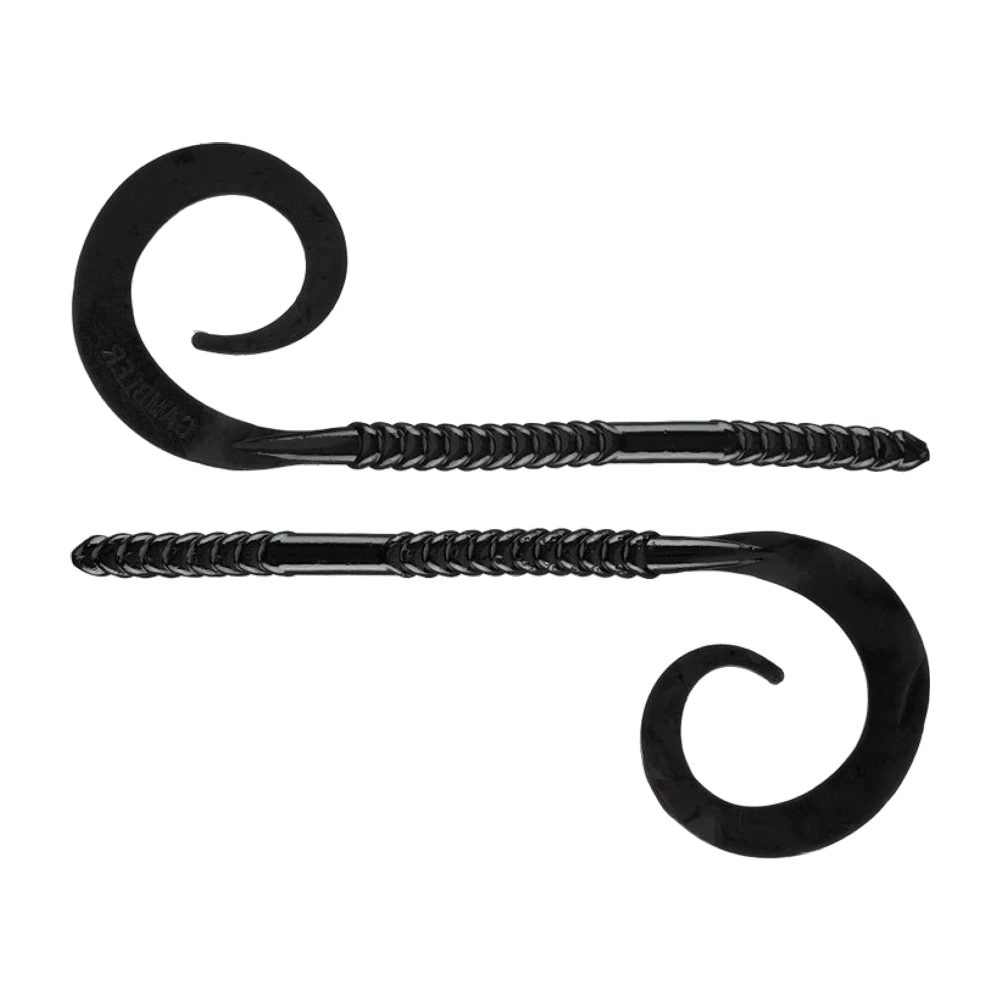
Gambler 13 in Ribbon Tail Worm, 33 cm built to sort out the big ones
Before tying this one on, it helps to know if the spot actually calls for it. CarnaFish reads the scene from a photo.
There are two ways to fish a tournament day: fill the livewell, or go after the fish that changes the standings. The Gambler 13 in belongs squarely to the second category. Thirty-three centimetres of soft plastic is a lure that cuts the number of bites and raises the average size of the ones you do get. Worth knowing before you tie it on.
What the maker publishes, and what it does not
The table has two columns: 13 in, that is 33 cm, in packs of 5. That is all.
There is no per-bait weight and no class column. Two pieces of information are therefore missing, and it is better to flag them than to invent them. The weight first: on a worm this size the mass of plastic is not trivial and genuinely affects how fast the rig sinks, but no official figure lets you estimate it. Buoyancy next: with no class given, there is no way to state whether the bare body sinks, floats or sits neutral. In practice the question rarely comes up, since this bait is almost always fished weighted, but the difference shows in how the tail sits during pauses — and the only way to know is to drop one in water yourself.
What is clearly stated is the attractant: the worm is loaded with Gambler BITE, presented as drawing fish in and, above all, making them hold on longer. It is that second function that matters here. On a 33 cm worm fished Texas-style, the delay between the fish taking and you being able to set the hook is everything that separates a hookup from a spat-out bait.
A ribbon tail designed against fouling
The tail is the central selling point, and the interesting detail is not that it waves — every ribbon tail waves — but that it is wider at its base. The maker explains why: that is what stops it wrapping around grass and stick ups.
The mechanism is simple. A classic ribbon tail attaches to the body through a thin section: when it meets a blade of grass it winds round it like a shoelace and the bait arrives dead, balled up. Widening the base stiffens the junction, the tail turns around the body instead of folding onto itself, and the bait comes back clean. On a worm meant for weed and sunken wood, that is not cosmetic: it is what lets you cast repeatedly without checking the lure every time.
Before you cast, swim the worm through the water at your feet for a couple of metres. If the tail opens and waves straight away, the rig is straight. If it spins on itself or stays glued to the body, the worm is twisted on the hook: re-rig it. Five seconds of checking saves ten wasted casts.
Two rigs, two uses
The Texas rig
This is the default. A bullet weight of 7 to 21 g depending on depth, weed density and wind, and a wide-gap worm hook in 5/0 to 7/0 — over 33 cm of body, a hook that is too small leaves too much free plastic and multiplies missed hooksets.
The retrieve is deliberately sparse: cast, let it drop while watching the line, then one wide rod pull, and wait. A long time. The tail keeps waving through the whole fall, and that is overwhelmingly where the bite comes, not during the pull. An angler who works this bait continuously throws away its only real asset.
With an unpegged weight, the worm separates from the lead on the fall and glides longer: that is the version to favour in clear water and on wary fish. With the weight pegged by a stopper, the whole rig punches through dense vegetation better.
The Carolina rig
A heavy weight on the main line, a swivel, then a long leader — 60 cm to 1.20 m — before the hook. The worm then works freely, above bottom, while the weight ploughs the substrate a few tens of centimetres ahead. On a large 2 to 5 m flat where fish are scattered, that is clearly more effective than a Texas rig, because you cover water without speeding the bait up.
Not sure what to tie on?
Photograph your spot: CarnaFish reads the scene, cross-checks the conditions and gives you the zone, the lure and the retrieve. Free on iOS and Android.
Where and when to pull out a 33 cm worm
The right window is summer and early autumn, when big fish have settled on precise spots and no longer move much. The lies worth the effort: dense weed edges, the foot of a drop-off, sunken wood, and more generally anywhere a big fish can hold without effort.
The limit is obvious and should be owned: this worm gets fewer bites. Far fewer. If you want action, a Berkley PowerBait Power Worm in 15 to 20 cm or a 6th Sense Boosa 9.6 Ribbon Tail Worm will give you many more fish in a day. The 13 in earns its place when you know big fish are present and you accept blanking on some days.
The classic mistake
Setting on the first sensation. On a bait this long a fish often takes the tail first, and what you feel in the rod at that moment is not the hook in its mouth but a pinch forty centimetres from the hook. Drop the rod, give it a second or two, wait for the weight to become continuous, then set hard by pulling rather than lifting. That delay is exactly where the attractant earns its keep.
Colors by water
- Stained water or cluttered bottom: the black shown in the photo, or a junebug. On this much plastic, silhouette dominates, and black gives the cleanest outline seen from below.
- Clear water: a green pumpkin, closer to what a wary fish accepts when it gets to inspect the bait before committing.
- Low light, early or late: stay on a dark, plain tone. A detailed pattern adds nothing at that hour, and the worm works first through its volume and its waving tail.
A bait that deliberately cuts the number of bites does not forgive a bad choice of spot, and that is exactly where CarnaFish saves time: one photo of the water and the AI suggests the zone, the depth and the lure type that fit the day. To know when to pull out this kind of volume, our guide to predator fishing season by season sets the frame, and the Zoom Trick Worm covers the other end of the range when you need numbers.
Key takeaways
- One size only: 13 in, that is 33 cm, in packs of 5. Neither weight nor buoyancy class is published.
- The ribbon tail is deliberately wider at its base so it does not wrap in grass and wood.
- Everything happens on the fall and during pauses, not during the pulls: move it little and wait a lot.
- A culling bait, not a numbers bait: fewer bites, a markedly higher average size.
FAQ
What size is this worm exactly, and how many come in a pack?
One length in the catalogue, 13 in or 33 cm, packed five to a bag. Those are the only figures the maker publishes; neither per-bait weight nor buoyancy is given.
What hook do I need for a 33 cm worm?
A wide-gap worm hook in 5/0 to 7/0, depending on how you thread the bait. A hook that is too small leaves too much free plastic between the point and the tail, and that is the main cause of missed hooksets at this size.
Why is the tail wider at its base?
Because that width is what stops it wrapping around grass and sunken branches. A thin base folds over like a shoelace at the first contact and the bait comes back balled up, with no action.
Should I set the hook immediately?
No, that is the most expensive mistake with this bait. A fish often takes the tail first: drop the rod, allow a second or two, wait for the weight to become continuous, then set by pulling.
Does the Gambler 13 in get fewer bites than a normal worm?
Yes, considerably, and that is the point: it is built to cull for size. If you want action across a day, a 15 to 20 cm worm will produce far more bites for a lower average size.
What is the attractant it is loaded with for?
To draw fish in, but above all to make them hold on longer. On a worm this length, those extra fractions of a second are exactly what gives you time to set the hook properly.
The full bass lure guideSeason-by-season strategy: which family of lure, when, and why.Go from theory to fish
CarnaFish reads your spot from a photo and gives you the game plan: zone, lure, retrieve. Free on iOS and Android.