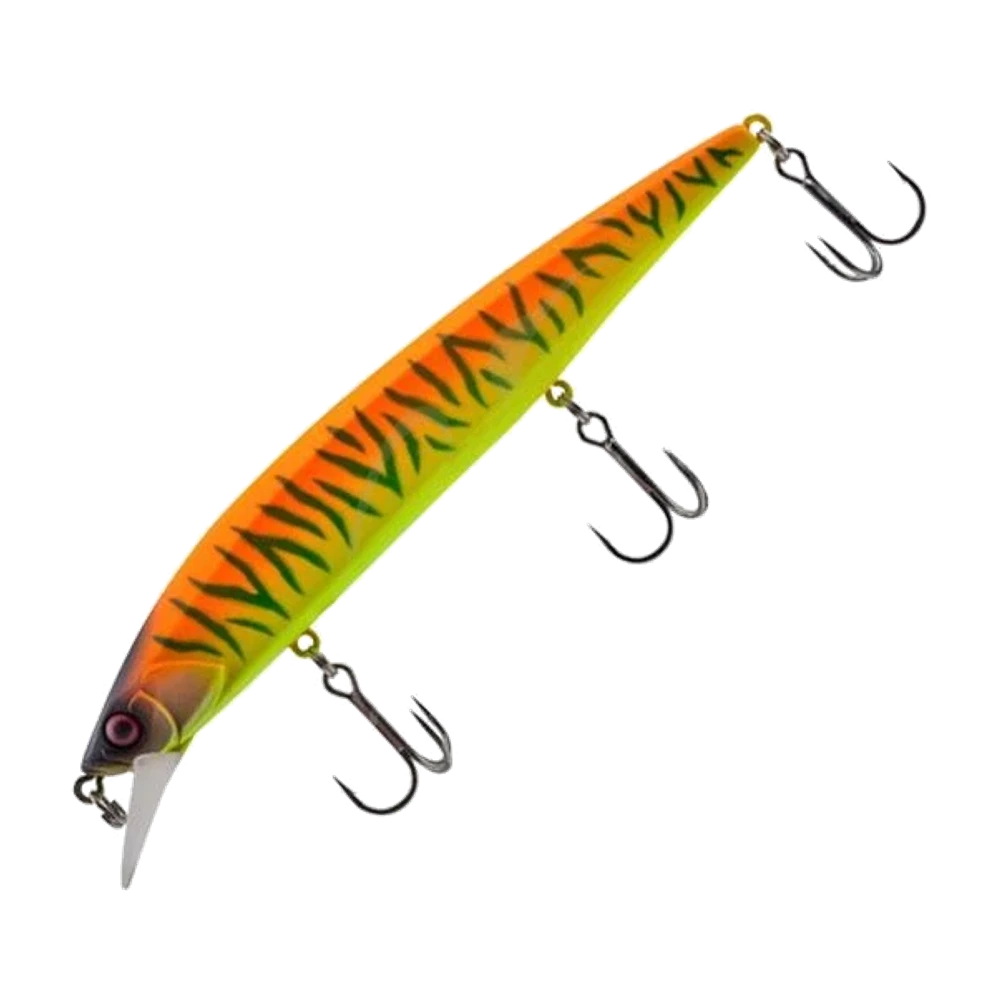
Jackall Rerange: the jerkbait that never leaves its lane
Before tying this one on, it helps to know if the spot actually calls for it. CarnaFish reads the scene from a photo.
There are spots where the usable width is measured in centimetres. A metre-and-a-half channel between two bands of lily pads. The gap between two jetty posts. The strip of open water along a rocky drop-off that you have to track without ever straying from it.
On those spots, a wide-darting jerkbait is a problem. On every twitch it shoots forty or fifty centimetres sideways, catches the vegetation, hits the post or wanders away from the rock. You spend the session unhooking and you never really fish the line you meant to fish.
The Rerange is built for the opposite use. Its darts are short, sharp, and immediately followed by a return to the axis. The lure zigzags without ever leaving a lane about sixty centimetres wide, and that is what makes it a precision tool rather than a searching tool.
The tight dart: what you gain, what you lose
A wide-amplitude jerkbait produces an unpredictable path that leaves the fish's field of view and comes back into it. That is very effective on scattered fish in open water, and unmanageable in a confined space.
The Rerange makes a different technical choice, and the consequences are direct:
- A controlled path. You know where the lure is at every instant, which lets you track an obstacle at thirty centimetres without touching it.
- A higher frequency. Because each dart is short, you can string far more of them together over the same length of retrieve. Over an eight metre channel you place twelve to fifteen twitches instead of five.
- Less loss of speed. The lure sets off again immediately, which keeps progress steady and avoids leaving slack.
- Less calling power at range. That is the flip side: a fish sitting five metres off to the side will not see the Rerange the way it would see a wide-darting jerkbait.
The practical conclusion is clear: this lure wants to be put where the fish is, not asked to go and find it.
The retrieve: short cadence, clean pause
- Place your cast carefully. On a narrow spot, the angle the lure enters at matters more than the retrieve. Cast down the line of the channel, not across it.
- A turn and a half of the handle to bring the lure to between 1.2 and 1.8 m.
- Three to five short, closely spaced twitches, wrist only, rod tip down, taking up the slack between each. The rhythm is a cadence, not isolated strokes.
- A pause of two to five seconds depending on temperature. The lure settles flat immediately and holds its depth.
- Repeat to the bank, holding the same swimming line the whole way.
- Over the last five metres, slow down further: plenty of followers bite as you approach the bank or the boat, on a pause.
On the water: on a narrow spot, do not change your retrieve when nothing is biting — change your casting angle by fifteen degrees and run the same thing again. In a channel or along a drop-off, the angle at which the lure enters the fish's field of view weighs far more than the cadence of the twitches.
Settings by target and season
| Situation | Pause | Line / leader |
|---|---|---|
| Bass, water above 15 °C | 1 to 2 s | 0.25 mm fluorocarbon |
| Bass, 10 to 15 °C | 3 to 5 s | 0.25 to 0.30 mm fluorocarbon |
| Pike, clear water, spring | 3 to 6 s | 0.50 mm fluorocarbon leader |
| Pike, stained water | 2 to 3 s | 20 cm soft wire leader |
Two rigging points are worth respecting. Line diameter shifts the running depth by around twenty centimetres between 0.25 and 0.30 mm: that is far from negligible when you are trying to pass just above a weed bed. And a pike leader is unavoidable as soon as the species is present: twenty-five centimetres of 0.50 mm fluorocarbon is enough in clear water, while soft wire becomes essential when visibility drops and takes get more decisive.
On hooks, stay with trebles of the same wire diameter as the originals. A heavier model sinks the lure on the pause and kills the depth hold, which is the other half of its interest.
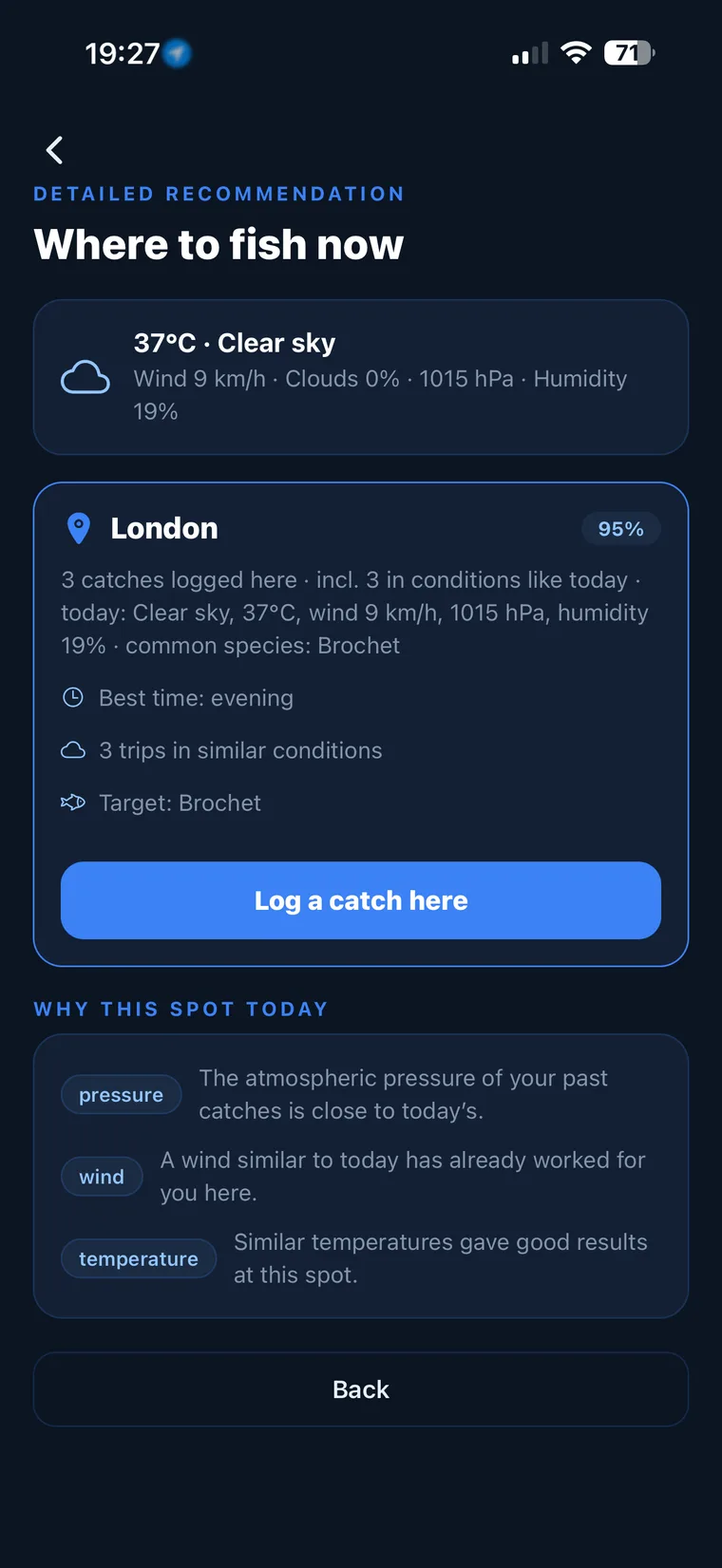
Not sure what to tie on?
Photograph your spot: CarnaFish reads the scene, cross-checks the conditions and gives you the zone, the lure and the retrieve. Free on iOS and Android.
Its ground, and the ground to avoid
It excels in everything narrow, structured and identified: weed channels, lily pad edges, jetties, posts, fallen trees, rocky drop-offs, narrow river mouths. Its temperature window is broad, from 8 to 20 °C, with a peak in spring and autumn.
On pike it is especially relevant in spring in clear water, on fish sitting in shallow margins that refuse bulkier lures.
It is on the other hand unsuited to large empty areas, where you would need ten times more casts than with a searching jerkbait to cover the same ground. The same goes for very murky water, where its short darts do not displace enough water, and for deep ground, which it does not reach.
Rerange, Provoke or Pointer
The three jerkbaits cover three different logics and it is useful to set them clearly against each other.
The 6th Sense Provoke is the lure of space: long casts, wide darts, sweeping big flats. The Lucky Craft Pointer 100 is the lure of time: a very stable suspend and endless pauses for apathetic fish. The Rerange is the lure of line: a path held to the centimetre, on a spot you have already identified.
Within Jackall, the most useful comparison is perhaps with the TN 70, which covers the same margins but through vibration and on the drop, where the Rerange plays on sideways flash and depth hold. In stained water or cold weather the lipless often comes out in front; in clear water on visible fish it is the other way round.
Our guide to choosing a pike lure covers the margin situations where this kind of jerkbait beats bulkier lures. And if you are unsure what swimming line to aim for in a weed channel, CarnaFish analyses a photo of the spot and answers.
Key takeaways
- Short darts and an immediate return to the axis: the lure holds a lane about 60 cm wide.
- A precision tool for an identified spot, not a searching tool.
- A cadence of three to five close twitches, then a pause of 1 to 6 s depending on temperature.
- When nothing bites, change the casting angle before you change the retrieve.
- A leader is compulsory as soon as pike are present; keep trebles at the original wire diameter.
FAQ
What is the difference with a wide-darting jerkbait?
The Rerange moves sideways over a reduced amplitude and comes straight back to the axis, which lets you track an obstacle without catching it. A wide-darting jerkbait calls from further away but becomes unmanageable in a tight space.
How deep does the Rerange swim?
Between 1.2 and 1.8 m depending on line diameter and rod angle. Fluorocarbon of 0.30 mm makes it work around twenty centimetres higher than 0.25 mm.
Do you need a leader for pike?
Yes, as soon as the species is present. Twenty to twenty-five centimetres of 0.50 mm fluorocarbon does the job in clear water; switch to soft wire in stained water, where takes are more decisive and less well placed.
How many twitches should you string together?
Three to five short, closely spaced twitches, then a pause. Unlike wide-amplitude jerkbaits, cadence matters more here than the intensity of each stroke.
Is it any good for searching large areas?
No. Its small calling radius and tight path make it a lure for a spot you have already identified. To sweep a big flat, a long-casting jerkbait will pay off far better.
Can you change the stock hooks?
Yes, provided you keep the same wire diameter. Heavier trebles sink the lure during the pauses and lose it the depth hold that makes up half its interest.
The full bass lure guideSeason-by-season strategy: which family of lure, when, and why.Go from theory to fish
CarnaFish reads your spot from a photo and gives you the game plan: zone, lure, retrieve. Free on iOS and Android.