Jackson Gyro Pop: turning missed bass strikes into hooked fish
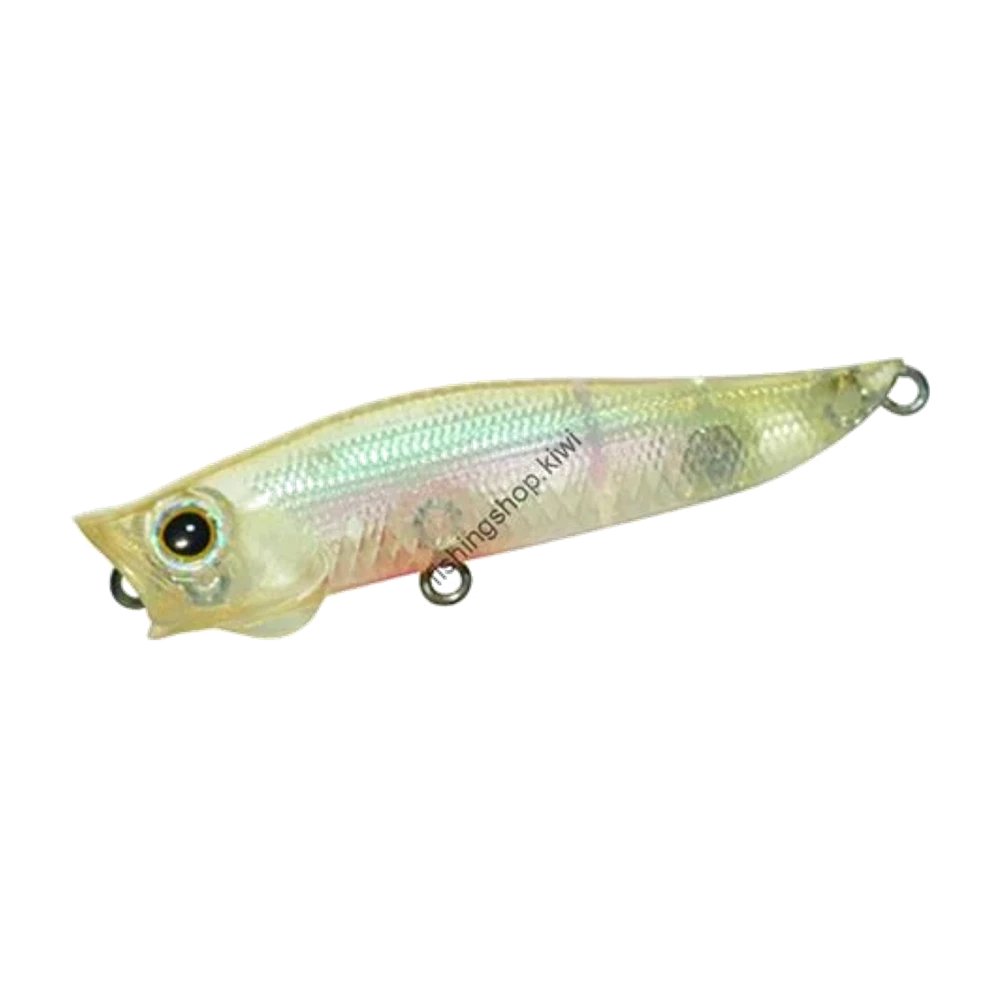
This lure shines under specific conditions. CarnaFish tells you in 10 seconds if today is one of them.
Everyone has been there: the bass explodes on the popper, water flies, you set the hook, and there is nothing on the end. Three times in a row. With a saltwater topwater, the real problem is almost never getting the fish to come up — it is getting it hooked.
The reasons are mechanical. A popper that throws a wide spray buries itself in foam and the fish attacks water. A popper that slides sideways on the pop is no longer where the bass had aimed. And a popper that sits dead after the pop gives the fish three tenths of a second to realise its mistake.
The Gyro Pop works on all three at once: a short, vertical spray, an immediate return to the line of retrieve, and the ability to restart with no dead time. It is a percentage popper, not a finesse popper.
A high spray rather than a wide one
The mouth of the Gyro Pop is cupped so that it throws water upward instead of spreading it in a sheet in front of the lure. Three concrete consequences:
- The column of water stays visible from a distance, even on a rippled sea, because it climbs instead of collapsing. Over a washed-over reef, that is what lets a bass locate the lure from ten metres away.
- The lure stays clear. Less foam around the body, so a crisp silhouette at the moment of the strike. The fish aims at the lure, not at a cloud of bubbles.
- Resistance on the pop is low. You can string pops together without the lure digging in and locking up the rod.
The second characteristic is less visible but decisive: it does not slide sideways. Plenty of poppers hook off to one side on every pop. That is appealing on curious fish, and a handicap on fast bass attacking from directly below. The Gyro Pop comes back into line between pops, which makes its path predictable for the fish — and for you.
The retrieve: short cadence, never a long silence
Unlike freshwater poppers, which you fish with long pauses, this one is fished continuously.
- Cast as far as you can and close the bail with the rod low, tip almost skimming the water.
- Tighten the line by taking up the slack. A popper will not pop properly with slack line trailing.
- String two or three close-spaced pops together, sharp 20 to 30 cm wrist snaps, reeling in between each.
- Pause for one second at most. Not three, not five. Just long enough for the spray to fall back.
- Get going again immediately. The steady rhythm is what convinces a bass to commit to a chase.
- Do not set on the sound. Keep the motion going and set when you feel the weight. That single correction changes more than anything else.
On the water: when a bass misses twice in a row, do not slow down — speed up. A popper that escapes triggers a third attack far more often than a popper that stops, because stopping gives the fish time to inspect and refuse. Slowing down is a freshwater reflex that does not work here.
A useful variant on a flat sea with wary fish: replace the sharp pops with a continuous scratching retrieve, fast and steady, just making the mouth bubble without a real spray. The lure leaves a foamy wake instead of a series of detonations.
Settings by sea state
| Conditions | Cadence | Leader | Colour |
|---|---|---|---|
| Glassy sea, dawn | Soft pops, continuous scratch | 0.40 mm | White, pearl pink |
| Light ripple, full daylight | 2-3 sharp pops, 1 s pause | 0.45 mm | Blue back, chrome |
| Marked chop | Firm pops, fast cadence | 0.50 mm | Dark back, light belly |
| Backlight, dusk | Steady cadence | 0.45 mm | Black or purple silhouette |
The rig matters as much as the retrieve. Fine braid as main line for distance and for transmitting the pops, one to one and a half metres of 0.40 to 0.50 mm fluorocarbon leader to absorb rubbing on rock and the head-shakes at the surface. A welded stainless clip, never an open clip that deforms on a jumping fish.
As for hooks, check them after every session over rock. A blunt treble on a saltwater popper is expensive: this is exactly the lure where the margin for error at the hookset is thinnest.
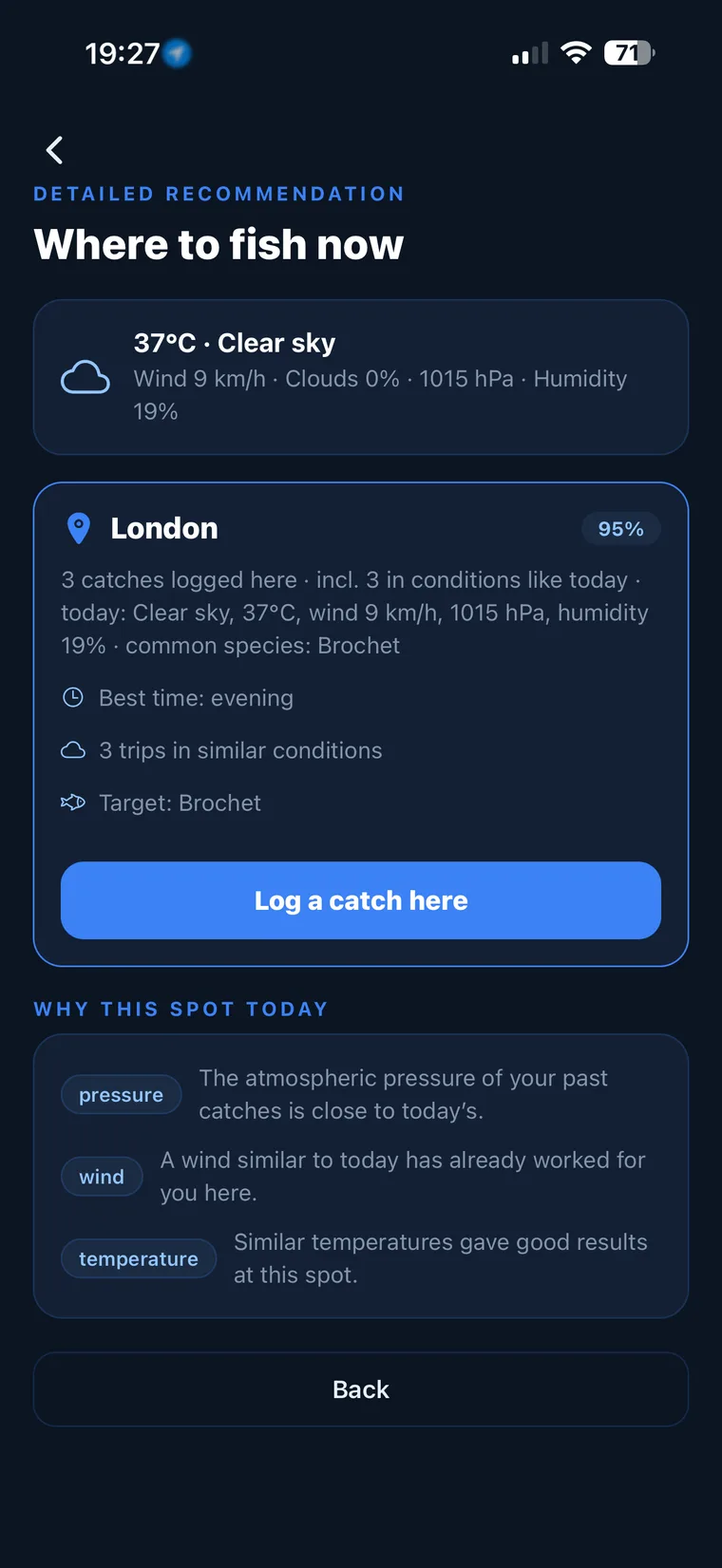
Not sure what to tie on?
Photograph your spot: CarnaFish reads the scene, cross-checks the conditions and gives you the zone, the lure and the retrieve. Free on iOS and Android.
Where it shines, where it is useless
Its situations:
- Rocky plateaus and reef heads under one to three metres of water, on a slightly stirred sea.
- Visible bass activity on fry or sandeels, where you need to cover a moving zone fast.
- Points and the current that runs off them on the flood, when the water goes white over the stones.
- Bright summer days, where the surface concentrates activity at first and last light.
Its limits:
- Deep, calm water with no visible activity. A popper will not bring a bass up from eight metres.
- Very clear, flat water with educated fish: a hard spray becomes a flight signal rather than a call.
- A violent following wind, which pins the line to the water and makes a clean pop impossible.
Gyro Pop or a freshwater popper taken to sea
Plenty of anglers use a bass-fishing popper in saltwater. A Rebel Pop-R or a Megabass Pop-X are excellent lures, but their logic is the opposite: discreet spray or long pause, close wary fish, small volumes of water. At sea, that rhythm does not cover enough ground and those models lack the mass to cast into wind.
The Rapala X-Rap Pop compares better on paper, but it plays on the feather and the pause. The Gyro Pop commits to a sustained cadence and a vertical spray: it searches, it calls, it restarts.
If you want to stay on the same spot but fish more quietly once the sea settles, the Jackson Pin Tail Tune takes over just under the surface without any noise.
Our guide to lure fishing for sea bass covers the tide windows where topwater beats everything else. And if you are unsure when to switch to the surface in front of a reef, CarnaFish analyses a photo of the spot and answers.
Key takeaways
- Short vertical spray, lure left clear: the bass aims at the silhouette, not at the foam.
- No sideways slide between pops, so a path the fish can anticipate.
- Sustained cadence, pauses of one second at most. Long silences are a mistake at sea.
- Never set on the sound: keep the motion going and set on the weight.
- Useless in deep water with no activity, and on a glassy sea with educated fish.
FAQ
Why do bass miss a popper so often?
Because they attack from directly below, often into the foam, aiming at a blurred silhouette. A vertical spray and a lure that stays in line cut that failure rate sharply, as does setting the hook on the weight rather than on the sound.
Should I use long pauses?
No. One second is enough, just long enough for the spray to fall back. Long pauses belong to freshwater poppers worked over holding fish; at sea they give the bass time to inspect and refuse.
What leader for a saltwater popper?
One to one and a half metres of 0.40 to 0.50 mm fluorocarbon, joined to 0.15 to 0.20 mm braid. The fluorocarbon takes the rubbing on rock and the head-shakes at the surface, the braid delivers distance and transmits the pops.
Does it work at night?
Yes, but with a different logic: a slower cadence, a dark silhouette, and a steadier retrieve. Sound becomes the main signal since the silhouette is barely visible.
Can it be fished on a flat sea?
Yes, by replacing the sharp pops with a fast, continuous retrieve that just makes the mouth bubble. That produces a foamy wake, less aggressive than a series of detonations and better accepted when the water is smooth.
Should I change the stock hooks?
Not automatically, but check them after every session over rock. On a popper the hooking window is very short: a slightly blunt treble turns a clean strike into a lost fish.
The full sea bass lure guideSeason-by-season strategy: which family of lure, when, and why.Go from theory to fish
CarnaFish reads your spot from a photo and gives you the game plan: zone, lure, retrieve. Free on iOS and Android.