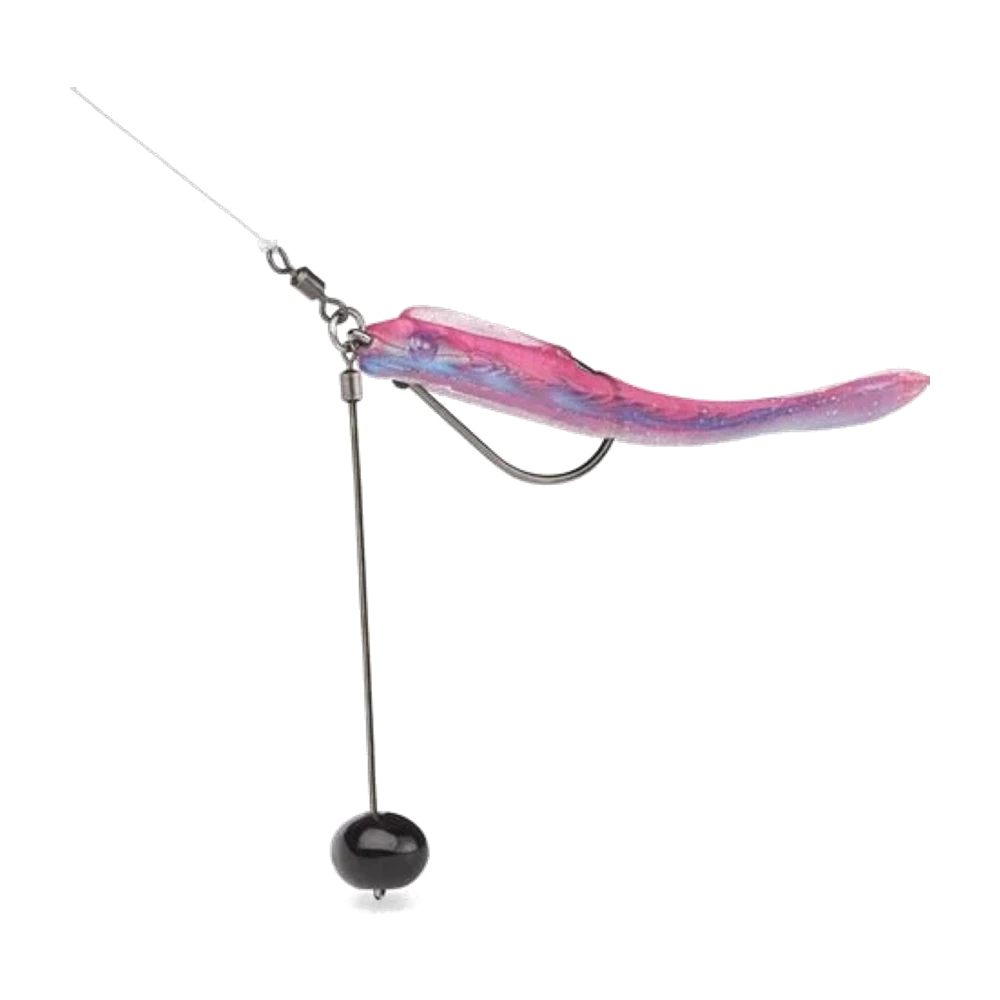
VMC Neko Rig: the hook that gets a Neko through the timber
This lure shines under specific conditions. CarnaFish tells you in 10 seconds if today is one of them.
The Neko rig has a structural flaw: the hook is pinned crossways, point bare, on a lure you fish right on the bottom. As long as you stay over clean gravel, all is well. The moment you approach a sunken tree, a mat of branches or a reed edge — in other words the places fish actually hold — you spend your time pulling free.
The usual answer is to switch to a Texas rig, and in doing so lose everything that makes the Neko worth using: the worm standing up, the vibration on the spot, the instant hookset.
The VMC Neko hook exists to avoid that trade-off. This is not a wacky hook with a wire tacked on: the bend, the gap and the guard are designed together for a worm pinned crossways and weighted at the nose. The technique itself is described in our piece on the Neko rig — here we are talking about the hook.
What a dedicated bend changes
Plenty of anglers rig their Neko on a generic wacky hook, or even on a plain straight-eye hook. It works, right up until you compare.
- The gap is calculated for a worm pierced crossways. On a hook that is too closed, the body of the worm fills the space and the point no longer has clearance: the fish comes off, or the hookset misses outright.
- The shank is short. It adds no leverage that would pivot the worm on every shake, and it limits the risk of the fish levering itself off.
- The wire is an intermediate gauge. Fine enough to penetrate effortlessly on slack line, thick enough not to open up on a good bass hauled out of a brush pile.
- The eye is perpendicular to the plane of the hook, which stabilises the worm's attitude during the shakes and stops it twisting.
Four details. Put end to end, they show up in the fish count at the end of the day.
The weed guard: what it buys, what it costs
This is the model's main selling point. One or two strands of soft nylon run from the eye and shield the point.
What it buys you, concretely:
- Dropping the rig into the middle of a sunken tree and shaking it between two branches without dragging everything back.
- Dragging over a bottom of fine brush or dead leaves, typical of autumn margins.
- Fishing tight against a reed wall or along a weed-covered jetty, as close as you can get.
What it costs: a slight loss of penetration on soft bites. The guard absorbs part of the pressure before the point clears. It is not a deal-breaker, but it does mean adapting your hookset — more on that below.
On the water: never crush the guard down to "make it work better". If you are hanging up too much, the problem is almost always your retrieve, not the guard. A Neko that snags is a Neko you are dragging instead of shaking on the spot. Cut your drags down to twenty centimetres and the problem disappears.
Conversely, if you are fishing a perfectly clean bottom, use the guardless version. You will gain a few hooksets on delicate fish.
What size to use
The criterion is not the length of the worm but its diameter. A very slim 13 cm worm calls for a smaller hook than a chunky 10 cm one.
| Worm | Diameter | Hook size |
|---|---|---|
| Slim finesse worm, 8 to 11 cm | fine | 4 |
| Standard stick bait, 10 to 13 cm | medium | 2 or 1 |
| Thick stick bait, 12 to 15 cm | heavy | 1 |
| Chunky worm for big bass | very heavy | 1, heavy wire |
Quick rule: once the worm is pinned, the distance between its back and the point must stay at least half a centimetre. If the point brushes the plastic, go up a size.
Rigging and retrieve
The movement is no different from a standard Neko, with one nuance around the guard.
- Fit an O-ring a third of the way along the worm and push a tungsten nail into the nose, on the axis.
- Pass the hook under the ring, point facing the head of the worm.
- Fold the guard down so it just brushes the point without pressing on it. It should move aside under simple thumb pressure.
- Cast, let it drop on a controlled slack line and watch the line: plenty of bites come on the fall.
- On bottom contact, do nothing for five seconds, then shake the rod tip on the spot for five to ten seconds, wrist only.
- Move it twenty centimetres, let it settle, start again.
The hookset needs adapting. With a guard, forget the big rod stroke: it often slides the worm without driving the point home. Reel fast to come tight, then sweep the rod up smoothly, firmly and without a jerk. The guard collapses, the point goes through, and the fish is hooked in the corner of the mouth.
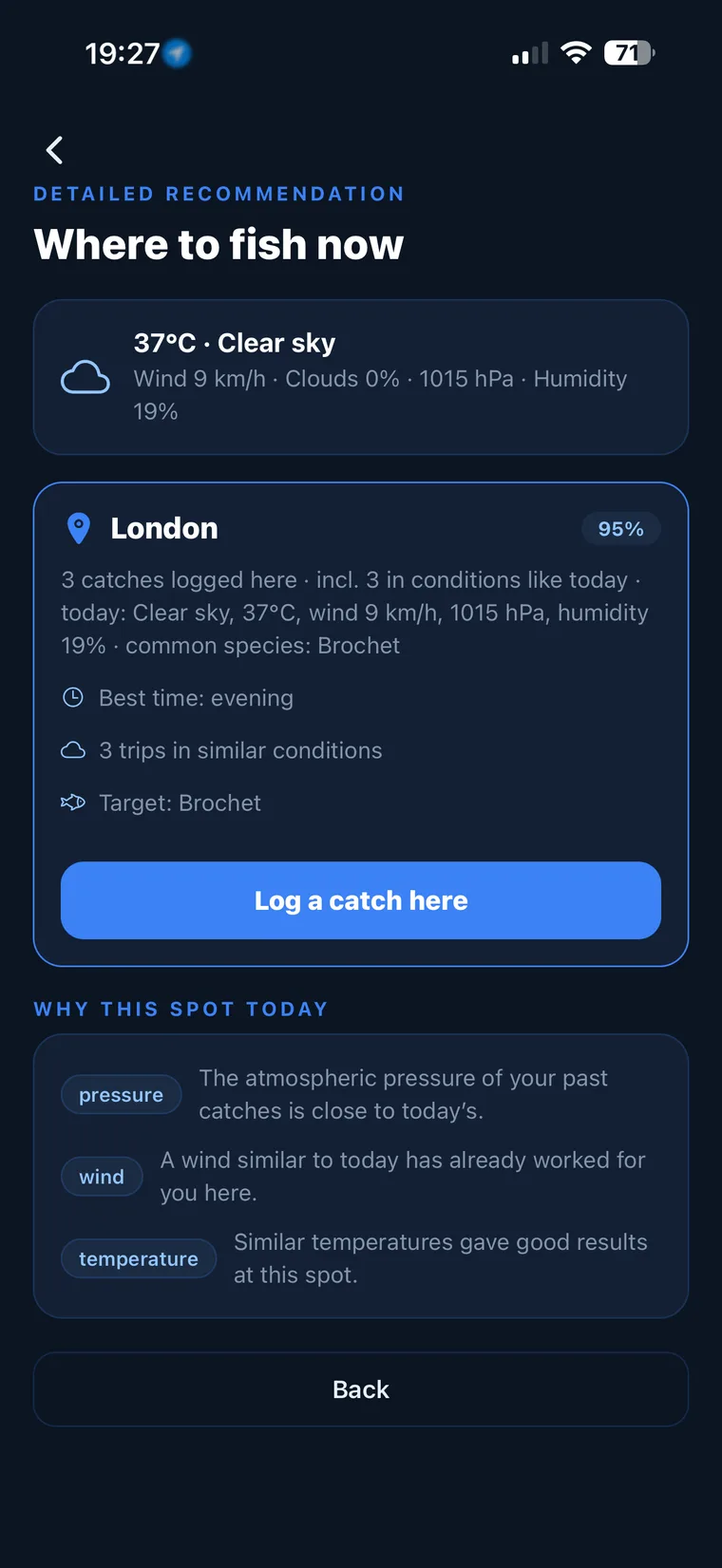
Not sure what to tie on?
Photograph your spot: CarnaFish reads the scene, cross-checks the conditions and gives you the zone, the lure and the retrieve. Free on iOS and Android.
Where it wins, and where it is pointless
This hook earns its place as soon as the bottom is cluttered: dead wood, brush, reed edges, rip-rap furred with filamentous algae. It also earns it in late autumn, when leaves carpet the bottom and catch everything that passes.
It loses its interest on clean bottoms in clear water with wary fish: the guard then costs you a few converted bites without bringing anything. It is also wrong in dense weed — in lily pads or a meadow of elodea, no guard is enough and you need to move to a Texas rig with the point fully buried.
VMC Neko Rig or a standard wacky hook
An ordinary wacky hook remains perfect for the wacky rig: no weight, a flat fall, clean bottom, fish high in the water column. It never has to handle the weight of a nail or the pressure of a worm standing up against structure.
As soon as you move to a Neko and fish cluttered spots, the dedicated hook genuinely changes things: it takes the weight without deforming, it keeps a usable gap despite the bulk of the worm, and its guard opens up square metres that a bare hook cannot touch. If you want to go deeper into the timber still, with the weight held away from the lure, look at the VMC Tokyo Rig, which solves the same problem from the opposite direction.
Our beginner's guide to bass fishing puts these rigs in relation to each other. And if you are torn between a bare hook and a weed guard in front of a spot, CarnaFish analyses a photo of the spot and answers.
Key takeaways
- Bend, gap and shank are calculated for a worm pinned crossways and weighted at the nose.
- The guard opens up cluttered spots: dead wood, brush, reeds, leaves.
- Size is chosen on the worm's diameter, not its length. Aim for half a centimetre of clearance.
- Set the hook by reeling tight then sweeping smoothly, never with a big rod stroke.
- Pointless on clean bottoms in clear water, not enough in dense weed.
FAQ
What is a dedicated Neko hook for?
It combines a gap calculated for a worm pierced crossways, a short shank and an intermediate wire gauge. The result: the worm stays straight during the shakes and the point keeps enough clearance to drive home.
Does the weed guard get in the way of the hookset?
A little, on very soft bites. You need to reel tight first, then sweep the rod firmly. With that movement the guard collapses and the point goes through without difficulty.
What hook size should you choose?
The criterion is the worm's diameter, not its length. Size 4 for a slim finesse worm, 2 or 1 for a standard stick bait, a heavy-wire 1 for a thick worm aimed at big fish.
Can you use it wacky, without a nail?
Yes, the rig works. But the hook is optimised to take the weight of a nail and the pull of a worm standing up against structure; for pure wacky over a clean bottom, a finer model will convert delicate bites better.
Do you need an O-ring with this hook?
Yes, as with any Neko. Without a ring, the plastic splits around the hole after two or three fish. With one, the same worm lasts ten fish or more.
Does this rig catch perch?
Yes, by dropping a size: hook 4, an 8 to 10 cm worm, a light nail. On perch sitting at the base of structure, shaking on the spot often triggers better than a conventional retrieve.
The full bass lure guideSeason-by-season strategy: which family of lure, when, and why.Go from theory to fish
CarnaFish reads your spot from a photo and gives you the game plan: zone, lure, retrieve. Free on iOS and Android.