Gunki Headbanger: the jig head that noses down on the drop
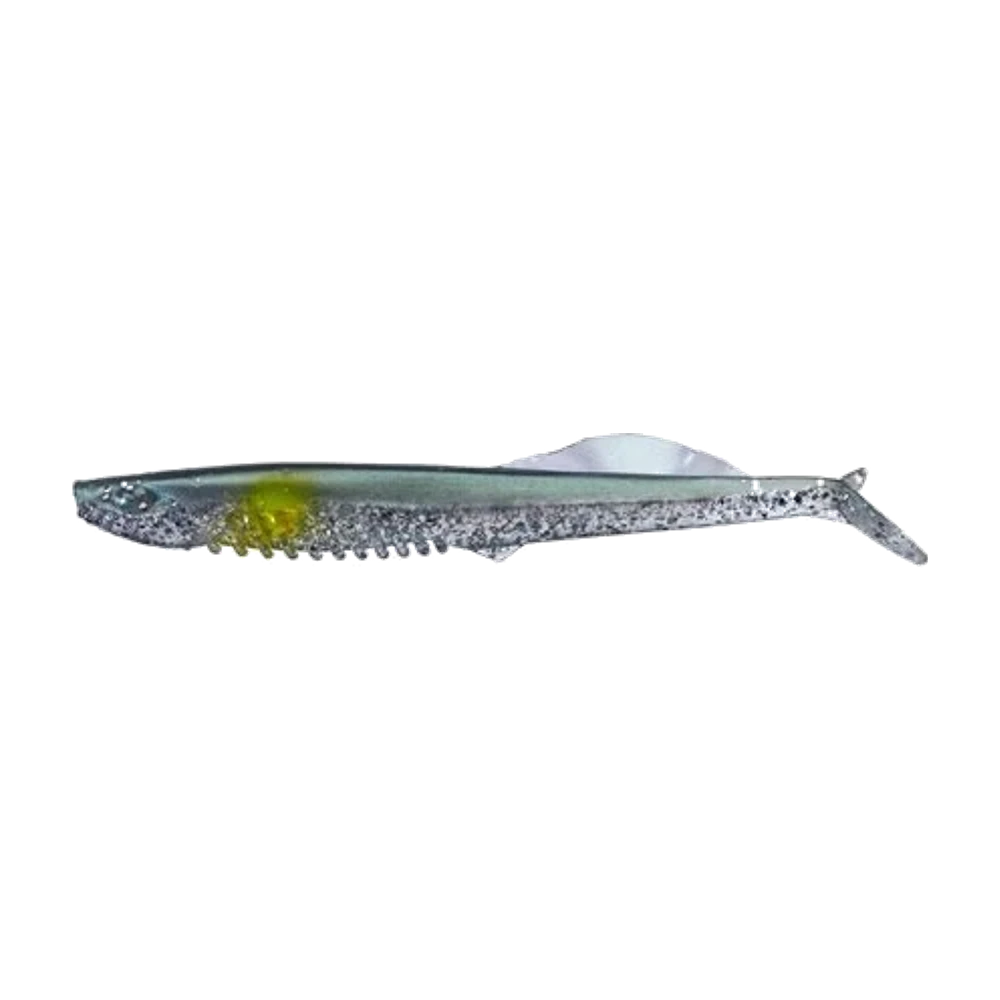
Not sure this lure fits YOUR spot today? CarnaFish tells you in 10 seconds, from a photo.
You are working a shad along a dam wall in seven metres of water, lift-and-drop, and you have been at it for an hour. The gesture is clean, you are counting the fall, and yet you are catching nothing while the angler next to you keeps hooking up. The difference is neither the colour nor the brand of shad. It is the way the lure presents itself during that second and a half of falling — the only phase in which a zander makes up its mind.
A classic round jig head takes the shad down flat, or slightly sideways, with the body trailing behind. The Headbanger does something else: the moment you let go, it tips firmly nose-down, the shad's body lines up with the head, and the fall looks like a fish dropping vertically rather than an object sinking.
If the basics of picking a weight and rigging a shad are not yet clear, start with our page on the simple jig head rig. Here we are only covering what this particular head does differently.
A geometry built for the fall, not for a straight retrieve
Three things separate this head from a standard bullet weight.
- The eye sits high and well forward. That is what causes the tip: on the drop, the pulling point is above the centre of gravity, the nose dives and the tail rises. On a round head with a centred eye, the fall stays far flatter.
- The head is flattened on the sides rather than spherical. It offers less lateral resistance to the line during the descent, so less drift when the wind pushes on your slack. Drifting slowly from a boat, that detail buys you contact.
- The shank is long and the wire relatively thick, sized for shads of 9 to 15 cm. This is not a finesse head: it is built to hold a bulky body straight and to take a hookset at seven metres on the end of a braid.
The body is held on barbs behind the collar. Rig the shad by pushing the hook through dead in line, and mark the exit point with a pen before you pierce it if you need to: a high-eye head amplifies every alignment fault. A shad rigged crooked will visibly spin on the lift.
The retrieve: two lifts, one full fall
- Cast and let it sink on a semi-tight line, counting. Note the count at the first bottom contact — that is your reference for the whole spot.
- Two short rod-tip lifts, 30 to 40 cm each, without turning the handle while you do it.
- Let go completely and follow the fall down with the rod tip. This is where the head tips and the shad presents itself nose-down.
- Take up the slack as soon as you feel bottom contact, or as soon as the line stops running before your expected count — that is a bite.
- Go again with two lifts, moving a metre of bottom closer with each cycle until you reach the bank.
On the water: a zander almost always takes during the last third of the fall, once the head has finished tipping over. Take up contact too early and you delete that fraction of a second. Count your descent under your breath and wait one beat longer than instinct tells you, even when you are sure the bottom is close.
A useful variant on perch and on lethargic zander: a single, very short lift followed by a complete fall. On fish glued to the bottom in winter, that stripped-back rhythm often outproduces the classic double lift.
Weight: what changes compared with a round head
The general reasoning — depth, current, sink rate — is covered in our page on the simple jig head rig. What is specific to the Headbanger is that, weight for weight, the tipping action takes it down slightly faster and straighter than a round head. In practice you can often drop one step lighter than usual.
| Situation | Usual weight | Note specific to this head |
|---|---|---|
| Pond or gravel pit, 3 to 5 m, no current | 7 to 10 g | drop to 7 g to lengthen the fall |
| Lake or reservoir, 5 to 10 m | 12 to 18 g | crisp contact thanks to the flattened profile |
| River with moderate current, 4 to 8 m | 18 to 25 g | low lateral resistance limits the drift |
| Deep water or strong current, beyond 10 m | 25 to 30 g | favour the single lift, the fall does the work |
Above a 12 cm shad, add a stinger hook: the nose-down tip shifts the zander's point of attack towards the rear of the body, and a main hook on its own lets short bites through. Our page on the stinger rig covers how to fit one.
Where it makes the difference, and where it is useless
- Vertical fishing and boat drifting over holes and drop-offs: the low lateral resistance keeps the line in line and improves detection.
- Lift-and-drop from the bank, along deep dam or gravel-pit margins, where the fall is the whole of the fishing.
- Rivers, when you need weight to hold bottom without the lead swinging across the current.
- Perch on rock piles, in small weights of 5 to 10 g with a 7 to 9 cm shad.
Conversely, it is the wrong tool for a steady straight retrieve: a high-eye head pulls the shad's nose down permanently, which upsets the action at constant speed. If your fishing consists of cranking evenly over a flat, a bullet head with a centred eye swims straighter. It is also too coarse for finesse perch rigs: below 5 g and on bodies under 7 cm, the long shank and thick wire choke the lure.
Finally, it is not a weedless head. In vegetation or heavy wood the bare hook digs in; switch to a weighted Texas rig.
Not sure what to tie on?
Photograph your spot: CarnaFish reads the scene, cross-checks the conditions and gives you the zone, the lure and the retrieve. Free on iOS and Android.
Headbanger or classic round head
The round head remains the default choice, and for good reasons: it is versatile, it swims straight on a steady retrieve, it rolls over rocks without wedging, and it costs less. It is the one to keep on when you do not yet know how you are going to fish.
The Headbanger is a specialist. It wins as soon as the fall becomes the decisive phase — meaning on deep zander and on settled fish — and it loses as soon as the fishing goes back to a straight retrieve. The reasoning is the same as with a jointed jig head such as the Illex Dexter Jig, which also aims at a controlled descent but through a different rigging logic.
To place your season and know when a deep lift-and-drop takes over from everything else, our beginner's guide to lure fishing for zander gives you the markers. And if you are unsure what weight to fit when you reach an unfamiliar bank, CarnaFish analyses a photo of the spot and answers.
The soft body to put on it
The head is only worth as much as the shad that extends it. Two coherent directions:
- A shad with a wide tail and a strong kick, such as the Fox Rage Pro Shad Firetails, for a strong signal in stained water.
- A slim-bodied shad with a discreet action, such as the Gunki Grubby Shad, when the fish are wary or the water is clear.
In both cases, check the alignment before each series of casts. A body that has slipped two millimetres on the collar is enough to make the whole thing spin, and you will not feel it in seven metres of water.
Key takeaways
- The high eye tips the lure nose-down the instant you drop it: the fall becomes vertical and readable.
- Flattened head: less lateral drift, better contact when drifting and in current.
- Two short lifts, then a full fall followed down with the rod tip. The bite comes at the end of the fall.
- Weight for weight it sinks faster than a round head; you can usually go one step lighter.
- Wrong for a steady straight retrieve, for finesse under 5 g, and for weedy areas.
FAQ
What is the high eye position for on this head?
It puts the pulling point above the centre of gravity. On the drop, the nose dives and the shad's body lines up behind it, which gives a vertical descent instead of a flat fall.
What weight of Gunki Headbanger should I choose?
7 to 10 g down to 5 m with no current, 12 to 18 g between 5 and 10 m, and 18 to 30 g in rivers or beyond 10 m. Since this head sinks straighter than a round model, you can generally go one step lighter than usual.
Do I need a stinger hook with it?
Above a 12 cm shad, yes. The nose-down tip moves the point of attack towards the rear of the body, and the main hook alone lets a zander's short bites through.
Can it be fished on a straight retrieve?
That is not what it is for. The high eye pulls the shad's nose down under constant retrieve and unbalances the action. For steady cranking, a bullet head with a centred eye stays more stable.
Is it suitable for perch?
Yes, in 5 to 10 g weights paired with a 7 to 9 cm shad, typically over rock piles or around bridge pilings. Below that, the long shank and thick wire are too heavy for finesse fishing.
How do I stop the shad from spinning?
By piercing it perfectly in line: mark where the point should exit with a pen before you push the hook through, and check the alignment between series. A high-eye head amplifies the slightest rigging fault.
The full zander lure guideSeason-by-season strategy: which family of lure, when, and why.Go from theory to fish
CarnaFish reads your spot from a photo and gives you the game plan: zone, lure, retrieve. Free on iOS and Android.