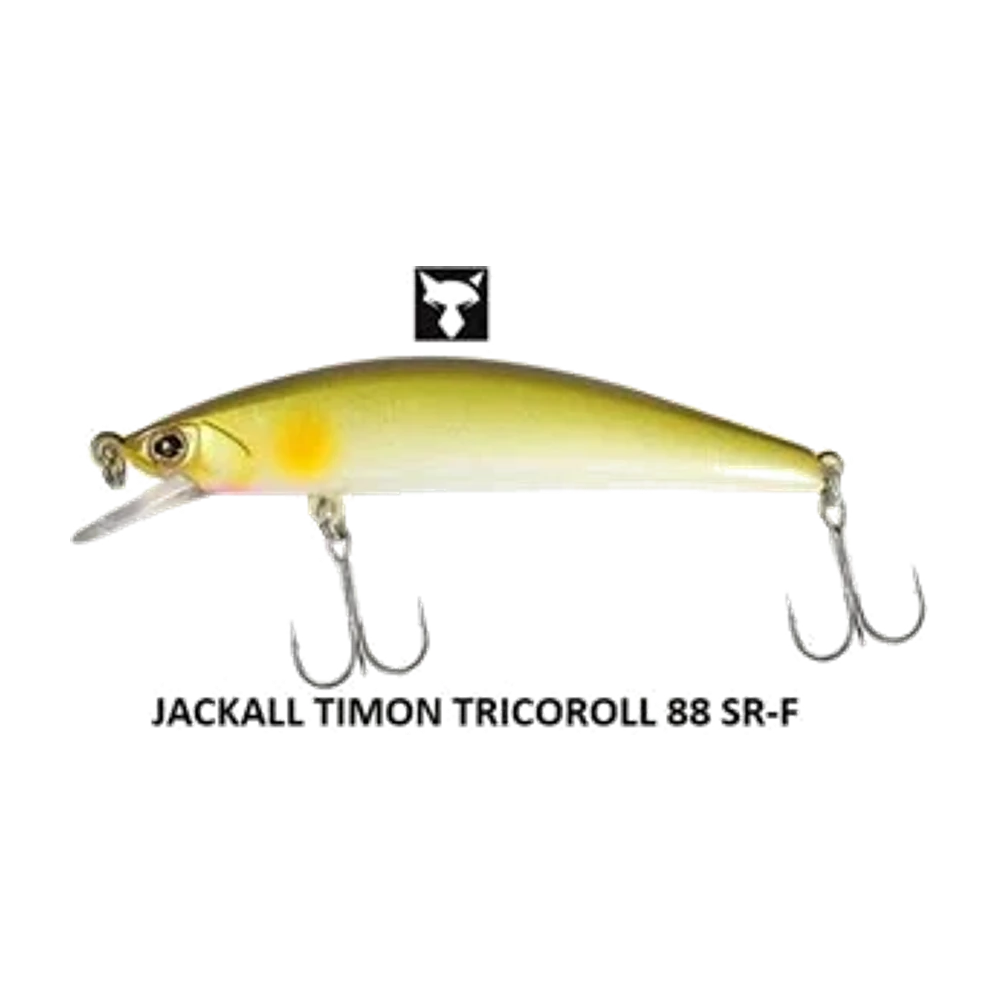
Timon Tricoroll Shad: the ultra-light soft plastic that fishes at a standstill
Before tying this one on, it helps to know if the spot actually calls for it. CarnaFish reads the scene from a photo.
There is one situation hard micro lures cannot handle: the fish that touches without taking. You feel a tap in the rod tip, sometimes two, sometimes three in a row, and you never hook anything. It happens with wary perch on a winter margin, with stocked trout at the end of a session, and the script is always the same — the fish tastes the lure and spits it before you can react.
The reason is mechanical. A hard plastic minnow is a rigid piece that does not deform. The fish takes it in, meets no material that gives, and rejects it instantly. On a committed fish that makes no difference: it attacks and it is hooked. On a fish that is only sampling, you lose everything.
The Tricoroll Shad offers the other answer: a small soft shad built for ultra-light gear, one that folds under the teeth and allows something hard lures cannot — fishing at a complete standstill, sitting on the bottom.
What softness actually changes
Three differences, and all three are usable.
Holding time. A fish that closes its jaws on soft material keeps hold of it one to two seconds longer than a hard body. That delay is exactly what you need to set the hook. It is the number one reason to reach for a soft plastic when the bites keep coming to nothing.
The settled pause. A suspending minnow stops in midwater, which is already a lot. A shad on a light jig head settles on the bottom and stays there as long as you like, the tail still moving with the slightest current. On winter perch or lethargic trout, nothing else replaces that presentation.
Minimum speed. The fine tail beats as soon as it moves a centimetre. You can work it at a speed where a hard lure has no action at all — a ten-centimetre lift of the rod tip is enough to make it work.
The downside is real: soft plastics tear, wear out, and get destroyed by jack pike and abrasive-mouthed perch. Count on two to five fish per lure, and carry several.
Three rigs, three ways of fishing
Light round jig head (0.6 to 1.5 g). The basic all-round rig. A very slow straight retrieve in midwater, or short lifts along the bottom. The round head pivots freely and lets the lure live.
Fine drop shot. Size 10 single hook nose-hooked, 2 to 4 g weight twenty to thirty centimetres below. The lure stays in midwater, motionless, at the depth you choose, and you work it on the spot without moving it. This is the rig for perch pinned against structure. The drop shot rig is covered step by step in its own piece.
Unweighted or barely weighted (bare lure on a fine hook). For subsurface work in summer, on rising trout. The shad glides down on an unpredictable path, and plenty of bites come during that fall.
| Situation | Jig head | Retrieve |
|---|---|---|
| Perch on the margin, 1 to 2 m | 0.8 to 1.2 g | Very slow straight retrieve, 3 s stops |
| Perch on deep structure | Drop shot 3 to 4 g | Shakes on the spot |
| Stocked trout, middle layer | 1.2 to 1.5 g | Slow straight retrieve after a count |
| River trout, light current | 1.5 to 2 g | Three-quarter downstream drift |
On the water: when you keep getting bites without hooking up, do not change colour or size. Drop half a gram off the jig head. Nine times out of ten the problem is not that the fish refuses the lure, it is that it feels hard resistance as it inhales. A lighter rig goes further into the mouth, and bites turn into fish.
The retrieve: the pause is the retrieve
- Cast and count the drop, line semi-tight. A large share of bites happen right there: watch the line, not the rod tip.
- Let the lure settle and wait three to five seconds doing nothing.
- Lift the rod tip ten to fifteen centimetres, very slowly, to raise the shad.
- Set it back down and wait again.
- Take up two turns of the handle and start over. You cover two metres a minute: that is the right rhythm.
For the straight-retrieve version — on stocked trout or active perch in midwater — you swap that sequence for a continuous retrieve at minimum speed, with no twitches at all, exactly like an area spoon. The weight-step approach used in area fishing applies here word for word: change jig head before you change lure.
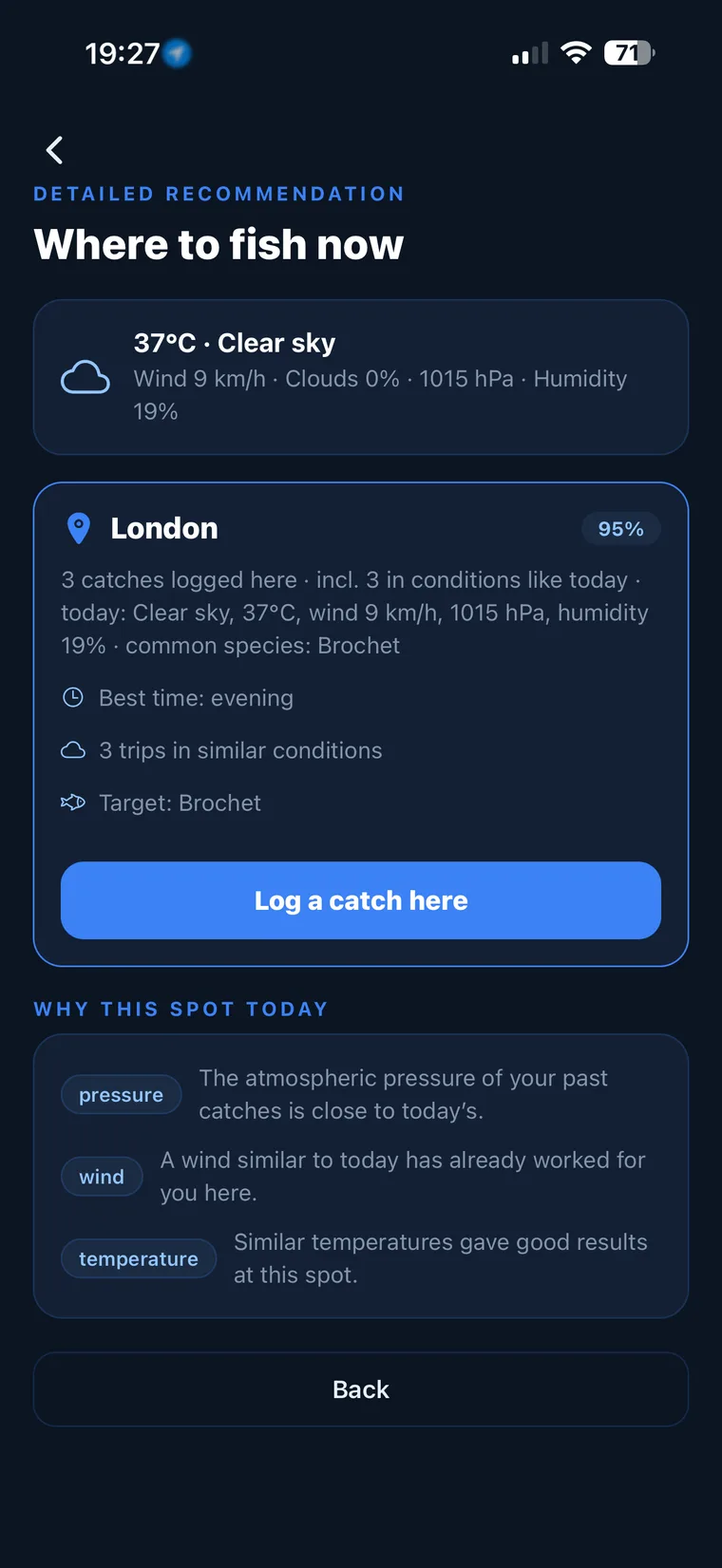
Not sure what to tie on?
Photograph your spot: CarnaFish reads the scene, cross-checks the conditions and gives you the zone, the lure and the retrieve. Free on iOS and Android.
Where it takes over, and where it is too much
- Margin perch in winter, pinned to the bottom, no longer reacting to anything fast.
- End of a session on a stocked water, on educated trout that follow without taking.
- Vertical spots: jetty pilings, sheet piling, rip-rap, where drop shot lets you keep at it without moving the lure.
- Cold water, below 8 °C, where a long pause on the bottom becomes the only productive presentation.
Conversely, it is wrong as soon as you need to search fast: you cover almost nothing at that rate. It suffers in strong wind, where an ultra-light rig becomes uncontrollable and you stop feeling anything. And on fish in full feeding mode, a hard lure that sends a stronger signal and fishes three times faster will catch more per hour.
Soft shad or hard micro minnow
This is the real decision in an ultra-light box, and the three lures do not target the same fish.
The Illex Tiny Fry 50 is an imitation of a lone fry, to be twitched very finely in the top fifty centimetres. It relies on profile and on a nervous retrieve. The ZipBaits Rigge 56 plays on a tight roll and high-frequency vibration: it is a provocation lure, unlocking perch you have seen but not caught by changing the signal radically.
The Tricoroll Shad attempts neither. It relies on material and stillness — two registers neither of the others can reach. You bring it out when provocation has failed and you need to switch to a slow, settled presentation that fish will hold on to.
The sequence that works best on a difficult margin: hard minnow first to provoke and locate, soft plastic afterwards to convert the fish you have found. Our guide to lure fishing for perch sets out the spots to work in that order. And if you are torn between attacking a margin with provocation or with finesse, CarnaFish analyses a photo of the spot and answers.
Key takeaways
- Soft material makes fish hold the lure one to two seconds longer: that is what turns a bite into a fish.
- Only a soft plastic allows a settled pause on the bottom, tail alive, for several seconds.
- Three rigs: 0.6 to 1.5 g jig head, fine drop shot, or the bare lure in the subsurface.
- Bites but no hook-ups? Drop half a gram off the jig head before changing anything else.
- Poor for fast searching and in strong wind: this is a conversion lure, not a search lure.
FAQ
What jig head for a 4 to 5 cm shad?
Between 0.6 and 1.5 g in most cases, a round head that lets the lure pivot freely. Go up to 2 g only if there is current or if you have to hold bottom beyond two and a half metres.
Why do I feel bites but never hook up?
Most often because the jig head is too heavy: the fish feels hard resistance as it inhales and spits immediately. Drop half a gram before changing colour or size — it is the most effective correction there is.
Straight retrieve or bottom work?
Both, depending on the mood of the fish. A very slow straight retrieve on stocked trout or active perch in midwater; short lifts with three to five second pauses on the bottom for lethargic fish or in cold water.
How many fish does a soft plastic this size last?
Two to five on average, fewer if jack pike get involved. Carry several of each colour: a shad torn at the head loses its swimming axis and becomes unusable.
When should I prefer a hard lure?
When you need to cover ground quickly, when the fish are actively feeding, or in wind that makes an ultra-light rig uncontrollable. A micro minnow sends a stronger signal and fishes three times faster.
Does this lure work on river trout?
Yes, on 1.5 to 2 g and fished on a three-quarter downstream drift in light current. In strong flow the rig becomes too light to hold the seam and a denser presentation is needed.
The full trout lure guideSeason-by-season strategy: which family of lure, when, and why.Go from theory to fish
CarnaFish reads your spot from a photo and gives you the game plan: zone, lure, retrieve. Free on iOS and Android.